
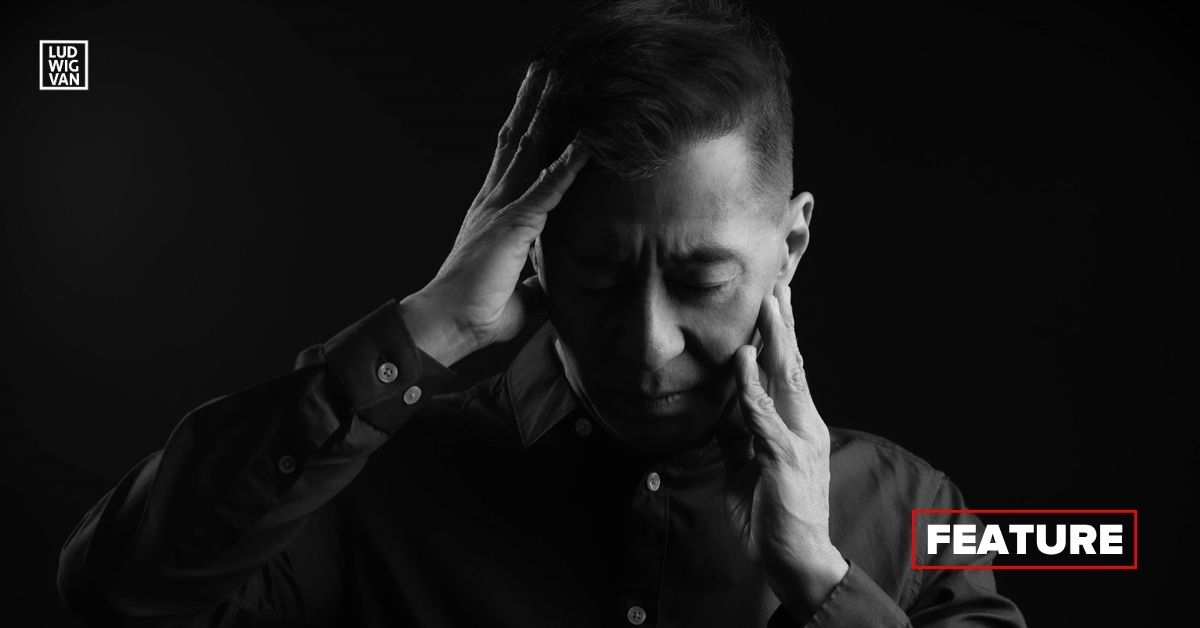
Ghosts in the Forest is a new album by Kiyoshi Nagata. It offers a collection of tracks that were inspired by the experience of Japanese-Canadians in the internment camps of WWII. The music explored themes of home and identity, intergenerational trauma, self-discovery, and childhood.
As WWII began, thousands of Japanese-Canadians along the Pacific coast were forced from their homes into internment camps in the interior of BC. While they were eventually freed after the war was over, the experience left a dark stain of trauma that extends to the generations that have come since that time.
The album drops June 18, 2026, with an album release party at Tranzac’s main hall on June 19. The album release party also includes the premiere screening of the documentary Taiko: Music of the Strong, which follows taiko master Kiyoshi Nagata on a trip to British Columbia to visit the site of the former Japanese internment camps.
Japanese-Canadian Internment Camps
During World War II, Japanese-Canadians along the Canadian West Coast were taken from their homes and forced into internment camps. More than 22,00 Japanese-Canadians, the majority of which were Canadian citizens, were stripped of their rights and subjected to this treatment. Their property was confiscated, and many men were separated from their families and forced to work on roadwork projects. Some were relocated to Alberta and Manitoba to work on sugar beet farms. Those who protested their treatment were taken to Prisoner of War camps in Ontario.
After the end of the war in 1945, Japanese-Canadians were given a choice: deportation to Japan, which had just suffered what is still the only nuclear bomb attack in history, or relocation east of the Rockies. They finally regained freedom of movement, and the right to return to the West Coast, on April 1, 1949.
An official apology, and a compensation package, was eventually issued by the federal government in 1988.
Nagata’s own parents were held in such an internment camp in British Columbia during WWII.
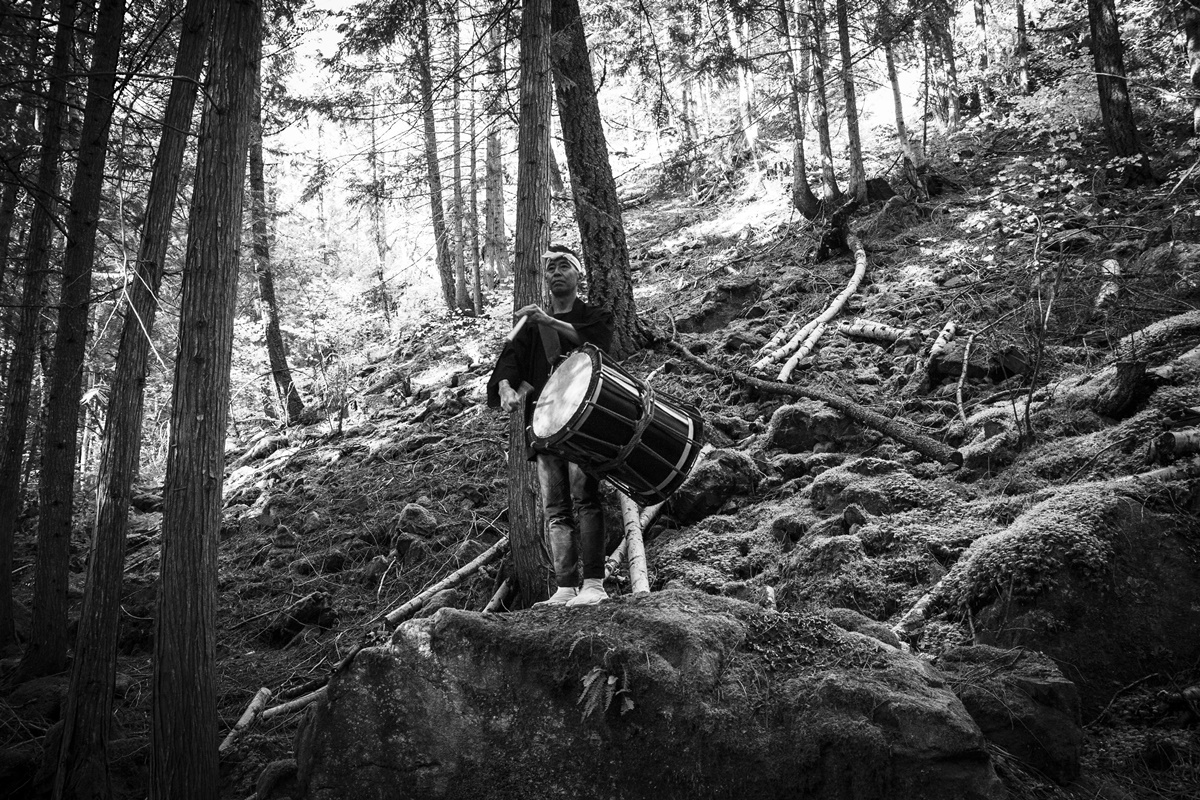
Kiyoshi Nagata
Kiyoshi Nagata is the artistic director of Toronto’s Nagata Shachu, the acclaimed taiko drum ensemble. He has also been teaching at the University of Toronto, Faculty of Music since 1998, and has presented workshops and lectures at several universities and community groups by invitation.
In addition to the taiko, Nagata plays the shinobue and shakuhachi. He studied with Daihachi Oguchi (as artistic director and performer of the Toronto-based, Suwa Daiko from 1982 to 1992) and with Kodo (as an apprentice from 1993 to 1994). He also studied Western classical percussion at the Royal Conservatory of Music with the assistance of a Chalmers Performing Arts Training Grant.
As a musician and composer, his career spans more than four decades. He has composed taiko music for a variety of media and ensembles, including dance, theatre, film, video games and radio, and has collaborated with a variety of artists from multiple genres of music over his career.
Kiyoshi served as the diegetic music producer for the video game Assassin’s Creed Dark Shadows, and is featured in the documentary, Taiko: Music of the Strong. He is the recipient of the Japan Foreign Ministry’s Commendation recognizing his outstanding contributions to the promotion of Japanese culture and the strengthening of friendship between Japan and Canada through music.
The Album
The album title, along with the titles for the opening track Okaeri (Welcome Home), along with Kogarashi (Cold Wintery Wind), Haru Ichiban (First Spring), Petorikoru (Petrichor), and Shichi-Go-San (Autumn Children’s Festival), come from John Endo Greenaway. Greenaway created a research project, initiated by the Powell Street Festival Society, where a group of artists visited the former internment site in the Kootenays in 2022 in order to come up with new ways of telling the story.
The album is written in a contemporary style that bridges the gap between tradition and modernity, and the music melodic, emotional and dramatic, and cinematic in scope. Nagata’s genius lies in the layering of sounds, in particular, the various percussion instruments, to create both subtle and dramatic effects.
The tracks tell the story of Japanese-Canadian internment, each offering a different perspective, with the passing of the seasons marking time.
In From Here to Elsewhere, the shinobue, a traditional Japanese transverse bamboo flute, performed by Jiro Murayama, takes the melody, contrasted by the Kevin Zi-Xiao He 贺子潇 ケヴィンon the cello. Both Murayama and He improvise on their instruments. The combination is emotional and affecting, bolstered by vocals and Nagata’s taiko, hyōshigi (a type of wooden clapper), gongs, and cymbals.
Within Without is more percussive, driven by bells, gongs and drums. Kiyoshi plays the taiko, triangle, atarigané (brass hand gong), orugoru (a small bell set), and chappa (hand cymbals), with Akemi Akachi doubling on taiko. Both also contribute breaths and screams to the track, adding a sense of urgency and distress. As the liner notes explain, Within denotes betrayal, despair, anger, shame, anxiety; Without indicates hope, identity, self-worth, belongings, possessions.
Kogarashi (Cold Wintery Wind) is an atmospheric and evocative track, characterized by Kevin Zi-Xiao He’s work on the shakuhachi, a traditional longitudinal Japanese flute created from the bamboo root. Its tone ranges from breathy to high and sweet. He’s accompanied by minimalist drumming on the taiko by Kiyoshi and Akemi Akachi on the evocative track. All three musicians improvise, with Nagata adding tsuzumi, an hourglass-shaped hand drum, and rei, a Buddhist hand bell. Akashi also plays the hyōshigi and gong. Kogarashi (木枯らし) denotes the cold wind that blows at the beginning of winter. It signals the end of summer and autumn. The piece describes in musical terms that first harsh winter spent in the internment camps without electricity, heating or running water.
Shichi-Go-San is both a traditional Japanese rite of passage and festival day, dedicated to three- and seven-year-old girls, and five-year-old boys. It’s held each year on November 15. The album’s track Shichi-Go-San 七五三 (7-5-3) commemorates the occasion with a traditional sound created by a variety of percussion instruments against the shinobue. Kiyoshi Nagata performs on the taiko, bells, shakers, hand claps, with Akemi Akachi contributing chappa (hand cymbals), taiko, hand claps, Kevin Zi-Xiao He on taiko and hand claps, and Jiro Murayama playing shinobue, bells, shakers, and hand claps.
The full track list includes:
- Okaeri (Welcome Home)
- From Here to Elsewhere
- Within Without
- Kogarashi (Cold Wintery Wind)
- Haru Ichiban (First Spring)
- Petorikoru (Petrichor)
- Shichi-Go-San (Autumn Children’s Festival)
- Okaeri Reprise
Album Details
“At this stage in my career, I feel a responsibility to create work that not only advances the art form, but also contributes to a broader cultural and social dialogue. This album is my way of honouring those who came before me, giving voice to their stories, and fostering greater awareness and understanding through the power of music,” says Kiyoshi Nagata in a statement.
The full list of performers include:
- Kiyoshi Nagata 永田清 — taiko, percussion
- Akemi Akachi 赤地明美 — taiko, percussion
- Kevin Zi-Xiao He 贺子潇 ケヴィン — cello, shakuhachi, shinobue
- Jiro Murayama 村山二朗 — shinobue
- Aki Takahashi 高橋アキ — shamisen
- Makoto Tani 谷真琴 — koto
Find details and tickets for the June 19 album release party at Tranzac [HERE].
Are you looking to promote an event? Have a news tip? Need to know the best events happening this weekend? Send us a note.
#LUDWIGVAN
Get the daily arts news straight to your inbox.
Sign up for the Ludwig Van Toronto e-Blast! — local classical music and opera news straight to your inbox HERE.


- FEATURE | Kiyoshi Nagata Releases Ghosts In The Forest, Inspired By The Japanese-Canadian Internment - June 16, 2026
- FEATURE | The Classical Canon: What Would It Look Like If It Started Today? - June 16, 2026
- INTERVIEW | Susan Aglukark Talks About Career, Music, And Working As An Inuit Artist - June 15, 2026