The “classical canon” can be thought of as a kind of greatest hits collection of Western classical music. It’s those pieces and composers that you would encounter as a student, musician, or audience member, no matter where you are across the globe.
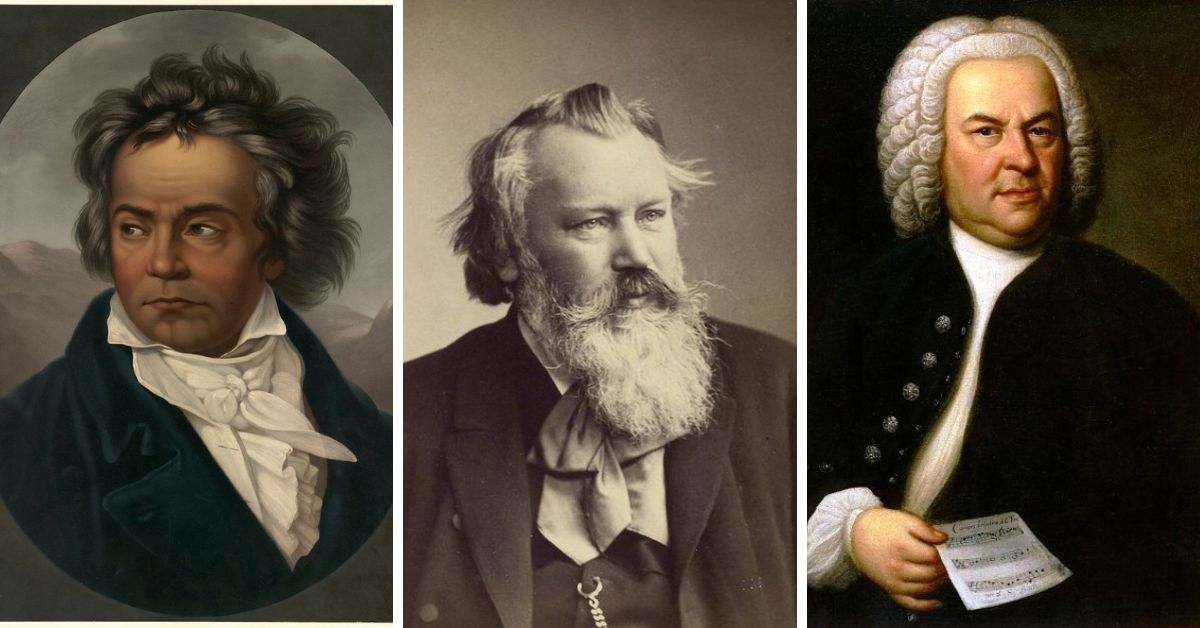
It’s the big three of Bach, Beethoven, and Mozart, and pieces like Tchaikovsky’s Nutcracker Suite, Paganini’s 24 Caprices for Violin, and Stravinsky’s The Rite of Spring. If you’ve ever studied classical music, or gone to a concert series, anywhere, you’ll be familiar with those artists and works.
What they all have in common is a European, or at least eurocentric background. They espouse Western notions of tonality and music theory, and when those elements have changed over the centuries, they changed along with it.
It’s a group of pieces and composers that derive from the historical traditions of Western European music, in other words.
But — what would the classical canon sound like if its origins began now, in the 21st century?
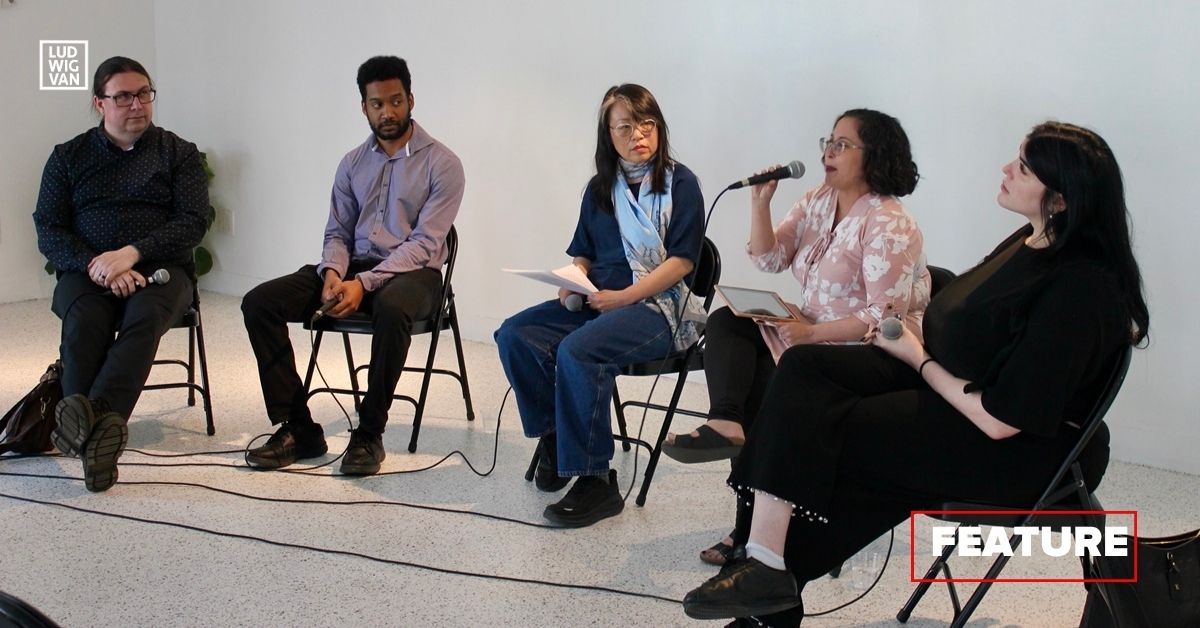
That was the question that was posed at a recent panel discussion, held as part of New Music Concerts’ Future Resonance Festival. The Festival closed NMC’s 55th season.
The Event
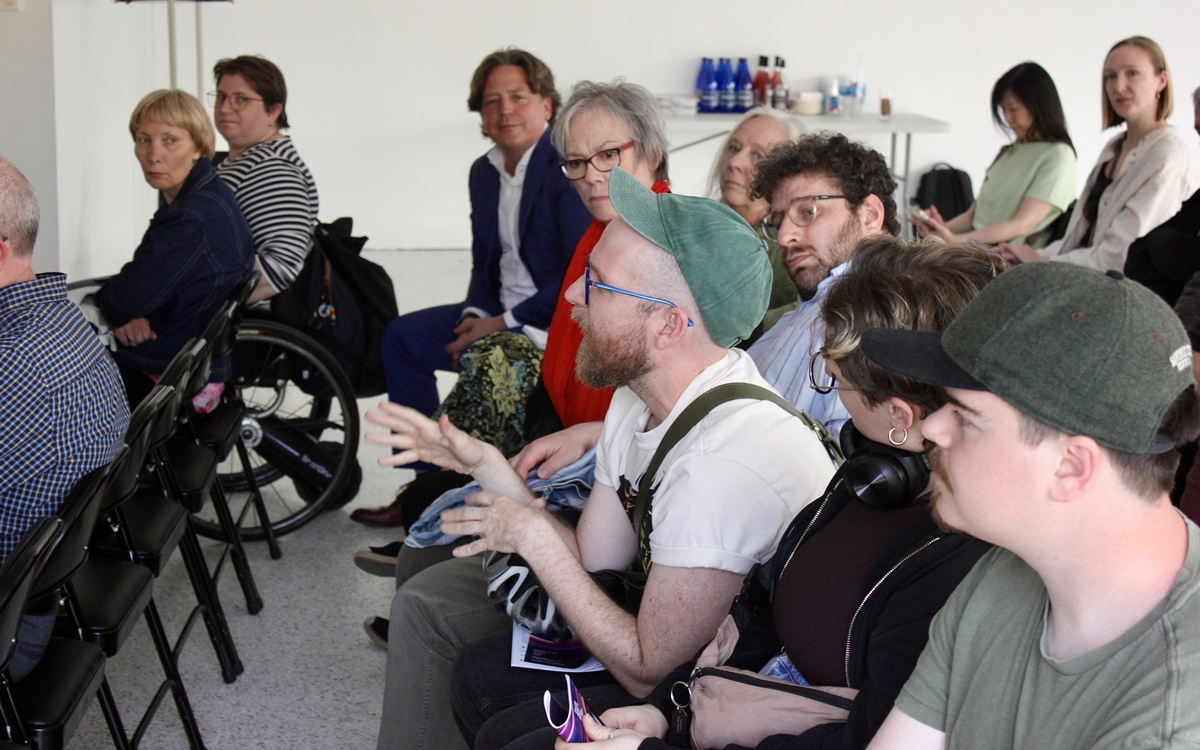
The discussion was attended by a swath of Toronto’s new music community, including composers like Alice Ping Yee Ho, and representatives of organizations, such as Holly Nimmons of the Canadian Music Centre, along with other musicians and interested parties.
The panellists included a range of voices.
Aiyun Huang was the panel chair. She is a Professor of Percussion at the University of Toronto, as well as Area Head of Percussion. Her background includes a BA from the University of Toronto, followed by an MA and DMA from the University of California San Diego. Along with her UofT research and teaching activities, she performs as a soloist and chamber musician, and serves as a producer. Aiyun was the First Prize and the Audience Award winner at the Geneva International Music Competition in 2002. She’s performed widely across North America, Europe, and in China.
J. Alex. (Jason) Young is a Cree-Settler Composer from Northern Ontario. He earned degrees from Carleton University and the University of Ottawa. His PhD in Composition from the University of Calgary is based on his research into Cree culture, storytelling, song, and ceremony as the basis for new artistic creation. He is a dedicated member of the Canadian Music Centre’s Accountability for Change and Indigenous Advisory Councils. Jason’s pieces have been premiered and performed by the Calgary Philharmonic, and he is an Assistant Professor of Composition at Brandon University.
Scholar Rena Roussin earned a doctorate in musicology from the University of Toronto, and is currently a postdoctoral associate at Western University. Her work focuses on the relationships between Western classical music and concepts of equity, embodiment, and social justice, both historically and in contemporary society. Her specific expertise centres on changing concepts of disability and gender in 18th-century Austro-German music, as well as Indigenous-led classical music initiatives in 21st century North America. She is working on her first book, Identities, Indigeneities, Intersectionalities: Positioning Contemporary Opera in Canada.
Composer, educator, scholar, and creative industries leader Dr. Charlie Wall-Andrews teaches at the University of Toronto Faculty of Music and in the Professional Music Program at The Creative School at Toronto Metropolitan University. Her compositions have been performed internationally as well as in Canada. She also serves on the Board of Directors for the Canada Council for the Arts and leads the SOCAN Foundation
Musician and composer Rashaan Rori Allwood is currently pursuing a PhD in Composition. He holds a Bachelor’s degree in Piano Performance and a Master’s degree in Organ Performance. As an organist, he has performed across North America and in Europe. In 2022, he received the Marilyn Mason Award in Organ Composition from the American Guild of Organists, and was commissioned by that organization to compose a new piece for solo organ which premiered in Washington in 2022. He is currently the director of music at St. Ansgar Lutheran Church, Toronto where he regularly premieres new works.
The Discussion
“What would the classical canon sound like if it started now?” asked NMC Artistic Director Brian Current.
“Honestly, I don’t want to sound pessimistic, but I doubt it would be any different.” Young explained that, in his experience, Indigenous voices are still muted within the world of Western classical music, and he felt that would continue “unless we are willing to mute the Western voices”. He argued that musical merit was used as the justification for suppressing voices outside the Western musical sphere.
“I love Beethoven a lot,” acknowledged Rena Roussin, “but I also love to go to the concert hall and hear something else.” While the music itself has developed over the centuries in various directions, the mindset essentially hasn’t. “I think we would still inherit a lot of the same [prejudices],” she added. While many orchestras and other ensembles do program work from outside the traditional canon occasionally, it too often acts as a kind of tokenism of diversity.
“I don’t really want a canon,” Roussin added, “I want communities.” Rather than fostering a single centralized concept of what music should be programmed and taught, thriving and diverse musical communities that respond to their own cultures and circumstances represent an alternative model. The music presenters program, essentially, should look a lot like the city or place where they live. In multicultural Toronto, it would mean giving much more room to voices outside the tradition.
Dr. Wall offered the example of Saudi Arabia, where she spent some time as a music industry representative. Until just a few years ago, interpretation of Islamic law led to the suppression of music in public, including concerts, which were effectively illegal. The ban was formally lifted in 2019, and since then, the nation has been building its own musical infrastructure, essentially creating its own canon. Wall said that the decision was made to prioritize both traditional and contemporary music modes, including everything from performance to the establishment of the country’s first music schools. “We all want the canon to be reflective of the diversity of the communities where we live,” she said. That, she acknowledged, would require both political and societal change.
“Institutions mostly move slowly, and are decades behind what is outside [of them],” Huang pointed out.
Allwood mentioned the context of music education, and the notion of what is worthy to be included in the canon. It’s a concept that students grapple with, and often fight against. “There are people who are fighting against the world they’re trying to enter,” he said. In his experience, many artists create their own spheres and canons, and don’t actually strive for inclusion into the realm of sanctioned music.
What is blocking progress in these areas that the speakers identified?
“I was thinking of the commodification of music,” Young said. The expectation that music has to create monetary value drives the music industry. He contrasted that with traditional Cree societies, where musicians and storytellers had a role that was just as valued as that of the hunters and fishers. They played their part, and were supported by the community rather than having to carve out a financial living.
Jason also noted the typical practice of setting Indigenous composers apart, for example, having a specific concert dedicated to their work rather than programming it as a matter of course. “As if the music can’t compete with Brahms.”
Rena Roussin pointed out the example of an Indigenous opera in Manitoba that sold out. If you create works that the community wants, they will come out for it. “There is this myth that [work] that isn’t by these German men won’t sell.”
Charlie pointed out that many organizations operate on tight budgets that don’t allow much or any leeway for risk taking. “It can also be a huge risk to curate something that doesn’t sell,” she pointed out. “It’s not a light switch.” Changing attitudes takes time, and requires that those changes be programmed into the process.
Aiyun noted the difference between commercial and art music. The latter survives on a combination of public and private financing, as well as public support.
“Chopin didn’t make money,” Allwood pointed out. “A lot of contemporary classical scenes are like that. They’re small, they’re intimate.” They’re held up by a community of artists who support each other.
“We need to find a way so that everyone can feel like they belong [in the music industry],” Wall said.
Audience Questions
A question from an audience member picked up on the idea of tokenism. “How do we navigate between representation and tokenism?”
Roussin pointed to the example of the Canadian Opera Company’s Circle of Artists, a consulting group that advises the company on how to approach and develop Indigenous works. The committee is made up of Indigenous creatives, who make the decisions, and offer their advice.
Young noted that change begins with education. He called attention to the fact that he rarely saw anyone without a PhD at teaching level in a university. “But, Elders have just as much knowledge,” he said.
The mindset of Indigenous artists also diverges from that of the music industry as a whole, an aspect that’s not often taken into account. “Artists aren’t viewed as commodities in Indigenous culture,” he said. When it comes to collaboration between Indigenous and non-Indigenous parties, understanding is key. “Are you ready to walk in that Indigenous community as a collaborator and learn everything about their culture?”
As he pointed out, every Indigenous community and culture is different, a fact that is often lost in these discussions.
Final Thoughts
It was an interesting discussion, and one that needs to continue throughout the classical music world and well beyond.
To be relevant and vital in contemporary society, music, like any art, has to reflect the world that it’s in — not an idealized version of what it was centuries ago.
Are you looking to promote an event? Have a news tip? Need to know the best events happening this weekend? Send us a note.
#LUDWIGVAN
Get the daily arts news straight to your inbox.
Sign up for the Ludwig Van Toronto e-Blast! — local classical music and opera news straight to your inbox HERE.