
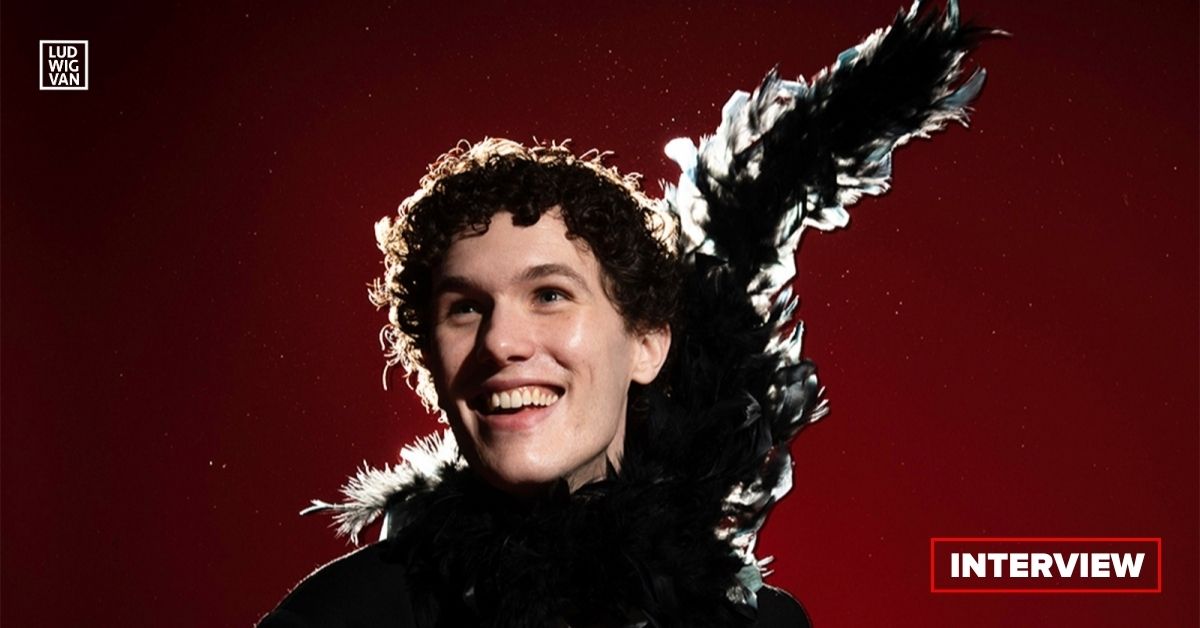
Brava: A Cabaret Of Devotions is a new show by vocalist Yanik Gosselin. He’s known to Toronto audiences and beyond as an operatic tenor, and the show marks his Toronto Fringe Festival debut.
Gosselin has a wide ranging repertoire that includes everything from early Baroque opera to the premieres of contemporary works, pop, rock music, art song, and chamber music. He’s a storyteller and a dedicated musician.
LV caught up with Yanik to talk about his career, and the show.
Yanik Gosselin
Yanik Gosselin grew up in the Lake Temiskaming area in northeastern Ontario. He’s currently based in Toronto.
Yanik earned a Bachelor of Music from the University of Ottawa, followed by a Master of Music from McGill University. While he was still in high school, and as an undergrad student, he sang with and conducted the Chœur du Moulin choir in Rockland, Ontario, and returned to perform with them as a guest soloist this past season.
Other highlights of 2025/26 include performing Blondel in Grétry’s Richard Cœur-de-lion with Opera in Concert, singing in Haydn’s The Creation with the Avanti Singers, and in the role of Edoardo Milfort in Rossini’s La cambiale di matrimonio with the Glenn Gould School.
Highlights from previous seasons include performances with Grande Prairie Opera, Opera in Concert, Toronto Operetta Theatre, and Opera McGill, and his first performance as the Evangelist in excerpts from Bach’s St. Matthew Passion at the Banff Centre. While in Banff, he also participated in workshops of new music by composer Karim Al-Zand.
As a tenor soloist, his repertoire includes Mozart’s Requiem, Honegger’s Le Roi David, and Rossini’s Petite messe solennelle. Gosselin has curated and performed several solo recitals, including I give him songs…, which explores themes of love, loss and legacy, and features Wind and Wood, a new song cycle composed for him by John Gordon Armstrong to poetry by Seymour Mayne.
Yanik also works as a project coordinator for non-profit arts organizations. One of his passions is community engagement through the arts. Since 2025, Yanik sits on the Board of Directors of the Canadian Art Song Project.
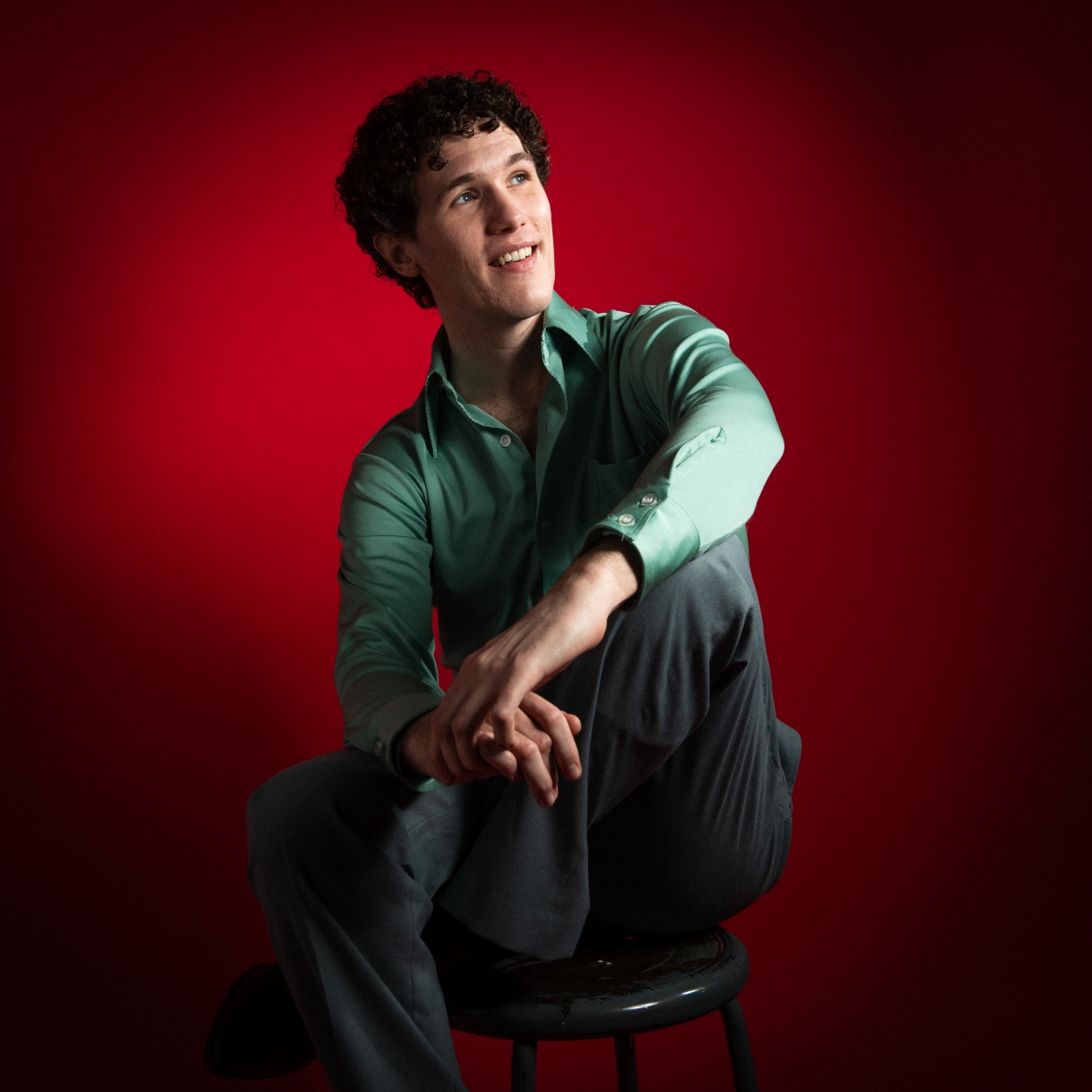
Yanik Gosselin: The Interview
Yanik was sure of his musical passion from childhood.
“I think it was always,” he says, “definitely I always considered myself a singer, from an early age. From as far as I can remember, I was a singer, or the little singer, as my aunts used to call me.”
Turning singing into a career was an idea that naturally came later.
“I don’t think it was first what I wanted to do, or I didn’t necessarily see it as a career,” he says.
Gosselin always had an artistic bent, and was drawn in particular to storytelling along with song. Those twin passions have fuelled his career.
“[When it comes to] my background, definitely, I loved musical theatre, and I’ve done musical theatre in high school,” he says. “I did rock bands in high school.” When it came to music, his early efforts were on into the world of pop.
Opera came along later, in university.
“I saw Schubert’s Winterrieise as just as much a concept album as Pink Floyd’s The Wall would be to me,” he says. “But, I was told I had to pick either one or the other.”
It’s true that many teachers try to streamline their vocal students into one genre or another, rather than encouraging learning multiple skills and techniques. After finishing school, however, he worked with mentors who told similar stories of having a love for different kinds of music.
“It wasn’t necessarily something that they had at a young age,” he recalls hearing. “Maybe it wasn’t so dangerous to do a bit of both.”
Recently, he asked a mentor about how to approach a specific song “He just pulled up a YouTube of Tom Jones. I though, yes, good singing is good singing,” Yanik says. “Maybe I’ll explore repertoire outside what I thought was limited to — outside what I thought I had to stick to.”
When it came to putting together material for his Fringe show, he was looking for songs with a very personal connection. That includes songs by iconic artists like Liza Minnelli, Bette Midler, and Céline Dion, alongside the music that was introduced to him as a child by two beloved aunts, including the soundtrack to the movie Grease.
“I chose songs that have spoken to me from a young age,” Gosselin explains. “Songs that I thought I could interpret in a unique and personal way.”
What’s Next?
Yanik is combining both his operatic and musical theatre streams into his career goals for the future.
“Who knows what will come next?” he muses. “I realized that as long as I’m singing and telling stories, the genre doesn’t matter any more,” he adds. “I understand that every genre or style requires just that, a different style.”
He’s just coming off his debut in the role of Tonio in La Fille du régiment with Grande Prairie Opera.
“I won’t be singing Tonio’s aria as Tom Jones,” he laughs. “But it still comes from a very similar place.”
Working in multiple styles of singing does present its challenges. “It’s such a challenging thing,” he notes. That includes both from a performance and teaching perspective. “To discover those different styles, one must make those strange noises,” he explains.
“It can be uncomfortable at first, but if you’re well guided, and you’re pushed away from harm, and you’re in a space with a teacher where you can say, this hurts, and this feels uncomfortable, [it can work],” Yanik says. “You need to be well guided.”
Switching requires the right mentors. Still, it’s not that it’s unheard of.
“I know it’s not unique. Therevare some great people out there who are doing it successfully, who are jumping from one genre [to another].”
As he points out, with the arts sector nowadays, it’s always advantageous to add to your skillset. It opens more doors. “It’s better to be a more rounded singer,” he says.
In the end, he’s less concerned with labels.
“For me, I found it more exciting to ask myself, not so much what do I want to sing, but why do I want to sing?” Gosselin states. “To be a storytelling singer, is way more compelling to me.”
Stories and music together can reach an audience more deeply.
“That’s the exciting thing about live performance, is that there’s an audience. That’s really the part that’s outside of our control as creators,” he points out.
“If we get to share something that resonates with them, then we get something in return.”
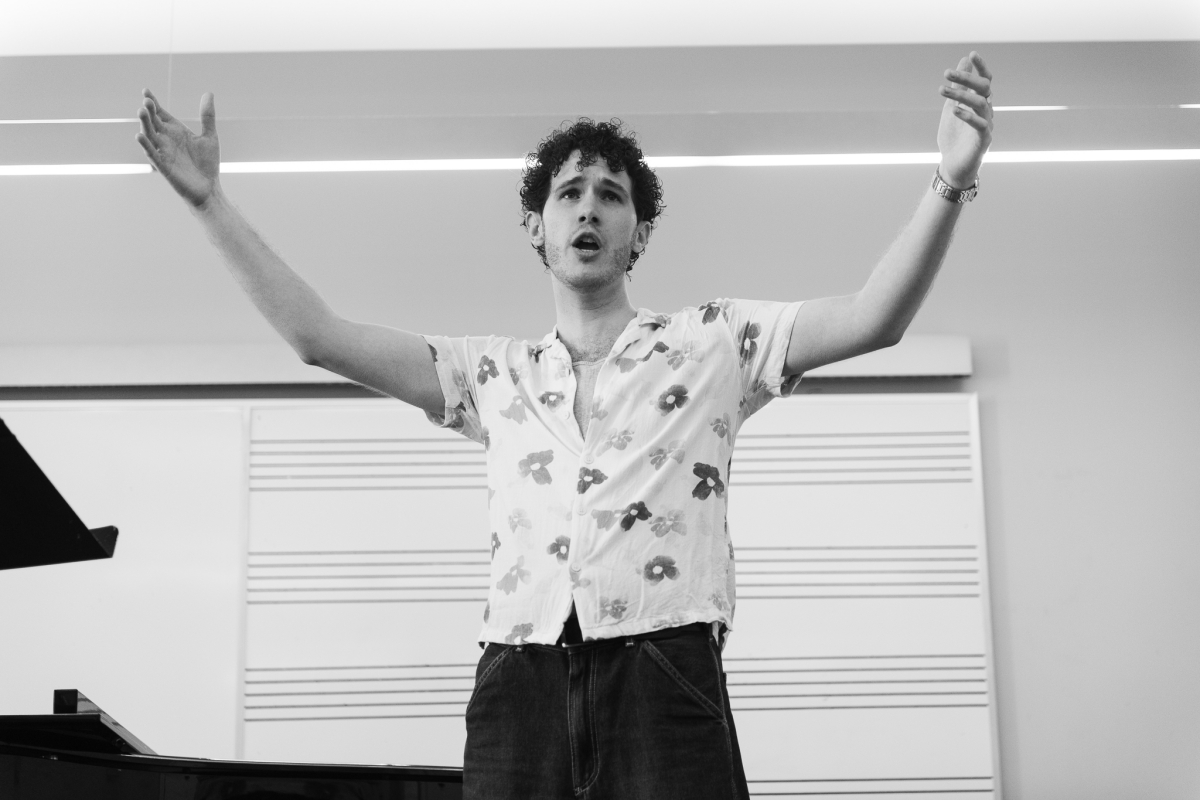
Brava: A Cabaret Of Devotions
“How I’ve structured it is very much a scene per diva,” he says. He’ll talk about what lessons he’s taken from each singer or diva, wrapping up the story with an iconic song from each artist’s well known repertoire. The stories are as important as the songs.
“It gives meaning to why I’m singing these songs,” he explains. “They’re all very personal and fun.”
Those great women of the stage have influenced him in various stages of his artistic life. He’s including the vital and early influence of his two aunts.
“They were very early enthusiastic audiences for me on stage while they were here with us, and I stitll carry them with me every time I sing,” he says. “They introduced me to Grease when I was very young. It was one of my first obsessions as a theatre kid.”
He cites the great music and dance sequences, and the great performances in the original film.
“Every element about it was exciting to me,” he says. His aunts turned him on to the film when he was only seven, and he didn’t quite get the plot. “But I was amazed by the dancing and singing,” he laughs. He admits that some of the PG sequences were probably beyond his comprehension.
“They were those kinds of aunts,” he says, “the cool older relatives.”
He’s hoping his very intimate take on the songs will connect with the Fringe audiences.
“It’s all personal stories, which makes it exciting, and also a little bit scary for a Fringe debut,” he says.
“I hope that people leave heart warmed. I hope that people leave remembering similar stories in their own lives,” he says. Perhaps it will connect with their own memories of key figures from their early lives. “And remember these people that shaped them.”
He says his initial inspiration for the show was Peter Allen.
“I open with Quiet Please, There’s A Lady On Stage,” he says. “You’re singing from the audience point of view,” he adds.
“Stay quiet, and listen to what she’s doing, you might learn something or get something out of it. It’s me being both audience and performer, channeling what they taught me,” Gosselin says.
“I hope audiences leave feeling like they had a good time,” he continues.
“Hopefully, and most likely, they will have one or two songs stuck in their heads for a long time — maybe even sing along. I very much focus this show on the women in my life but it can be anyone who has had an impact.”
As a mentor told him, when you’re sharing stories on stage, the audience is remembering their own similar stories. Using such famous icons also has a very individual effect on the audience.
“The names resonate in very different ways,” he says. “We all have our own version of them. These divas become cultural landmarks.”
You can get a taste of Yanik’s work here.
Show Details
Brava: A Cabaret Of Devotions, by and starring Yanik Gosselin is presented by My Fair Divas, Gosselin’s own produciton company. Music direction and piano are by Benjamin Kersey, a two-time Dora Mavor Moore Award nominee, and lighting design is by Mabel Wonnacott.
It takes the stage at Soulpepper Theatre’s Kevin & Roger Garland Theatre from July 2 to 12, 2026.
- Find tickets and other details [HERE].
Are you looking to promote an event? Have a news tip? Need to know the best events happening this weekend? Send us a note.
#LUDWIGVAN
Get the daily arts news straight to your inbox.
Sign up for the Ludwig Van Toronto e-Blast! — local classical music and opera news straight to your inbox HERE.

- INTERVIEW | From Opera To Musical Theatre Cabaret — Yanik Gosselin On His Fringe Show Brava: A Cabaret Of Devotions - June 26, 2026
- PREVIEW | Symphony In The Park: Mississauga Symphony Orchestra Brings Back The Popular Free Event - June 26, 2026
- PREVIEW | The Alliance For Canadian Musicals Presents Eight Musicals As Part Of 2026 Toronto Fringe - June 25, 2026