
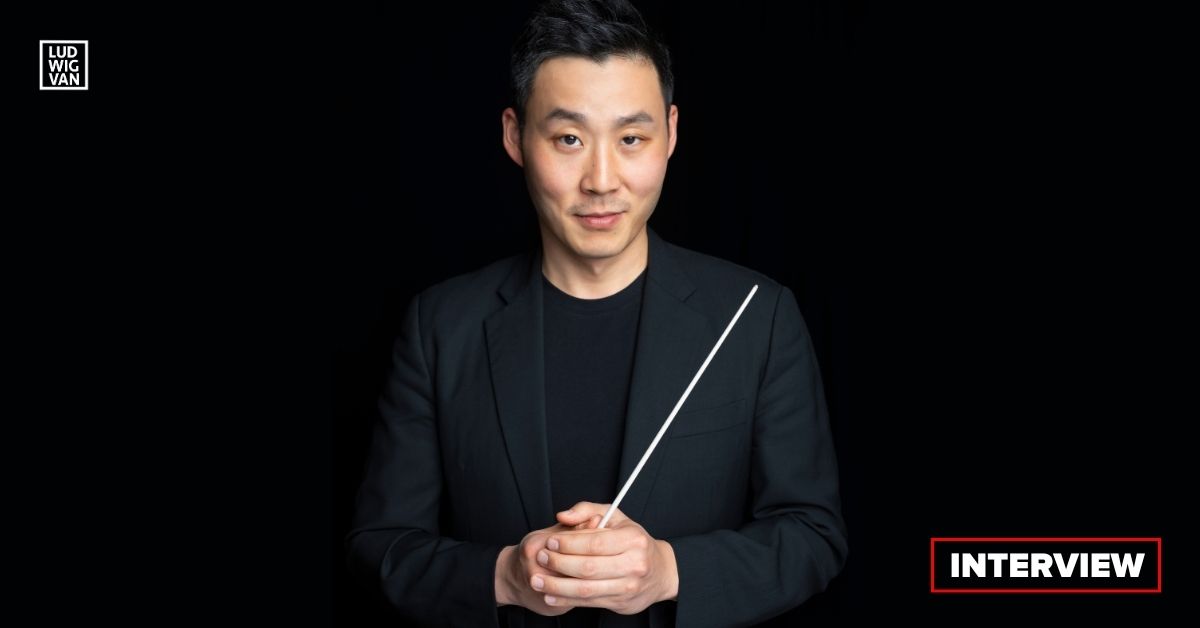
Earl Lee has carved out an international career as a conductor. He’ll be returning to Canada to lead the Royal Conservatory Orchestra in Toronto on May 1, the Kitchener-Waterloo Symphony on May 9, and the Calgary Philharmonic on May 22 and 23.
The Canadian-Korean cellist-turned-conductor is the music director of the Ann Arbor Symphony in Michigan, and his calendar is full of guest conducting engagements that take him across the continent. In August 2025, he was called in on short notice to replace Zubin Mehta and conduct Beethoven’s Symphony No. 9 with both the Boston Symphony Orchestra at Tanglewood and the Minnesota Orchestra to rave reviews.
LV spoke to Lee about his career, coming appearances, and more.
Earl Lee
Earl Lee’s musical journey began with studying the cello. He trained at the Curtis Institute of Music, The Juilliard School, and the Marlboro Music Festival.
The switch to conducting proved to be fortuitous. He was the winner of the 2022 Sir Georg Solti Conducting Award, and later that year, was named to the music director position in Ann Arbor. Previously, he served as Assistant Conductor of the Boston Symphony Orchestra, Associate Conductor of the Pittsburgh Symphony, and as the Resident Conductor of the Toronto Symphony.
He’s since led prominent orchestras across North America, including the New York Philharmonic, Boston Symphony Orchestra, San Francisco Symphony, Pittsburgh Symphony Orchestra, Toronto Symphony Orchestra, and Atlanta Symphony Orchestra. In the 2025/26 season, he made a return appearance to the Toronto Symphony Orchestra and Boston Symphony Orchestra, and made his debuts with the Korean National Symphony Orchestra and the Los Angeles Philharmonic in a special project with the Museum of Contemporary Art (MOCA).
Lee’s ever growing repertoire includes both traditional and contemporary works. He has worked with composers Unsuk Chin, Tod Machover, Donghoon Shin, Katherine Balch, and Carlos Simon, and led the world premieres of many works.
Earl Lee conducts the Toronto Symphony Orchestra in Canadian composer Violet Archer’s Poem for Orchestra:
Earl Lee: The Interview
On his return to Toronto to conduct the RCO, the program includes Ernest Bloch’s Schelomo, Rhapsodie Hébraïque, B. 39, with cellist Sabina Sandvoss, winner of The Robert W. and G. Ann Corcoran Concerto Competition, as the soloist.
“It’s fun to especially work on a cello concerto. While I conduct it, I can feel it in my fingertips,” Lee says. “This is my fourth or fifth time working with the Royal Conservatory Orchestra.”
The journey from cellist to conductor wasn’t necessarily an easy one.
“I went from learning piano to cello at an early age,” Earl says. Growing up in South Korea, his mother was a piano teacher. He began taking lessons with another instructor, but when he came home, his mother wanted to monitor his progress.
“She began coming into my room to fix things that I wasn’t doing right,” he says. By age four or five, he’d started to lose his enthusiasm for the piano. “I turned to cello in around the fourth or fifth grade,” Lee recalls. Today, he has a son of his own, aged five. “I try to correct him too,” he laughs.
His father also played a role in how his musical career would unfold. “My father used to bring home videos many different conductors,” he says, “and a lot of cello concerts. Out of that, I specifically remember him bringing a laser disc of Yo-Yo Ma in Tanglewood.”
Ma performed the Rococo Variations, and the performance stuck with Lee.
“As a Korean boy, watching an Asian guy playing cello at that level was inspiring, and also kind of shocking.” Lee says he was amazed at Ma’s technique, which went well beyond the first position he was learning at the time. “His technique, and also his artistry and musicianship. And he also looked like he was having so much fun.”
His impressions strongly influenced his commitment to the instrument.
“My whole family moved to Canada in December of 1994 or January of 1995,” he says. Lee was 11 at the time. He told his family that he wanted to focus on the cello. From the west coast, the family moved to Toronto, where he continued to study.
Eventually, he won a scholarship to study at the Curtis Institute of Music in Philadelphia. All students accepted at Curtis study tuition-free. “It was the only tuition free music school in the US at that time,” Earl says. “The year I got in, there were only two students for cello that were accepted, including me.”
Studying cello performance at Curtis, he found his element. “I found great joy and passion in playing chamber music,” he says. He was also exposed to orchestral practice. “Many of us found joy in playing orchestral music, and I was one of them.”
From Curtis, he went on to Juilliard to complete his Master’s degree. Then, however, fate intervened in his plans. Just after graduating from Juilliard, his hand was injured.
“It was focal distonia,” he says. Focal distonia is a neurological injury that causes sustained contractions of the muscles in a specific part of the body. Typically, it’s caused by repetitive movements. “It kind of ends a lot of people’s careers,” he says.
Healing and therapy is possible, but it’s a tough road. “You have to retrain, and help your brain to rewire in a different way. I spent almost three years trying to retrain.”
For nearly three years, he’d spend seven or eight hours a day trying to reteach his muscles to slowly push down on the cello strings, and then release.
“It was a very difficult time. I love music and I still wanted to be a performer.” Some improvement was possible. “I actually could play, but it never felt for me like I was 100%. In my mind, it kind of always felt like it was about 60%. It didn’t feel right for me.”
That’s when he thought of the videos his father had brought home of famous conductors like Leonard Bernstein. It appealed to his passion for orchestral music.
“I decided to study conducting.”
So, he went back to the beginning, so to speak. In 2010, he was living rent-free with a friend in New York City, teaching cello, and studying conducting.
“My goal was to get into a school for studying conducting. It still feels very vivid,” he says. “It was in some ways exciting. It was a fresh breeze of something.” He was accepted into the Manhattan School of Music, where he earned a Master’s degree in conducting. He later pursued post-graduate studies at the New England Conservatory of Music.
Earl enjoyed the process of discovering something new, and delving into his studies. As an instrumentalist, he points out, he has the advantage of knowing the limits of what he can ask of an orchestra.
A Busy Career
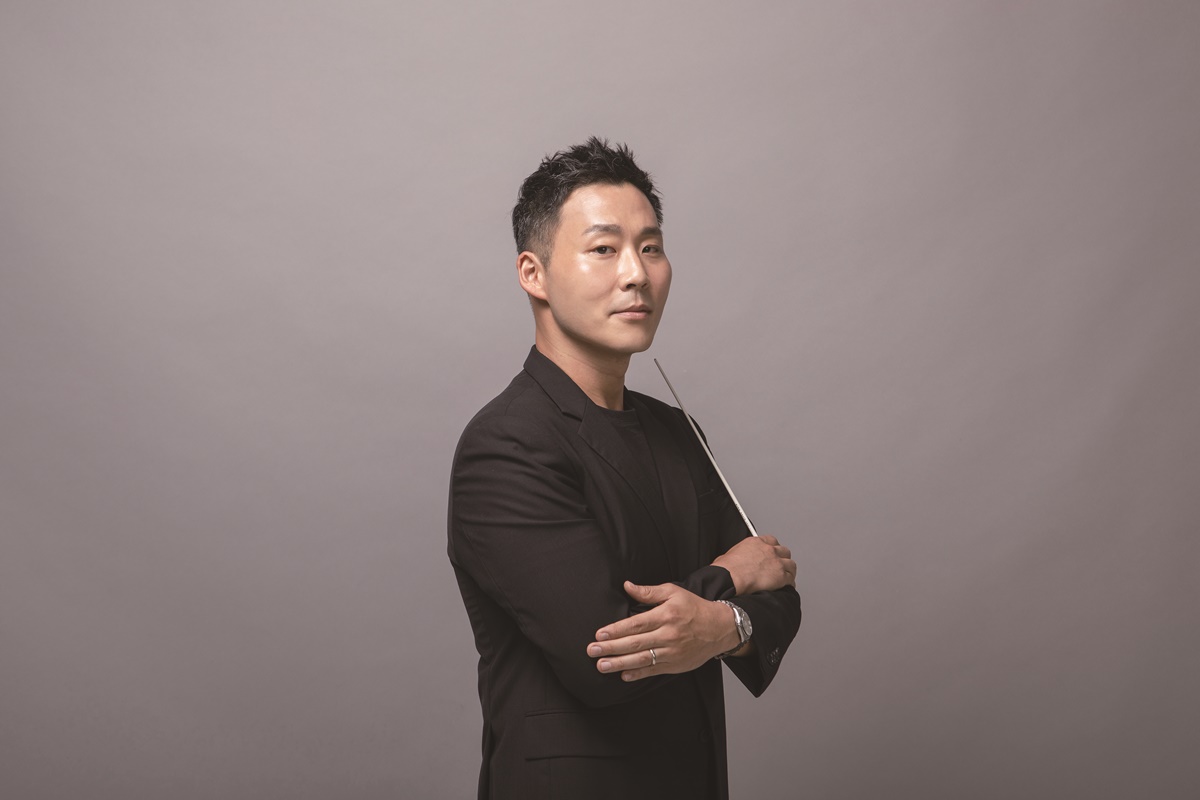
Today, his calendar is full. His 2025/26 season, which wraps up in Canada in May, includes about 30 conducting engagements.
“It’s a blessing,” he says of his current career. “Some great repertoire is written for the cello, but in orchestral music, it’s never ending,” he adds.
He relishes the opportunity to add to his repertoire.
“It’s very exciting. I get to work on something new all the time, or revisit works. I’m very happy for it, and grateful for it.”
It can get a bit hectic. His family lives in New York, where his wife plays in the New York Philharmonic. “It’s a challenge,” he acknowledges, “but we know how to do it.”
With his musical home base in Ann Arbor, he still has the opportunity to meet many orchestras and musicians as a guest conductor. “It’s always exciting in different ways. It’s great.”
While he’s in demand across the US, he makes a point of including Canadian dates.
“I’m Canadian — and coming to Canada is coming home. This is the root of my music. Canada is where I decided to become a musician, and where I had most of my inspiration as a young boy.”
In Toronto, he studied with David Hetherington, at the time the first cello of the TSO. Earl became the head cello of the Toronto Symphony Youth Orchestra, and later returned to serve as their Music Director. “It’s like a full circle,” he says.
“It’s a constant receiving and giving for me, coming to Canada, musically and as a person.”
Earl Lee conducts the Calgary Philharmonic Orchestra with violin soloist Diana Cohen:
Canadian Tour
It’ll be his third time working with the Calgary Philharmonic.
“Calgary’s also a very special place. I spent several summers there when I was young.” Lee attended a music summer camp run by Paul Dornian, former President and CEO of the Calgary Philharmonic, and long time Director of the Mount Royal University Conservatory. That’s where the summer camp was held. “I spent three summers there. It was highly influential.”
Lee’s first appearance with the Royal Conservatory Orchestra came in November 2021, at one of the their first full live concerts after the pandemic.
“It was a big program,” he says. “It was so special. One of the best halls for that size in the world. We were also so hungry to make this music.”
He recalls their exuberant energy, and the interactions on stage. “It was such a special week that I’ve been going back every season since then.”
The May 1, 2026 program is also “big”. Along with the Bloch piece, it includes Samy Moussa’s Elysium, and Mahler’s Symphony No. 1 “Titan”. He enjoys working with the RCO.
“They really step up to the plate, and play it really in the highest possible level you can imagine. It’s such a joy. One of the biggest passions that I have is working with younger musicians,” he says.
Lee says he frequently works with the student orchestras at The Juilliard School and Colborne School in Los Angeles.
“It’s my passion — sharing music with the younger ones.” One of the things he enjoys the most is being able to introduce works to young musicians who will be playing them for the first time. “It almost gives me that energy of doing that music with them for the first time.” Sometimes, as he notes, he is actually learning it along with them as he guides them through large ensemble playing.
“It’s really such a pleasure.”
Another pleasure, now that he’s so busy guest conducting, is meeting up with former student players who are now occupying chairs in professional orchestras. “I see these friends everywhere.” He relates that, they will often approach him to talk. “I say, please don’t call me Maestro; at some point, we’ll all be growing old together,” he laughs.
Earl never refers to the members of the RCO and other youth orchestras as students or kids. He always addresses them as musicians. He doesn’t treat them any differently than the professional musicians he works with.
“I think that resonates with them.”
He’s also happy to be making the acquaintance of the musicians of the Kitchener-Waterloo Symphony Orchestra. “I’m really happy to be working with them. It’s my debut with [the orchestra],” he says. “I’ve always known about them. It’s a fun program.”
It will include Guiseppe Verdis Overture to La forza del destino, Mozart’s Violin Concerto #5 (Turkish) with soloist Bénédicte Lauzière, and Tchaikovsky’s Symphony No. 4.
“I’m really looking forward to that.”
Lee notes that he’ll be conducting a handful of cello concertos in the near future, including the Elgar in Ann Arbor with soloist Maximilian Hornung on April 25, the Bloch work with the RCO, and Schumann’s Cello Concerto in A major with soloist Steven Isserlis in Calgary.
He’s particularly looking forward to the latter.
“I grew up listening and watching him as one of my cello idols,” Lee says.
Concerts
- Find information and tickets for the Ann Arbor Symphony concert on April 25 [HERE].
- Find information and tickets for the Royal Conservatory Orchestra concert on May 1 [HERE].
- Find information and tickets for the Kitchener-Waterloo Symphony concert on May 9 [HERE].
- Find information and tickets for the Calgary Philharmonic Orchestra concerts May 22 and 33 [HERE].
Are you looking to promote an event? Have a news tip? Need to know the best events happening this weekend? Send us a note.
#LUDWIGVAN
Get the daily arts news straight to your inbox.
Sign up for the Ludwig Van Toronto e-Blast! — local classical music and opera news straight to your inbox HERE.

- INTERVIEW | Parisa Karimi Molan Talks About Growing Up In Iran, Learning To Sing & Her Upcoming Toronto Show - July 22, 2026
- THE SCOOP | Harbourfront Centre Welcomes The Shaw Festival To Its Inaugural Residency - July 22, 2026
- SCRUTINY | The National Youth Orchestra Of Canada Kicks Off Canadiana Tour In Toronto With Dazzling Performance - July 21, 2026