
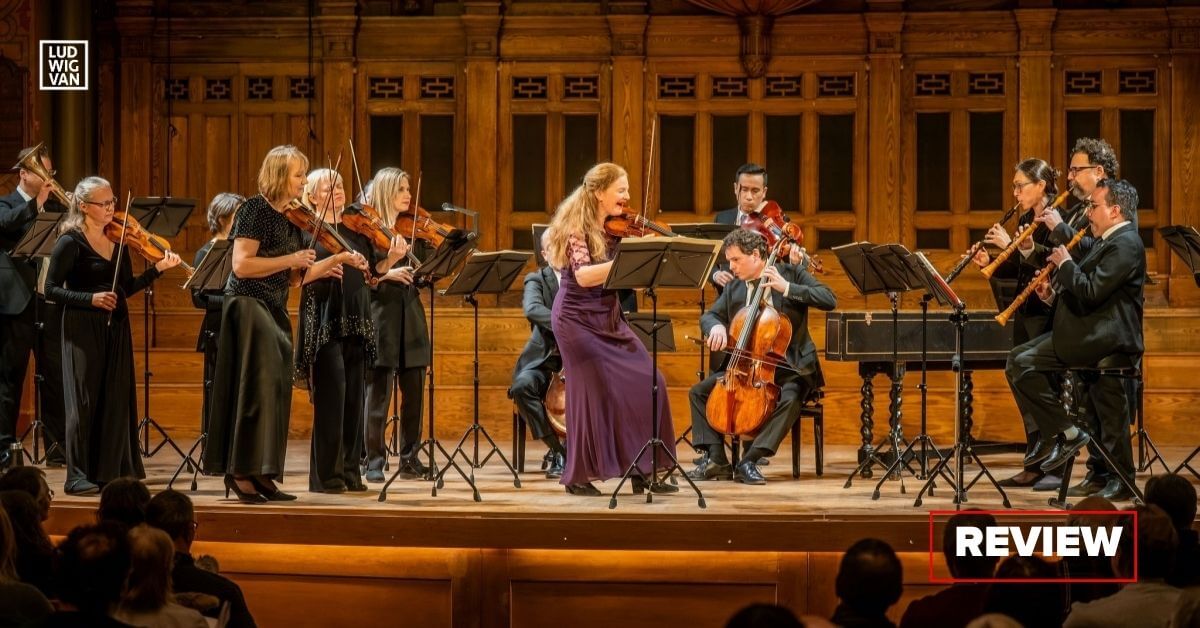
Tafelmusik: Inflencers: Influencers: the Bachs, Mozart & Haydn. J.C. Bach Sinfonia in G Minor; Mozart Violin concerto no. 3 (Rachel Podger, violin soloist); C.P.E. Bach Cello concerto in A Major (Keiran Campbell, cello soloist); Haydn Symphony no. 52 in C Minor. Rachel Podger, Principal Guest Director & violin soloist; Keiran Campbell cello soloist; Tafelmusik Orchestra, on period instruments. April 12, 2026; Jeanne Lamon Hall, Trinity-St. Paul’s Centre.
Rachel Podger’s April return with Tafelmusik was a great celebration of uninhibited joy and true collaboration.
The synchronicity and the little remarks, inspired from the score and realized naturally, shared among the group were touching — sometimes cheeky and humorous, but also of sublime beauty and calmness. The true joy of being together easily spilled over to the audience as the house resonated with chuckles, and closed-eyes bathing in the moments of beauty — and this afternoon was full of great moments.
The afternoon’s title, Influencers, is an interesting choice. Drawing from the old French meaning of ‘emanation from the starts that act upon one’s character and destiny,’ and Medieval Latin meaning of ‘a flow of water, a flowing in,’ the program connected four figures: J. C. Bach, C. P. E. Bach, Mozart, and Haydn, who expanded, diversified, then streamlined Western classical music from Baroque to Classical.
It is also interesting to see these four figures — two titular, and two considered minor, in their process of inference — leading to the emergence of the definitive classical style. It is rare to hear the music of Bach’s children live; the shadow of the giant remains strong, and the non-definitive nature of their music — in the midst of stylistic chaos, though joyful — makes it difficult to categorize.
J. C. Bach: Sinfonia in G minor
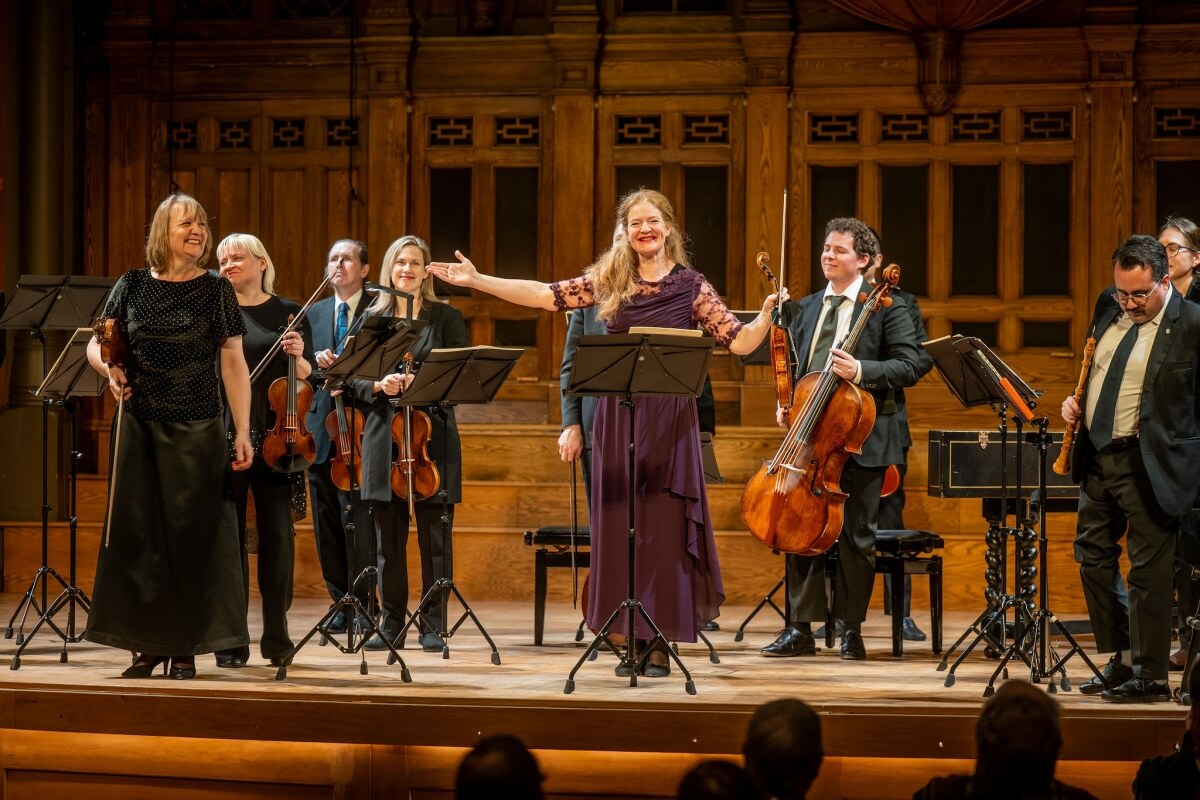
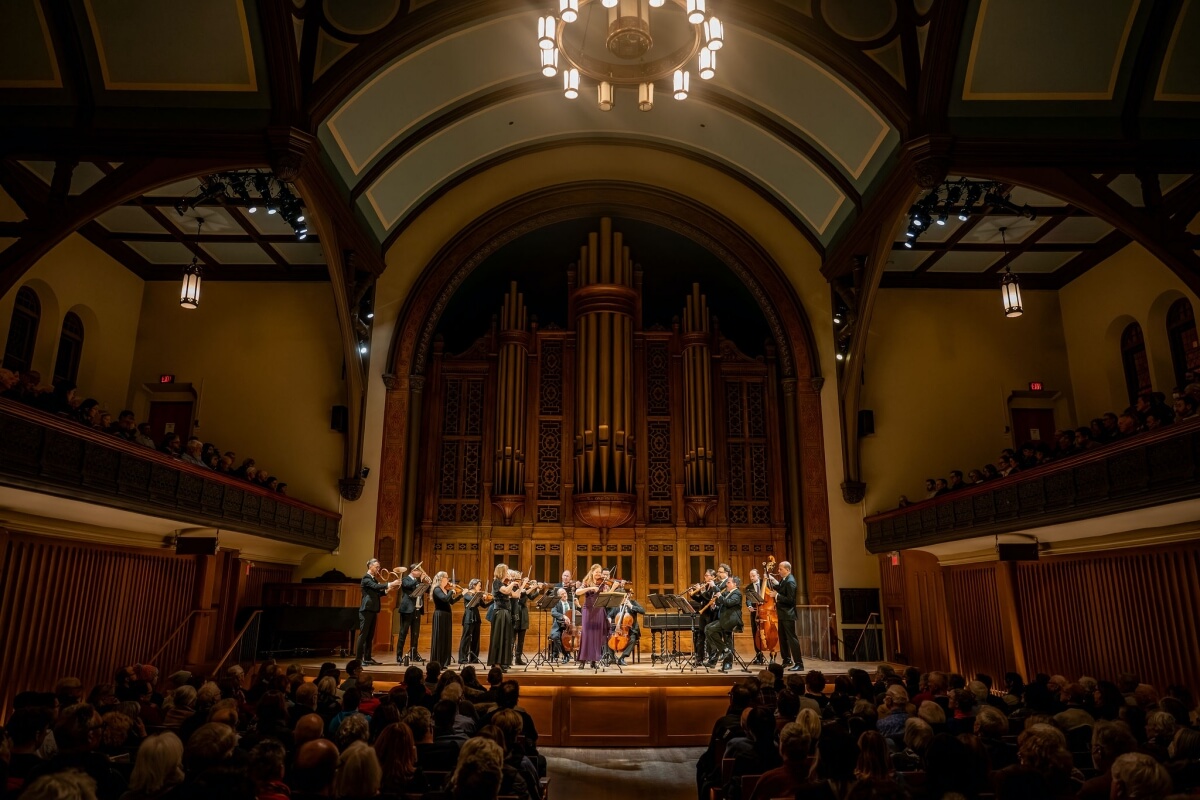
To hear the group open with J. C. Bach’s Sinfonia in G minor was a great refresher, perhaps a fresh introduction for many. Tafelmusik’s smaller ensemble format — tight strings with just five woodwind and brass players of two horns and two oboes, and a bassoon, with harpsichord — made the colouristic contrast an important focus.
The timbral contrast not only brought harmonic tension, but also a great interest in blending; it is lovely to hear such sparkle and shine on top of the well-attuned strings. It is also difficult to imagine this work to sound as live and lithe through the typical big orchestra; the clarity of the chamber format, so much lighter and nimble compared to the modern orchestra, gave us a performance of great momentum and vibrant energy.
Mozart: Concerto No. 3
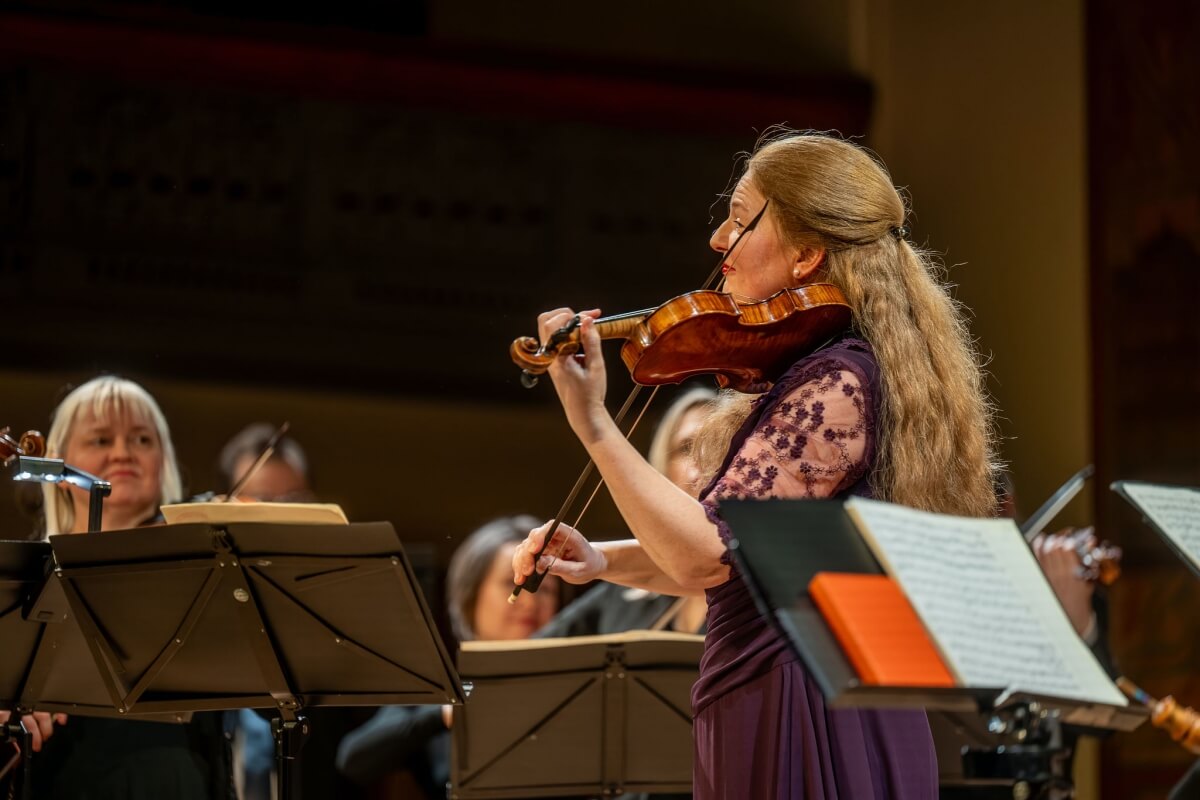
Podger’s Mozart Concerto No. 3 was spectacular.
Her leadership and communication with the entire group is natural, infectious, and inspiring. Often described as violinist and conductor, perhaps it’s worthwhile to make the distinction that she conducts the musical intention throughout the whole group, like the way metals share electric flow with one another. She is not a typical conductor as we have learned to expect — there is no baton, no fixed position, and no sense of rigid, often deadly hierarchy.
Her emotions from joy to poignant melancholy are emoted through her entire body language. She does not mind turning her back to the audience if she needs to connect with her musicians. She exudes energy and momentum through free gestures, and the orchestra responds with openness.
The small rhythmic gestures of Mozart, often static and exact, were especially playful and organic this afternoon, as the music hopped from one beat to another, with effervescence.
Podger’s midrange long notes were especially lovely — it was so natural to imagine Mozart writing this for himself, especially known for his fondness for the viola, full of warmth and resonance.
Her cadenzas — the improvisational nature of the idea of cadenzas before they became another rigid reproduction of written ideas of historic greats — was interesting, beautiful and wildly successful. Free, often bar-less passages, start full of spontaneity, and the organic resolution of phrases instigated playful reactions from the raptured audience, their gasps and chuckles often audible. Lovely.
C.P.E. Bach: Cello Concerto in A Major
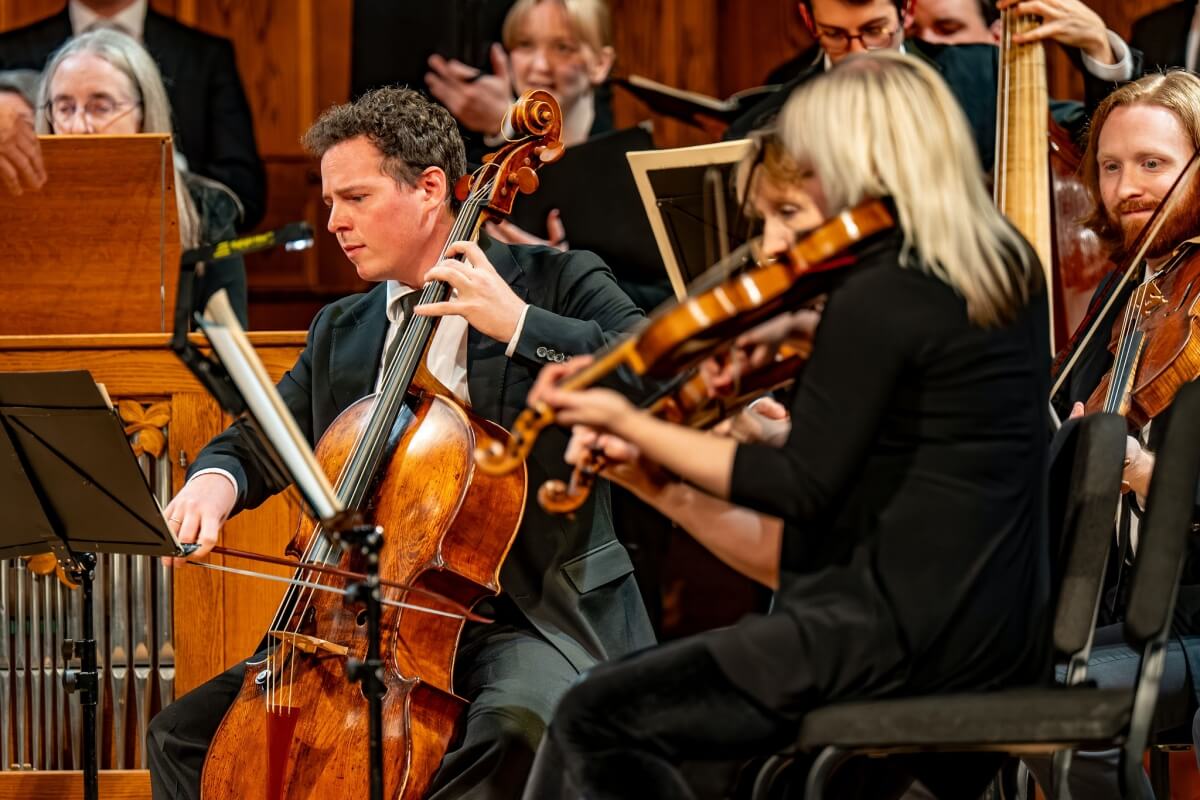
Keiran Campbell’s C. P. E. Bach concerto was beautiful and spirited.
The masterful writing of C. P. E. Bach highlighted the lower resonance of the cello, giving it plenty of room for Campbell to speak, and sing, through his cello.
Being able to hear the consonants of the melody, the articulations and the space, instead of just lines filled with a toothless parade of vowels, was such a treat. Through the group’s fantastic balance and the acoustics of the hall, the second movement’s high range cello melody also soared easily.
Beautiful.
The quicksilver vitality of the third movement was also a joy. With such a performance, we wonder: why is this work not performed more often, as it is full of ingenuity and beauty?
Haydn: Symphony No. 52
Haydn’s Symphony no. 52 rounded out the afternoon. The shared elements of the program — colourful harmonies, rhythmic vitality, and unexpected harmonic surprises — were all present and vivid in this Haydn.
It was also quite amazing to hear the variety and punch packed from the five wind and brass players throughout the entire program: Daniel Ramirez Escudero, Marco Cera, Dominic Teresi, Scott Weaver and Yoni Kahn. Their playing added so much interest, while the strings soared and glided.
Charlotte Nediger on the harpsichord was super effective in providing percussive and harmonic support, often stirring the group through a quick energy change, dipping into quick curves, or carrying them through nearly frantic, bursting-at-the-seams build ups.
Final Thoughts
This ‘influencers’ program felt like a true retro Rock and Roll; it makes one wonder how did we lose such great potential energy, and made late Baroque-Classical music insipid and limp?
And how lucky it is to have such a sparkling performance in our little city of 3.3 million?
As the house emptied out with chatters, full of hand gestures and smiles, this successful performance brought much joy and emotion to the cold, grey April afternoon; an inspiration, and hope and curiosity for the next season’s goodness to come.
Are you looking to promote an event? Have a news tip? Need to know the best events happening this weekend? Send us a note.
#LUDWIGVAN
Get the daily arts news straight to your inbox.
Sign up for the Ludwig Van Toronto e-Blast! — local classical music and opera news straight to your inbox HERE.

- CRITIC’S PICKS | Classical Music Events You Absolutely Need To See This Week: May 25 – May 31 2026 - May 25, 2026
- CRITIC’S PICKS | Classical Music Events You Absolutely Need To See This Week: May 18 – May 24 2026 - May 19, 2026
- SCRUTINY | Soundstreams’ In Terra Pax, Curated By Anna Pidgorna, Explored The Effects Of War With Finesse - May 11, 2026