
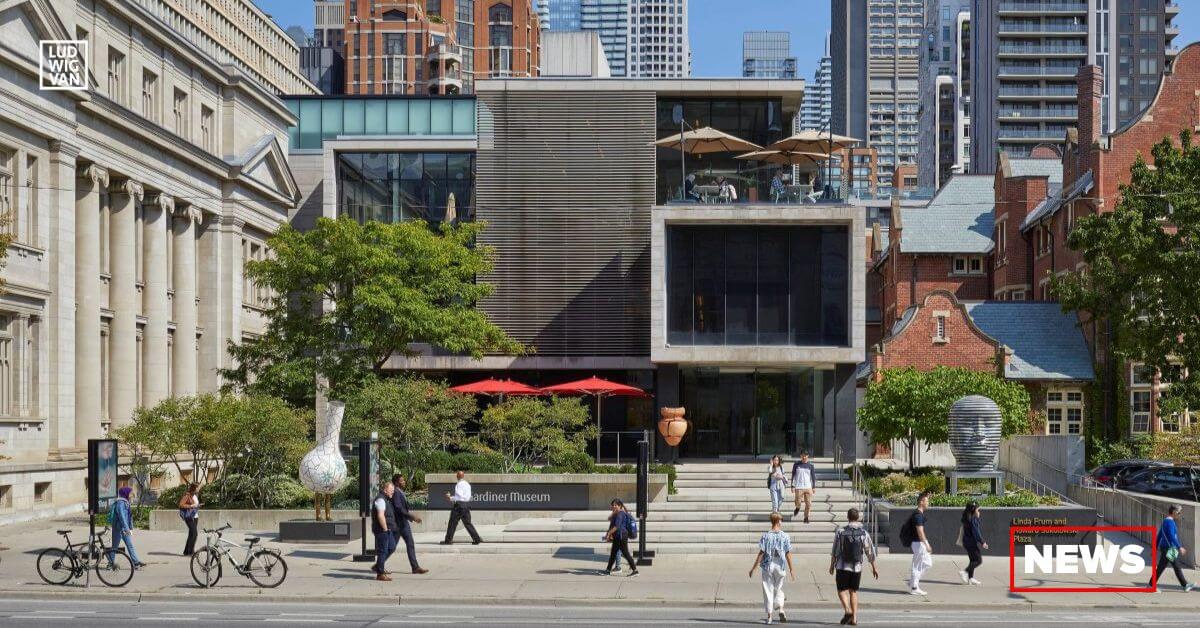
Toronto’s Gardiner Museum is unique in the city. Dedicated to the ceramic arts, it recently reopened after a $15.5 million transformation that includes a new Indigenous Gallery, Makerspace, Community Learning Centre, and more.
The Gardiner’s 9,000-square-foot ground floor was completely reimagined in the renovation project, designed by Montgomery Sisam Architects and Andrew Jones Design, in collaboration with architect Chris Cornelius of studio:indigenous. Breaking ground in 2024, during the Museum’s 40th anniversary year, it represents the Museum’s most significant capital project in the last two decades.
Both public and private funds went into the renovation project, including a key $9M gift from The Radlett Foundation, established by the late William B.G. Humphries. The donation represents the largest in the Museum’s history by an individual other than its founders, and comes with part of Humphries’ personal ceramic collection, including more than 250 objects.
The focus is on creating a community-driven hub that is both accessible and inspiring.
“With this transformation, we’ve created vibrant spaces where people can find wonder and inspiration, tap into their creativity, and engage in important conversations,” says Gabrielle Peacock, Executive Director & CEO of the Gardiner Museum. “We’re thrilled to welcome the public into this exciting new chapter of the Gardiner’s story.”
Clay is a medium that spans cultures and people, and working with clay represents an important part of human history.
“Clay embodies what it means to be human, grounding and connecting us to the earth and to each other,” says Sequoia Miller, Chief Curator & Deputy Director of the Gardiner Museum. “This transformation establishes the Museum as a dynamic and flexible cultural institution for everybody.”
Details
The reimagined ground floor incorporates a number of significant features.
- New Collection Galleries includes the Museum’s first-ever gallery of Indigenous ceramics, which is prominently placed in the heart of the Collection Galleries.Other new spaces include the Hilary and Galen Weston Foundation Entrance Hall, a bright, open, and welcoming space
- The Makerspace is fully outfitted with everything visitors of all ages will need to roll up their sleeves and participate in ceramic workshops and drop-in clay sessions, as well as watching experienced artists at work.
- The Community Learning Centre is an incubator for projects that build community by working with clay, and the Museum partners with local community groups to host workshops, exhibitions, and other events, along with hosting 200+ student groups each year.
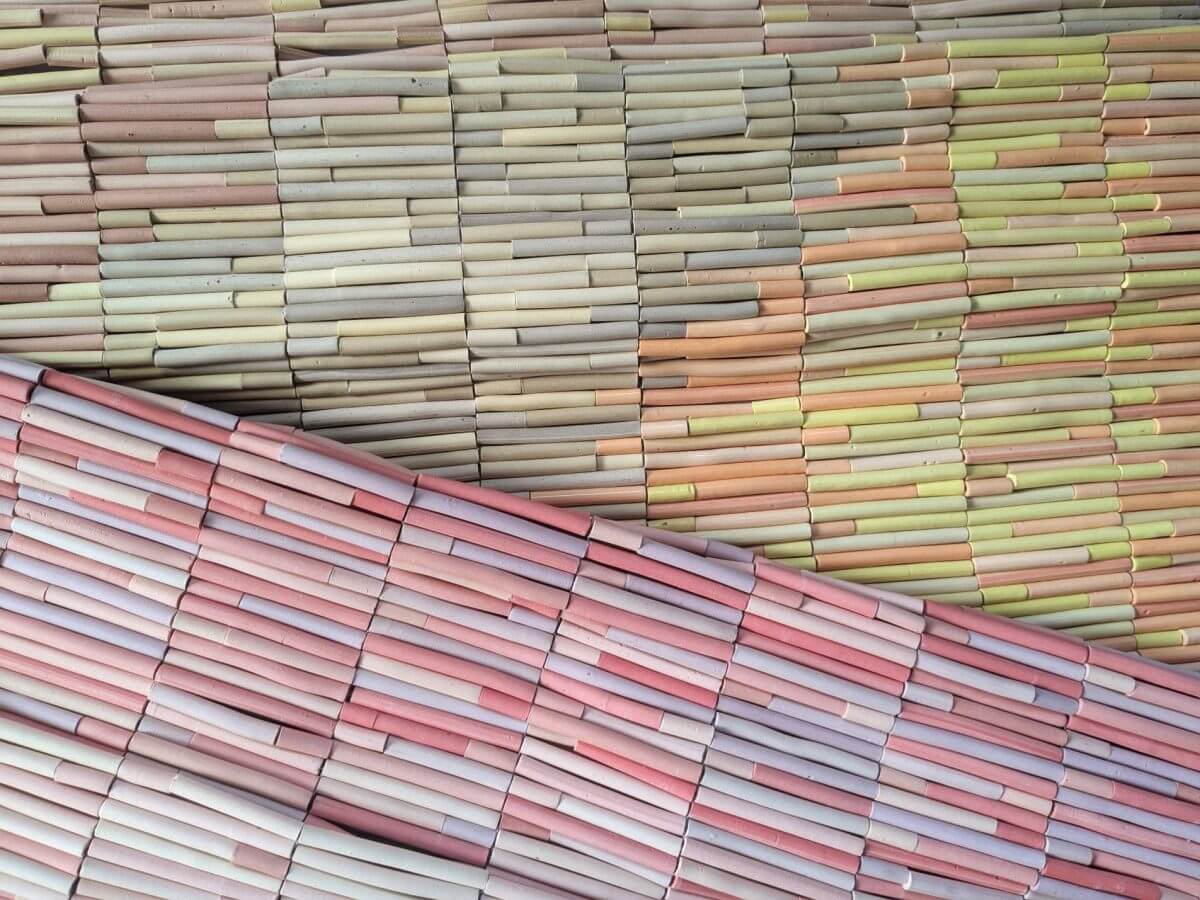
As visitors enter the hall, they’ll see a major new commission by contemporary visual artist Nadia Myre. The Montréal based artist is an Algonquin member of Kitigan Zibi Anishinaabeg First Nation, winner of the 2014 Sobey Art Award.The installation uses handmade ceramic beads, similar to bugle beads, and clay pipe stems Myre collects along the River Thames.
Inaugural Curator of Indigenous Ceramics
The Gardiner Museum has appointed Franchesca Hebert-Spence as its first Curator of Indigenous Ceramics. The Anishinaabe curator and member of Sagkeeng First Nation has a broad background of experience that includes working with the National Gallery of Canada and the Art Gallery of Alberta.
She was a key figure in leading the Museum’s development of the new Indigenous gallery, collaborating with architect Chris Cornelius (Oneida), and in consultation with the Gardiner Museum Indigenous Advisory Circle — Mary Anne Barkhouse, Bonnie Devine, Kent Monkman, Andre Morriseau, Duke Redbird, Frank Shebageget, and Tekaronhiáhkhwa / Santee Smith.
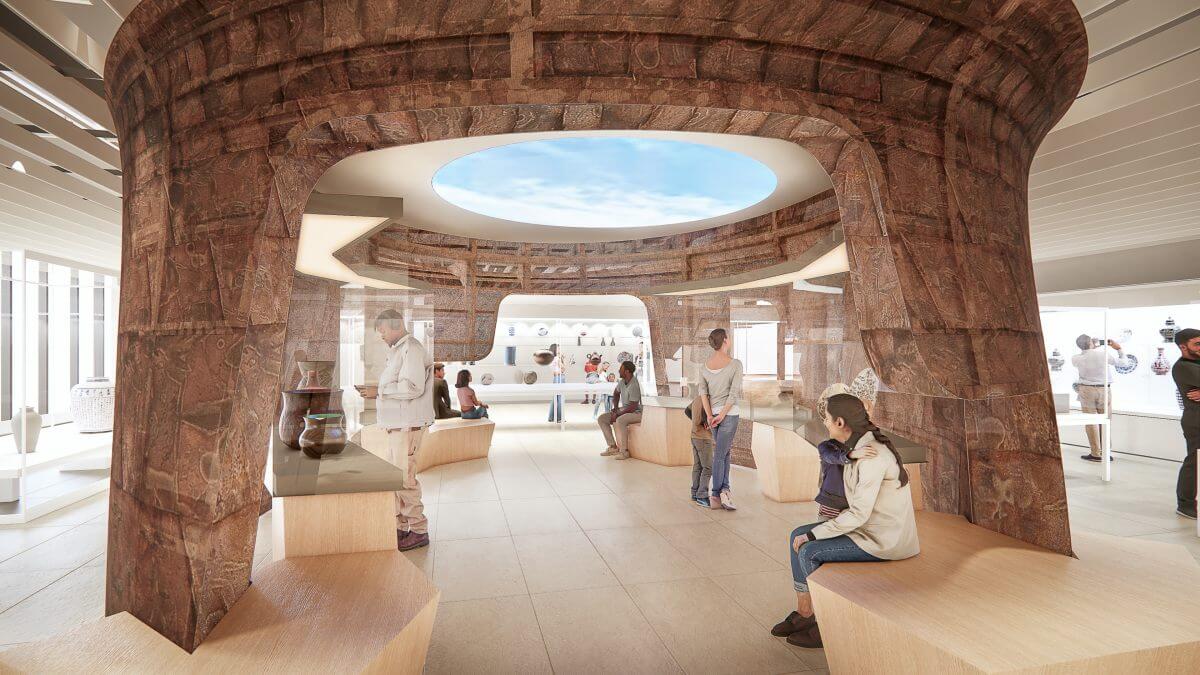
The Gallery of Indigenous Ceramics, a permanent gallery in the Museum, features works from Manitoulin Island, Six Nations of the Grand River, and Curve Lake, including ancestral belongings. The design by Cornelius is titled yelákhwaˀ, meaning container, or “one uses it to be in”, and incorporates a wooden frame in the shape of a vessel clad in copper mesh.
Every visit will be a slightly different experience due to a projection of the sky that takes 24 hours of movement and compresses it into a 20 minute video.
Linda Rotua Sormin: Uncertain Ground
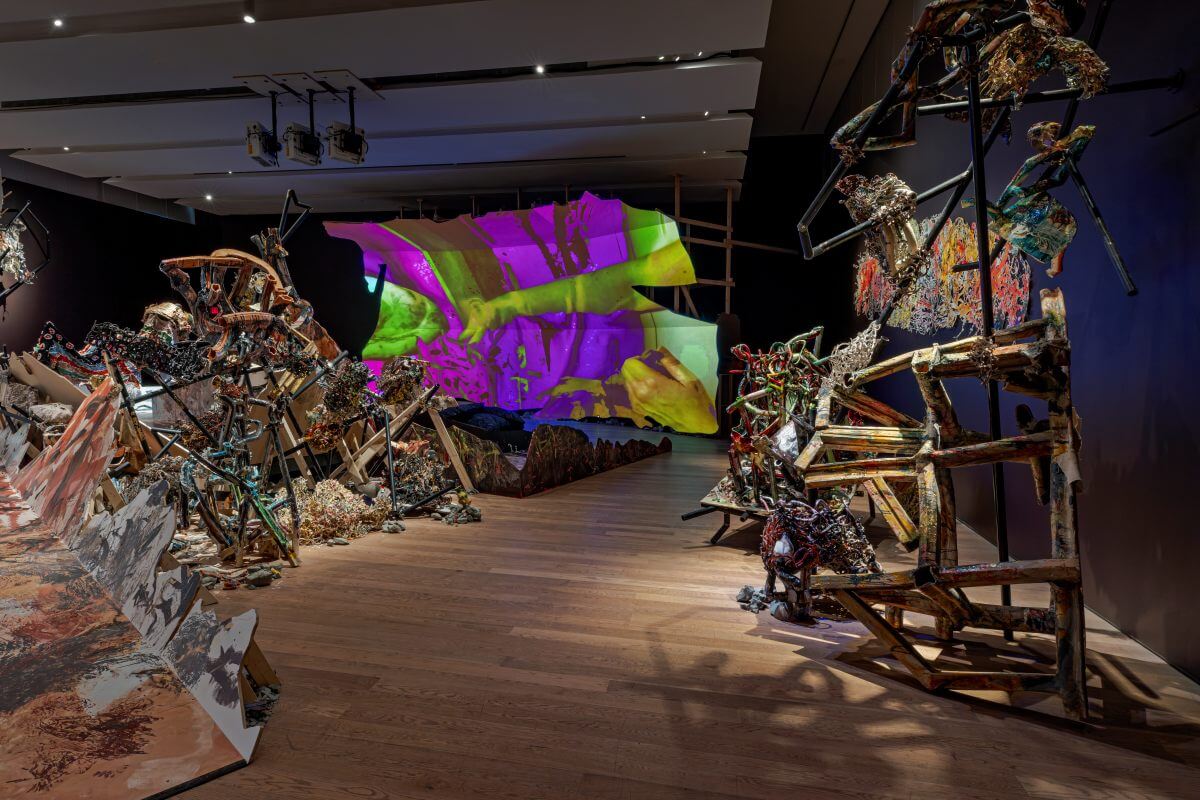
The Museum reopened with Linda Rotua Sormin: Uncertain Ground. It’s the first solo museum exhibition and largest project so far for the artist, who was raised in Thailand and Canada.
The exhibition represents the culmination of more than 20 years of Sormin’s work, and examines her roots in Indonesia via Batak mythology, including roosters, tigers, dragons, and sacred texts. The Batak people of Sumatra live in the Indonesian archipelago. Sormin’s grandmother and grandfather were forcibly converted from shamanic leadership to Christian followers in a disruption of their traditional spirituality.
“For 20 years, I’ve fed found, broken bits of ceramic into sculptures and installations — my hand-pinched forms have a big appetite for porcelain figurines and other discarded objects,” says Sormin.
“Five years ago, I learned that Batak shamans traditionally used pottery from China, Vietnam, and Thailand in their spiritual practices, carving Batak imagery into wooden stoppers that sealed these vessels. Realizing that my impulse to gather and remake is part of an old lineage shifted everything in my work — storytelling started to happen through video, painting, and the voices of my family.”
The Gardiner Museum Commission incorporates clay, sculpture, video, sound, hand-cut watercolour painting, and digital fabrication
“Linda Rotua Sormin’s fearless, monumental structures have established her as a leading voice in sculpture,” says Dr. Sequoia Miller, Chief Curator & Deputy Director of the Gardiner Museum.
“She consistently pushes the medium into new realms of scale, meaning, and material exploration. It’s fitting that her bold and deeply resonant work will debut at the Gardiner as we also mark the reopening of our transformed ground floor, signaling a dynamic new chapter for the Museum.”
- Find more details on the exhibition, the Museum, and its programs [HERE].
Are you looking to promote an event? Have a news tip? Need to know the best events happening this weekend? Send us a note.
#LUDWIGVAN
Get the daily arts news straight to your inbox.
Sign up for the Ludwig Van Toronto e-Blast! — local classical music and opera news straight to your inbox HERE.


- SCRUTINY | Guild Festival Theatre: Brontë: The World Without Offers A Portrait Of The Lives, Trials & Triumphs Of The Brontë Sisters - July 20, 2026
- INTERVIEW | Violinist Mark Fewer Talks About His Upcoming Release Of Bach Solo Sonatas & Partitas, Canadian Luthiers, And More - July 17, 2026
- PREVIEW | The Mandle Philharmonic Offers Mahler’s Resurrection Under The Stars - July 17, 2026