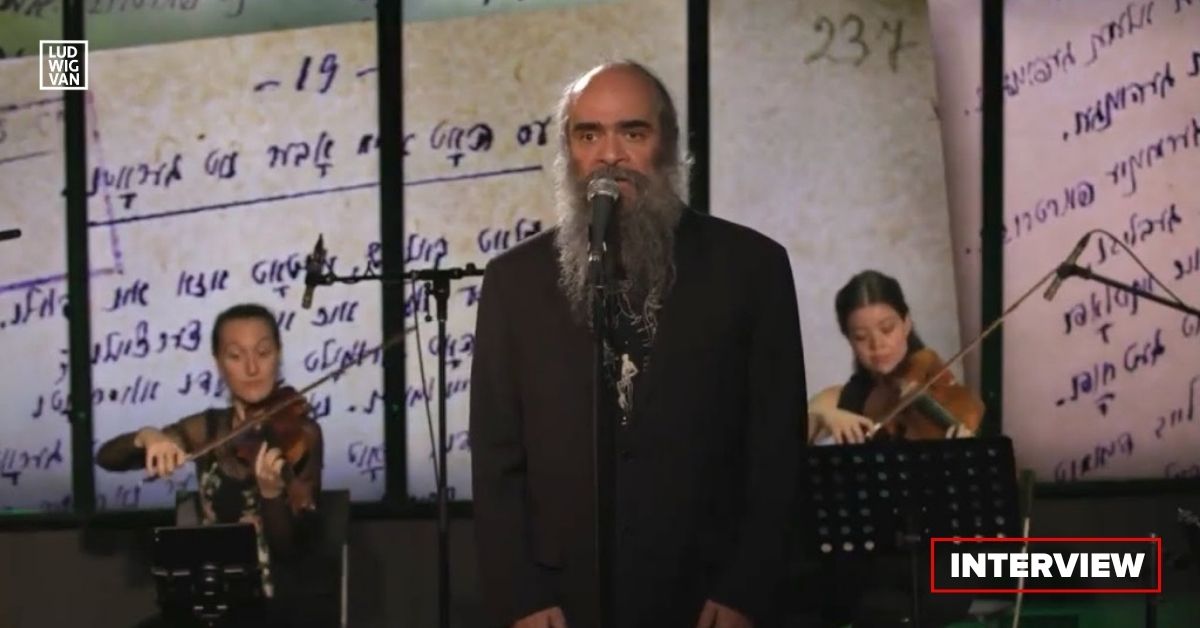
The release of Yiddish Glory, The Silenced Songs of World War II, in April on the Six Degrees Records label, actually began several decades ago with an incredible story.
During the 1940s, ethnomusicologist Moisei Beregovsky (1892 – 1961) led a group of scholars in the discovery of a collection of songs that had been written by a wide range of people who had witnessed the horrors of World War II in Eastern Europe and Russia. It included pieces by Jewish Red Army soldiers, refugees, victims and survivors of Ukrainian ghettos, including a 10 year old orphan, a teenager prisoner of a concentration camp, and many more.
Their voices reconstructed history, and revealed truths that can only come from first person accounts.
In 1944, while the war still raged on, Beregovsky presented his project on the history of Jewish instrumental music, the first ever dissertation on Jewish music. He received his degree from the Moscow State Conservatory, and returned to Kyiv not long after. There, from 1936 to 1949, Beregovsky he was head of the Office for Musical Ethnography in Kyiv.
However, under the Soviets, Russia’s stance on Jews had changed. In 1949, the Office for Musical Ethnography was eliminated, and Beregovsky was fired. On August 18, 1950, he was arrested and accused of Jewish nationalist activity. He, and eventually most of his colleagues, was convicted and deported to the Ozerlag camp in the Irkutsk region for a ten year sentence. Paroled in March 1955 because of ill health, Moisei took up his work again, but could not find a publisher in Russia — despite the fact that he petitioned for, and received, rehabilitation from the charge with the support of people like Dmitri Shostakovich.
He died in 1961 thinking his work would fall into the forgotten crevices of history.
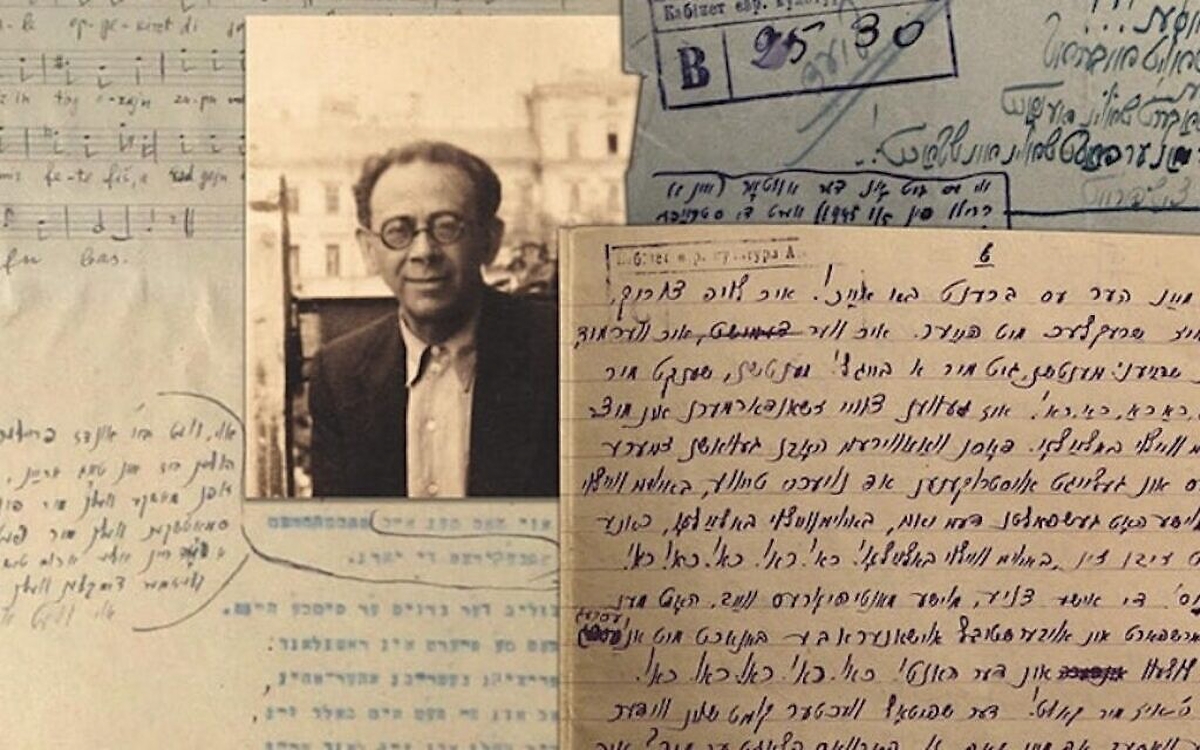
It was only by coincidence that Yiddish Professor Anna Shternshis, Director of the Anne Tanenbaum Centre for Jewish Studies and the J. Richard and Dorothy Shiff Chair of Jewish Studies at the University of Toronto, rediscovered this cache of music in Kyiv that had, incredibly, survived the decades since the group of researchers had been arrested and imprisoned. The documents, some typed and many handwritten, were fragile, and she worked quickly to preserve them. Some included lyrics, music and melodies, while others were simply lyrics scribbled onto whatever scraps of paper could be found at the time.
Toronto producer Dan Rosenberg assembled an ensemble of musicians and vocalists from the worlds of classical, folk and jazz. The first album of works from this incredible collection of music was released in 2018 to wide acclaim, including a GRAMMY nomination.
Earlier this year the follow up album, Yiddish Glory, The Silenced Songs of World War II, dives deeper into this musical archive. The music, some of it newly written for songs that only existed as lyrics, is written in a range of styles from Eastern European klezmer to classical-adjacent.
“Every song on this album is controversial,” explains Shternshis in a statement. “Some tell stories of illegal border crossings, others condemn fellow ghetto prisoners for corruption, while still others uncover stories of betrayal by former friends and neighbours who became prison guards instead of companions. Each song contains secrets, because singing them out loud could lead to jail sentences. Yet each song is also a testament to the fact that some people who lived through what they lived to, have simply refused to be silent.”
Yom Kippur Without Fascists (1945) is a satirical song that was written in Almaty, Kazakhstan by an anonymous Jewish refugee in celebration of the end of World War II. In it, the writer calls for the death of Hitler, who he describes as a “kapore” or sacrificial chicken of Yom Kippur.
The lyrics were collected by I. Merzon in Almaty, Kazakhstan, 1945. The music was composed by Psoy Korolenko and Drew Jurecka.
Performed by Rebekah Wolkstein, Violin; Drew Jurecka, Bandoneon and Clarinet; Joe Phillips, Bass; Robert Horvath, Piano.
LV talked to Professor Shternshis about the album.
Anna Shternshis: The Interview
Collaborators on this second release include Drew Jurecka as arranger, composer, and musician, the late Robert Horvath, composer and vocalist Psoy Korolenko, producer Dan Rosenberg, cellist and arranger Beth Silver, British singer, violinist and arranger Alice Zawadzi, and many others. Shternshis notes that there are about 19 or 20 collaborators on the latest Yiddish Glory album.
“The idea of this album is two things,” says Shternshis. “One is to think about that what kind of society is it [where] simple folk songs — people who collect them go to jail?”
Why would collecting folk songs be dangerous to the government?
“Every single song on that album revises either the history of the Holocaust in the Soviet Union or the history of Jews.” It speaks to a larger issues of history, what is understood and perhaps distorted of events after the fact, and who gets to tell those stories.
“What are we missing when we don’t study music, when we don’t study the violence against civilians?”
Moisei Beregovsky’s work was quashed because of shifting political ideologies. “Two reasons. First of all, the Soviets did not love the citizens […] who survived the German occupation,” she explains. Anyone who came out of a concentration camp was interrogated and investigated, particularly Jews. “The reason for that was, if the Jews survived, they must have done something so valuable to Germans.”
Beregovsky, in the end, was seen as a disruptor. “He was accused of fostering Jewish nationalism,” Anna explains. He had approached Jewish survivors and asked them about their Yiddish songs. To the Soviets, it meant he was encouraging and fostering nationalism that would not otherwise have arisen.
“That was the accusation that landed him in jail for six years.”
Truth Revealed In Song
The value of the songs and music is obvious from the start.
“The songs that are on this album, every single one of them tells us something we did not know.”
The song A Priest Was Murdered in Kalisz (words: Leyb Diamant, music: Psoy Korolenko, arranged by Beth Silver) gives an eyewitness account of the murder of a Catholic priest in 1939 in Kalisz, Poland. Leyb Diamant was a 37-year old Jew who eventually managed to escape Kalisz to Cheboksary, Chuvashia. In Kalisz, the Nazis forced a group of Jewish teenagers to kill the priest, who had refused to cooperate with the regime, and hoped to start a race riot. However, witnesses saw what happened, and no such pogrom occurred.
Performed by: Psoy Korolenko, Vocals; Beth Silver, Cello; Eric Abramovitz, Clarinet; Emily Kruspe, Violin; Yolanda Bruno, Violin; Catherine Gray, Viola.
“The Poles saw through these machinations,” Anna says. “I think this was one of the very first Yiddish songs of the Holocaust.”
Leyb Diamant’s song conveys the events with a sense of immediacy and urgency. “This is what mattered in this moment. The song gives us an opportunity to look at that,” Shternshis notes.
“Astonishingly enough, I was able to trace the author of this song, Leyb Diamant,” she adds. After wide ranging travels following WWII, the shoemaker by trade ended up in New Jersey. Diamant was interviewed about his experiences for an American TV show, but was not allowed to sing on camera. “So the stories ended up in the interview, but not his songs,” she adds.
“The history of the time and what was told later is different. Every single song is talking about what actually happened. Some named villains, and Jewish leaders too — later a lot of those topics did not come up,” Anna says. “In the songs, they don’t know what will matter later.”
The Music
Transnistrian Lullaby was written by Relly Bley (1913– 2000). In it, the 32 year old survivor of the Mogilev-Podolsky ghetto describes the hunger, disease and destruction that she witnessed in Ukraine during the Holocaust.
Performed by: Psoy Korolenko, Vocals; Rebekah Wolkstein, Violin; Joseph Phillips, Double Bass; Robert Horvath, Piano; Drew Jurecka, Bandoneon.
The album’s appeal lies not only in what is expressed, but the dynamic music and interpretations that give it life. “That was the vision,” Shternshis explains, “was to combine the stories with music that would appeal to today’s public.”
Beregovsky himself wanted the music he was collecting to be performed, not simply preserved as a museum piece. “He wanted those songs to be performed on stage.” Anna relates that in 1949, Beregovsky tried to entice artists to perform the songs and include them in their repertoire. His efforts were hampered, in part, by the nature of the songs themselves. “Those [songs] were not exactly Shakespeare in their poetry,” she continues. Many were simply based on old Yiddish songs with new words.
In looking to create the recording, Anna and Dan Rosenberg drew on Toronto’s talent pool, and beyond. “All of those people had their own vision of how to approach these works,” she says.
“We approached Drew Jurecka to perform some of this work,” she says. Classically trained as a violinist, Jurecka is also an arranger, composer, and producer who has worked with the likes of Dua Lipa (winning a GRAMMY for the song Future Nostalgia), Robi Botos’ JUNO winning Old Soul album, and many others. He recently won a GRAMMY for his work with Canadian Justin Gray on the album Immersed.
“Drew has a universalist sound. The vision for him I think was that, when you talk about the songs of women and children, and people who create music in conditions of violence, he wanted them to appeal to the emotions and play to contemporary sensitivities,” she says.
Alice Zawadzi’s background is in traditionalist jazz. “She does a lot of different genres,” Shternshis says. “She wanted to tell the story how she felt the story. It has a different sound […] but I think they’re similar in that they want to pass along the emotion to the listener.”
Zawadzki arranged the song The Sad Camp for the album. In it, Itsik Semidubovski, a veteran of the Red Army and former prisoner of the Bershad ghetto writes about his time there. His music is based on a traditional folk song titled Bublichki.
“The challenge of that song is that the tune of that song was set to an old Yiddish song,” she says. That original folk song is a sentimental and nostalgic tune. The emotion Semidubovski expresses, however is hate.
“She took this old song about love and turned it into hate — the cities that provoked love, are now sources of hell on earth. Even if you don’t understand the words, you still feel the original passion that the original songwriter had.”
Asian Tour
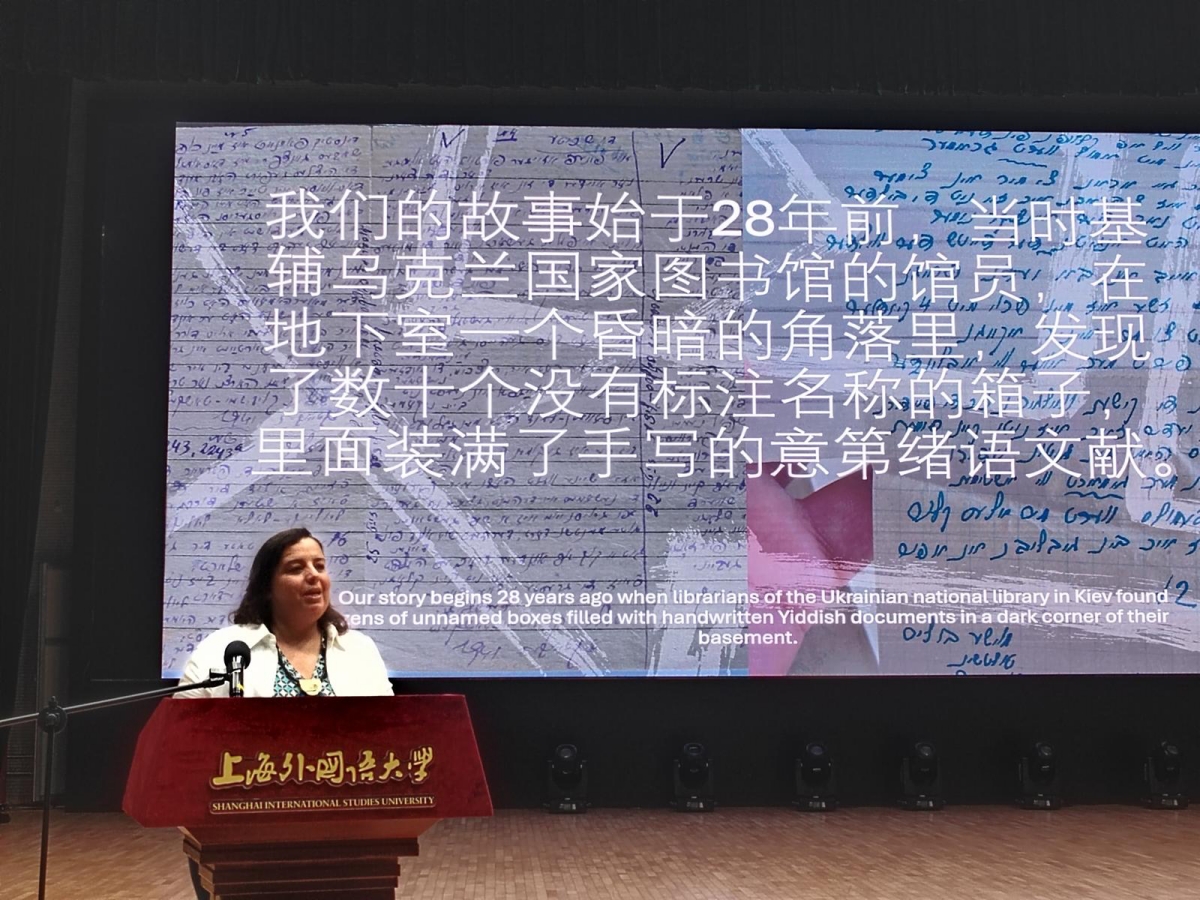
Dr. Shternshis recently traveled to Asia to support the album’s release.
“I just came back from China,” she says. “We went to Korea, to Shanghai, and to Hong Kong, and then to Beijing.” There were eight events in 12 days. “The reception has been absolutely astonishing,” she adds.
“The majority of the audience did not come from the Jewish community,” she points out. That means most of the events and talks took place with translators. Nonetheless, the message came across.
“I saw many of them wiping away their tears,” she says. She believes it’s due to the very human voices, from children who’d lost their parents, or parents who’d lost their children, along with moments of humour, like the song I Am A Typhus Louse, written in Auschwitz for children to perform in an orphanage,.
“All those stories resonate on a human level. These songs, they transcended these boundaries, and these borders.”
There was an event May 10 at the Museum of Jewish Refugees in Shanghai. “It was also Mother’s Day there,” she notes. “The engagement from this audience was incredible.”
There were a lot of questions after the performance revolving around the idea of how music can be a response to violence, especially in conditions when any other kind of resistance becomes impossible. “It’s a bit of respite, inspiring them to live until tomorrow,” Shternshis says.
“That was really an incredible experience.”
No melody survived to go along with the words of Menukhe Dunant, a 27 year old refugee in the Russian region of Chuvashia. Poet Hirsh Kleyner documented the song from the woman, who had escaped Kalisz, Poland, in 1942. She describes the atrocities she witnessed before fleeing the city, along with about 2/3 of the city’s Jewish population.
Psoy Korolenko created a melody to match the words, with an arrangement by Beth Silver.
Performed by Psoy Korolenko, Vocals; Beth Silver, Cello; Eric Abramovitz, Clarinet; Emily Kruspe, Violin; Yolanda Bruno, Violin; Catherine Gray, Viola.
More To Come?
“I’m writing a book about this project,” Shternshis says. It will examine both the songs and their writers. “Essentially I’m interested in what we miss when we’re not studying music when we study violence.”
Deprivation, fear and uncertainty inevitably come with war.
“It’s often hard to study those things from the (perspective) of the victims,” she says. The songs offer that raw first hand point of view.
“They couldn’t stay silent.”
- Find the whole album to stream or download [HERE].
Are you looking to promote an event? Have a news tip? Need to know the best events happening this weekend? Send us a note.
#LUDWIGVAN
Get the daily arts news straight to your inbox.
Sign up for the Ludwig Van Toronto e-Blast! — local classical music and opera news straight to your inbox HERE.