
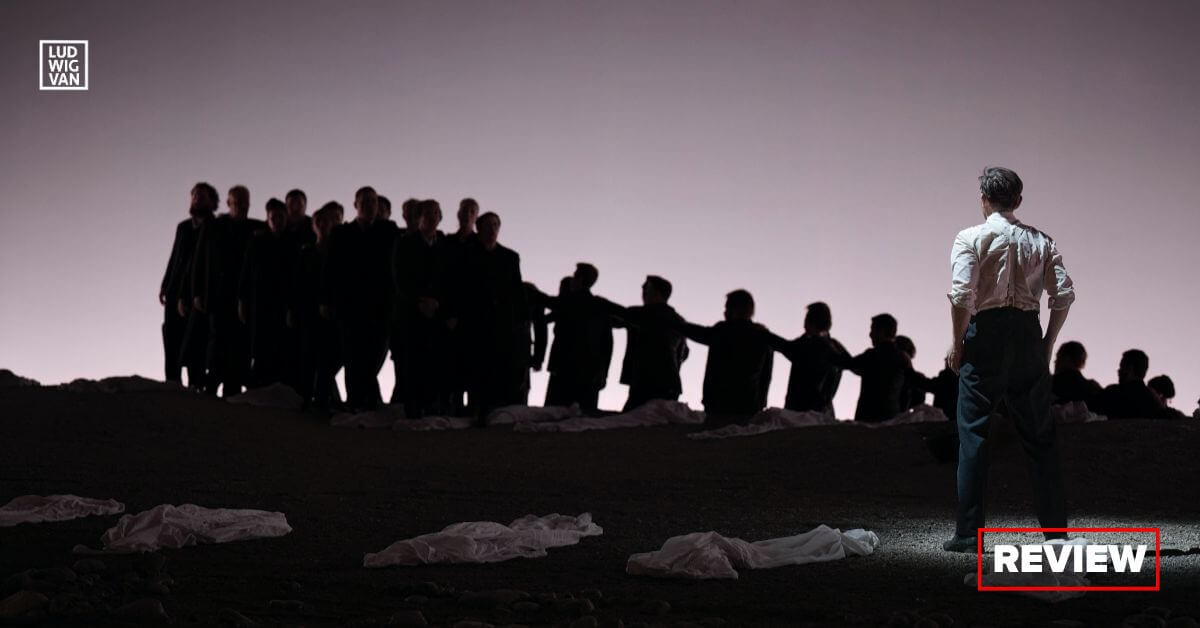
Canadian Opera Company/Théâtre des Champs-Elysées, Fondazione Teatro dell’Opera di Roma, Opéra Royal Château de Versailles Spectacles, and Lyric Opera of Chicago — Gluck: Orfeo ed Euridice. Bernard Labadie, Conductor; Robert Carsen, Original Director & Lighting Designer; Christophe Gayral, Revival Director, with Iestyn Davies (Orfeo); Anna-Sophie Neher (Euridice); Catherine St-Arnaud (Amore). October 9, 2025, Four Seasons Centre for the Arts. Continues until October 25, 2025; tickets here.
A minimalist staging for Gluck’s stripped-down opera is almost too obvious a choice. With only three principal roles, this first reform opera already makes a manifesto of replacing the ornate with the essential — both musically and dramatically.
Canadian Robert Carsen’s tried-and-tested production, first mounted in Chicago in 2006, goes further in its abstraction, stripping down both the mythical setting and, perhaps more frustratingly, most of its physicality, in particular dance.
The Production
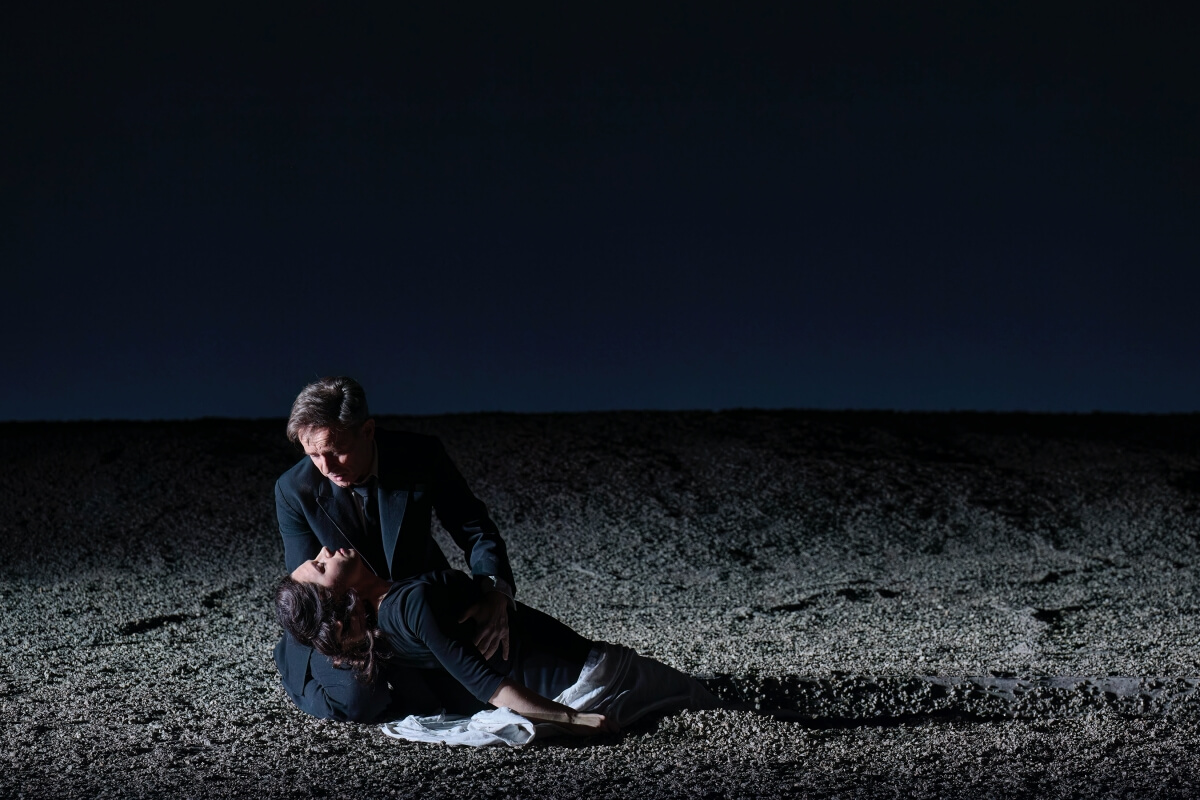
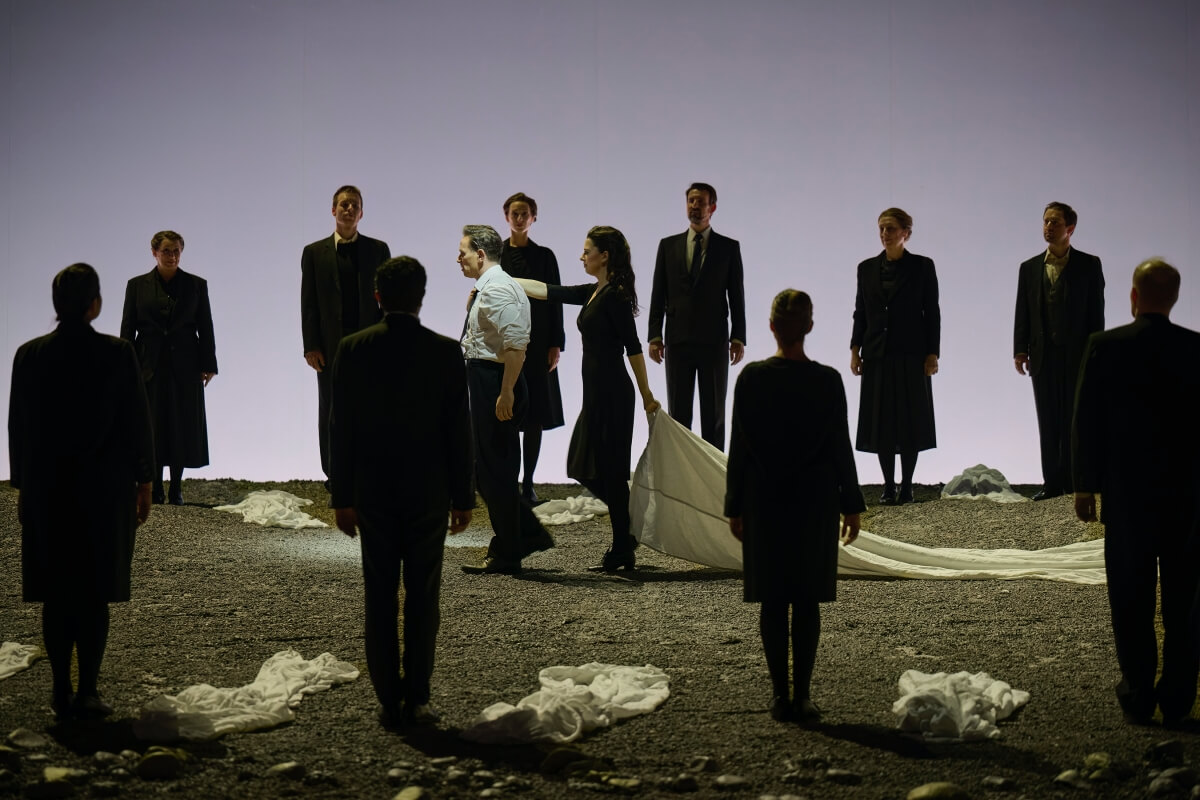
Carsen’s concept generally coheres well. The visual world unfolds in restrained monochromes — shades of grey for the realm of the living, black with flickers of orange for Hades, and a dark, melancholy blue for Elysium. The dim lighting allows for a striking play of shadows, particularly effective in the portrayal of the chorus, with silhouettes of mourners in the opening scene, and later the Blessed Spirits frozen in sculptural poses behind Orfeo’s wonder.
Costumes are modern, yet timeless: men in simple suits, women in sombre village dresses, some with scarves, reminiscent of Zorba the Greek — except that these women are far more restrained.
Raw emotions are left to the leads. Carsen’s Orfeo is no mythical musician but an Everyman mourning the loss of his wife. As such, the focus shifts from the power of music to the power of love — a choice that goes some way to justifying the opera’s rather banal happy ending.
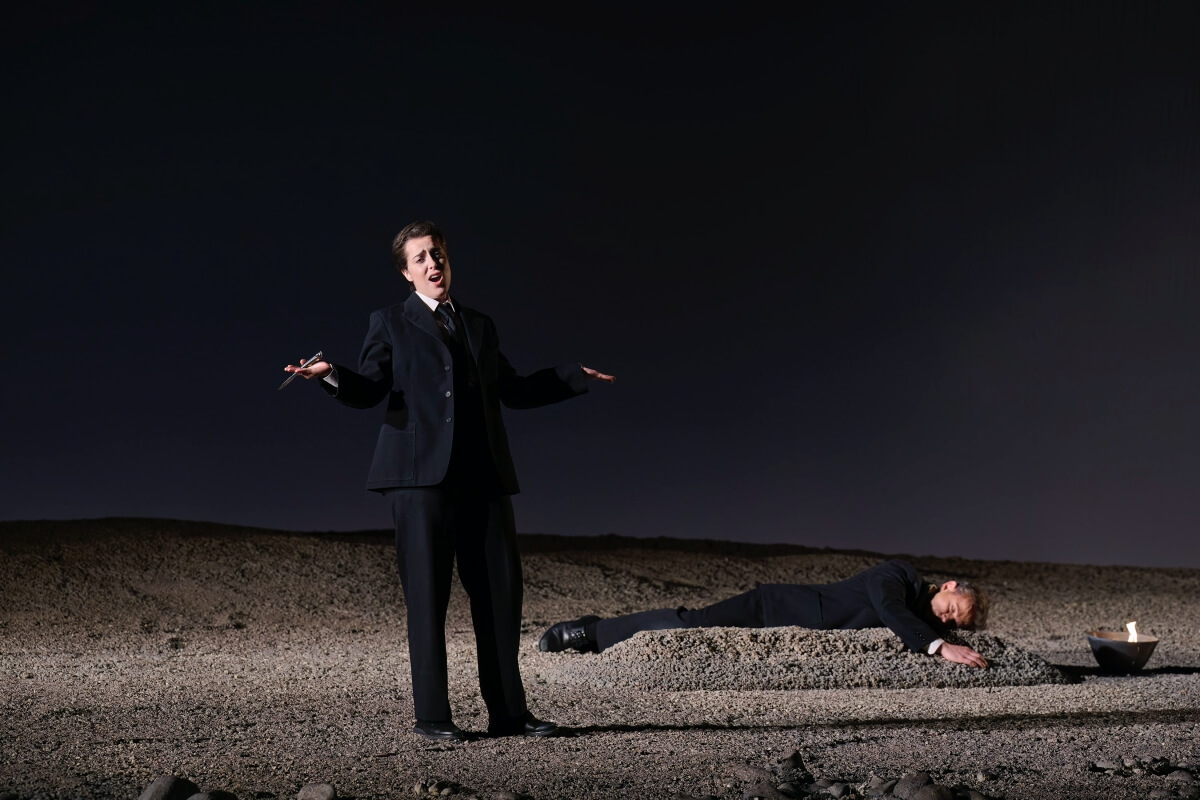
In Orfeo’s encounter with the Furies, it is not music but passion that clears his path. Accordingly, he wields a flaming bowl rather than a lyre, and this literal fire of love renders the offstage harp somewhat redundant. The scene is effectively nightmarish, the chorus’s furious “No!”s ringing out with visceral force.
The transition to Elysium, though smooth, feels distinctly unheavenly, as the Furies jitter from their cocoons to become the Blessed Spirits. Some of Carsen’s visually striking positioning of the chorus unfortunately serves to fragment their sound; in the opening scenes especially, they seem under-powered, despite Bernard Labadie’s sensitive and stylish conducting and the Orchestra’s discretion.
Performances
The blank stage places the onus on emotional truth, which British countertenor Iestyn Davies as Orfeo delivers with arresting depth. His rounded tone conveys both despair and tenderness, every phrase charged with humanity. His “Che farò senza Euridice?” is a masterclass in emotional gradation, ranging from numb disbelief through pleading anguish to hollow resignation.
As Euridice, Anna-Sophie Neher offers dark, resonant tone and sincerity of presence, at times recalling the grave dignity of Irene Papas (actress in Zorba). She does her best to make sense of Euridice’s outbursts during her rescue scene, lending them genuine pain rather than petulance.
Amore remains a weak link. For all her vocal agility, Catherine St-Arnaud’s light soprano lacks weight and penetration. Carsen’s idea — that she represents Orfeo’s subconscious — never quite registers, and the gender shift, whereby she is first dressed as Orfeo, later as Euridice, feels more arbitrary than revelatory.
Nor does the final giddy tableau wholly convince: Gluck himself seems tied again to convention, and Carsen — resolutely opposed to the inclusion of dance — does not resolve the inherited problem. One almost wishes, at that final chorus, for a cathartic Zorba-style tableau to break the spell of tasteful restraint.
The program lists four actors and two dancers, but apart from a final, rather symbolic lifting of the lovers, their contribution remains elusive. That absence, however, could be considered apt for a production that so rigorously pares back everything to its essence — sometimes, perhaps, too much so.
Final Thoughts
Ultimately, Carsen’s Orfeo ed Euridice exemplifies the virtues of universality and practicality, a production refined enough to travel anywhere (as it has) and remain timeless.
Yet, amidst its measured discipline I found myself yearning for more risk-taking and magic, for a reckless leap of imagination that would somehow pierce its polished surface. The austerity that 50 years ago may have felt like radical renewal has now become a habit.
Perhaps the time has come to move beyond minimalism for its own sake.
Are you looking to promote an event? Have a news tip? Need to know the best events happening this weekend? Send us a note.
#LUDWIGVAN
Get the daily arts news straight to your inbox.
Sign up for the Ludwig Van Toronto e-Blast! — local classical music and opera news straight to your inbox HERE.

- SCRUTINY | Perfume, Psycho, And A Perfect Mendelssohn: TSO & Gimeno Outshine Hollywood - June 9, 2026
- SCRUTINY | East, West, And Universal: The Toronto Symphony Orchestra Welcomes Anoushka Shankar - May 25, 2026
- SCRUTINY | Of Gods And Prophets: Abel Selaocoe’s Toronto Debut Was A Life Changing Experience - May 19, 2026