
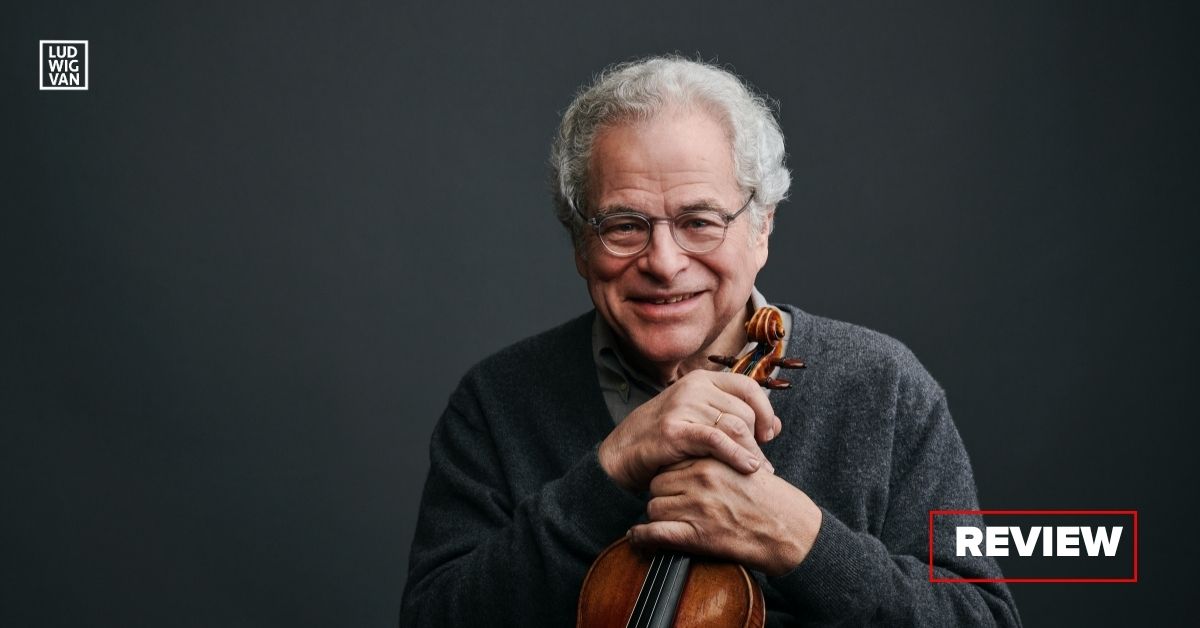
Roy Thomson Hall: Itzhak Perlman, with Rohan De Silva, piano. Mozart, Sonata No. 32 in B-flat major; César Franck, Sonata in A major; Dvořák, Sonatina in G major & encores announced from the stage. Roy Thomson Hall, April 20, 2026.
Like many aspiring young musicians, I grew up in a household where the name Itzhak Perlman carried a special cachet.
At moments of difficulty, my mother would invoke it almost as a proverb, proof that willpower could bend circumstance to its purpose. That narrative — of polio overcome, of artistry wrested from adversity — has followed Perlman throughout his life, sometimes illuminating his musicianship, sometimes threatening to eclipse it. It felt apt, then, that his return to Roy Thomson Hall for his 80th-birthday recital was preceded by a community initiative designed to kindle similar sparks in younger minds.
Under the hall’s “Share the Music” banner, some 250 schoolchildren were invited to a pre-concert workshop led by Shane Kim, before staying on to hear the evening’s performance. The lobbies, usually a study in polite murmurs and wine-supping, buzzed with a more unguarded energy.
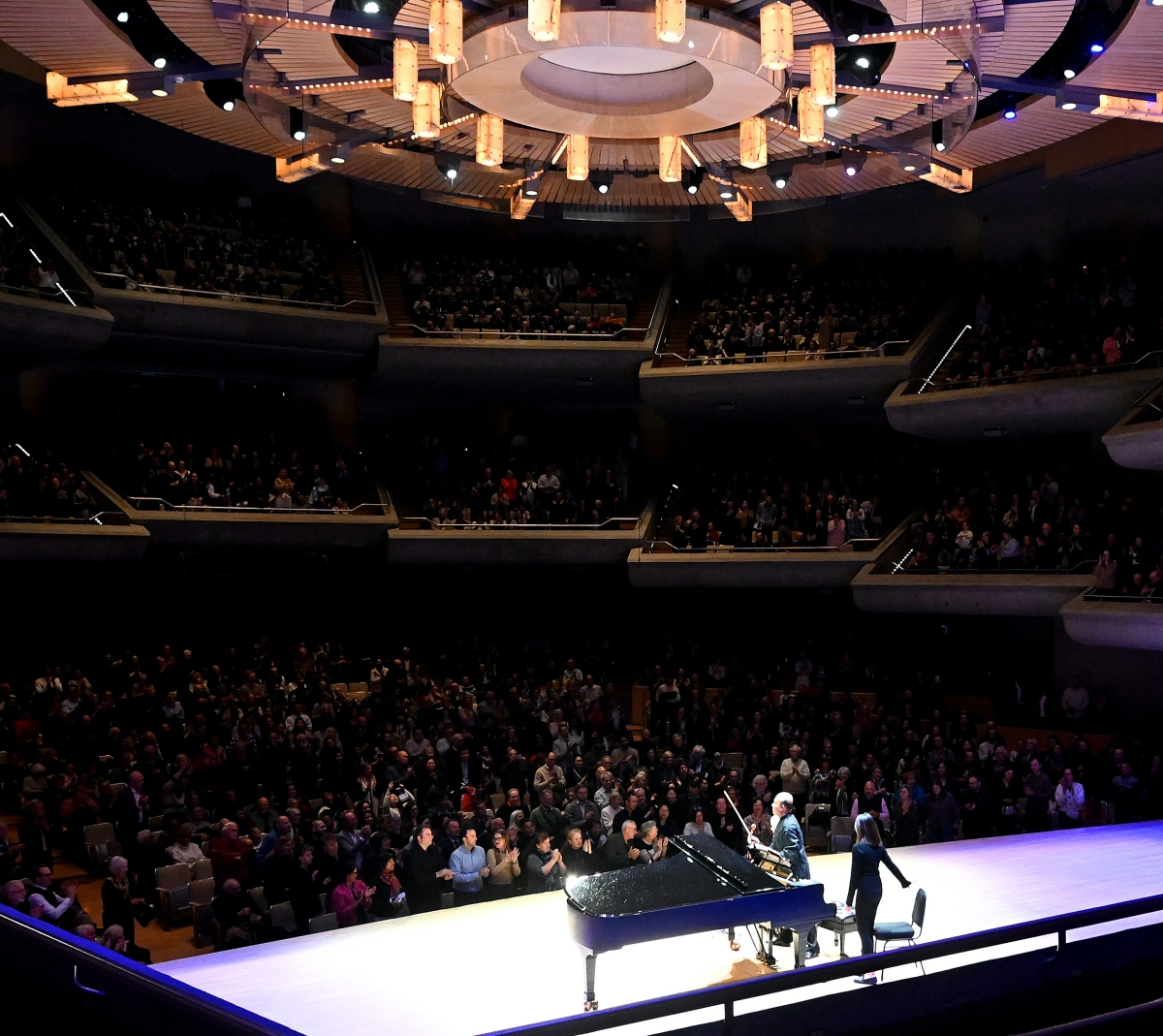
As the lights in the hall dimmed, that energy was absorbed — almost magically — into the cavernous auditorium. A near-full house faced a bare stage: a piano, a solitary music stand, and little else. It looked, if not lonely, then expectant.
Perlman arrived in his motorised wheelchair, accompanied by his long-time collaborator, the Sri Lankan pianist Rohan De Silva.
Main Program
The program was almost as spare as the stage: Mozart’s Sonata No. 32 in B-flat major, and Franck’s Sonata in A major before the interval, followed by Dvorak’s Sonatina in G major after it, with the promise that other works would be announced from the stage — a nod to Perlman’s reputation as a raconteur of dry, slightly subversive humour.
Time, that most severe of accompanists, has not dulled the essential sweetness of Perlman’s tone. What has dulled, at least in a hall of this size and acoustic, is projection. Much of the evening’s playing felt curiously recessed, as though heard through a scrim.
It was also strangely impersonal. In the Mozart Sonata, the central movement offered moments of genuine poise — brief, glinting exchanges between violin and piano that suggested a conversation worth overhearing — but the outer movements settled into a certain rigidity, their formality underlined rather than animated.
The César Franck Sonata fared even less well. Here the cumulative architecture depends on a sense of shared purpose, of two players building something larger than themselves. Instead, there was a restless, rushed quality, the piano forced to swallow up phrase-endings just to keep up.
De Silva, an unfailingly attentive partner, seemed to spend much of the performance adjusting — trimming dynamics, yielding space, accommodating sudden accelerations — not an easy brief given such densely-woven textures. The result was a performance that never took wing; its emotional trajectory was flattened, its climaxes undernourished.
Here, and in the Dvořák Sonatina, I was left with the impression of hearing not the music itself, but its after-image, like a photograph left too long in the sun, where the outlines remain but the colours have faded.
And yet, intermittently, there were flashes of the old fire — particularly in the slow movement of the Franck and the more lyrical episodes of the Dvořák moments when the line sang freely and the shackles of time seemed, briefly, to loosen their grip.
Encores
It was during the encores that the event became properly engaging.
A teetering stack of scores — borne onstage by the page-turner — hinted at spontaneous decision-making.
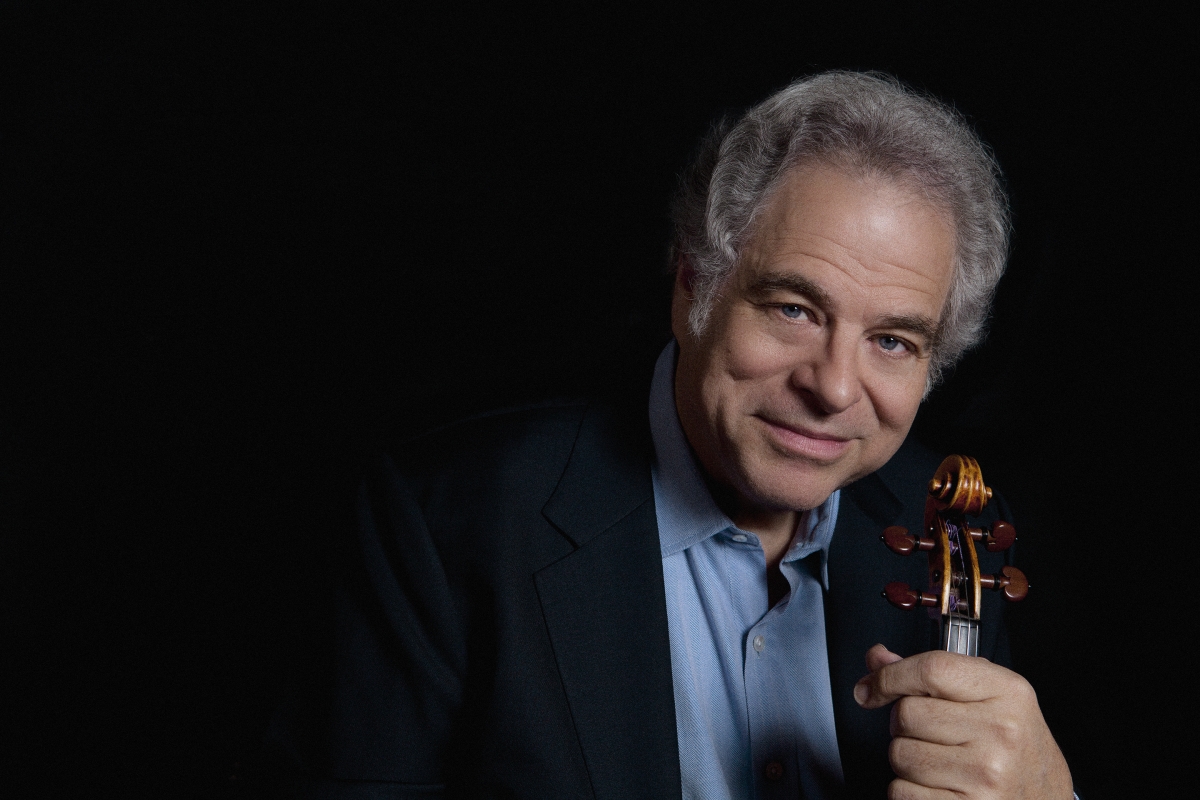
Perlman took the microphone. His celebrated charm proved entirely real. “Here is a computer printout of everything I have played in Toronto, … since 1912,” he quipped, leafing through a sheaf of papers. “But if you heard it then, chances are you can’t hear anything now.”
Two pieces by Fritz Kreisler followed, each prefaced by an anecdote delivered with impeccable timing. The best concerned a Tchaikovsky work “dedicated to his friend who was arrested for some misdemeanours. It’s called Chanson sans parole,” Perlman deadpanned, before adding, “This joke works best in Canada. In the U.S., the only word they understand is ‘parole’.”
The inevitable Theme from Schindler’s List drew the warmest response, though its musical appeal remains something of a mystery to me. Perlman played it with restraint rather than overt pathos, yet the standing ovation it provoked suggested that, for many, the association alone sufficed. A final encore — Brahms’s Hungarian Dance No. 1 — offered a reminder that, when required, the old virtuosity can still be exhumed.
Final Thoughts
This was not, in the end, a concert about the quality of playing.
It was about something more elusive, perhaps more valuable — the chance to occupy the same space as a figure whose significance has long since outgrown the notes he plays.
For the young musicians scattered through the hall — those 250 children who had begun their evening with hands-on music-making — the lesson may have been less about perfection than persistence in the face of adversity. For the rest of us, it was a reminder that inspiration, like tone, can endure even as its projection fades.
Are you looking to promote an event? Have a news tip? Need to know the best events happening this weekend? Send us a note.
#LUDWIGVAN
Get the daily arts news straight to your inbox.
Sign up for the Ludwig Van Toronto e-Blast! — local classical music and opera news straight to your inbox HERE.

- SCRUTINY | Perfume, Psycho, And A Perfect Mendelssohn: TSO & Gimeno Outshine Hollywood - June 9, 2026
- SCRUTINY | East, West, And Universal: The Toronto Symphony Orchestra Welcomes Anoushka Shankar - May 25, 2026
- SCRUTINY | Of Gods And Prophets: Abel Selaocoe’s Toronto Debut Was A Life Changing Experience - May 19, 2026