
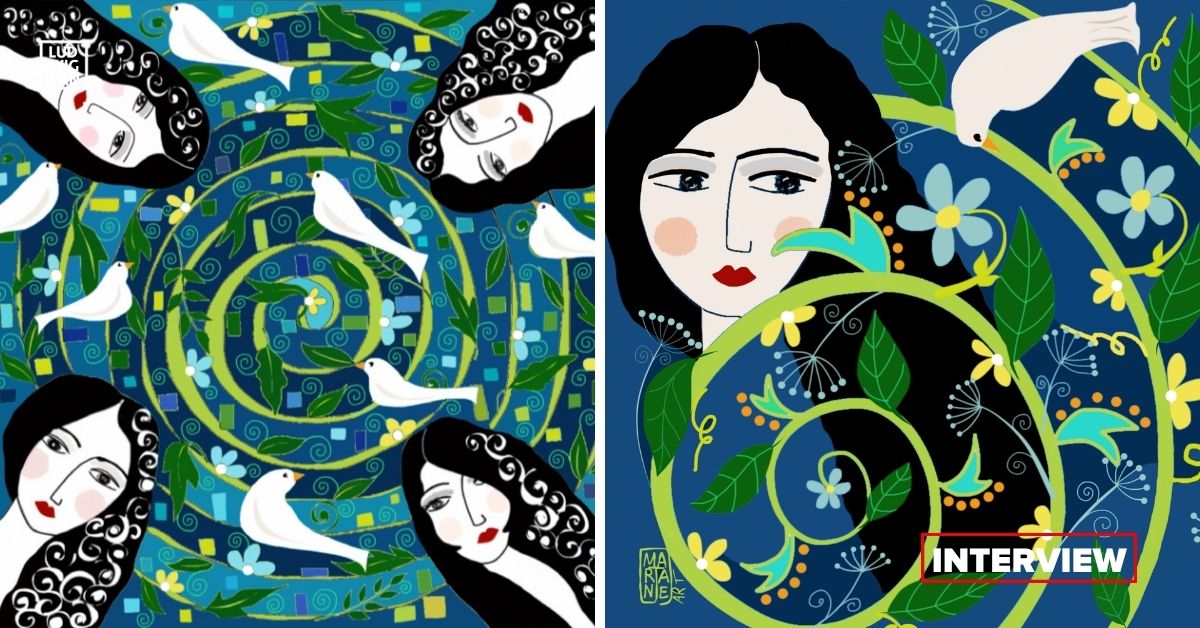
Parisa Karimi Molan was born and grew up in Iran, where she had to learn how to sing in secret. She found a group of women who had been legendary performers in pre-revolutionary Iran, and studied for two decades in hiding from authorities.
Parisa came to Canada in 2017, and settled in Montréal. Her debut album Unveiled was released in April 2026 on Toronto’s Lulaworld Records label, and she’s playing a live show on July 25, 2026 at the Scarborough Folk Festival.
In the liner notes for her album, she writes,
“This album, UNVEILED, is the fulfillment of a lifelong dream, and it could not have come into being without the generosity, trust, and artistry of may people.”
LV caught up with Parisa to talk about the music, her album, and more.
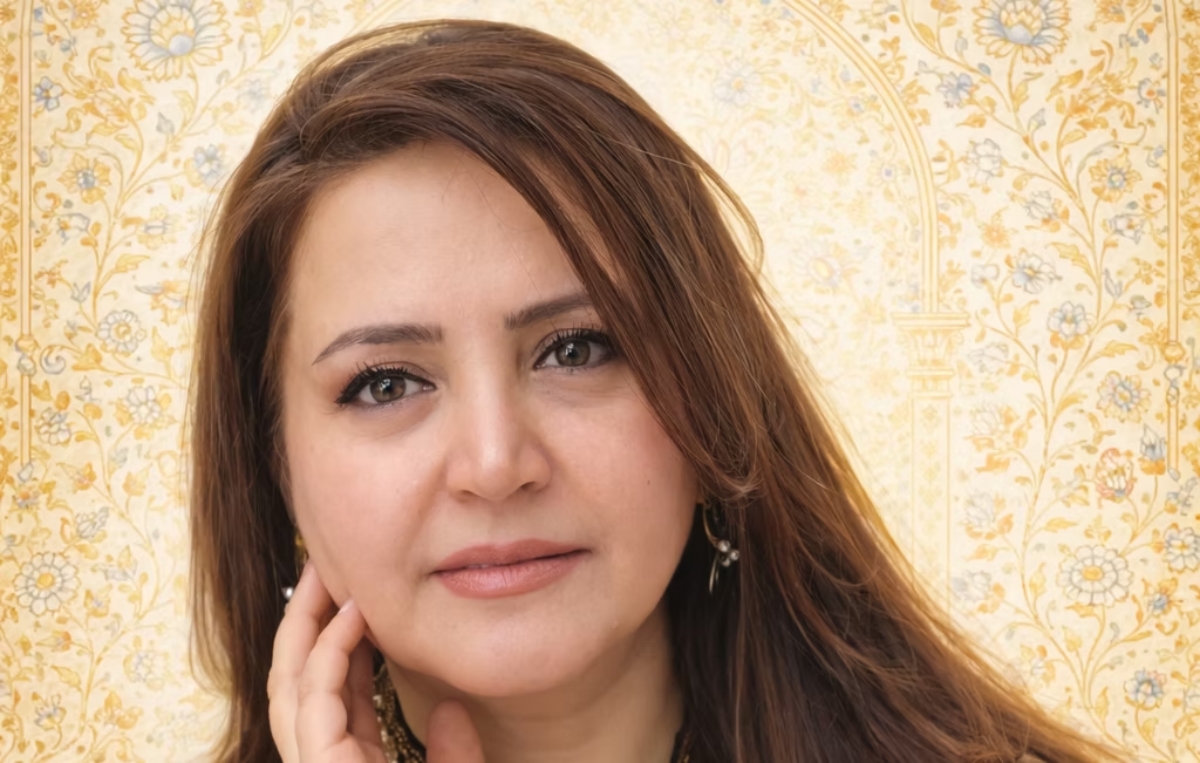
Parisa Karimi Molan: The Interview
Parisa wrote a poem about her decades long dream to sing, which is also part of the album’s liner notes.
Unveiled
I learned to sing where voices were meant to disappear.
In basements with closed windows,
in closets where breath became melody,
in silence that listened back.
I come from East Azerbaijan, from Arasbaran —
a land of mountains, echoes, and songs that travel mouth to mouth,
even when they are forbidden to rise.
For years, I sang only in secret,
not knowing if my voice would ever meet the open air.
Still, I learned —
so the songs would survive,
so memory would not be lost.
This album is not only sound.
It is time reclaimed.
It is a voice stepping out of hiding,
carrying the weight of silence
and the joy of finally being heard.
Sizeh Salam Getirmishem, the first single from Parisa Karimi Molan’s album Unveiled:
Parisa recalls growing up in a home filled with music. Her father was a talented musician, a tar player and singer, though it wasn’t his profession.
“Actually he was a primary school teacher, but he was at the same time a semi-professional musician,” she says. Along with his playing, he conveyed his love of music to Parisa. “He was one of the greatest collectionists of music,” she says. Without the internet, he exposed her to the traditional music of Iran in various forms. “He had a rich archive of music from the past. It was inspiring to hear that kind of music at home. I believe he is my first music teacher.”
Much of that traditional material, she says, wasn’t published, and existed only in performance or on old vinyl records.
In that environment, she discovered her own love of music early. “[In] my childhood, I found that I was in music, and I wanted to sing. I repeated every song that I was listening to.”
But, the Iranian Revolution of 1979 had imposed a strict code of conduct. “Women were not allowed to sing in public,” Molan explains. Musicians of any gender faced many restrictions. “Musicians do not have that much space,” she adds, “they needed permission even to carry their instruments in public. For women, the situation was even more critical.”
Her father enjoyed the fact that she had picked up on his own love of music, but understood the dangers. “He was encouraging, but he said I had to be careful.”
Learning To Sing In Iran
Parisa’s love of music could not be extinguished, even by an oppressive environment.
“I found some girlfriends, like me, who loved singing,” she explains “I found there are some legendary singers from before the revolutionary time,” she says. They included legendary singers like Parissa and Pari Maleki. After the Iranian Revolution, those artists began teaching music and singing to women at home. “Parissa is one of the most famous Iranian singers,” she continues.
“I was very lucky to be part of that training, but it was in secrecy,” she says. “Most of the time, we were in the basement, closed windows. We didn’t want to attract any attention to our activities, because if it was revealed, it would be finished.”
It was an important task, not only to develop her own skills, but to keep those musical traditions alive for future generations. “I think it’s a treasure. It has come from centuries, 2,000 years ago,” Molan says.
“We need to keep it and pass it to the next generation. It’s so beautiful.”
Poem of Atoms performed by Parisa Karimi Molan as part of a recital of at Montréal Vocal Arts Studio on April 13, 2025, with accompanist Julian Shively.
Collaborators
Once in Canada, she was able to develop her skills both in singing and performance.
“I needed to discover my voice again. As Molan explains, she had learned to sing under pressure, in hiding. It resulted in a restrained voice. “I want to hide my voice, I need to clip it.” She explains that it took time to develop her vocal skills in order to be able to express herself freely. “To wash out from my mind that you can freely sing. It took a while to refind my voice.”
Even as she learned, Parisa connected with many Iranian musicians in Montréal. “I was lucky to meet a lot of musicians here in Montréal. I was inspired by them.”
As she discovered, not everyone who was interested in Iranian music came from an Iranian background.
Collaborators on the album include Segiu Popa, a Romi accordionist, who serves as musical director and arranger for the album. Cellist Noémy Braun, a native of Switzerland, earned degrees from HEM Geneva/Lausanne before moving to Montreal in 2015 to study at McGill’s Schulich School with Matt Haimovitz.
Pouria Pournazeri comes from a family of musicians in Iran. He contributes setar to the musical mix. Toronto-based Mohammad Aman is a master tar player, a music graduate of National Conservatoire of Azerbaijan. He performs with a number of ensembles in Toronto, included a few he founded.
Kurdish singer and artist Srwa Hassani contributes vocals, including the lead vocals on one of the tracks.
“The cultural richness here is really important,” Parisa says of her Canadian home. “Sergiu Popa, he is a great musician. He is from Moldava.” As she explains, he was attracted to Iranian music from a young age. “One day in Montréal I met him. It was very easy to get connected to him,” she explains.
“Noémy is from Switzerland, and she plays the cello. She is very into that music,” she says. “You cannot recognize that she is not Iranian.”
Pouria’s background made his contributions to the ensemble a natural fit. “He is from a musical family,” Molan explains. “In Iran, they are musicians. He knows all these melodies by heart.”
Toronto-based Mohammad Aman is known for his musical skill. “One of the greatest tar players that I’ve ever met,” Parisa says.
The Album
Parisa gives a lot of credit to producer Dan Rosenberg. “I wish to thank Daniel Rosenberg, who made it happen,” she says.
As she points out, the songs she sings on Unveiled come from a range of traditions.
“Srwa Hassan, she sings in Kurdish,” Molan explains. Iranian culture includes Kurdish, Persian, and Azeri cultures, all of which are represented in the tracks. “It was a mix of all beautiful music and cultural diversity that we have in Iran. I think that makes it even more precious,” she says.
“The arrangements are new.” They were created largely by Sergiu Popa and Noémy Braun. One of the tracks is an instrumental featuring setar and cello.
Final Thoughts
“I didn’t know that one day I would be able to sing in public. But, I was learning. It was also very rich. Learning has its own sweetness.”
The musical spark that began in childhood has finally found its expression.
“It happened, and it’s beautiful,” Parisa says.
Of her childhood friends who were united in their love of music, she reports that some have left the country, while others continue to study in secret in Iran.
“I’m very lucky to have the opportunity.”
Listen To The Music
Parisa has some concerts planned for Quebec later this year. Scarborough Folk Fest will be her only Ontario date.
- Find Parisa Karimi Molan’s album Unveiled [HERE].
- She’ll be performing at 5:30 p.m. on July 25, 2026 at the Scarborough Folk Festival at Thompson Memorial Park in Toronto; details [HERE].
Are you looking to promote an event? Have a news tip? Need to know the best events happening this weekend? Send us a note.
#LUDWIGVAN
Get the daily arts news straight to your inbox.
Sign up for the Ludwig Van Toronto e-Blast! — local classical music and opera news straight to your inbox HERE.

- INTERVIEW | Parisa Karimi Molan Talks About Growing Up In Iran, Learning To Sing & Her Upcoming Toronto Show - July 22, 2026
- THE SCOOP | Harbourfront Centre Welcomes The Shaw Festival To Its Inaugural Residency - July 22, 2026
- SCRUTINY | The National Youth Orchestra Of Canada Kicks Off Canadiana Tour In Toronto With Dazzling Performance - July 21, 2026