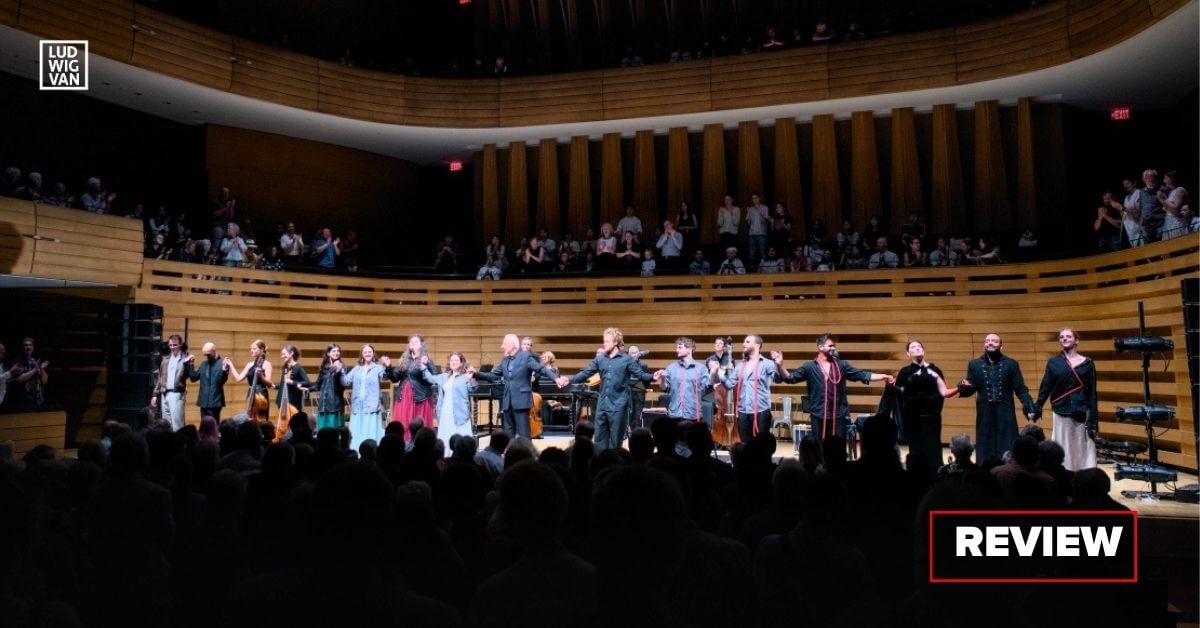
Toronto Summer Music: Les Arts Florissants — Les Arts Florissant & La descente d’Orphée aux enfers by Marc-Antoine Charpentier. Orchestra of the Florissants & Jardin des Voix: Josipa Bilić (La Paix, Daphné); Camille Chopin (La Musique, Euridice); Sarah Fleiss (La Poésie, Proserpine); Tanaquil Ollivier (Énone); Sydney Frodsham (L’Architecture, Aréthuse); Bastien Rimondo (La Peinture, Ixion); Richard Pittsinger (Orphée); Attila Varga-Tóth (Tantale); Olivier Bergeron (La Discorde, Apollon, Titye); Kevin Arboleda-Oquendo (Un Guerrier, Pluton). Dancers: Claire Graham; Andrea Scarfi; Tom Godefroid. William Christie: Musical direction; Marie Lambert-Le Bihan & Stéphane Facco: Spatial arrangement; Martin Chaix: Choreography.
Toronto Summer Music opened with a full house at Koerner Hall, and a luminous production of two of Charpentier’s chamber operas by French company Les Arts Florissants, including Les Arts Florissant, the company’s namesake, and La descente d’Orphée aux enfers.
They were two quite different works in tone and meaning, brought to life by the Baroque specialists of the company and the young voices of their Jardin des Voix.
The Company
William Christie founded Les Arts Florissants in 1979 as a company specializing in European Baroque repertoire. Along with a chamber orchestra of period instruments, the company includes dancers and a vocal ensemble called Le Jardin des Voix, which was added to the ensemble about two decades ago. Le Jardin des Voix consists of several young singers who have competed and won a competition. This year, the ensemble includes the young vocalists who have won the Jardin des Voix #12 competition
The company has recorded many works, including operas, cantatas, madrigals, and other vocal works.
While the music is historically informed, their performances include modern production elements such as costuming and choreography.
The Operas
Les Arts Florissants was written in 1685 to a French libretto by an unknown writer, and mixes classical Roman mythology with then-current history. It’s an allegorical work where the various Arts — poetry, architecture, painting, and so on — are flourishing under the reign of Louis XIV, who is referred to at various points in the work.
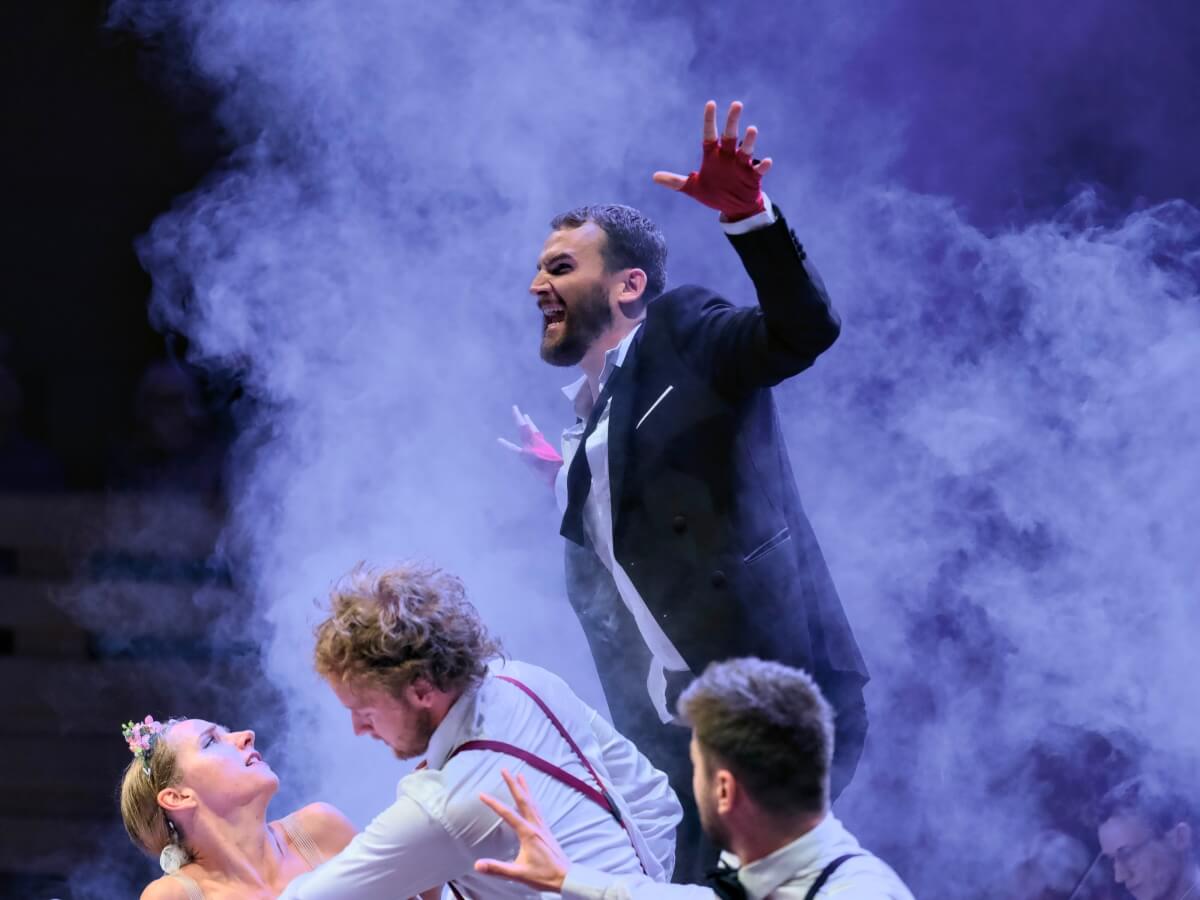
The various Arts celebrate the return of peace due to their “invincible leader”, but Discord (La Discorde) is never far away. In one scene, Discord and his Furies return to overwhelm the action, but then Peace (La Paix) calls on Jupiter to intervene. Jupiter hears her appeals, and his thunderbolts chase Discord and the Furies back into Hades.
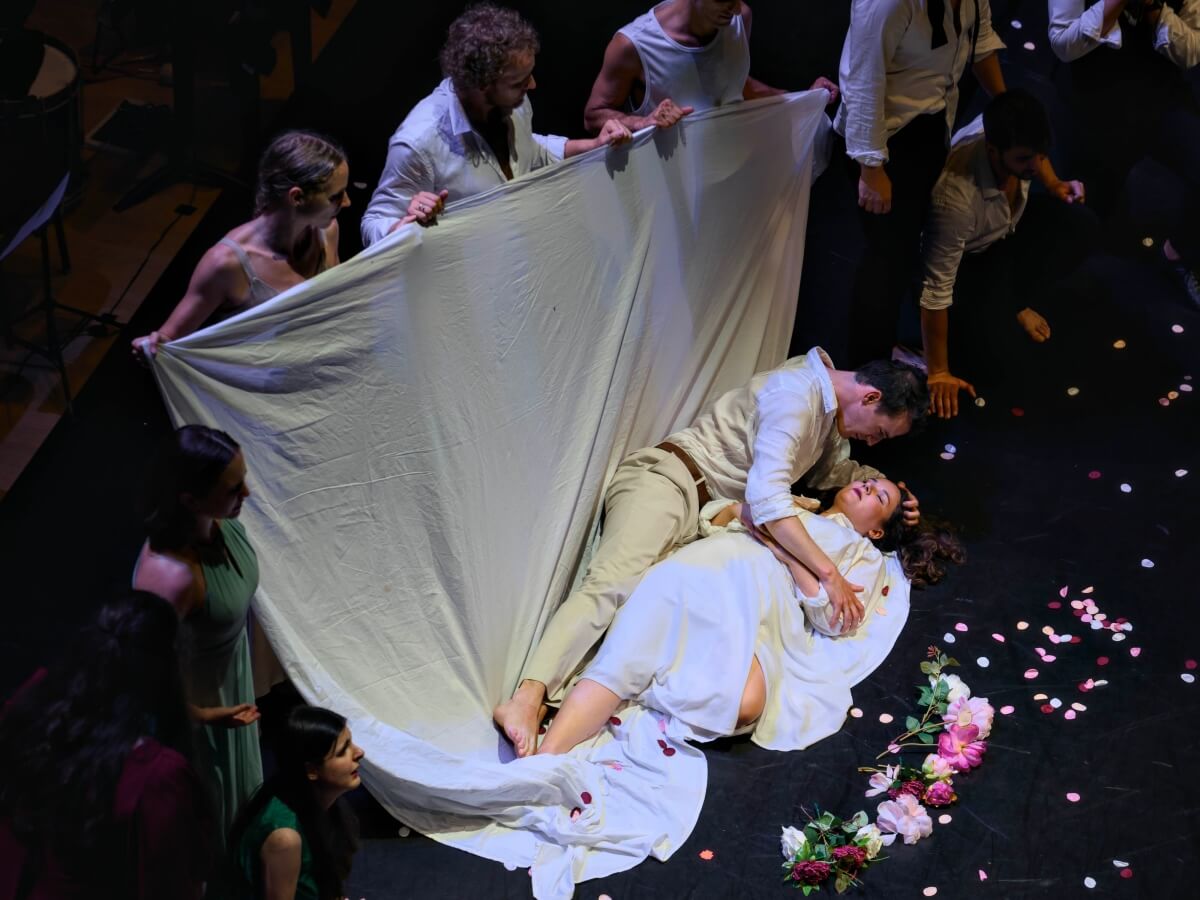
It is believed that Charpentier wrote La descente d’Orphée aux enfers in 1686. Inspired by Book 10 of Ovid’s Metamorphoses, the librettist is unknown. The story begins with the celebration of the wedding of Orphée and Euridice, but there’s a snake in the grass (literally), and what begins as a happy day takes a tragic turn. Orphée is inconsolable, but his father Appolon offers hope — because of his musical gifts, he can enter into the underworld and look for his love.
After journeying through the underworld, where he encounters the souls of the dead, the two-act opera ends with the couple reunited. Pluton has been persuaded by both his entreaties and the intercession of his beloved wife Proserpina. There is a condition, though, that Orphé cannot look back once he begins his journey back to the land of the living.
Charpentier’s opera leaves out the unhappier ending of the myth, leading some scholars to believe the work was left unfinished.
Performances
The fresh young voices of the Jardin des Voix brought both works to life beautifully. While there were many spotlight moments for specific singers, it was truly an ensemble performance. There were many passages that were sung by the whole company in gorgeous harmony, with a nice balance of the vocal parts.
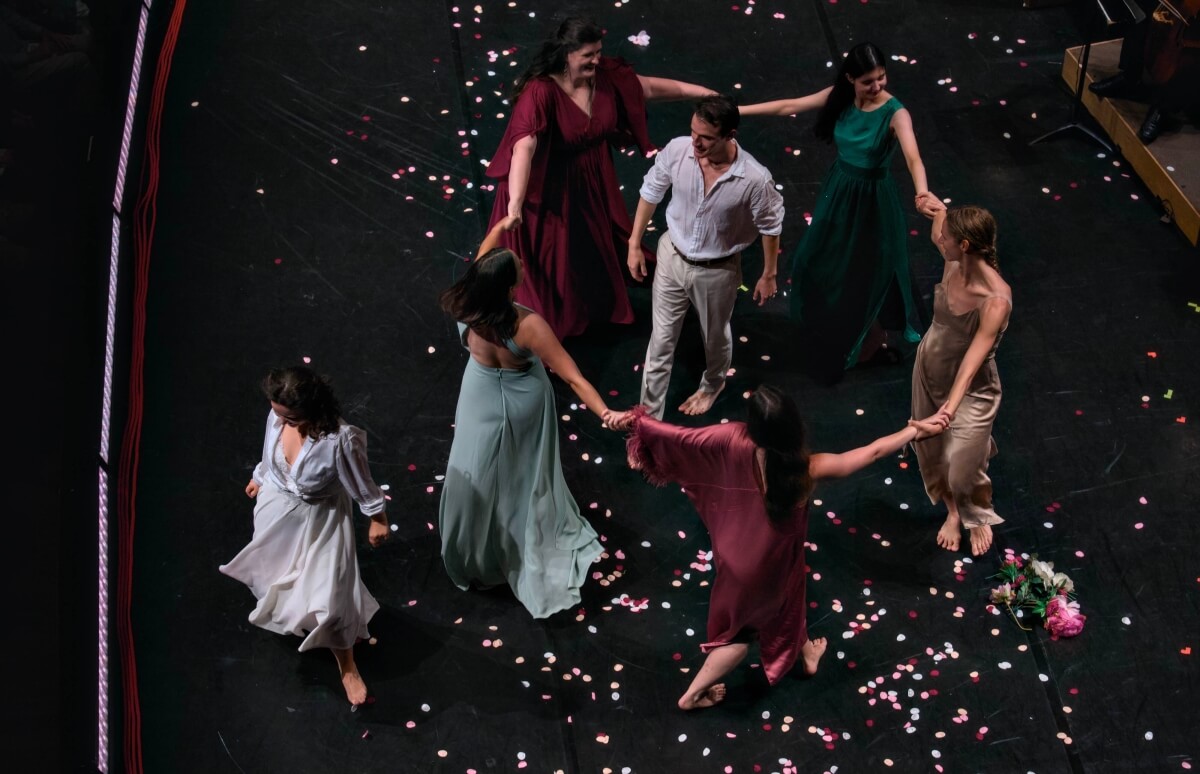
The three dancers, while they also had their standout moments, also became part of the ensemble on stage, whether part of the pantheon of gods, the wedding celebration, or the unfortunate damned souls in the underworld.
Camille Chopin excelled as La Musique in the first half, and later in the short role of Euridice, with a lovely tone and stage presence that suited both characters. In Les Arts Florissants, Josipa Bilić was a standout as La Paix, with an exquisitely pure voice that perfectly captured the character as an idea.
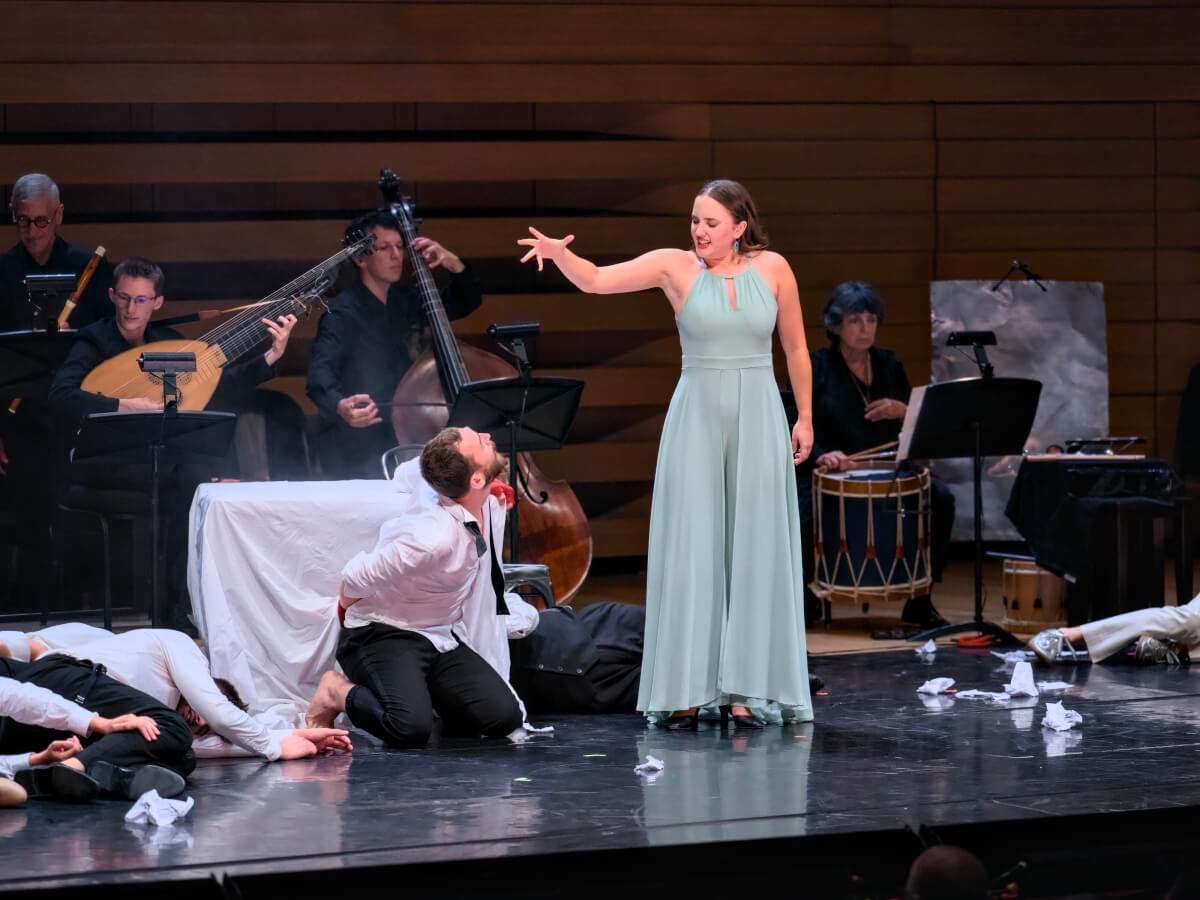
Olivier Bergeron has a strong stage presence, particularly in Les Art Florissants as La Discorde, lurking at the edges of the scene in his dishevelled tux until he can seduce the Furies into their moment of chaos triumphant. He provided many of the work’s comedic moments with over the top physical interpretation. His volume as a vocal soloist, however, was often inadequate to be heard over the orchestra.
Bergeron, Bastien Rimondo, and Attila Varga-Tóth shone as a trio of damned souls in the underworld, the first encountered by Orphée after he makes his descent. They were gradually joined with most of the vocalists as they thanked Orphée for lightening their load with his beautiful music.
Countertenor Richard Pittsinger was the perfect Orphée, with a voice that can soar in sadness, but also express his anger at the gods who would allow his beloved to die so young. Like the rest of the vocalists, his dramatic talents were as on display as his singing; he made a very convincing young lover left bereft by tragedy.
As Pluton, Kevin Arboleda-Oquend projected both a dramatic and vocal gravitas that balanced Orphée and his plight. He was matched by Sarah Fleiss as Prosperpine, and his softens visibly as well as in song in a charming portrayal of their love.
Tanaquil Ollivier, as the nymph Énone, and Sydney Frodsham (as L’Architecture in the first half, then as Aréthuse, another nymph), also had chances to showcase their vocal talents, if in briefer passages than the other parts.
Dancer Claire Graham made a striking figure on stage. Her choreography was modern in flavour, and enhanced many of the performance’s dramatic and comedic moments.
The music, directed by Christie from the harpsichord, was impeccably performed, a fact that was not lost on the audience despite a stage full of singers and dramatic scenarios. At the end, they received a roar of approval during the curtain calls.
Design & Direction
Both productions were a marvel of thoughtful direction and minimalist staging. The musicians took up the back of the stage, leaving a narrow space behind where the action sometimes took place. With a few well chosen props, the rest of the Koerner Hall stage served as everything from the woods to the underworld.
Choreography and movement enhanced the emotions of both works, as well as fleshing out active scenes. When there was harmony, the company danced together; in contrast, as the Furies, each pursued their own chaotic agenda, including a funny lap dance-adjacent turn by Claire Graham. As damned souls, they were bent over, then cowering on the floor to avoid notice by their dark ruler Pluton.
The few props included a table in Les Arts Florissants, covered with a white cloth. It allowed Discord to both disappear and reappear at will. In La descente d’Orphée, the table vanished, but the cloth stayed on stage to serve several roles, including part of the opening wedding dance. Red ropes signalled Orphée’s passage into the underworld, and bound the souls within it, marking their torments.
Bright lighting gave way to red lights to designate Pluton’s realm. It effectively changed the atmosphere of the scene.
The modern (or at least 20th century) ball gowns and tuxedoes of the first half were simply covered by jackets of various types in the second half of the performance. It was a simple — and very quick — way of de-glamourizing their look, and turning the exalted art forms of Les Arts Florissants into the everyday men and women of hell in La descente d’Orphée aux enfers.
Final Thoughts
The music and arts of the 17th and 18th centuries remain in good hands with Les Arts Florissants, who prove that period musical performance can coexist with modern staging and choreography in a seamless artistic blend.
Though our contemporary sensibilities are far removed from the story origins of either work, their message — the desirability of peace over war, and the triumph of love — still resonates in a performance delivered with conviction.
“Tonight is only the beginning,” said TSM Artistic Director William Fedkenheuer in his opening remarks.
The Festival is off to a thrilling start.
Are you looking to promote an event? Have a news tip? Need to know the best events happening this weekend? Send us a note.
#LUDWIGVAN
Get the daily arts news straight to your inbox.
Sign up for the Ludwig Van Toronto e-Blast! — local classical music and opera news straight to your inbox HERE.