
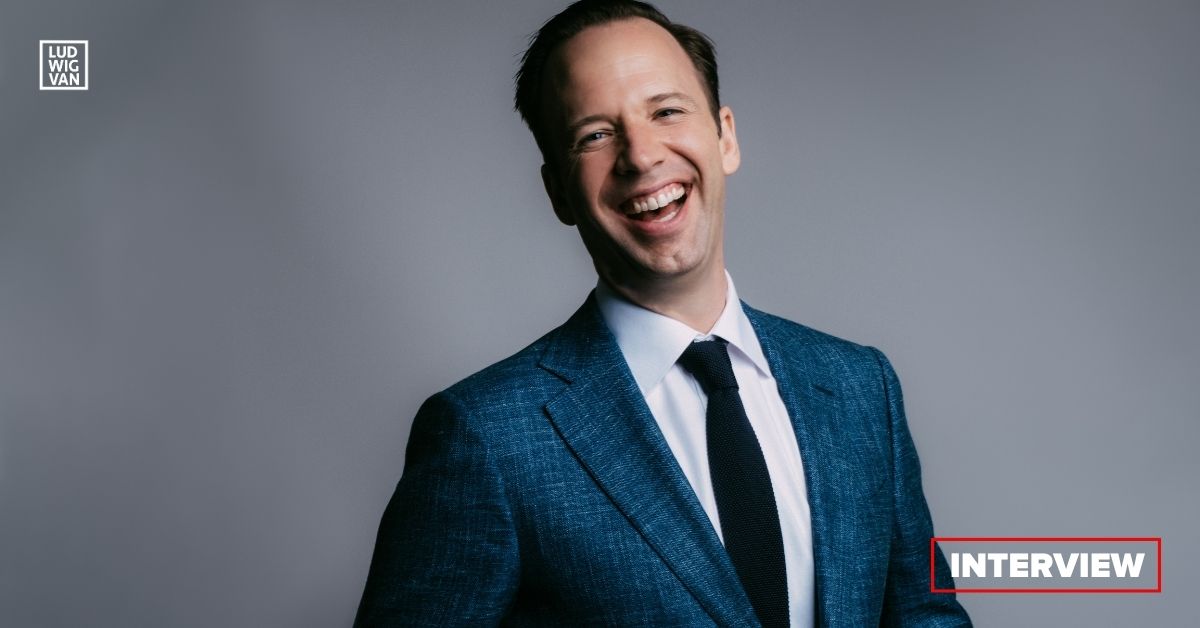
Calling all Toronto music fans: July is almost here! Can Toronto Summer Music (TSM) be far behind?
If you are both a music fan and a Jays fan, or a backyard BBQ devotee, or someone yearning to escape to your cottage in the country, don’t neglect your summer classical music fix.
Thanks to Toronto Summer Music, we have great music right in town. Its history can be traced back to the summers of 2004 and 2005, when the Silver Creek Music Foundation presented chamber music workshops and mini-series of public concerts featuring the likes of the Gryphon Trio, Scott St. John, and Shauna Rolston, to name a few.
TSM History
Now it’s 2026, and we’ve enjoyed two decades — minus two COVID summers — of beautiful music in our fair city, since its inaugural season of 2006 under the visionary stewardship of its founding Artistic Director Agnes Grossmann. Many great artists have come to TO in July, not just to perform but also to give masterclasses and to mentor aspiring young musicians.
In 2010, Grossmann bade farewell to the Festival, and her successor, Douglas McNabney, violist and former Artistic Director of Montréal’s Domaine Forget, continued her tradition of excellence. During McNabney’s tenure, he spearheaded the development of the Academy arm of the Festival into a full-fledge fellowship program for the many gifted chamber musicians, singers, and collaborative pianists.
From its modest beginnings, the Academy transformed into a premiere training ground for young artists, a program that is recognized internationally. The popularity of Festival arm continued to grow, evidenced by rising attendance and critical acclaim from the media and audiences.
In 2016, McNabney passed the torch of leadership to Jonathan Crow, the concertmaster of the Toronto Symphony Orchestra. TSM continued to grow and flourish under Crow’s leadership in public visibility, in attracting big-name artists, and in innovative programming.
Selling summer music is never easy, as Torontonians love their escape to cottage country or firing up the backyard barbecue. But, TSM has managed to get bums in the seats, by offering attractive programs that music lovers want.
Last September, upon the conclusion of the 2025 Festival, the TSM artistic leadership was passed onto violinist William Fedkenheuer. A Calgary native and a member of the celebrated Miró Quartet, Will, as he’s affectionately called by his friends, wears multiple hats: as a violinist, fiddler, teacher, coach, consultant, artistic director, and family man — to two boys, two dogs, and wife, Leah.
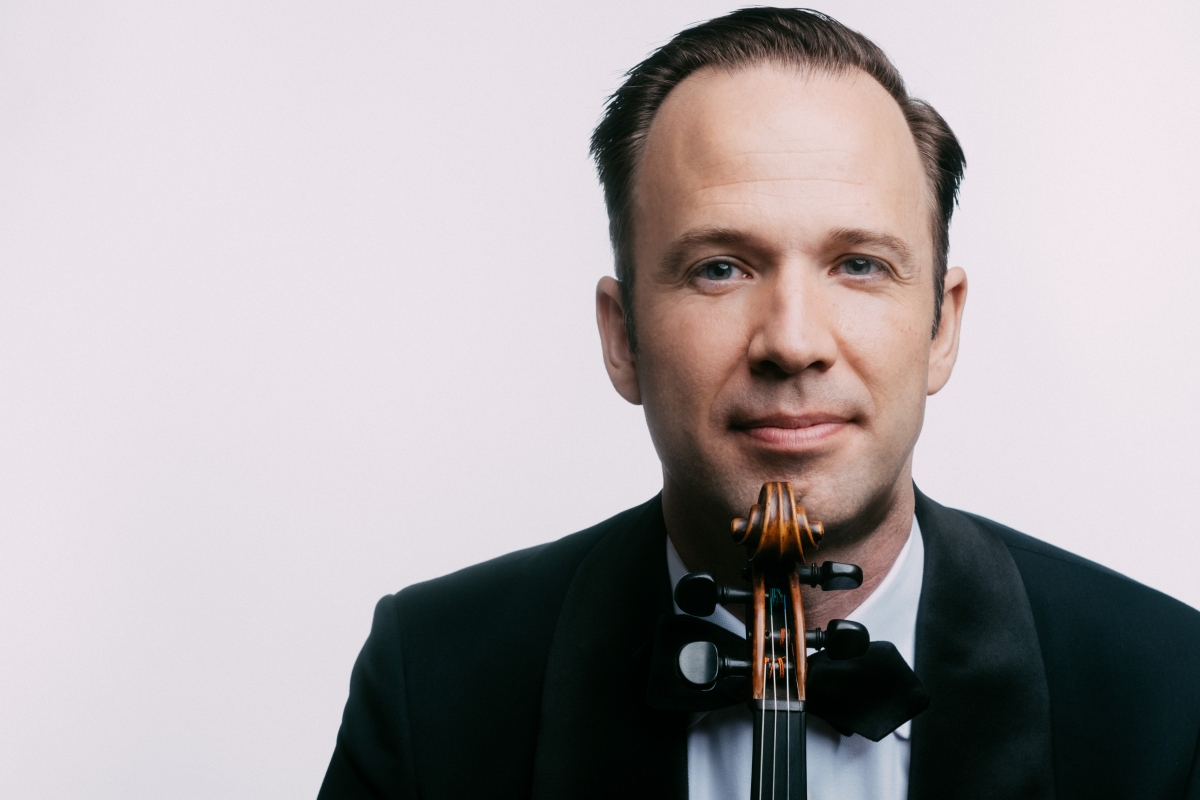
William Fedkenheuer
It was the fiddler on his CV that caught my eye — here’s a classical musician who crosses musical boundaries.
In fact, the fiddler part goes back to his childhood days. He was named Canadian National Fiddle Champion way back in 1989. He made his solo debut with the Calgary Philharmonic at the tender age of 17. He received his classical music training from the top, having attended Rice and Indiana Universities, plus Music Academy of the West, Tanglewood and the Steans Music Institute at Ravinia.
Fedkenheuer is Professor of Practice in Violin and Chamber Music at the University of Texas at Austin’s Butler School of Music, where he co-directs the Young Professional String Quartet Program and mentors emerging artists. In addition to his teaching duties, he is also a well-known consultant and coach, working with aspiring artists.
In preparation for this year’s Festival, I interviewed Will by Zoom recently, and although it was only a virtual encounter, his personal warmth came through the cyberspace in abundance. His affable personality and charismatic persona tell me that he teaches by inspiration and passion, making him the ideal mentor in a summer program like TSM’s Academy.
The Miró Quartet (Daniel Ching, violin; William Fedkenheuer, violin; John Largess, viola; Joshua Gindele, cello) perform Mozart: String Quartet in B-flat Major, K 458, “Hunt”, movement i.:
William Fedkenheuer: The Interview
LV: Years ago, there were hardly any classical music concerts in the summer in Toronto, with the Symphony and the opera shut down. When TSM first started, I remember feeling so blessed that we have wonderful music. I am so glad you are here to continue that tradition.
WF: It’s an honour. Jonathan and I are the same age, and we stayed in touch over the years. I had played here as a member of the quartet in the 2023 Festival. I was so amazed by the community and the staff. When I saw the announcement that the AD position was open, I was so curious about the organization. Jonathan and I had a conversation.
LV: And you are now at the helm. Tell us, what is your vision for TSM?
WF: What I am inheriting is such a gift, it has such a solid platform. My vision is to keep it as simple as possible — great artists, great music, great experiences, while growing the platform and the standing of TSM across Canada and as a global institution.
People travel to Toronto to be part of the TSM. We already have this happening in the mainstage concerts and in the academy programs. It’s a matter of looking at what kind of future collaborations and partnerships can we create that will bring our visibility to a broader audience. Also looking at commissions and partnerships with other global icons like Wigmore Hall, Chamber Music Society of Lincoln Centre, Carnegie Hall, and other summer festivals.
LV: You’re a real practising musician — I noticed that you are in three of the concerts.
WF: Yes, I’ll be in the opening Friday concert with some of our mentor artists. Then the following Friday with Jackie [Jon Kimura] Parker. Then I’ll have my own evening, Two Sides of the Same Fiddle, on July 23. I grew up fiddling. The early part of my life I was doing classical but fiddling was really the shining part of what I did. Now classical is what I do.
LV: Did you perform with your sister, Liesel?
WF: Yes… do you know Liesel?
LV: I have fond memories of her from her COC Ensemble days.
WF: She’s hoping to come to the TSM for Art of the Song. She is my older sister by four years. She’s the reason why I play the violin. She heard the violin at school, came home and told our mom that she wanted to play the violin. I was four when I started. She switched to the viola. Then I joined the fiddle, and started travelling, and she wanted to do that and she learned to fiddle. We travelled a little as fiddlers together. When she was in college, she was studying the viola and her voice emerged. She came to Toronto and studied with Mary Morrison and got into the COC. I remember as a kid watching Mary Morrison teach, and she came to Liesel’s recital.
LV: You sure come from a musically talented family! TSM has always been theme based. Is there a theme this year?
WF: Jonathan made the pivot two years ago to move away from theme-based programming. Part of that is due to marketing and branding issues. The theme idea creates a lot of challenges in programming. For me, there are threads in the program that I’ve planted, to create connections even though there’s no overarching theme.
LV: Is Art of the Song as a focus still in place?
WF: It’s still there. Steven Philcox is the artistic director of Art of the Song. Sasha Cooke is the mentor, and Warren Jones is the piano mentor.
LV: Will you be teaching in the academy?
WF: The first week I will be both AD and mentor in the Academy. My role throughout the summer will be mentoring. We’ll give professional development talks. Our artists on the vocal front, Erin Morley and Lawrence Brownlee, and William Christie will give masterclasses to our vocalists. We’ll have our Chamber Music Intensive (CMI) artists be involved with the voice section.
LV: I’ve always thought that it would be nice to have the vocalists participate in the chamber music concerts.
WF: It’s challenging, the available combined repertoire is not as in depth. Planning and threading existing repertoires is a real challenge.
LV: I’m curious — how much of this season’s program is you, your ideas?
WF: When I took over from Jonathan last Fall, nothing was programmed. There were times when I cursed him [big laughs]. Overall, I am grateful, because this is “the team’s voice”. While I am the head, the staff — Vanessa (Goymour), Cait (Wood), and the whole team, and the board are all incredible.
Part of my role is to listen and learn what TSM has been, and what people loved about it, and to make sure those elements move forward. I take those elements, water it, and plant a few seeds and see it grow. This season it’s under my artistic direction, but the whole team is behind it. We’ve been super-excited by the response from the community.
LV: Any future plans?
WF: Yeah! [Laughs] I am very much looking forward to reaching August 2, to experience basically the full circle of being in this role. There’s so much in the learning process in this first year.
August 2 I have to go to Montreal to play a concert with my quartet, but I’ll have experienced from a total blank slate, through the development, getting to know the community, the donors, the supporters, experienced concerts at places like Christie Gardens, and to have lived through the coming to life of all these plans.
Along the way there are all sorts of conversations that are so good for me, to explore different directions, different ways. We’re not looking for major changes, as the foundation is so solid and well built, but there are little elements that we’re looking at. Within the Academy program, are there little stresses. One thing that we’ve talked about is the young ensemble part of the Academy.
I am already programming, been in touch with artists and managers, for both the Academy artists and the Mainstage managers for 2027. Some of the conversations are leading to 2028 and 29. The higher the profile, the longer the path it is to get them. It’s a mixture of executing what you know now, and decisions and plans you make for ’27 and ‘28. That’s where the team is so important. Right now, there’re no major structural changes…we love where everything is.
LV: How is the financial side of things? Are you going to have fund raising drives?
WF: Right now, the plan is to keep the same type of tools as we had before. There will be the “match campaign” during the Festival. We have a variety of opportunities for people to get involved, which include sponsoring a fellow for next year, sponsoring mainstage concerts. We are thinking of how to build an endowment for TSM, the larger gifts.
As the organization moves past the second decade, those gifts will become vital to support the foundation that’s there. Those gifts can come from individuals. We have an incredible development team in Vanessa, Cait and the Board. As we grow now from second to third decades, we want to look at financial stability, to increase the foundational support.
LV: Toronto used to have summer music taking place at Harbourfront. I really miss those concerts. Maybe TSM should consider giving a concert there in the future?
WF: I can’t announce it yet, but there’s an initiative we are working on, talking with Harbourfront about doing something special for a particular trial period this summer.
LV: This summer?
WF: Yes. It’s something unusual, but it’s something that has had great success elsewhere. We just got the funding in place.
LV: I was so pleasantly surprised to hear that you are going to give a concert at Christie Gardens [retirement home]. Glad to see that community outreach is an important part of Toronto Summer Music.
WF: That’s part of the role we can play. We’re going to other places as well, bringing what we do to other communities. Toronto is such a multicultural city, and we want to reach out to these communities — that’s one of my goals for the future.
LV: Thank you so much for speaking with me, and I look forward to the beautiful music to come this July. All the best for a successful 2026 Festival.
Are you looking to promote an event? Have a news tip? Need to know the best events happening this weekend? Send us a note.
#LUDWIGVAN
Get the daily arts news straight to your inbox.
Sign up for the Ludwig Van Toronto e-Blast! — local classical music and opera news straight to your inbox HERE.


- INTERVIEW Passing the Torch: A Chat with the Incoming TSM Artistic Director William Fedkenheuer - June 25, 2026
- SCRUTINY | Mandle Philharmonic Offers A Transcendent Performance Of Mahler Second - May 25, 2026
- SCRUTINY | University Of Toronto Opera’s The First Viennese School Showcases Voices of Tomorrow - March 30, 2026