
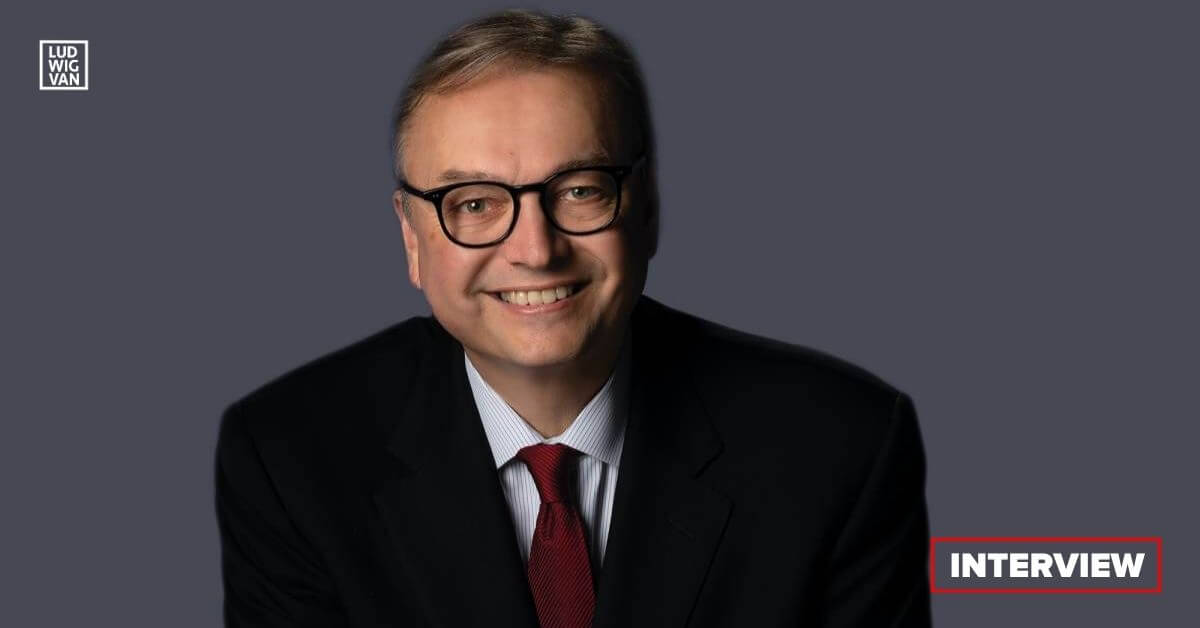
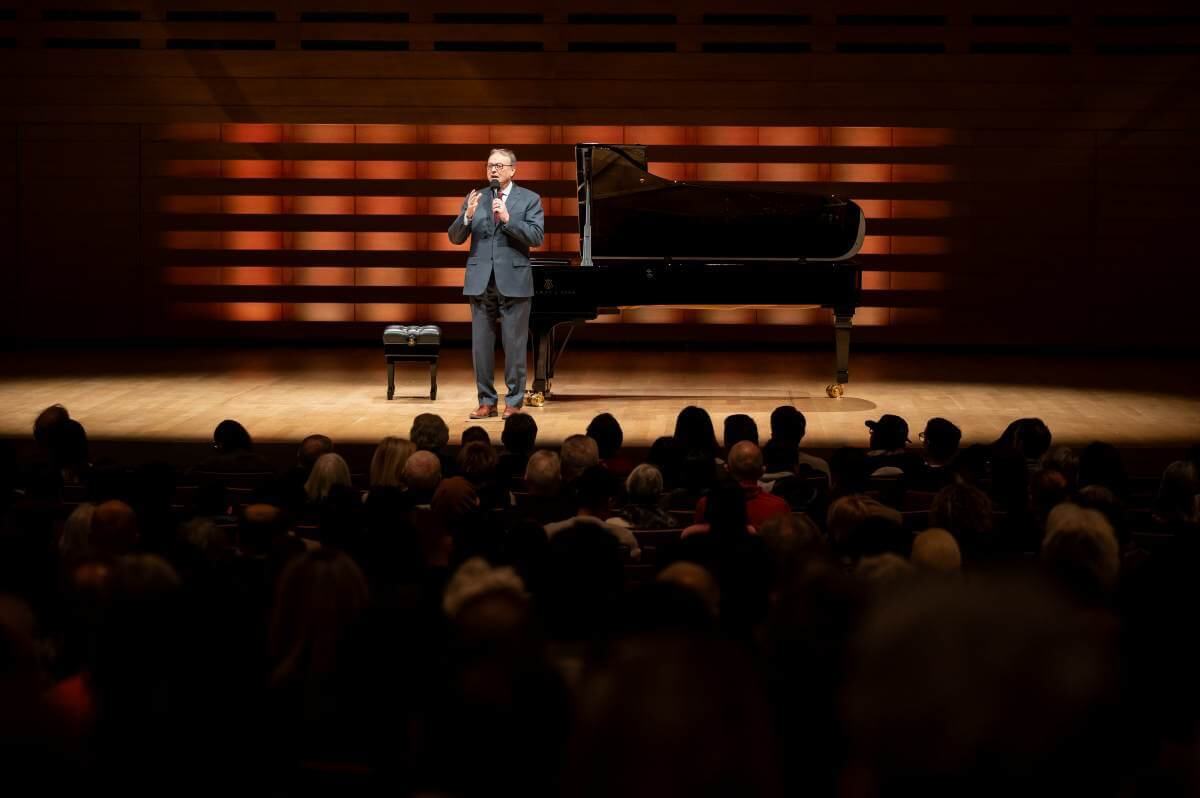
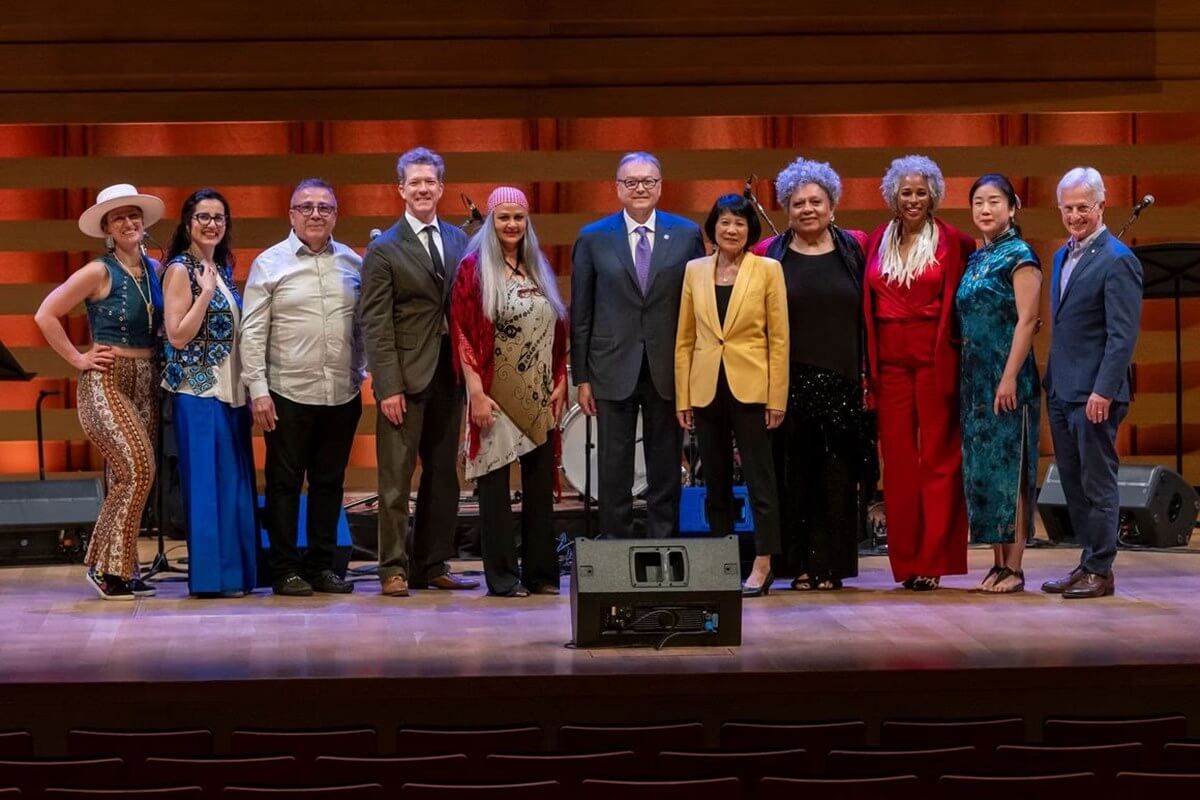
On June 4, Mervon Mehta and other RCM officials announced the lineup for the 2026-27 Royal Conservatory concert season in front of an invited crowd. The event was only partly to announce the rest of the RCM season of performances at Koerner Hall, including jazz, global, and other artists.
The remainder was devoted to a tribute to Mehta, whose term in the role of Executive Director, Performing Arts at The Royal Conservatory’s Koerner Hall ends with the 2025/26 season later this month.
The tribute included speakers like former board member Dr. David Goldblum, and former Governor General of Canada Adrienne Clarkson, along with performances by artists of KUNÉ Global Orchestra, which Mehta himself founded back in 2016, with vocalist Maryem Tollar, mother and daughter powerhouse vocalists Jackie Richardson and Shakura S’Aida, Taylor Academy violinist Christie Cheung, and a stellar jazz trio of Robi Botos, Mike Downes and Mark Kelso.
Mehta was awarded an honorary fellowship from the RCM during the event. That award joins other accolades on Mehta’s mantle, including the 2025 King Charles Coronation Medal.
When he began his tenure in Toronto in 2009, Koerner Hall was not yet finished.
“The first time we heard real music in the hall, we all looked at each other and said, ‘Oh… this is pretty good. I think this is going to be OK.’ Until that moment, we really didn’t know,” he recalls in a statement.
Under his leadership as the inaugural Executive Director, Performing Arts, Koerner Hall has become a jewel of a venue not only for classical music, which makes up about half of its programming calendar, but also jazz, and a range of global and pop artists from a long list of genres.
“From the very beginning, we wanted Koerner Hall to be a place for everybody — a cultural hub for Toronto. We made it clear early on that this would not be a hall for just one kind of music or one kind of audience,” Mervon said.
During his time at Koerner, the hall has hosted or presented more than 1,500 concerts, and that includes 130 world premieres and 83 commissions by the RCM as part of the 21C Series.
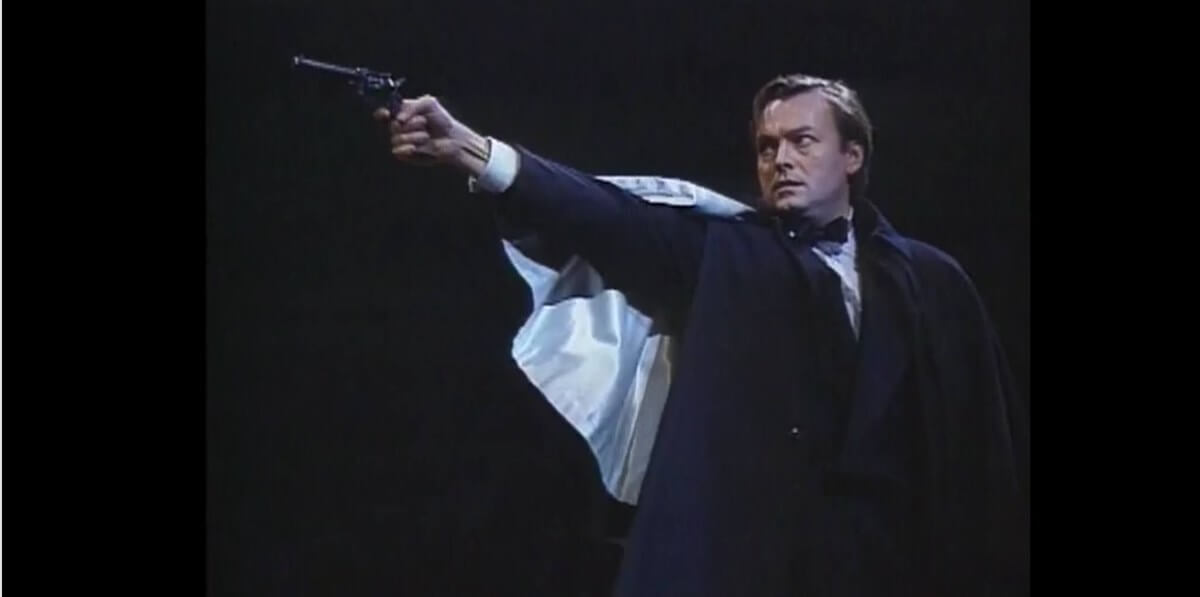
Mervon Mehta
Mervon Mehta began his career as an actor, and he appeared in more than 100 theatrical productions. He trained with the late Sanford Meisner in New York, and performed in that city for several years as a member of the Neighborhood Group Theatre. He also took on roles in regional theatre, and on TV. After returning to Canada in 1987, notable appearances include the role of Laertes in Hamlet at the Persephone Theatre in Saskatoon, Marulus/Messala in Julius Caesar at the Citadel Theatre in Edmonton, and Lucentio in The Taming of the Shrew at Skylight Theatre in Toronto, among others.
At the Stratford Festival, selected roles include Paris in Richard Monet’s Romeo and Juliet, Valentine in The Two Gentlemen of Verona, and in Michael Langham’s critically acclaimed production of Timon of Athens. His reach as an actor went far beyond Shakespeare, and included Rodolpho in A View from the Bridge, Stanley in Brighton Beach Memoirs, Bernie in Unidentified Human Remains and the True Nature of Love, and Cuirette in Michel Tremblay’s Hosanna.
TV roles include appearances on The Untouchables, Choices (with George C. Scott), and he appeared on several daytime soap operas.
In 1993, he moved to Chicago, and performed in several productions there, including The Seagull (Treplev) at Touchstone Theatre, in Once in a Lifetime (Jerry) at the Court Theatre, and in The Cure at Troy (Neoptolemus) directed by the late Bernie Sahlins at Steppenwolf Theatre, along with regular roles at Chicago’s Apple Tree Theatre.
In 1994, his career took a turn from on stage to behind stage. He joined Chicago’s Ravinia Festival as a programmer for the pop concert series In 1998, he became Director of Programming, and Director of Production in 2001. Ravinia hosted 120 concerts each summer, including 20 by the Chicago Symphony Orchestra.
Mehta made the move to Philadelphia in 2002, and took on the role of Vice President of Programming and Education at the Kimmel Center for the Performing Arts. There, he programmed a diverse range of artists from fado star Mariza to Ravi Shankar, and an international roster of orchestras from Berlin, Vienna, Boston, and New York, along with soloists like Lang Lang, Yo-Yo Ma and others. He also incorporated dance and jazz artists in the Kimmel Center lineup.
Alongside his other endeavours, Mervon has become a sought after narrator at classical music concerts, and has taken on this role for a variety of ensembles, including with his father Zubin Mehta performing such works as Beethoven’s Egmont (Los Angeles Philharmonic, Houston Symphony, National Arts Center Orchestra and the Hallé Orchestra in Manchester, England), and works such as Leonard Bernstein’s Kaddish Symphony (Houston Symphony, Gulbenkian Orchestra in Lisbon, Munich Philharmonic, Maggio Musicale in Florence, Hungarian National Orchestra in Budapest); Walton’s Henry V (Lisbon); and Schoenberg’s Verklärte Nacht (Chicago Symphony), among others.
LV caught up with Mehta to talk about his time at Koerner Hall, and what may lie ahead.
Mervon Mehta: The Interview
The timing of his stepping down from the role he’s held since 2009 boils down to a number of factors.
“It’s a lot of things, all leading to the point where it was just kind of the right time,” he says. “I spent 17 years here, plus I spent eight in Chicago and eight in Phildadelphia, doing a similar volume […] of concerts a year. It takes its toll.”
His son is a recent graduate from university, and Mervon says he’s looking forward to traveling with him. “That was a big impetus,” he says.
It’s also a matter of principle.
“We talk a lot in the cultural worlds where the next leader is coming from,” Mehta says, “and we’re not doing the job of training the next group. And one of the reasons is that the older generation isn’t getting out of the way. It’s not healthy for the industry,” he says.
“Koerner Hall, it’s time for a new voice. I never want to get stale. Seventeen years as an artistic director is a long time.”
As he points out, in Australia, for example, festivals change their Artistic Directors every three years by mandate, to avoid the kind of staleness he describes.
Also, he has other projects in mind.
“I have other things that I want to do that don’t involve 60 to 70 hours a week behind a desk.”
Next Steps
Will he make a return to the stage as an actor?
“I’m hoping to,” Mehta says. “We’ll see. I hooked up again with my old agent from 30 years ago, and he’s game. “
Mervon notes that he has a second agent who’s looking into more gigs involving narration with orchestras and other ensembles.
“I’ve been doing that off and on as a kind of side hustle, but I haven’t really been doing that a lot recently,” he says. “I would be very happy to do that.” As he points out, it involves travel to various locations for a short period of time of rehearsals and performances.
“Whoever wants to hire me. We’ll see.”
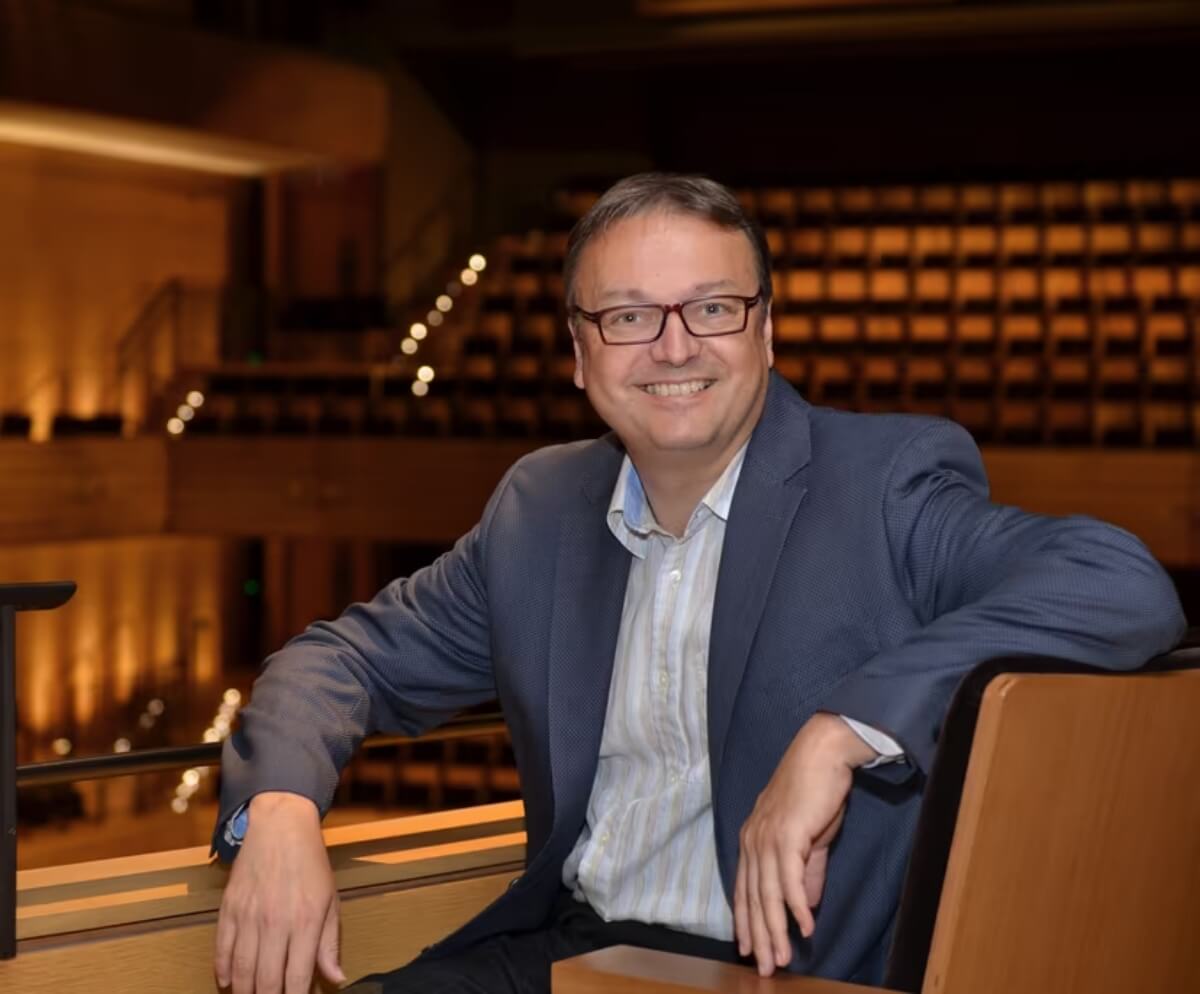
Looking Back
Does he have any regrets from his time at Koerner Hall — anything he’d do differently in retrospect?
“I mean there are certain things that we tried and didn’t work, so in hindsight we shouldn’t have done them,” he acknowledges. He puts some less than satisfactory projects down to elements like marketing failures, or misjudging ticket pricing, for which Mehta takes responsibility.
In other cases, not having a sellout crowd is simply part of the package.
“Part of our mandate is young emerging Canadian artists, who aren’t necessarily going to sell out on their [first try],” he points out.
Other times, it’s simply the something that couldn’t be foreseen.
“There have been a few shows that looked good on paper and didn’t quite work,” Mehta says. “We’ve done a lot of things that we put together.”
Some of those initiatives, like the yearly Sondheim musicals, have sold well. Others, like The Journal of Hélène Berr, were exemplary works, but difficult sells.
“It wasn’t terribly well sold, but it was an extraordinary work. [It was] a very difficult piece about the Holocaust,” he says, noting that the dark subject matter — about a young musician in Paris who was pursuing her career when she was rounded up by the Nazis and sent to a concentration camp — was probably hard for audiences to stomach.
The timing was also unfortunate. “Interesting to do a Holocaust piece while the genocide is going on in Gaza. A lot of people didn’t want to spend some time in that world,” he says. “It was fantastic but it was a tough sell,” he adds.
“But regrets on doing it? No.”
Likewise, he points to the international orchestra series, which has brought ensembles like The Philadelphia Orchestra and Yannick Nézet-Séguin, Ricardo Muti and The Chicago Symphony Orchestra, and the Budapest Festival Orchestra with Iván Fischer to Koerner Hall in recent years.
“None of them made any money, but [it was a fantastic experience],” he says. “We came close a few time, and missed it a few times,” Mervon continues.
“No regrets on bringing that calibre of artists.”
Along with performances, he notes that artists like Iván Fischer spent time holding masterclasses with Glenn Gould School students. They’d work through a whole symphony, or portions of various pieces.
“That kind of education for two hours for our students, to be led by a master conductor, is priceless.”
Other projects, like the formation of KUNÉ Global Orchestra, simply can’t be thought of in terms of money and financial gain. KUNÉ was formed with a whisper of funding from government sources. He points out that the ensemble, which now operates separately from the RCM, is still going strong after a decade.
“They’ve all become very good friends.”
What Makes A Good Artistic Director?
A good artistic director needs to balance their own tastes — and ego — against the practical considerations, like what will sell tickets.
“You’re certainly on a fine line all the time in terms of your personal preferences,” he notes, “[to] balance that with what the audience wants. Sometimes they’re the same, sometimes they’re not,” Mehta adds.
“Bottom line, you have to make the budget. If I had free reign and an unlimited budget, I would have brought three orchestras a year, and Renée Fleming every year, and Lang Lang every year,” he says.
He counts himself fortunate to have been able to incorporate his own tastes into a programming mix that works overall. “It seems to resonate with the audience at these venues.” Naturally, if he’d been looking after the Scotiabank Arena, his choices would have been vastly different.
In Philadelphia, he points out, he worked with three halls, the largest of which has 2,500 seats. That meant booking bigger names, and fewer recitals and chamber ensembles.
“Koerner Hall was kind of a sweet spot in the middle — big enough to do big things sometimes, and small enough [to book] someone like Kevin Chen.” As an emerging Canadian artist, Chen wouldn’t be expected to fill a 2,500 seat venue.
“My career is kind of gone from 13,000 [seats] to 2,500 to 1,200. Obviously the kind of programming you get to do in a smaller hall is frankly more interesting to me.”
In Chicago, he points out, he was booking artists like Sting and Bonnie Raitt, among many other international stars. “The things I’ve been able to do in Koerner, from an artistic satisfaction [perspective], has been greater.”
A good artistic director should also be able to recognize viable ideas that come from the people around them.
He says he gets a lot of suggestions from subscribers and donors, ranging from good to ridiculous. The late Michael Koerner was someone whose ideas often panned out. Koerner was the RCM’s first Chancellor, and an important philanthropist whose donation of $5 million in cash and antique instruments provided the seed funding for the hall named after him. He routinely sent Mehta clippings from newspapers about new artists as he traveled in Europe.
“We took a look at them, and sometimes we’d program them.”
The Orchestrated series, which pairs a contemporary artist with an orchestra, was Alexander Brose‘s idea. “That’s new, not from my head, but from one of my colleagues.”
Sometimes, artists would approach him as well, including pianist Stewart Goodyear, who came to Mehta with his idea of performing all of Beethoven’s piano sonatas in a single day.
“I remember when he did it, a few of the people in the media called it a bit of a stunt,” Mervon recalls. Goodyear has since performed that same program in a number of venues. “The first time was here. Frankly, we didn’t know if he could do it.” It took nine hours in all, including two short breaks.
“All by memory, by the way,” Mehta relates. “The first thing I said to him was, who is your page turner?” He was astonished when Stewart said he wouldn’t be needing one. “He has an extraordinary mind,” he adds.
Another artist-led initiatives included composer Brian Current’s Gould’s Wall, which involved singers climbing and singing against the preserved original wall of the Conservatory where Glenn Gould once studied, still intact and visible inside the Telus complex. “We had 180 people in Muskoka chairs,” Mehta laughs. “It was pretty wild.” A 15-piece orchestra played in front of the RCM’s cafe. “It’s not something that I think any of the designers of the building had in mind.”
Who Will Take On The Position Of Executive Director, Performing Arts?
Naturally, the search for Mehta’s successor is ongoing.
“I’m not involved directly, but I know some of the people who have put their hand up,” he says. His opinion on various candidates has been asked by the search committee, and they include a few people that Mehta knows directly.
“All would be fantastic,” he says. “It’s an interesting position, because you really have to have your head around classical music.” As Mervon points out, that includes not only orchestral music, but also chamber music and solo recitalists. “An orchestra artistic director, probably not a good fit.”
Since Koerner Hall’s programming includes about 50% classical, and the other 50% jazz, global, and pop music, the position requires a balanced approach. “Someone has to have their finger on the pulse of a lot of different genres.”
Those musical worlds also operate on different bases. Classical musicians are booked about two years ahead, while jazz musicians might be looking at a year ahead, and pop bands, perhaps months or even just weeks ahead. As Mehta also points out, in general, the classical music artists will tour with material for months or even years before they record it. Pop artists, in contrast, record first and then tour.
“It’s a different world,” he says. Audience expectations are also quite different. “A lot of audience [for classical music] comes for the celebrity of the [artist], but a lot of them, probably more, come for the repertoire.”
If a classical artist has to cancel, it’s possible to replace them with another who will play the same program. In the pop music world, that kind of flexibility doesn’t exist.
Next Steps
Other than travel, Mehta has no plans to pull up his roots in Toronto.
“I’m staying in Toronto,” He says. “My wife is here and still working. My son just graduated.”
His newfound freedom will leave him with different options. He’s looking forward to traveling on a much more relaxed schedule with family members.
“I’m going to be at a lot of concerts,” he says. “I booked all season. But I’ll be coming at quarter to eight, rather than 10 in the morning.”
He’s also been asked for advice from a handful of organizations who are building new concert halls at various stages of the project.
“They all want my 35 years of advice. That seems to be a side career that I might embark on,” he says. He notes that the initial push is typically to get the venue built. What happens afterwards is often an after thought. That’s where his advice will come in.
Launching a new venue is about fulfilling a need. “I think Koerner filled a great niche in Toronto,” he says. “I think Koerner is well positioned. When we started, we had to explain the hall to the artists and the audience. We had to really sell it. Now, my successor doesn’t really have to sell it,” Mehta adds.
“If get into working with other halls, I’ll have to start selling the hall again,” he says. “But, I’m not going to take another full-time job — unless my money runs out,” he laughs.
Koerner Hall: 2026/27
For the upcoming season, in addition to the classical music concerts announced earlier this year, highlights include:
- West African legends Vieux Farka Touré and Salif Keita, and fado star Mariza;
- On the jazz front, a five-concert series titled A Centenary of Trane and Miles that features renowned international artists such as John Beasley, Ewan Farncombe and friends, the Branford Marsalis Quartet and Dianne Reeves, Chicago trumpet master Orbert Davis with Toronto Tenor Madness featuring three of Toronto’s great saxophonists, and the all-female Artemis with Pat LaBarbera.
Tickets are already on sale for subscribers, and will go on sale to the general public on June 16.
“I’m really quite excited about next season,” Mehta says. “I think it’ll be a good one.”
- Find tickets and subscriptions for the 2026/27 Koerner Hall season [HERE].
Are you looking to promote an event? Have a news tip? Need to know the best events happening this weekend? Send us a note.
#LUDWIGVAN
Get the daily arts news straight to your inbox.
Sign up for the Ludwig Van Toronto e-Blast! — local classical music and opera news straight to your inbox HERE.