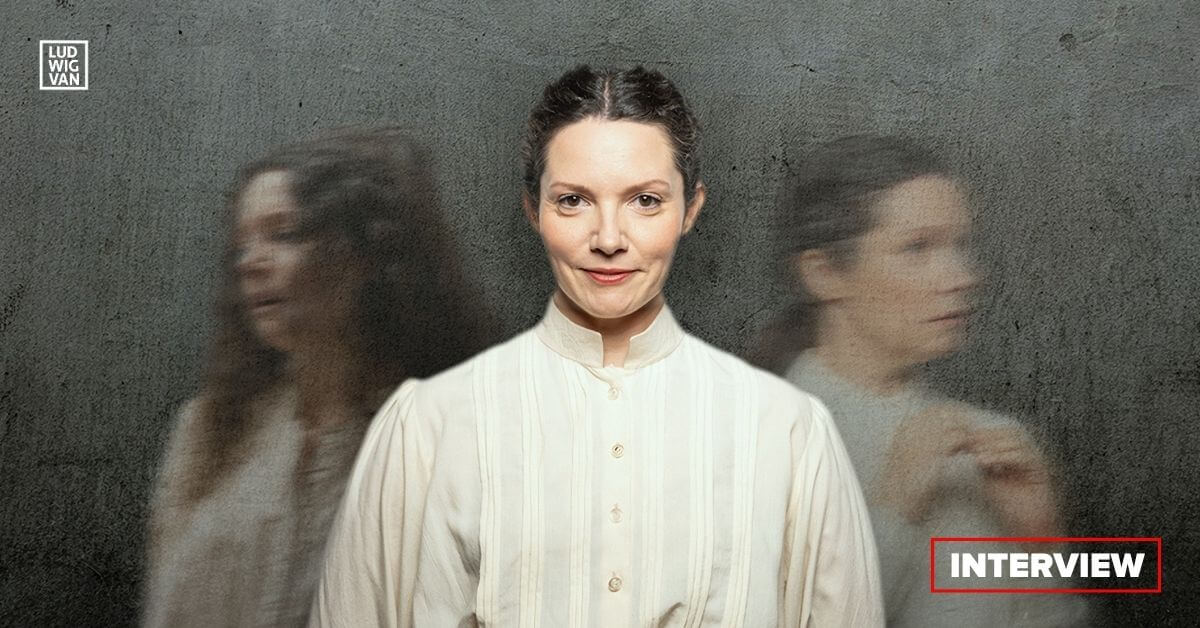
From a piece of investigative journalism that shocked the world to the stage, 10 Days in a Madhouse is a new opera composed by Rene Orth, with a libretto by Hannah Moscovitch. The work saw its world premiere in 2023 with Opera Philadelphia, and will see its Canadian premiere from June 16 to 21, a Tapestry Opera and Opera Philadelphia co-commission and co-production, co-presented with Luminato Festival and the Canadian Opera Company, in association with TO Live.
The story is based on the real life work of Nellie Bly.
Nellie Bly (1864 – 1922) was a groundbreaking journalist in 19th century America. Her still awe-inspiring body of work includes an exposé of the horrific conditions in the mental institutions of her day.
In 1887, at just 23 years of age, Bly posed as someone with mental health issues — something that was not difficult to do for a woman of her time, as it turned out — and spent 10 days at Blackwell’s Island learning firsthand what the women there, many of whom were quite obviously not mental health patients, had to endure.
Her piece for New York World, a newspaper owned by Joseph Pulitzer, brought public attention to the shocking truth. The institution was where patients lived in cold, dirty conditions, and were mistreated in many ways — particularly immigrants who didn’t speak English well.
The newspaper piece, and a subsequent book, led to real world reforms.
LV caught up with Canadian writer and librettist Hannah Moscovitch to talk about her work on the project.
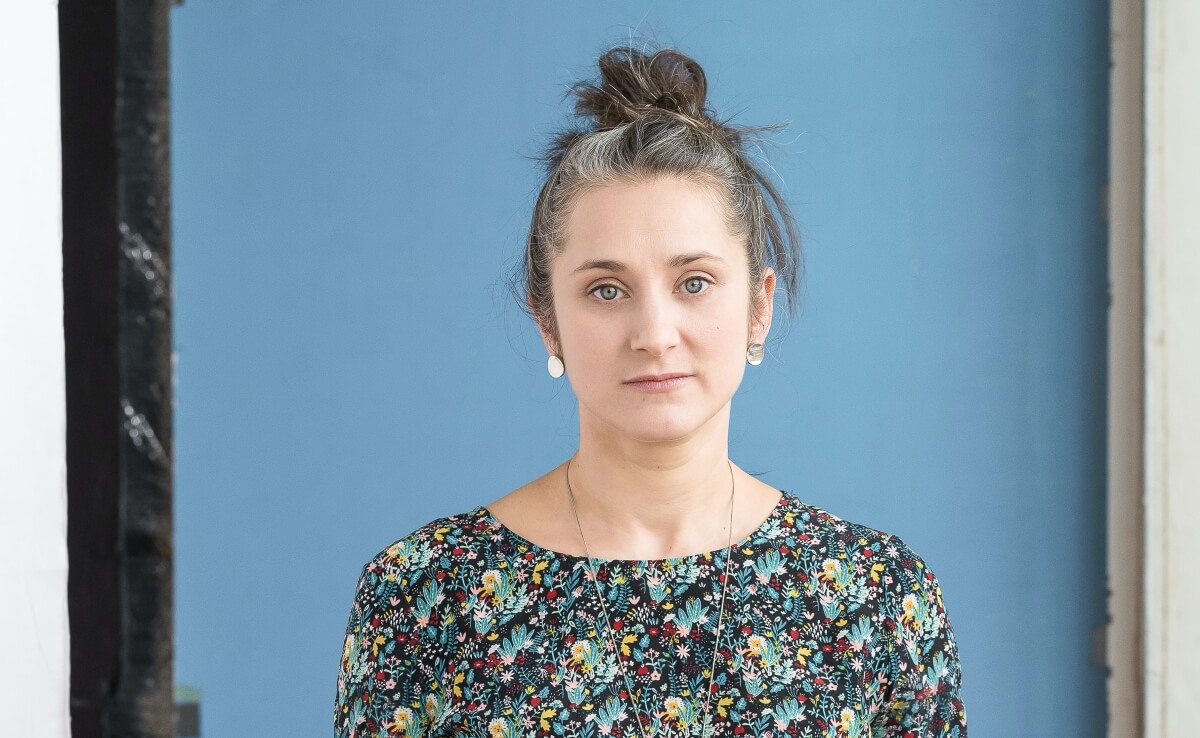
Hannah Moscovitch
Canadian playwright Hannah Moscovitch grew up in Ottawa, and studied at the National Theatre School in the acting stream. She first gained attention on a national scale around 2007, with the premiere of her play East of Berlin. She’d see a string of successes after that, including This is War, Old Stock: A Refugee Love Story, and Sexual Misconduct of the Middle Classes. The latter won her the 2021 Governor General’s Award for English-language drama.
Today, she divides her time between Toronto and Halifax. She has also won the international Windham-Campbell Prize administered by the Beinecke Library at Yale University, several Dora Mavor Moore Awards, the Carol Bolt Award, the Toronto Arts Council Foundation Emerging Artist Award, the K.M Hunter Award, and the international Susan Smith Blackburn Prize.
Moscovitch is one of the most produced living playwrights in Canada, but 10 Days is not her first foray into the opera world. Old Stock: A Refugee Love Story, co-created with Christian Barry and klezmer-folk artist Ben Caplan, is a music-theatre hybrid work.
Sky on Swings is a chamber opera about two women with Alzheimer’s, composed by Lembit Beecher and with Moscovitch contributing the libretto. It premiered at Opera Philadelphia in 2018. 10 Days in a Madhouse is her fourth opera project.
Moscovitch has written for TV, including episodes of the Interview with the Vampire series, and the series Little Bird, which streamed on on Crave and Aboriginal Peoples Television Network in 2023. Moscovitch has also worked as a producer and actress.
Hannah Moscovitch: The Interiew
Hannah became involved in 10 Days in a Madhouse through a long and winding process.
“It’s so convoluted,” she explains. “I did an opera lab a long way back at Tapestry to learn what it is to write for opera.”
For the Tapestry LIBLAB, she was paired with composer Lembit Beecher, which resulted in the opera short In This World, George Is Heartbroken in 2012. At the time, Beecher was a resident composer for Opera Philadelphia.
“I became affiliated with Opera Philadelphia through him, and they introduced me to Rene,” she say. “I have a secret very weird opera career in the States,” she laughs. “In all honesty, […] since 2020, I’ve really worked primarily in TV and film.”
Opera
What drew her to opera in the first place?
“Well, the music,” Moscovitch says. “There’s also an opportunity to work at the generative phase, when you’re creating, with another primary creator. Teaming up with someone who does something very different with you,” she continues.
“It feels like a kind of madness, really. There’s only so much language that composers and writers share.”
As a librettist, it felt like an interesting process to take part in.
“Having written four operas, it seems like you’re trying to support the music,” she says of her role. “You write the libretto — you hope it’s something they can use. That’s the mad part of opera.”
The technical aspects of matching libretto to music, of making the shapes of the words fit the composition, present a different challenge than other forms of writing. “That doesn’t register at all if you work in TV.” Composers have very specific demands. “We need more vowels in these words.”
It was an intriguing challenge. “This is so bizarre, that I have to keep doing it,” she says.
Other aspects of opera presented themselves. “For instance, blocking, the way that people are arranged on stage, is to some degree naturalist,” she says of theatre, “talking to someone who is facing you.” In opera, singers face the audience. “That was all blown out. There’s no relationship between what’s happening in the text and what we’re seeing.”
Hannah learned the various elements of opera through hands on work. “Since I don’t have a background in opera,” she says.
“I loved the aestheticism of it,” she says, “the gorgeous costumes and sets. I have no idea what’s happening, but I kind of like that.”
It didn’t follow the rules of storytelling for theatre. “To me, coming in from the outside, a lot of opera seemed non-narrative. There’s no mechanism of suspense,” she says. “Some aspects of storytelling can be jettisoned completely.”
The novelty of its parameters became part of opera’s appeal for her. “I had moved between a bunch of media at this point,” she says. That included podcasts, TV, and film. “I had never encountered one like opera. It had less in common with all the other media than any other media I had yet writ.”
The Story
Nellie Bly’s story is a juicy one, full of possibility.
“It was Rene Orth, the composer, who said read this,” Moscovitch recalls. Orth handed her Nellie Bly’s book. “I read it and was like, this is like batshit crazy.” She points out that Bly worked in a time without much in the way of technology, in an America that was still dealing with the aftermath of the Civil War.
“Her idea was so audacious,” she says. “I was just like, oh my god, this is so unexpected. There are people who are ahead of their time, but this is one bad bitch. It got my attention. I got interested in this, the phenomenon of this.”
What struck her most was that, after gaining admission to the asylum at Blackwell’s Island, Bly had dropped her pretence of insanity… but it didn’t matter. Once she was there, she was subject to the same treatment as everyone else, and denied any opportunity to appeal.
“Most of the women on that island were not mad,” Hannah says, “they were grieving, poor, Black or Chinese.”
Bly had assumed she’d be the only one in the institution who was not afflicted with a mental illness, but it proved not to be the case. The asylum was a repository for women who society, for various reasons, deemed too difficult to deal with.
“She came out and reported on that, and change occurred. I thought, that was so fascinating.”
The opera’s story goes beyond the bare facts.
“We thought about how those events in her life would haunt her,” Moscovitch says.
It became a kind of self-fulfilling prophecy, as she points out — if you put people in this kind of environment, they really would turn mad.
“It was impossible to convince anybody that she wasn’t mad,” she notes. In fact, her employers at the newspaper had to come rescue her. “You get in the zone of women not being believed. And, who’s in charge, and their reasons for maintaining the status quo,” Moscovitch adds.
“It was a mechanism to get rid of women.” Women who had been sexually assaulted, for example, and were not believed or supported, could end up in Blackwell’s, or a place like it. “It was a catch-all for throwing women who were inconvenient. Women who were saying things you don’t like. And you can also discredit them.”
The Production
In the opera, the collaborators made decisions on how the story would unfold.
“We were really interested in running the narrative backwards,” Hannah says. It begins with the asylum, examining the idea of madness and what it means. Then, the story proceeds back to the beginning.
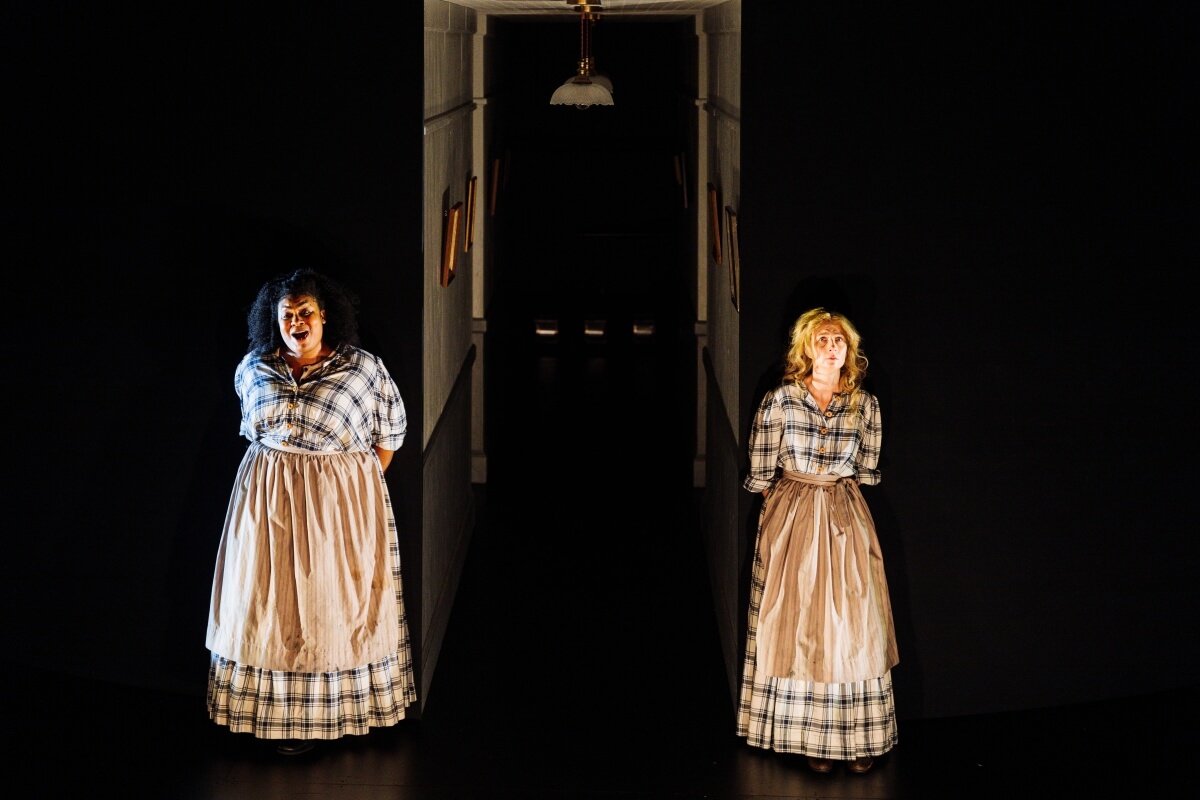
Jorell Williams portrays Dr. Josiah Blackwell, with Lauren Pearl as the Nurse/Matron — the antagonists of the piece. Mireille Asselin sings the role of Nellie Bly, with Taylor-Alexis DuPont in the role of Lizzie, a fellow inmate Bly encounters.
Rene Orth’s music brings the story together.
“I think Rene Orth is rad,” Moscovitch says. “She’s a really beautiful music creator,” she adds. “There’s a strong sense of suspense in her music, and of dramatic writing.”
Opera Performances
10 Days in a Madhouse by composer Rene Orth and librettist Hannah Moscovitch takes the stage at the Bluma Appel Theatre from June 16 to 21, 2026.
- Find tickets and show details [HERE].
Are you looking to promote an event? Have a news tip? Need to know the best events happening this weekend? Send us a note.
#LUDWIGVAN
Get the daily arts news straight to your inbox.
Sign up for the Ludwig Van Toronto e-Blast! — local classical music and opera news straight to your inbox HERE.