By Paul E. Robinson on January 15, 2015
Most music-lovers and performers too take it for granted that they know pretty much what Brahms should sound like. No need for the historically informed folks to get involved. In fact, however, there are still issues to be considered and we do need to look at period performance practice. Neither of these new sets claims to be “historically informed” but one in particular – the Chailly with the Gewandhausorchestra – shows that a lot of thinking and research has gone into the preparation and rehearsal process...
(Continue reading)
By Paul E. Robinson on December 16, 2014
Here we have two complete cycles of the 15 Shostakovich string quartets. How to choose between them? Actually, anyone seriously interested in this music needs have both of them.
The Beethoven Quartet cycle is practically self-recommending. The original members of the quartet worked together for the first time in 1923 as the Moscow Conservatory Quartet and regularly thereafter into the 1970s. As the Beethoven Quartet this great Soviet ensemble worked closely with Shostakovich for most of his life and gave the premieres of most of his quartets. The details of the relationship between Shostakovich and the Beethoven Quartet are well told by producer Jacob Harnoy in his liner notes. He quotes first violinist Dimitry Tsyganov on the subject of how they went about preparing the composer’s new quartets...
(Continue reading)
By Paul E. Robinson on December 1, 2014
Just over a month ago the London Philharmonic and its music director Vladimir Jurowski gave a concert in Roy Thomson Hall that elicited rave reviews. The major work on the program was the Symphony No. 8 by Shostakovich. Clearly, Jurowski had a special affinity for the music of this composer. Here they are again, on a new CD on the orchestra’s own label, and again playing symphonic music by Shostakovich. And again it would be appropriate to reach for the superlatives.
(Continue reading)
By Paul E. Robinson on November 26, 2014
In the spring of 2012 the Philadelphia Orchestra presented a “Stokowski Celebration” in the orchestra’s old home, the Academy of Music. The programs consisted of music associated with Stokowski, the longtime music director of the orchestra, and there was a well-curated display of Stokowski memorabilia in the lobby and on the orchestra’s website. Yannick Nezet-Seguin conducted all the concerts and in one remarkable moment Stokowski “passed” the baton to Yannick by means of lifelike holograms on either side of the proscenium. A year later Yannick made his first recording with the Philadelphia Orchestra and it included several of the works played at the Stokowski Celebration.
(Continue reading)
By John Terauds on November 18, 2014
(Continue reading)
By Paul E. Robinson on October 20, 2014
It has long been known that Dvořák’s New World Symphony was inspired by African-American and Native American music. And Dvořák himself mentioned Longfellow’s The Song of Hiawatha as another source of inspiration. But most musicians and musicologists were reluctant to be more specific than that. In recent years, however, the musicologists Joseph Horowitz and Michael Beckerman have tried to show that all of these elements, especially the Hiawatha story, can be linked to specific passages in the New World Symphony...
(Continue reading)
By Paul E. Robinson on October 14, 2014
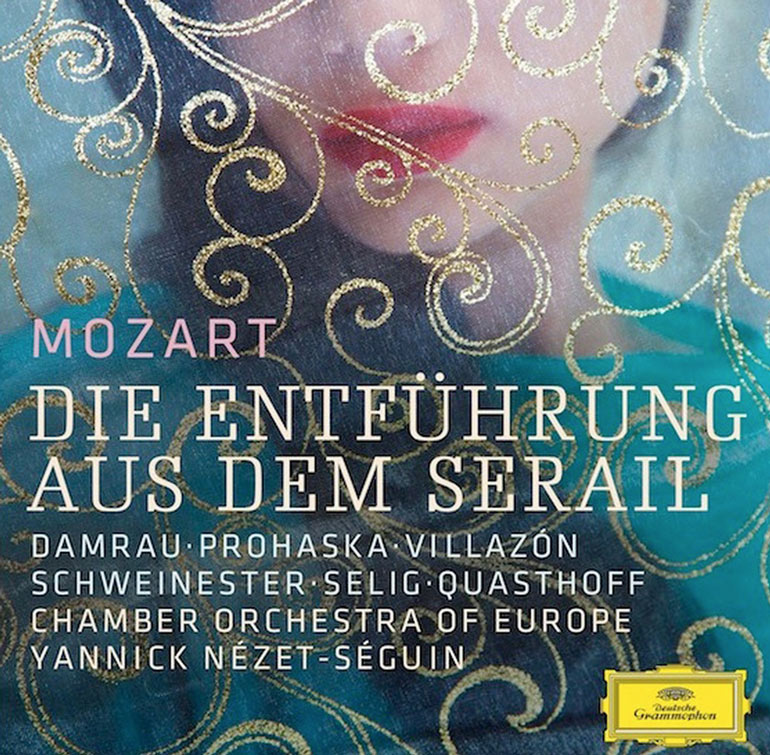
How many orchestras does a man need? Yannick Nézet-Séguin is music director of three of them at last count and has close connections as a guest conductor with several others. No wonder he recently cancelled several weeks of concerts to grab some rest. But then it is a whole new experience for a Canadian conductor to be in such demand. It has never happened before and 39-year Yannick Nézet-Séguin can be forgiven for finding it difficult to say no...
(Continue reading)
By Paul E. Robinson on October 8, 2014
During his long career the American violinist Oscar Shumsky (1917-2000) did not enjoy the fame of some of his colleagues but he was held in the highest esteem by violinists everywhere. He studied with Leopold Auer and appeared with the Philadelphia Orchestra under Stokowski when he was only eight years old. He had a strong Canadian connection. In addition to frequent solo appearances, starting in 1959 he served as music director with Glenn Gould of the Stratford Music Festival.
(Continue reading)
By Paul E. Robinson on September 23, 2014
Sir Georg Solti was the conductor for the first-ever complete recording of Wagner’s Ring cycle. It was an historic event and Decca Records and producer John Culshaw deserve enormous credit for undertaking the enormous risk involved. Against all odds – EMI producer Walter Legge thought it would be a disaster - the cycle was spectacularly successful. With most of the leading Wagner singers of the day taking part the performance was glorious, and John Culshaw and his team of engineers created a sound world that was far ahead of its time.
(Continue reading)
By Paul E. Robinson on August 28, 2014
(Continue reading)