
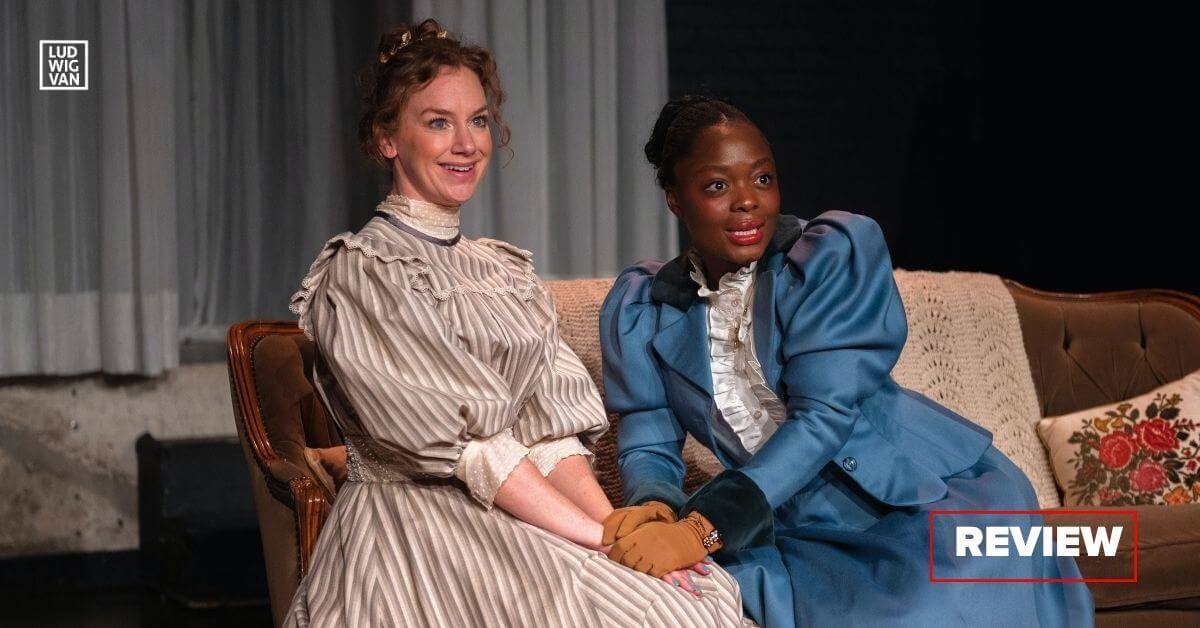
Riot King Art Market: The Moors. Written by Jen Silverman, directed by Bryn Kennedy, with Blessing Adedijo (Emilie); Jack Copland (The Mastiff); Raquel Duffy (Agatha); Erin Humphry (Marjorie); Lindsey Middleton (Huldey); Heeyun Park 박희윤 (The Moor-Hen). The Theatre Centre’s BMO Incubator Space, April 8, 2026. Continues until April 19; tickets here.
As The Moors opens, a family — sisters Agatha and Huldey, servant Marjorie, and the big black dog (Jack Copland as The Mastiff) — await the arrival of a new governess. The dangerous and unforgiving environment of the moors surrounds the family estate.
The Victorian Goth of the Brontë sisters immediately comes to mind, and the initial words and actions of the spinster sisters and their housemaid suggest that kind of emotionally fraught and repressive environment and story.
But, fairly quickly, the cracks begin to appear in that scenario. Master Branwell, the lord of the estate who’s been corresponding with governess Emilie, is mysteriously absent. The parlour maid has the typhus… or is she actually the pregnant scullery maid? Both? The dog waxes poetic on love and loneliness when the human characters are off stage.
From people who are locked in an attic to the moors and their dangers, the familiar elements appear in the story — just never in the ways that you’d expect.
The Moors takes the Brontëan preoccupations with family and the search for love in a difficult society, and filters it through a wickedly dark sense of humour and a queer lens.
The Story
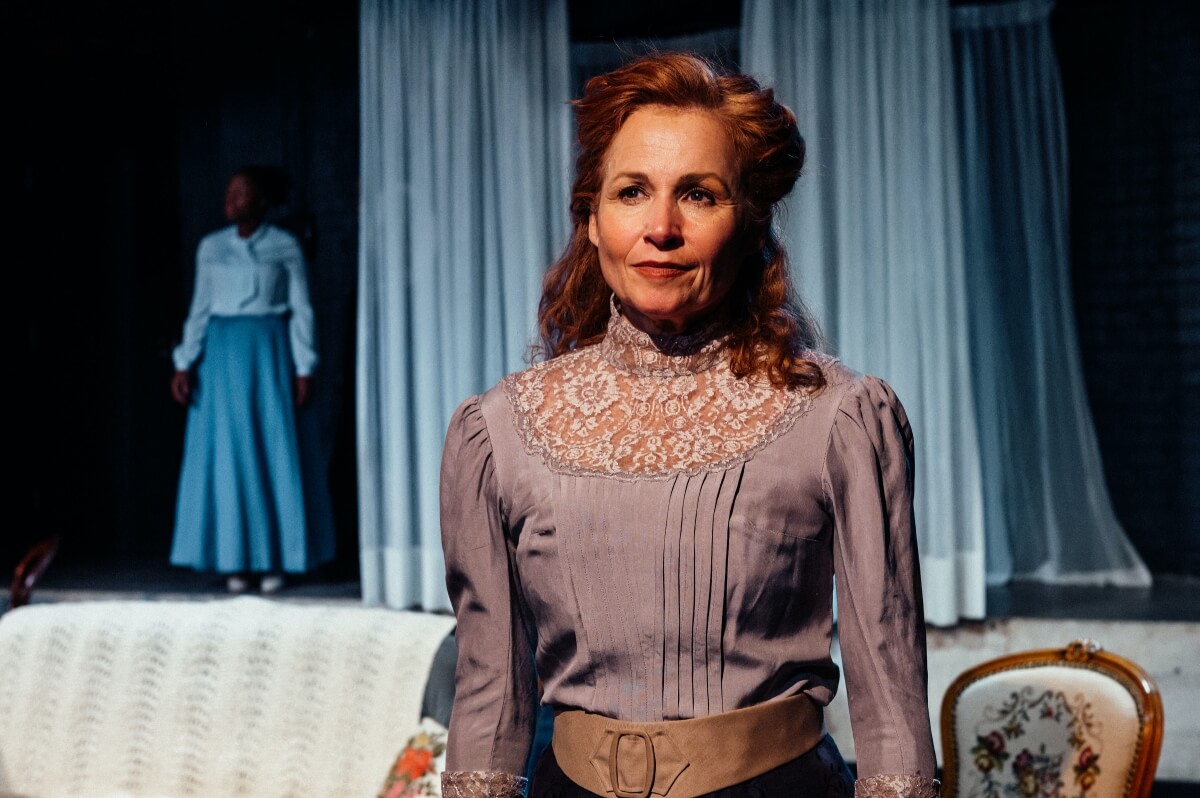
When Emilie arrives at the manor, she gets a frosty reception from Agatha, the elder sister seemingly in charge of the household, and an overly enthusiastic one from Huldey, the ditzy younger sister. Emilie asks about the master of the household, the man who’s sent her such… charming letters, and the young child she’ll be looking after. The dog barks, and the humans shut him up. The maid is caustic, while also deferring to the hierarchy of the household.
Initially, Emilie questions the incongruities as they pop up. Who is the maid exactly, and how many identities does she have? Why is her own bedroom suspiciously like the parlour? Why doesn’t the master present himself, and where is the child? Why does Agatha seemingly dislike her so much?
A good part of the laugh out loud humour in the play comes from pointedly acknowledging the disparities, while simultaneously, the characters attempt to live in denial of them.
As each of them attempt find love and free themselves and their stamped down desires, they begin to pair off.
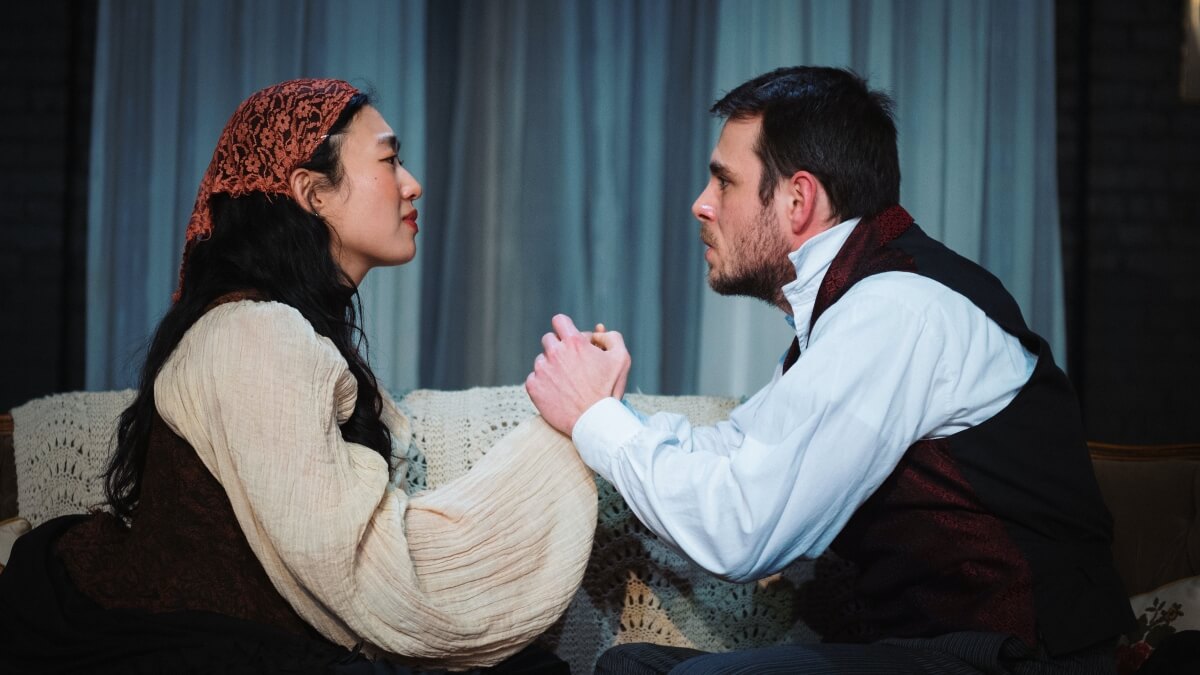
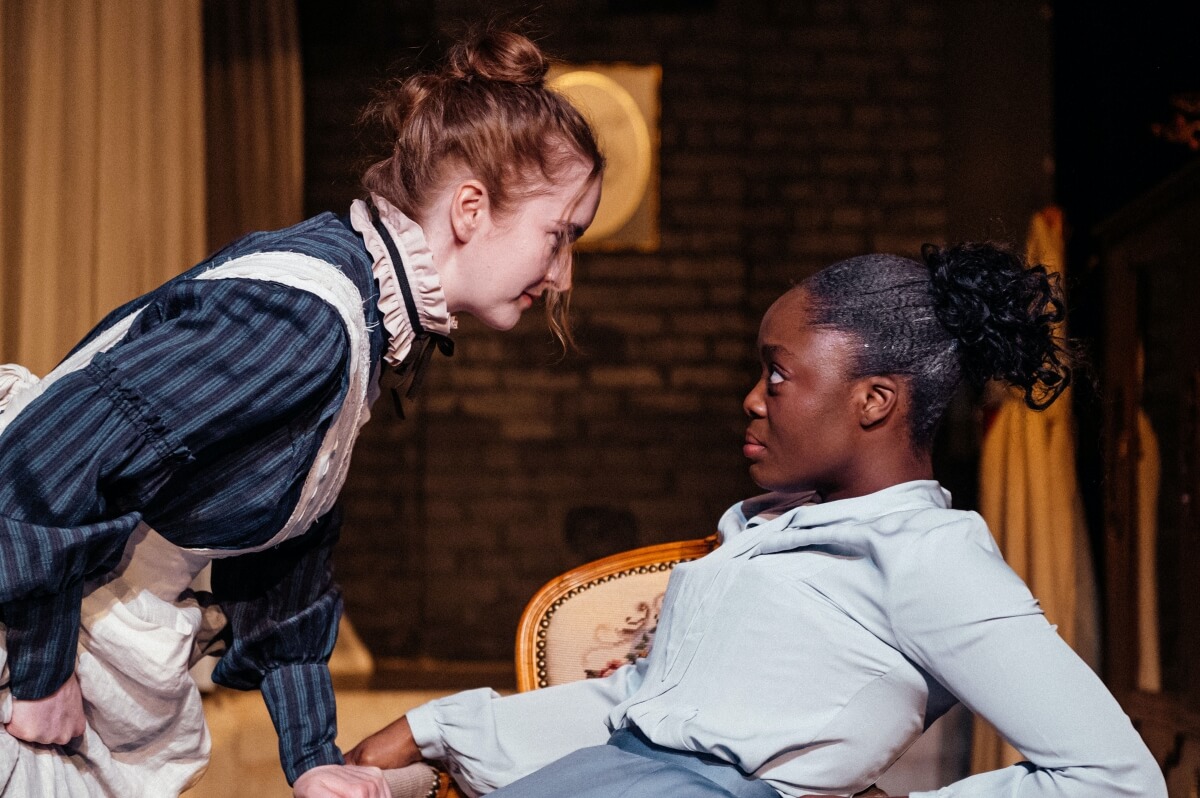
The lovelorn Mastiff, ignored and dismissed by all the humans, discovers a Moor-Hen. She’s reluctant at first to let him get close, but he wins her over with his, dare I say it, dogged devotion. Emilie and Agatha, who clash over the role of women along with the family’s secrets, finally thrash out their differences, and the truth (or some of it) of the household and its situation is uncovered in the process. Huldey and the maid have their moment of connection too over Huldey’s histrionic diary of depression and Marjorie’s desire, underneath a servant’s subservience, for her own story to come to the fore.
Collectively and individually, they scheme, obfuscate, and bulldoze their way towards what they see as happiness. But, is it really happiness they actually seek? Even as the connections are tenuously built, tensions begin to rise, and their individual stories go off the rails as all those repressed emotions explode and collide.
Emilie, initially the outsider and somewhat a voice of reason, is gradually subsumed in the household’s madness…. or was she out there all along?
Performances
The story, with its wild and surreal dimensions, hinges on the characters, and the cast is uniformly strong in creating characters with believable emotions, each distinct from the other.
Blessing Adedijo’s Emilie undergoes a convincing transformation. She’s not quite the voice of reason she appears to be at first, and she’s looking for love like anyone else. Agatha (Raquel Duffy) is perhaps the character most grounded in realism. She’s been made hard by life and circumstance. But, even when a softer side emerges, she’s both oblivious to anyone’s story outside her own, and imperious about her role in the household.
Lindsey Middleton’s Huldey is manic through and through, but she conveys the vulnerability that underlies the over the top emotions through subtle moments and gestures — a slight hesitation before insisting that the bedroom really isn’t the parlour, among others. She changes towards the end of the play, but it’s so delicious in scope that I won’t elaborate and spoil it for future audiences.
As The Mastiff, Jack Copland does a remarkable job of conveying a dog’s sensibility, albeit a very articulate dog. His eyes and physical gestures read dog, and added to the play’s genuinely funny moment. He’s romantic and longing for connection, but, just like an overly clingy pet, the imbalance reveals another side to him. Likewise, Heeyun Park’s The Moor-Hen conveys the emotional perspective of a small bird. She’s limited in intelligence, but she knows who she is. Both the animal characters are clothed as humans and not in some furry/feathery costume, a fact that doesn’t detract from their ability to offer peripheral perspectives that take place outside, but parallel to, the human drama.
The maid, with her shifting names and identities, and her sharp-tongued observations on the goings on, is often a part of the gag. Erin Humphry gives her a depth that serves to remind us of the realities of the working class who toil to keep the manor and its delusions afloat.
Staying true to the characters is what makes the story and both its humour and pathos work.
There are three song numbers within the story that add depth to Emilie, Agatha, and Huldey — the latter’s musical bid for freedom is a zany showstopper that brought a round of applause from the audience.
Set & Design
The set (designer Bryn Kennedy) is ingeniously detailed and designed with period antiques that fit the story without distracting from it. A couch and chairs in the foreground of the stage serve as the parlour/great hall/bedrooms/et cetera. A desk or boudoir at one side add to the illusion. White transparent curtains form a hallway at the back, with two doors and the door to the theatre space itself creating multiple points of entry and exit.
The stage space itself is on a lower level, and the raised areas to the side serve as the moors and the outdoor area. Taken all together, it’s a very creative use of space, where a static set effectively serves multiple purposes.
The costumes by Madeline Ius are wonderfully detailed, with at least two changes for most of the characters, and a special mention for the elaborate hair styles for the women characters. The Mastiff’s formal Victorian suit, and the Moor-Hen’s boho Romani-esque skirt and blouse, convey the essence, if not the animal reality, of the characters.
Director Bryn Kennedy is resourceful in moving the characters around the one-room set in ways that simultaneously suggest a much larger mansion, and also become part of the running joke, adding to the play’s skewed reality charm. Kennedy’s direction balanced the humour of the story with the relatable emotions at the heart of the play.
The titular moors, never depicted in a visual sense, lurk just outside human activity. Their presence is effectively conveyed as a space that exists as much in the imagination of all the characters as they do physically, a symbol of the wildly dangerous and unpredictable world.
Final Thoughts
Co-producer Brendan Kinnon, also a co-founder of Riot King Art Market, came out before the beginning of the play to talk to the sold-out audience about the work’s themes of longing, connection, including connection to land, and what people will do to avoid loneliness. It was a fitting preface for the play.
With its witty, insightful script, and a talented cast and creative team that bring home emotional truths through the black sense of humour, The Moors is a hugely entertaining and thought provoking night of theatre.
Are you looking to promote an event? Have a news tip? Need to know the best events happening this weekend? Send us a note.
#LUDWIGVAN
Get the daily arts news straight to your inbox.
Sign up for the Ludwig Van Toronto e-Blast! — local classical music and opera news straight to your inbox HERE.


- PREVIEW | The Guitar Society Of Toronto Presents The 2026 Toronto Guitar Weekend - April 9, 2026
- SCRUTINY | Victorian Tropes Are Turned Upside Down In Jen Silverman’s Witty And Whimsical The Moors - April 9, 2026
- THE SCOOP | Sistema Toronto Teams Up With NB Distillers For A Fundraiser - April 8, 2026