
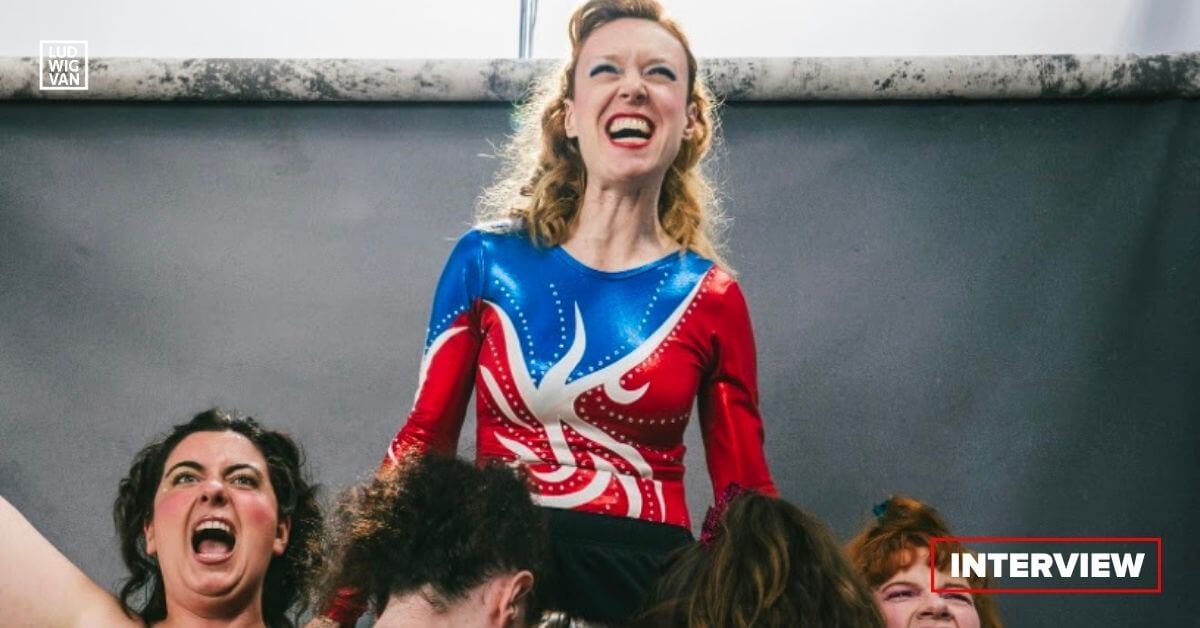
Coal Mine Theatre ends their 2025/26 season with Dance Nation by playwright Clare Barron. Barron wrote the work inspired by the fierce competition she witnessed watching Dance Moms on TV. The American playwright was a finalist for the 2019 Pulitzer Prize for the work, and won the 2017 Susan Smith Blackburn Prize.
She wrote a comedic play featuring pre-teen competitive dancers at a national competition, girls who are going after that prize just as they’re beginning to understand what society expects from them. While they throw their all into the competition, they’re also starting to be aware of the fact that the world expects them to tone themselves down, and not be “too much”.
It’s certainly fruitful grounds for exploration.
Coal Mine co-founder Diana Bentley is co-directing the show with National Ballet of Canada Creative Producer Alyssa Martin. The pair also teamed up to co-director last season’s multi-Dora Award winning People, Places and Things.
The show makes its professional Toronto debut April 12 to May 3, 2026, and takes over two floors of the Coal Mine venue as a Coal Mine Theatre and Outside the March co-production.
LV caught up with Bentley and Martin to talk abut the show.
Diana Bentley & Alyssa Martin: The Interview
The play is a comedy with a lot to say.
“I think my feeling is that Clare Barron is using the whole structure of competitive dance to give herself a scaffolding as a playwright,” says Bentley.
Young girls can be intense, spirited, and feel free to take up space — qualities that are conditioned out of them as they get older. It can be easy to make fun of the subject, but it ultimately reveals the ways that society makes fun of most things that young girls get passionate about.
“What it means to grow into womanhood, and what it means to be a woman, and what it means to be in a female body,” Bentley continues. “As you watch the play, the dance world really bleeds away.”
Barron’s genius lies in using the scaffolding Bentley mentions.
“She does incredible things with structure. She calls it a ghost play.”
The actors of various ages cycle between the pre-teen dance competitors, aged 11 to 14, and adults of various ages who may be reflecting on their own past.
“It goes in and out of time, and in and out of the different ages,” Diana explains. At one point there is a 65 year old man talking about his mother, at another, a 40-something woman who reminisces about her own days as a competitive dancer, for example.
The young dancers, from their own perspective, become more and more aware of what waits for them.
“Dance teacher Pat has this moment where he says to Zuzu, if you leave now, puberty will happen,” Bentley says. “There’s this whole paradigm of how women are made to feel small.”
The story doesn’t shy away from the harsh realities of the dance world, a kind of microcosm of how the world pressures women to become smaller. “Out of our size and wisdom, especially as we age,” Diana says. “It’s such a clever container for it.”
The ideas come through the action.
“And — it’s hilarious,” she adds. “It’s also a satire. It’s the perfect vehicle for clown.”
As she points out, teens are incredibly direct when it comes to matters of age.
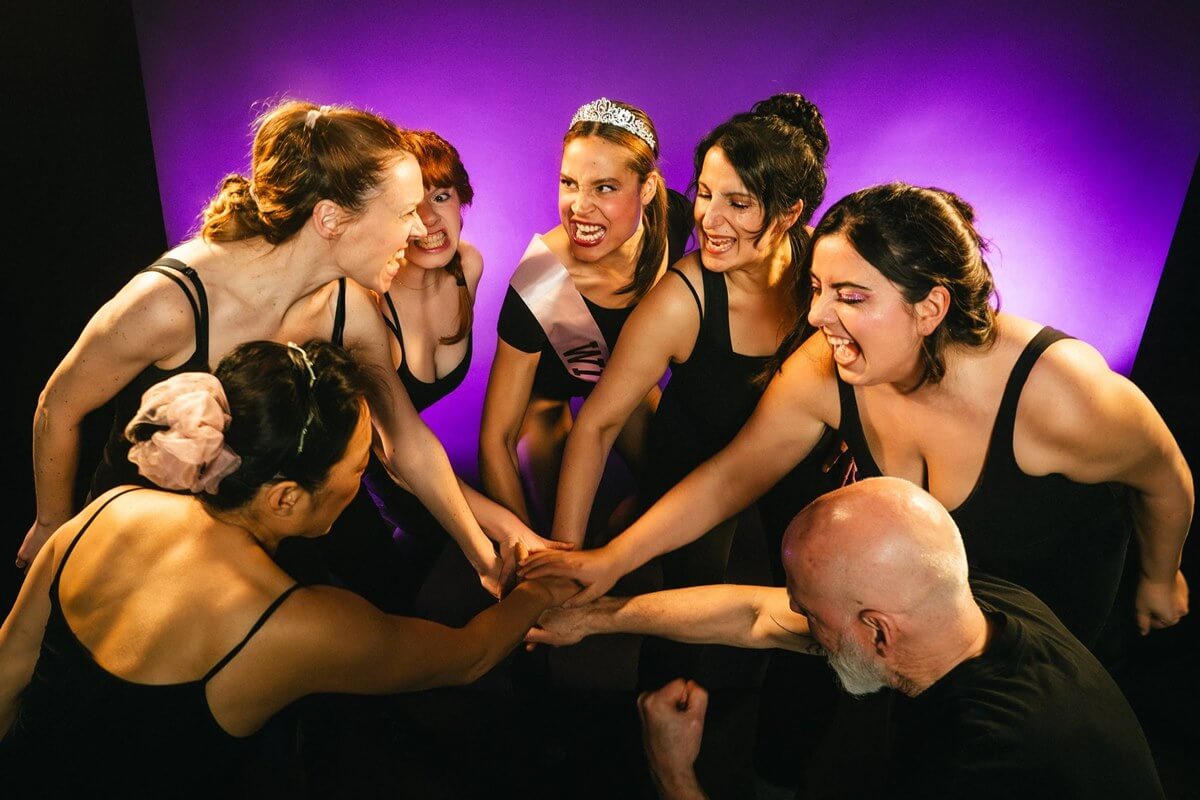
The Cast
The play requires a great deal of its cast — to be able to slip in and out of different ages both in character and physicality, to dance, and more.
“This is an exceptional cast,” Bentley says. “It’s been a long casting process.” When it was completed, she was sure she had the right performers in place. “Everybody in this room first of all has a very clear clown, which is important to this play, but there is a delicacy which is important to this show.”
She mentions the play’s “emotional white hot centre” of the story, something the actors understood.
Portraying different ages is something that comes with that kind of talent. “In casting these different ages, you have to understand it when you see it,” Bentley says. “It’s very trippy. I would say directorially, it’s one of those things that I don’t have to very much to do with. “
Movement
Along with the dance sequences, movement is crucial to the performances.
“A lot of it is just the way we approach working together,” says Alyssa Martin. “The movement of the entire piece is always considered. The body is always considered.”
It’s a principle that operates on various levels, from the individual performers and characters to the group.
“The ensemble as a physical presence is always pretty important with us,” Alyssa says. “There are obviously dances, choreographed dance sequences that are part of the script. Beyond that, we are considering how these characters exist physically throughout.”
It demands a lot from the performers. “It’s a great point. There’s so much energy,” Bentley says. Portraying adolescents isn’t for the faint of heart. “We’re lucky to have an extremely athletic group of people.”
She says the cast has been eager to push their own limits during rehearsals. “This show needs that,” Bentley says. There’s a lot of clown, and a lot of text to cover. “It needs a cast that is pushing.”
She calls it “deep tissue work” in terms of the emotional range. “[There are] conversations about feminism and periods, and male gaze.”
All the details, including performance and set design, work towards the goal of getting the message and the emotions across. “It’s really deep delicate work with all the pieces of the play. You have to carve right into the centre of that to make a play like this,” Diana explains.
The choreographed dances are a highlight of the play.
“I tried to harness my teen spirit,” Alyssa says. “I’m definitely excavating my childhood self who did dance competitions.”
She notes that anyone in the audience who comes from a dance background will recognize details within the choreography — the trends, the moves, and more. Those unfamiliar with that world will simply find the humour in it.
“There are jokes, and it’s satirical, and it definitely winks in that world,” Martin adds.
Final Thoughts
“I’m curious to see what our audiences get out of it,” Bentley says. “I have personal feeling about this current time to be a woman.” It’s a time when misogynists have been emboldened, as she points out, and the political climate for gender issues in general has become fraught.
“I ultimately hope that the play is inspiring for women to come and see it, and kind of participate in it,” Diana adds. “It feels really important to me that we’ve really excavated that in a way.”
She says that the play generates a mood that is “radically ecstatic”.
“I think that allows the audiences to come in how they want and need to see it,” Bentley adds.
Martin hopes that the work helps the audience free up the way that they use their own bodies “There’s something about […] putting adults into these teenage dancers,” she says. “I hope they feel moved by that, and hopefully feel compelled to do that themselves,” she adds.
“It’s still very compelling to watch people dance who are not necessarily dancers themselves,” Alyssa says. “The tension of that creates something very joyful, and I hope that it gives people permission.
I think as much as we give people permission to move their bodies […] the freer they’ll be.”
“That would be the win,” Bentley says, “if everybody had to go out dancing after seeing this.”
Performances
“This is the first time that we’ve taken over our whole building, so it will be really exciting experience,” Diana notes. The action will take place on two levels of the performance space. As she points out, it allows for varying perspectives as a member of the audience.
It’s the first time that Coal Mine has coproduced with Outside the March. “They’re known for their immersive productions,” Bentley says. “It has this really special combination of things.”
The Credits
Clare Barron’s DANCE NATION
- Directed by Diana Bentley with Movement Direction by Alyssa Martin
- Set and Lighting Designer Nick Blais, Costume Designer Kathleen Black, and Sound Designer Miquelon Rodriguez.
- Starring Salvatore Antonio (The Lion King), Katherine Cullen (A Public Reading of an Unproduced Screenplay About the Death of Walt Disney), Oliver Dennis (Witch), Amy Keating (The Flick), Beck Lloyd (Slave Play), Annie Luján (Monks), Amy Matysio (The Bidding War), Zorana Sadiq (Comfort Food), and Jean Yoon (Infinite Life)
Find tickets and show details for performances from April 12 to May 3, 2026 [HERE].
Are you looking to promote an event? Have a news tip? Need to know the best events happening this weekend? Send us a note.
#LUDWIGVAN
Get the daily arts news straight to your inbox.
Sign up for the Ludwig Van Toronto e-Blast! — local classical music and opera news straight to your inbox HERE.

- INTERVIEW |Coal Mine Co-Founder Diana Bentley & National Ballet of Canada Creative Producer Alyssa Martin Talk About Dance Nation - April 8, 2026
- PREVIEW | INNERchamber Concerts Presents Reverence, A Celebration Of Spring - April 7, 2026
- INTERVIEW | Soundstreams: I Want to Tell You Everything — Composer Nicole Lizée Talks About Karaoke & Karappo Okesutura - April 7, 2026