
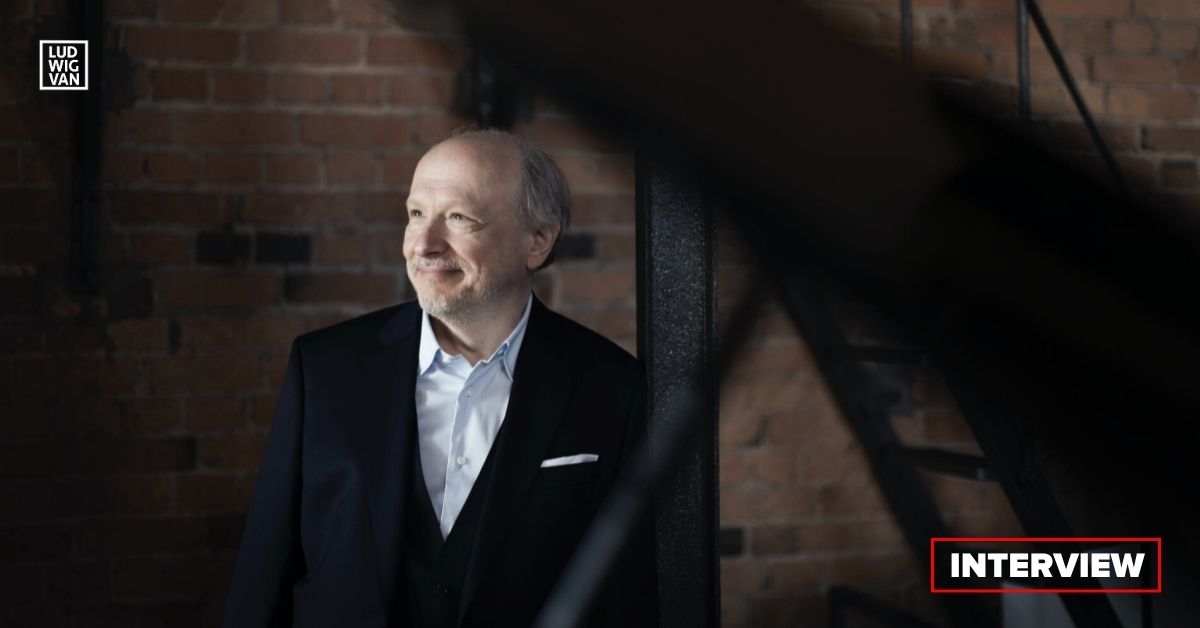
Hamelin & Richard-Hamelin: it could be a high-end law firm. In fact, it is something far rarer: an occasion for two of Canada’s finest pianists to share the stage in a two-piano recital that promises both brilliance and insight.
I have had the privilege of speaking with both artists before. Both encounters revealed musicians of exceptional intelligence and artistry, but also of disarming modesty and warmth.
So it was a particular pleasure to reconnect with Marc-André as he embarked on the Canadian leg of his current tour. I catch up with him in Kitchener, Ontario. For a pianist in the midst of a busy schedule, he was, as ever, generous with his time.
“We have all morning,” he reassured me. That generosity of spirit also lies at the heart of his musical partnerships — none more so than his collaboration with Charles Richard-Hamelin.
Marc-André Hamelin & Charles Richard-Hamelin
Their meeting was almost serendipitous.
“There was a Radio Canada producer in Montreal, Françoise Davoine,” he recalls. “She knew us both and decided to put us together.”
The two pianists met at one of Marc-André’s favourite vegetarian restaurants in Montreal and talked for hours.
“Very quickly, I realised he was a genuinely wonderful person. I had already heard some of his playing and knew he was a great musician.”
Their first collaboration came a bit later at the Lanaudière Festival in July 2022, where they performed Mozart’s Sonata for Two Pianos in D major alongside his double Concerto. “It worked so well that we decided to continue.”
It is clear that Marc-André holds his partner’s musicianship in the highest regard.
“He is very poetic,” he says of Charles. “He is never concerned with himself as a musician—only with what is there, what needs to be communicated.”
When I suggest that this self-effacing quality is something they share, he brushes my compliment aside and redirects it.
“He is one of the most remarkable Chopin interpreters. His Chopin is just otherworldly.” (Charles was also silver-medal winner of the 2015 Chopin Piano Competition.)
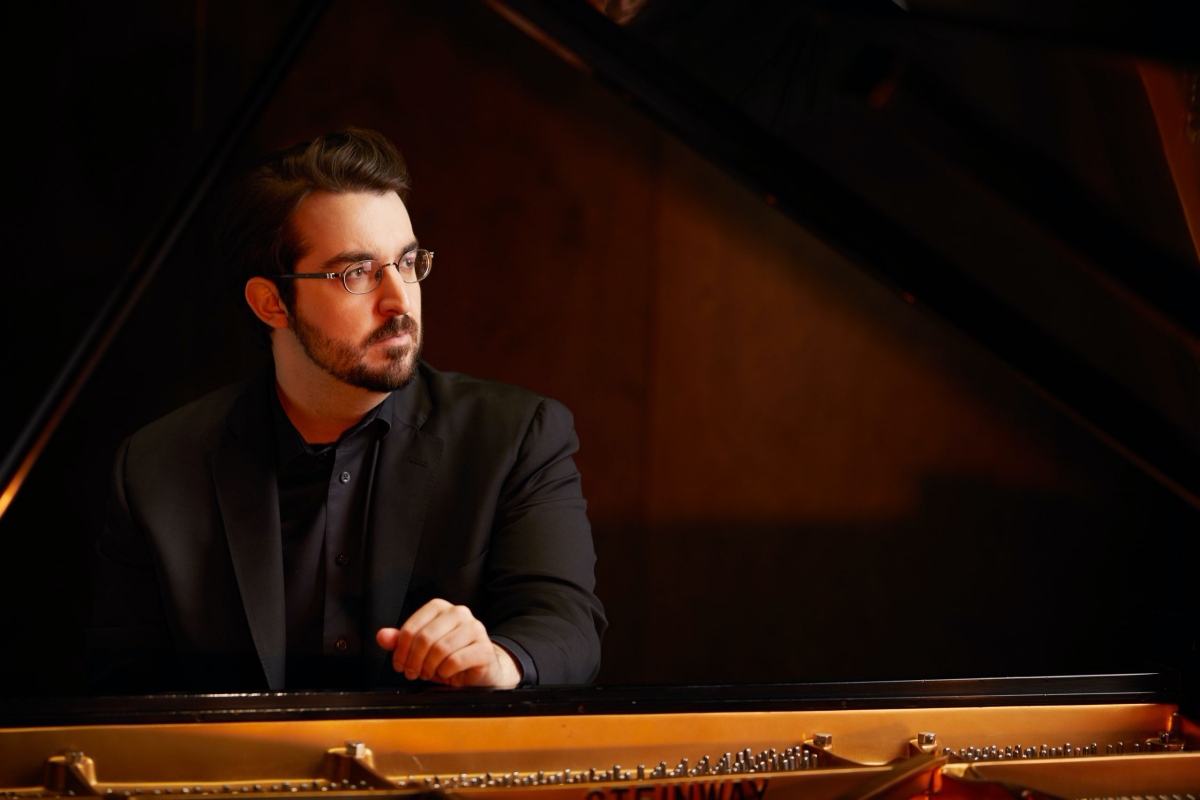
Performing Together
As a duo, their rapport seems almost instinctive.
“We spend a lot of time agreeing with each other,” Marc-André notes, with a hint of amusement. “And much of it happens without us doing very much, which is a sign that things work.”
At the same time, there is no lack of critical exchange. “Neither of us is shy about making suggestions. And I take everything he says very seriously — there’s always a very good reason behind it.”
Such dialogue feeds directly into their shared goal —to sound, as far as possible, like a single instrument.
“The point is to become as homogeneous and as connected as possible,” he explains. “It’s always useful to be reminded that what we do is not necessarily the best solution. It makes you rethink and reconsider things all the time.”
Toronto: Koerner Hall
Both pianists are also well acquainted with Koerner Hall, whose warm, transparent acoustic makes it an ideal space for two-piano repertoire.
Marc-André recalls his first appearance there with particular fondness. Having expected a far more modest venue, he instead encountered what he describes as a “gorgeous, beautiful hall”.
Their new program also reflects the spirit of collaboration. Suggestions came from both sides: Medtner from Charles, Mozart as a natural continuation of previous work, with other pieces emerging more by chance.
Cécile Chaminade’s Pas des cymbales (from Callirhoé, 1888) came from a festival requesting a work by a female composer.
“I knew this piece — it’s very exciting,” Marc-André says. “I even have a player piano roll of it at home.” Originally orchestral, it translates into a dazzling two-piano showpiece. “It just works,” he adds. “It’s not complicated, but it’s very effective.”
Chopin’s Rondo in C major for Two Pianos presents rather different challenges. “It’s exuberant, but not easy,” he says. “There are passages — especially in my part — that I can only describe with the French word tricotage,” referring to its intricate, almost knitted textures.
The music of Nikolai Medtner — a close contemporary of Rachmaninoff but far less frequently performed — inhabits a more rarefied and inward world. For many listeners, Marc-André himself has been an ideal entry point into Medtner’s richly wrought soundscape.
When I mention Charles’s admiration for his authority in this repertoire, Marc-André deflects the compliment and reflects on the music itself.
“The worst thing you can do to Medtner is to play him passively,” he says. “He is not, at first glance, as melodically generous as Rachmaninoff. But if you take the time to enter his world, you won’t be able to get rid of it — it’s fascinating.”
The Two Pieces Op. 58 are Medtner’s only essays in the two-piano medium. “He was an exquisite craftsman. His control of form is extraordinary.” Yet their dense textures require particular care. “They end up being busier than the solo works, so you have to deal with them very carefully. You have to listen closely and highlight certain things to guide the listener — otherwise, while the endless wonders are still there, they don’t come across.”
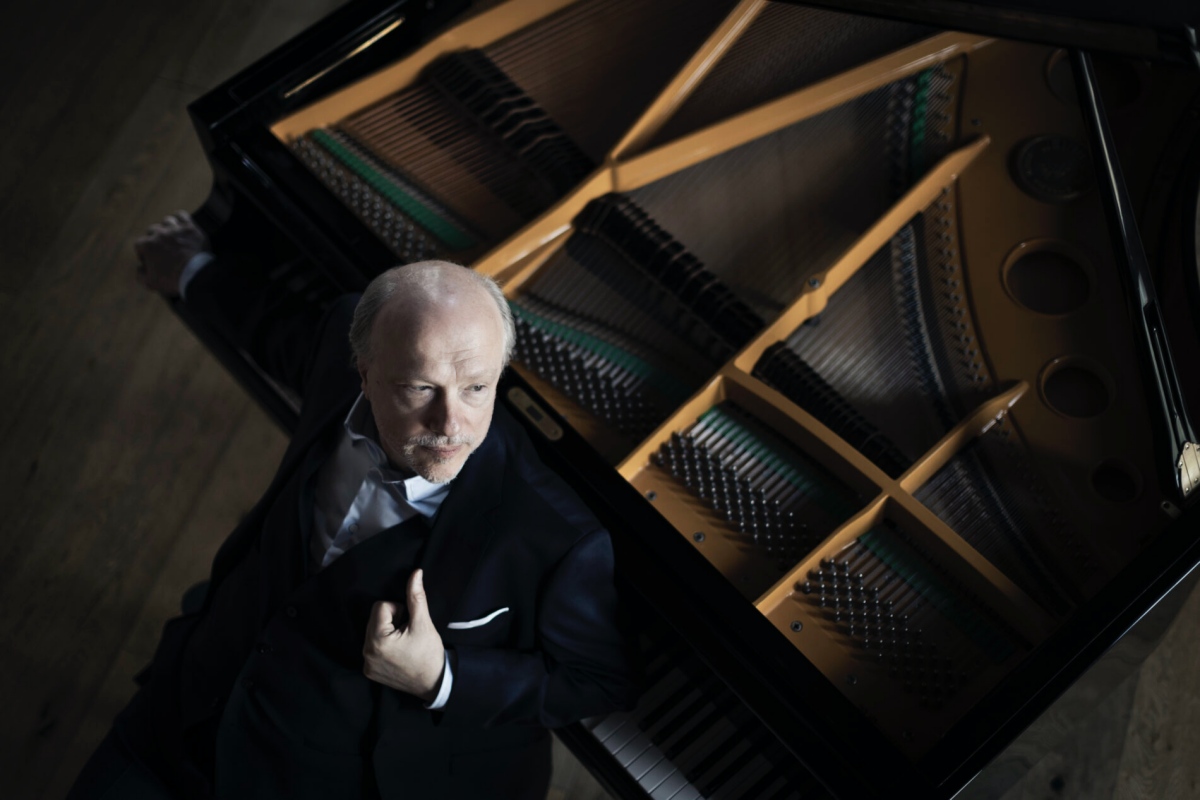
The Details
Even in repertoire that might appear more immediately accessible, questions of balance and texture are central.
In Mozart, for instance, “The interplay between the pianos is wonderful. He shares the material in a way that not all composers do.”
So, their approach is one of subtle intervention. “We do little things, but we also try not to get in the way — that’s very important.” A touch of spontaneity remains in a brief improvised cadenza in the third movement, shared between the two pianists — an echo of 18th-century practice.
Percy Grainger
Their Toronto program closes with Percy Grainger’s Fantasy on Gershwin’s Porgy and Bess, a vivid reimagining of themes from George Gershwin’s opera.
“It’s really more than an arrangement — it’s an 18-minute fantasy,” Marc-André explains. “Grainger brings enormous enthusiasm to the music, but also a great deal of respect.”
He is particularly appreciative of Grainger’s practical understanding of the instrument. “He always cared about performers — it’s very well written, very considerate.”
Where exactly does Grainger end and Gershwin begin? “I think Grainger first and foremost brings his utter enthusiasm for the music, but also his own way of shaping it — the sequence of numbers, the contrasts — he creates something very unified. You never wonder when it’s going to end; it has a very nice arch.” As for style, “I’ve never really thought of Gershwin as pure jazz. There’s jazz in it, of course, but it’s also popular music — dance music.”
That sense of rhythm and movement finds a more personal echo in the planned encore — a short Tango by Marc-André himself, written for either duet or two pianos. “It’s a little long,” he says with a smile, “but it works well”.
Final Thoughts
Practical matters — such as who plays which piano — are resolved with the same absence of ego that defines their partnership. “We always consider the personality of the pianos, how they work acoustically in the hall, and the character of the music. If the instruments are too different, then you have to rethink everything — sometimes even switch.”
The decision is never hierarchical. “Ego shouldn’t enter into it. It’s about what serves the music best.”
Our conversation, like so many of Marc-André’s performances, moves fluidly between precision and digression — touching briefly on composers, recordings, and shared musical interests. He remains throughout engaged, thoughtful, and quietly enthusiastic, with humour never far from the surface. I am reminded of something Charles once told me in an earlier interview, when he described his colleague as “the funniest person I know.” I now understand exactly what he meant.
Only towards the end do I realise that time has slipped away. For me, the day carries an additional significance: it is Nowruz, the Persian New Year. With just minutes to go before the turning of the year, I apologise and explain that I must call my family.
“Of course, of course — Happy New Year!”
I leave, feeling that I have already received the best possible New Year gift: not just an interview, but a reminder — echoing through music, conversation, and collaboration — of what it means to listen, to share, and to connect.
- Find details of the duo recital of Marc-André Hamelin & Charles Richard-Hamelin at Koerner Hall on March 29 [HERE].
Are you looking to promote an event? Have a news tip? Need to know the best events happening this weekend? Send us a note.
#LUDWIGVAN
Get the daily arts news straight to your inbox.
Sign up for the Ludwig Van Toronto e-Blast! — local classical music and opera news straight to your inbox HERE.

- INTERVIEW | Marc-André Hamelin Talks About Two Pianos, One Voice: Hamelin & Richard-Hamelin In Toronto - March 25, 2026
- SCRUTINY | From The UK: Opera North’s Peter Grimes Relies On The Power Of Music - March 17, 2026
- SCRUTINY | Shakespeare, (Un)strung: Ronnie Burkett’s Little Willy at the Canadian Stage - March 4, 2026