
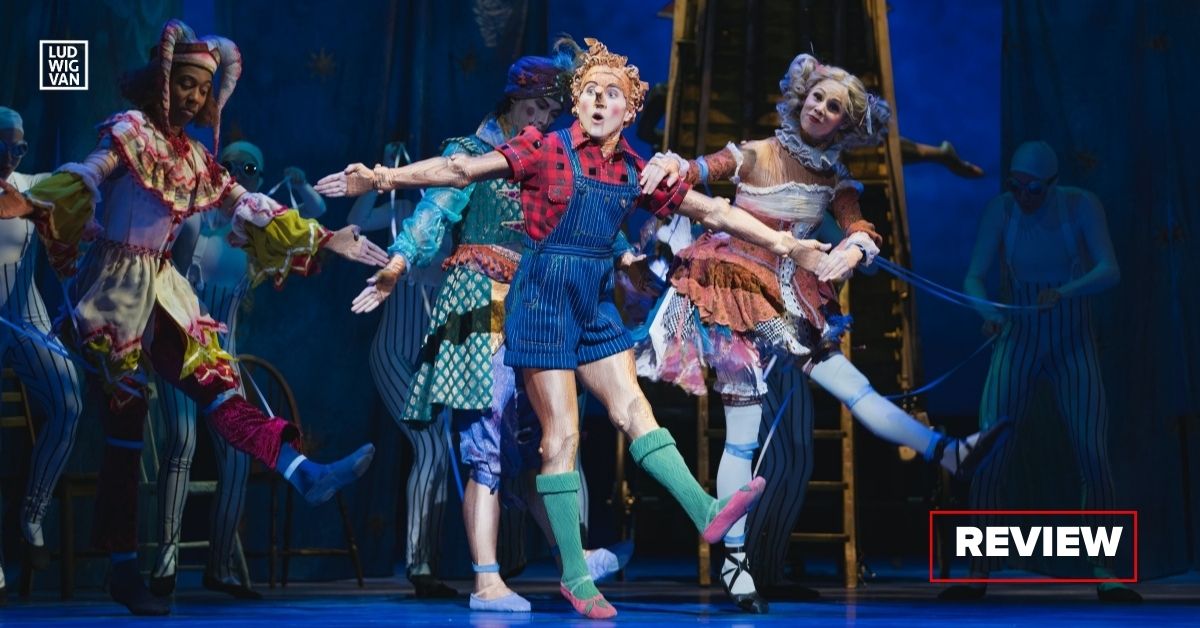
The National Ballet of Canada/Pinocchio, choreographed by Will Tuckett, composed by Paul Englishby, libretto by Alasdair Middleton. Four Seasons Centre, closes Mar. 22. Tickets here.
One hopes that when a work is aimed at young people, it will entertain older folk as well, and English choreographer Will Tuckett’s ballet Pinocchio, created for the National in 2017, does just that. In a word, it is an enjoyable outing for all, intelligently shaped for families without talking down to them.
The Story
Tuckett keeps many of the key elements from the original story by Italian author Carlo Collodi (1826-1890), most of which are echoed in the 1940 Walt Disney animated feature.
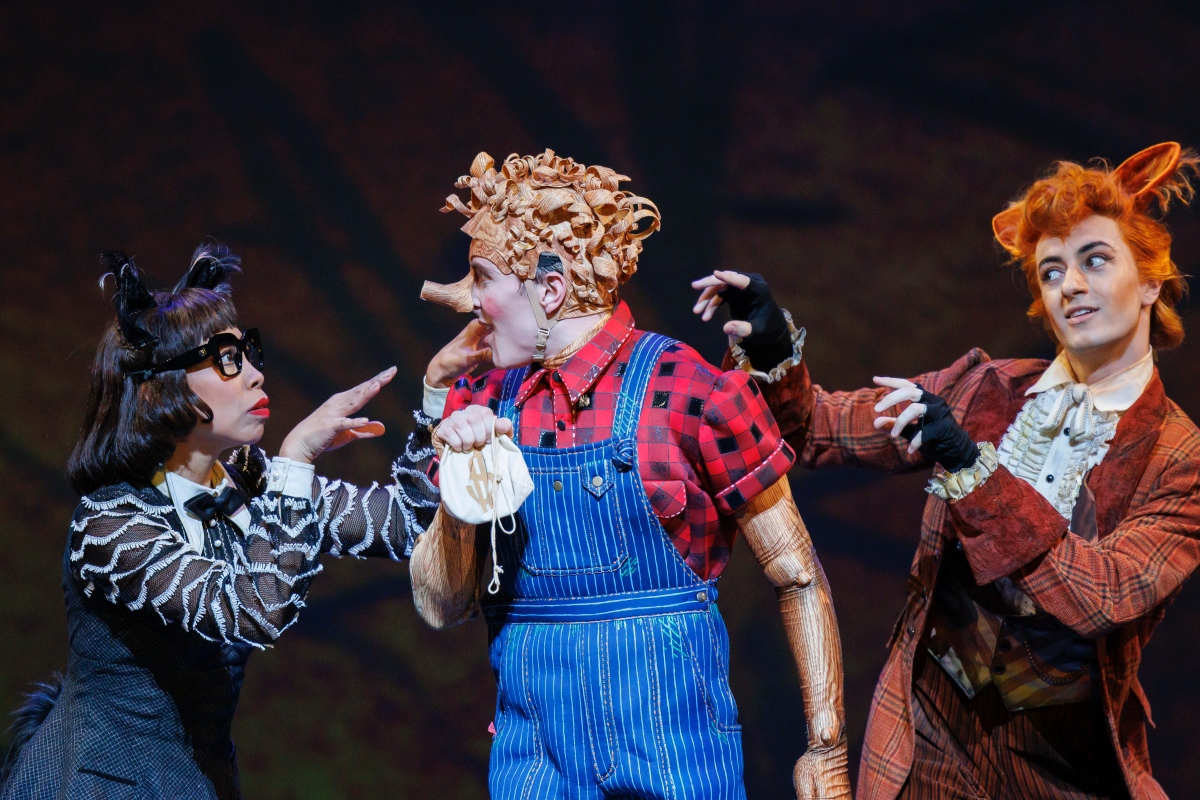
We have Geppetto (Donald Thom), the kindly father figure, the naughty Pinocchio (Noah Parets) skipping school to go on adventures, and the villainous Cat (Jenna Savella) and Fox (Isaac Wright) luring Pinocchio into evil ways.
The major set pieces are the tempting excitement of the puppet show (shades of Ballets Russes’ Petrushka), led by the convivial Puppet Master (Trygve Cumpston) and the forbidden visit to Funland, where Pinocchio and the school children end up in the clutches of the evil Ringmaster (Naoya Ebe), and of course, we have the whale.
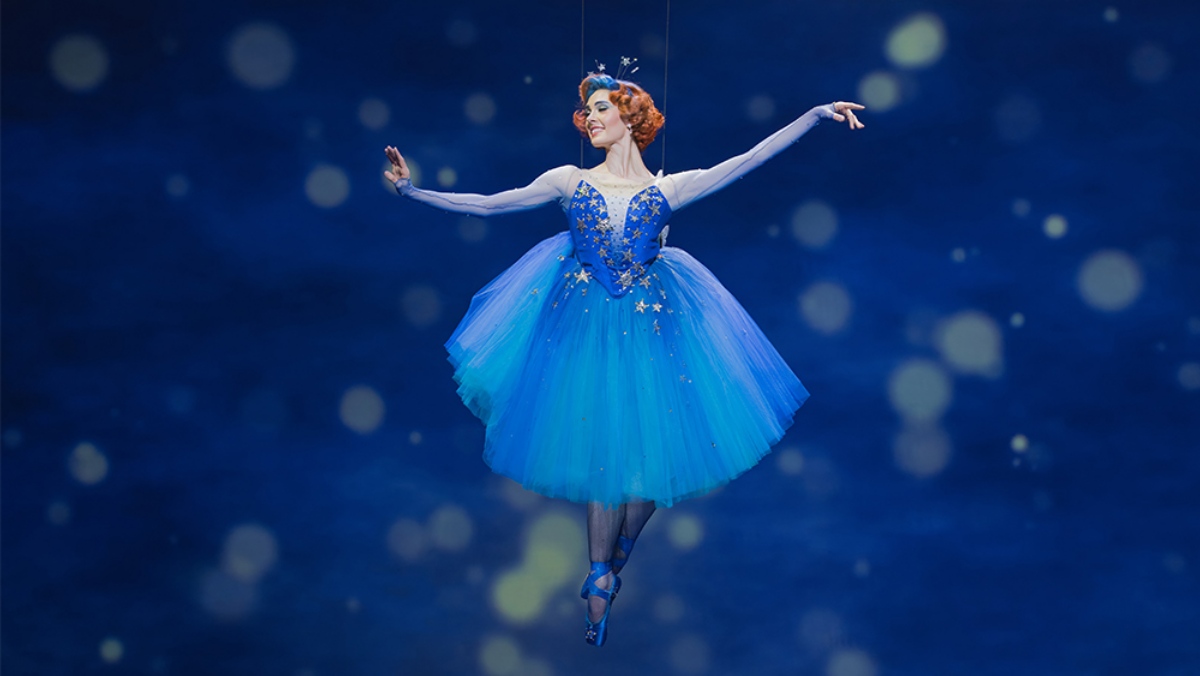
The Blue Fairy (Beckanne Sisk) takes on an extra role and functions as the moral conscience in this ballet version, replacing the Talking Cricket from the 1883 book, and Disney’s familiar Jiminy Cricket.
The corps de ballet is made up of the Blue Fairy’s Shadows (both male and female).
Whether one knows the darkness of Collodi’s three part serial or Disney’s sanitized, sentimental movie, the incidents will feel familiar, yet the tone remains firmly theatrical and anchored in dance.
Canadiana
There are also distinctly Canadian diversions.
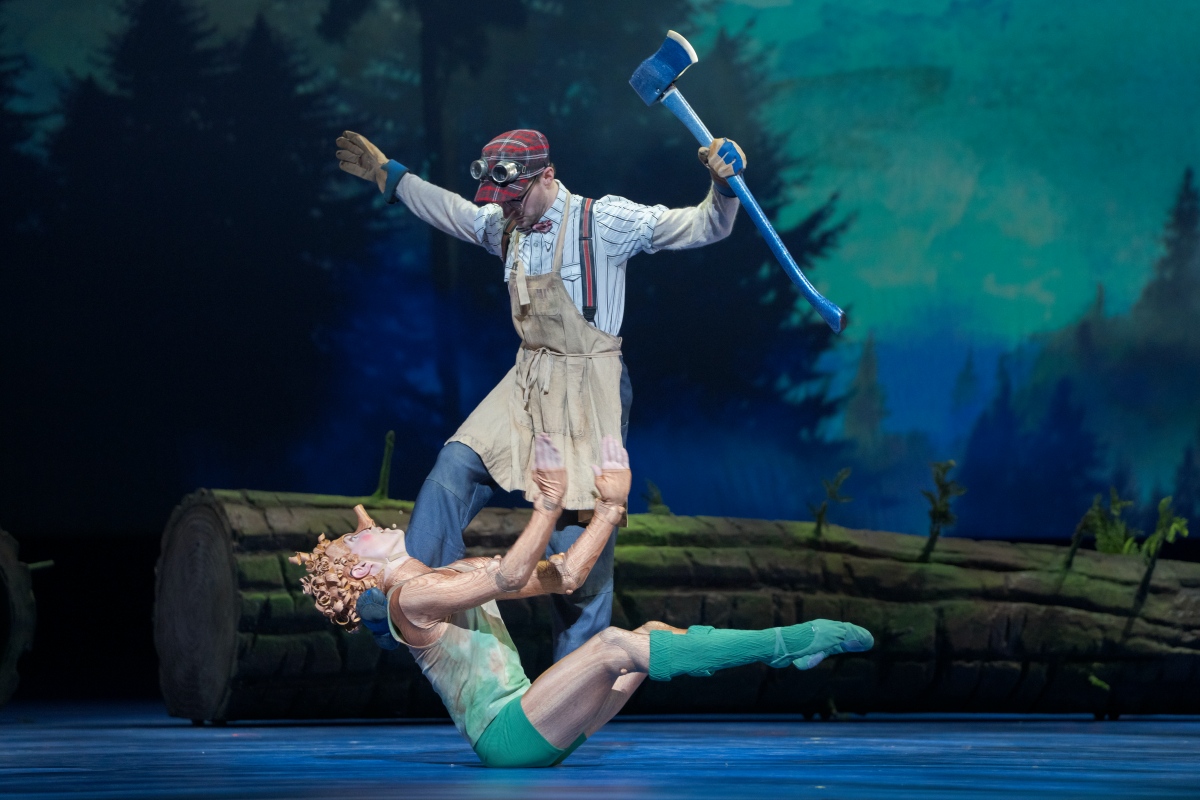
The ballet opens with the cry of “Timber”, and the curtain rises on a felled tree. The ensemble of plaid shirt and jeans-garbed lumberjacks attempt to split it until the Blue Fairy arrives with a magic axe. Suddenly, the trunk opens and a wooden boy appears.
Geppetto himself is reimagined as a lumberjack, which grounds the story in a robust, outdoors world, and the Blue Fairy entrusts this wooden boy, Pinocchio, to Geppetto.
Later in the ballet, the Cat and Fox lure Pinocchio into a dive of a gin mill populated by a depressed moose and various beavers and raccoons. A Mountie’s arrival sends everyone scattering. It seems it’s illegal to serve alcohol to animals.
These Canadian touches, created for the National Ballet, drew appreciative laughter from the audience, and give the production a welcome sense of local ownership.
The Structure
Structurally, the ballet is narrated in verse. Two professional actors (Maya Doherty and Trevor Patt) deliver the rhymed text by Alasdair Middleton, replacing the original device of dancers speaking.
The clarity of trained voices helps the story enormously, although at times the orchestra swells and overwhelms the speakers. Diction is sometimes poor, particularly in choral passages such as the school children (the dancers) speaking en masse.
Still, most of the narration comes through, and the simple rhyme keeps the episodes moving briskly and makes the plot easy to follow for younger viewers. The device of a narrated ballet works very well indeed.
The Choreography
Pinocchio’s costume is a triumph. With visible joints at shoulders, elbows, knees and ankles, and of course, the added the long nose, he truly looks wooden. His choreography emphasizes angles and disjointed movement.
Noah Parets on opening night, (along with David Preciado and Alexander Skinner in alternate casts), is the kind of short-ish, fast technical wizard every company needs.
Parets could be all angles one moment and astonishingly flexible the next, embodying both puppet stiffness and virtuosic agility. The role demands speed, clarity, and comic timing, and he delivers all three — more to the point, finding the needed variety of movement, appearing as he does in almost every scene.
The clever puppet theatre has a nod to Michel Fokine’s 1911 Petrushka (and Harlequin, Columbine and Pantaloon) in both costume and movement, while the dancers are attached by ribbons that echo marionette strings. The school children move in rigid formations that contrast to Pinocchio’s resistance to discipline.
The Blue Fairy, a quintessential ballerina in a long tutu, (and Sisk is gorgeous in the role), is lifted delicately aloft by her male Shadows. At one point, she is given a lovely pas de deux with Pinocchio, of all things, perhaps indicating that the tide of naughtiness is turning and we will see a better boy emerge. It is, however, a very odd couple in what is the most conventional set piece in the whole ballet.
Naoya Ebe as the Ringmaster has the biggest male solo, hypnotizing the children, turning them into donkeys, all the while moving like an eminence grise in his circus of evil. His dancing is truly other worldly.
The Cat (Savella) and Fox (Wright) are shown delighting in their evil ways by quite sexy dancing, lasciviously weaving their bodies together, as it were, making their appearances most intriguing.
Geppetto (Thom) himself provides an emotional anchor. His scenes are tender without becoming saccharine, and his grief when Pinocchio disappears gives the story weight. The final reunion in the whale is staged simply but effectively, allowing the audience to focus on the father and son rather than spectacle. When Pinocchio’s transformation finally comes, it feels earned.
If there is a reservation, it lies in an underwater ballet sequence between Pinocchio’s fall into the sea and his encounter with the whale. This is meant to be the pure ballet section for the corps de ballet and it is weak.
The Blue Fairy and her Shadows create shifting patterns and changing positions, but one wishes for more fully developed dance rather than placement. By contrast, the athletic choreography for the lumberjacks, the Ballet Russe flavour of the puppet show, and the theatrical energy of Funland are all more satisfying.
The Production
Much of the scenery relies on projections (by Douglas O’Connell), combined with set pieces (by Colin Richmond), and it works. The subtlety is refreshing. Even the lighting (by Oliver Fenwick) is unobtrusive.
Created nearly a decade ago, the projections avoid the excessive spectacle common today. Even the storm scene, with digital waves rolling across the backdrop, remains effective. The soft palette and restraint serve the storytelling well, creating atmosphere without overwhelming the dancers.
The visual world for each vignette is clear and specific. Every costume (also by Richmond) suits its character, and the theatrical distinctions between episodes are easy to read, helped, of course by the narration.
The Score
The score by Paul Englishby is perhaps the ballet’s greatest strength, and conductor Julian Pellicano and the National Ballet Orchestra certainly pour out the vivid music.
Rambunctious, melodic and theatrically astute, it gives each episode its own theme while maintaining overarching motifs for the Blue Fairy, Geppetto and Pinocchio.
Symphonic and cinematic at once, the music propels the action and at times even risks overpowering the narration. It could almost stand alone as a concert work, and it lends the entire evening coherence.
Final Thoughts
Is Pinocchio a masterpiece of choreography? No. Is it an enjoyable ballet to visit? Certainly. Does it do a service to a beloved story? Definitely.
More importantly, Will Tuckett’s Pinocchio proves that a narrative ballet for children can be crafted with intelligence, musical richness and theatrical imagination.
Are you looking to promote an event? Have a news tip? Need to know the best events happening this weekend? Send us a note.
#LUDWIGVAN
Get the daily arts news straight to your inbox.
Sign up for the Ludwig Van Toronto e-Blast! — local classical music and opera news straight to your inbox HERE.

- SCRUTINY | The National Ballet Of Canada’s Pinocchio Delights Adults And Children Alike - March 18, 2026
- SCRUTINY | Mirvish’s Shucked Is Loud, Brash & Unapologetically Corny - March 10, 2026
- SCRUTINY | The National Ballet of Canada Opens Winter Season with Classical Purity and Contemporary Power - March 2, 2026