
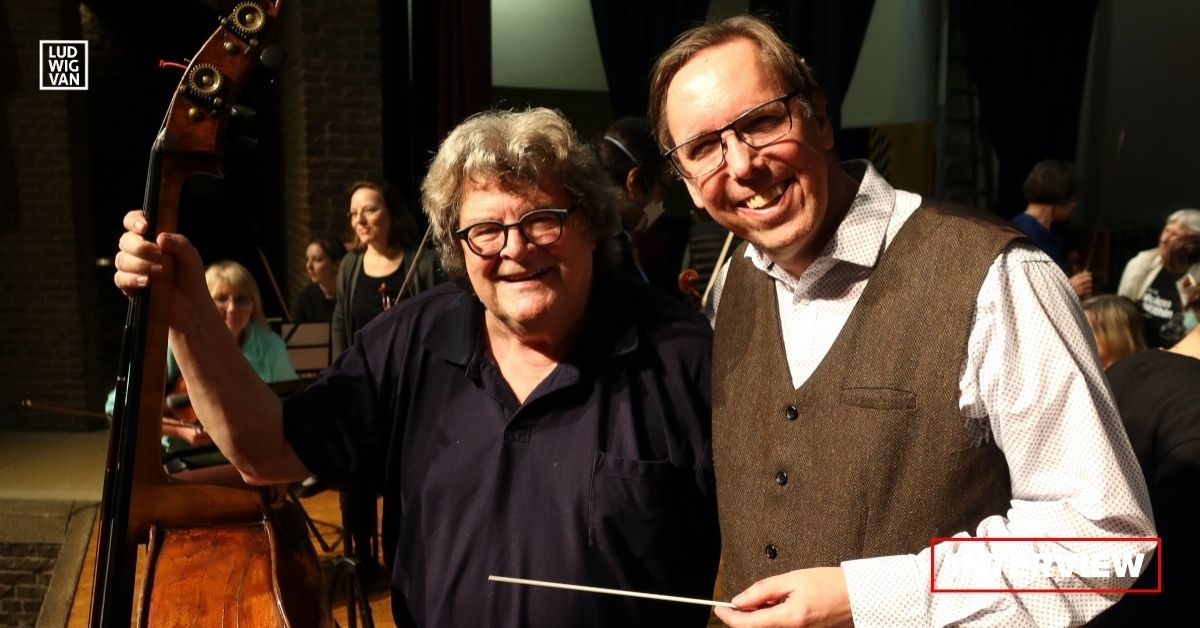
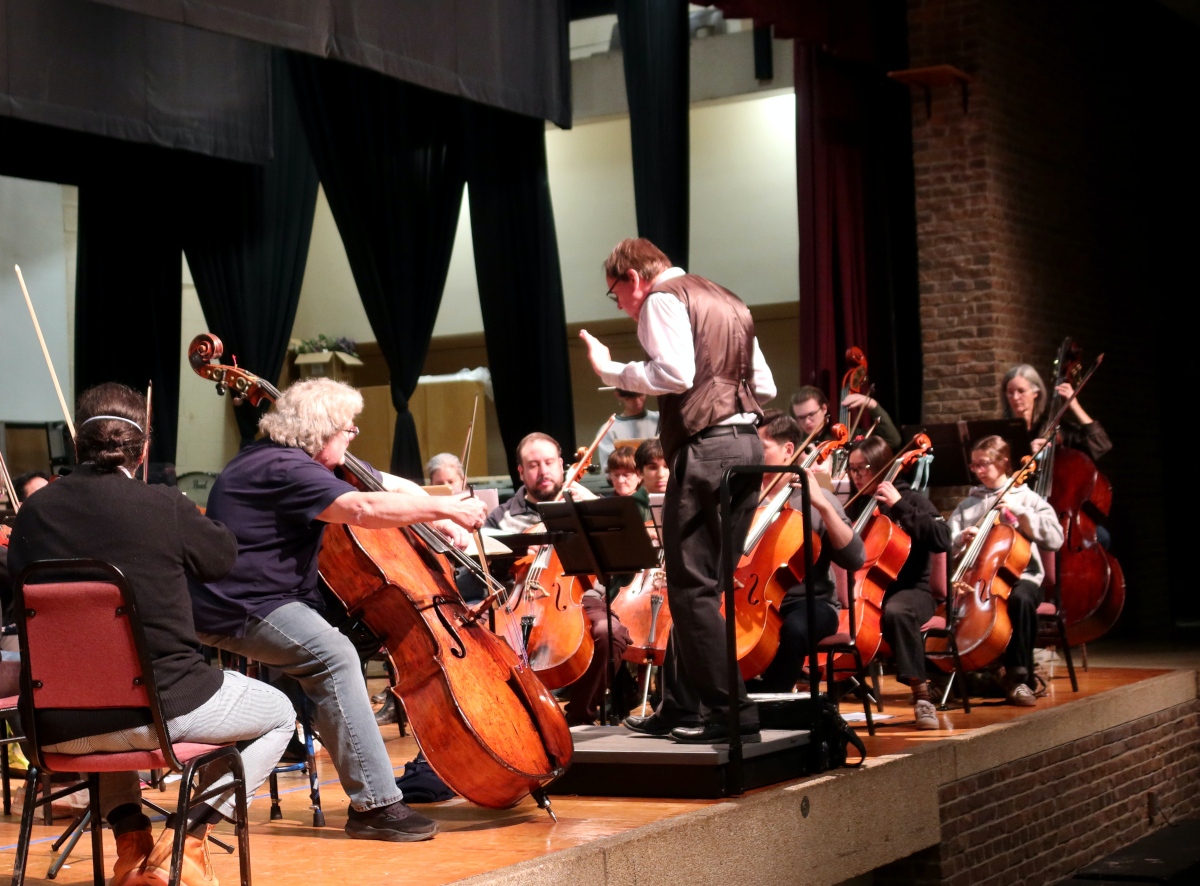
Dramatic Metamorphosis is the name of the next concert for the Etobicoke Philharmonic Orchestra, (EPO), featuring guest musician Joel Quarrington. The program features two pieces by Tchaikovsky, including his Rococo Variations, which Quarrington will play in a transcription for bass.
The program includes:
- Charles-Vincent Lemelin: Dans la tourbiere, je m’allongerai sur la mousse’
- Pyotr Ilyich Tchaikovsky: Rococo Variations
- Pyotr Ilyich Tchaikovsky: Symphony No. 5 in E minor, Op. 64
Charles-Vincent Lemelin was the EPO’s 2025/26 Young Composer Competition winner, and his work will be a world premiere.
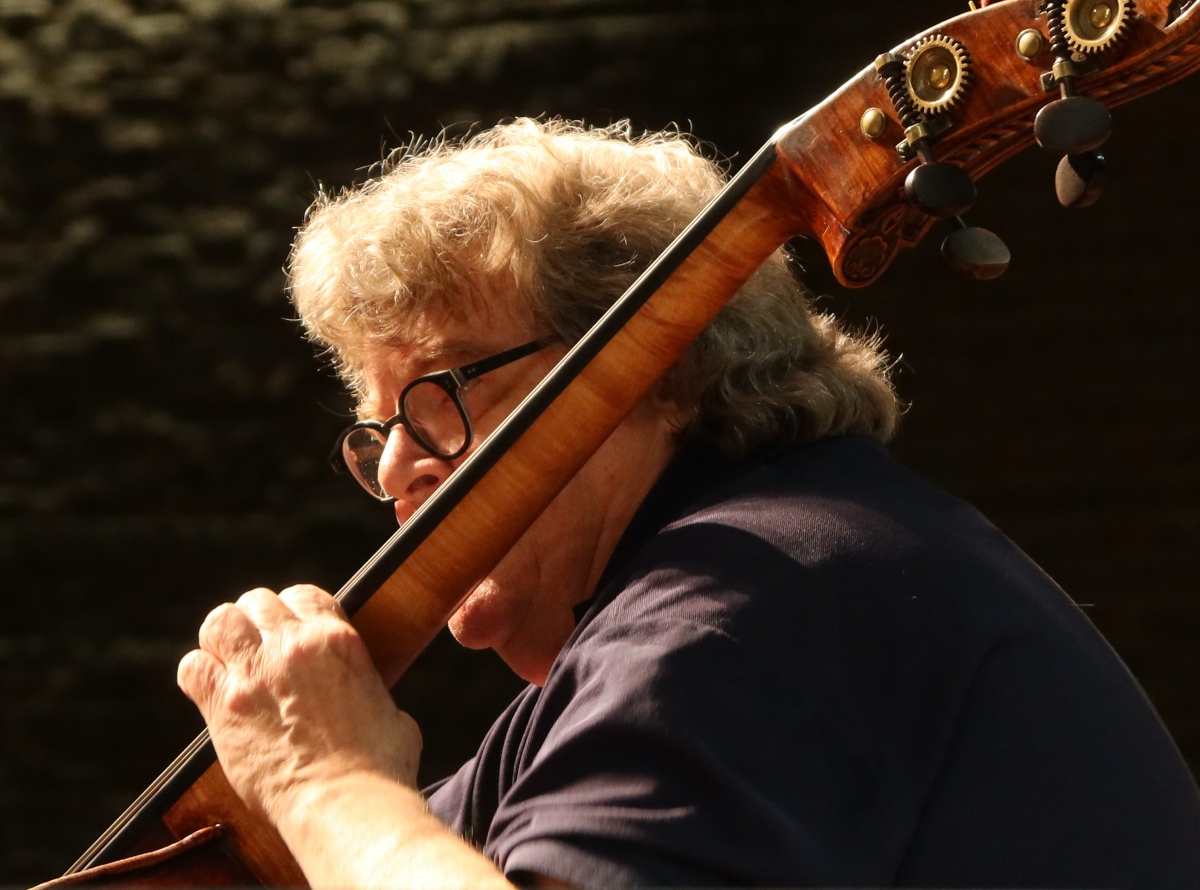
Joel Quarrington
Joel Quarrington is a native of Toronto, where he began playing the double bass at the age of 11. His first gig was playing as part of a bluegrass trio with brothers Paul and Tony Quarrington.
At 13, he began formal studies with Thomas Monohan, then principal bassist of the Toronto Symphony Orchestra. Joel would go on to earn a degree in music from the University of Toronto — where he was the recipient of the Eaton Scholarship — followed by private studies in Austria and Italy.
Along the way, he collected accolades that include first prize in the CBC talent festival in 1976, and second prize in the Geneva International Music Competition in 1978 (note: first prize was not awarded that year).
He’s served as principal bass with the Hamilton Philharmonic, Canadian Opera Company Orchestra, National Arts Centre Orchestra, and the London Symphony Orchestra. As a soloist, he’s performed across North America, Europe, and in China. He’s also performed with many prominent string quartets, including the Orford, Vermeer, Cleveland, Colorado, St. Lawrence, Allegri, Artis, Leipzig and Tokyo Quartets, and the Pinchas Zukerman Chamber Players.
Highlights of his career as a recording artist including a release of Schubert’s Trout Quintet with the Pinchas Zukerman Chamber Players and Yefim Bronfman on the Sony label, and a 1982 recording session with the legendary Glenn Gould for the soundtrack of Timothy Findley’s The Wars. He’s released several solo albums on various labels, including the 2010 JUNO winning Garden Scene, which featured music by Korngold, Gliere, and Weinberg. He collaborated with pianist David Jalbert on the Prix Opus winning album Brothers in Brahms.
As an educator, he has taught at the University of Ottawa, the Orford Arts Centre in Québec, and as a Visiting Artist at the Royal Academy of Music in London. He is a professor at the Conservatoire de Musique de Montréal.
He was appointed as a Member of the Order of Canada in 2023.
Joel performs on a bass made in 1660 by Italian master Santo Maggini, and notably tunes his instrument in fifths rather than the usual fourths.
Matthew Jones & Joel Quarrington: The Interview
Dramatic Metamorphosis is the title of the concert, and it was inspired by one of the pieces on the program, as Jones explains.
“I do think the centre of gravity for that thought came from the redemption arc of Tchaikovsky’s Symphony No. 5,” Jones says. He likens it to “1812 on steroids”.
“I think you’re going to equally say that there’s a dramatic metamorphoses in Tchaikovsky’s Rococo Variations,” he says, noting that Quarrington’s transcription is a metamorphoses of the work originally written for cello.
“It’s more than a metamorphoses,” Quarrington adds. Transposing music originally written for cello creates a different experience of the piece. Why transpose? “It’s mostly because of the existing double bass repertoire. There are a lot of original pieces for double bass, but it’s problematic programming them for a number of reasons.”
As he explains, not many are written to include a full orchestra with a bass soloists, and when they are, it’s typically 20th and 21st century repertoire, which may or may not fit in with the rest of the program.
“They require a lot of rehearsal,” he adds. “I have to say, just as a personal thing, when I go with a contemporary concerto, no one’s heard it.”
It means new music for everyone, and a lot more prep time than is often feasible.
“It will be great to go in where everyone already knows the piece,” he says. Limited rehearsal time is just one of the many practical considerations when it comes to programming.
“I need to maximize every moment of rehearsal,” Quarrington says. Tchaikovsky’s Rococo Variations is something he’s been working on for a while, but it’s the first time he’s playing it in concert. “It’s going to be new to me,” he says. “I’ve been teaching the piece for the last few years. A few bass players around the world play it.”
Since he tunes his bass to fifths, as does the cello, the transition is easier.
“I really don’t have to change anything,” Joel says. “It’s pretty much all down an octave. I hope people can appreciate that.”
Tchaikovsky’s Rococo Variations: Audience Appeal
As Quarrington points out, the audience is probably already familiar with the piece in its original form. “It’s not a publicity stunt, but it doesn’t scare audiences,” he laughs. “Everyone says, oh Tchaikovsky, I love Tchaikovsky. How bad can it be?”
For Matthew Jones, audience appeal is another of the elements he has to balance in the program. “I think there’s a fascination with the instrument,” he says of the bass. “Audiences are really interested in it.”
“You could also say — the public, when you program a highly virtuosic work on an unlikely instrument […] people throughout history have loved public executions,” Quarrington quips.
Jones laughs. “Mr. Quarrington plays the bass like a violin,” he says. “It is a very challenging piece.”
Played well, the audience may not even appreciate those challenges, he points out. “It’s a wild piece of music.”
“Well, there’s a lot there that’s specific to cello technique that exists in no double bass piece,” Joel explains. Again, his tuning in fifths makes some of that easier. “I can do these sort of patterns that cellos do, with my tuning. You can’t do that with a fourth tuned bass.”
He notes that he’s encountering some patterns and techniques in the Tchaikovsky piece for the first time. “There are core patterns that don’t exist in anything with the bass. That’s a challenge — also bowing,” Quarrington adds. “But other than that new stuff, I’m pretty good at all of it.”
“We hired the right guy for the job,” Jones says. “The difference between doing it on a cello and doing it on the bass is that the distances are greater. I appreciate that for Mr. Quarrington this is a trifling matter.”
Matthew points out that the audience will enjoy an active and dynamic performance from an instrument they may have never considered in that kind of role. The bass is typically in the background of orchestral sound. “It’s such an important instrument to the soundscape of the orchestra,” he notes. “We build sound from the bottom up. If you want the orchestra to sound good, you go talk to the basses. When we talk about intonation and tuning and all of those thing, fundamentally that starts at the bottom,” Jones explains. “Your piccolo and your bass player — there’s the relationship.”
Quarrington also considers the audience. “Well, it’s a really fun ride, is how I think of it. As Matthew said, I think people are going to love it. It’s a beautiful tune,” he says. He notes how the pieces builds and develops through each variation. “The cadenza, and seventh variation is this wild ride. Even if things don’t go that well, people are going to get excited,” he laughs.
He also notes the piece’s slow, beautiful melodies. “People will be exhilarated.”
“Tchaikovsky makes the audience feel very smart,” Jones says. “The audience appreciate the journey.” He points out that listeners can follow the progression of the variations quite easily. “It does make a listener feel smart.”
It’s a lighter hearted piece that contrasts with the Tchaikovsky symphony that closes the program, with its sweeping melodies, dramatic contrasts, and recurring theme representing fate. “I think he was looking for a little bit of lighter fare when he wrote it,” Jones adds.
Charles-Vincent Lemelin: Dans la tourbiere, je m’allongerai sur la mousse
“He’s a Québec writer,” Jones says of Lemelin, who won the EPO’s Young Composer Competition. “This is our winner. This is a competition that has a multi decades of existence.” The Competition attracts entries from promising young composers from across Canada, he notes. “We are excited to see our alumni, if we can call them that, go on to wide ranging careers,” he says.
“We had 26 applicants this year from across the country,” Jones adds. It’s a testament to the depth of Canadian compositional talent. “It’s absolutely alive and well in this country. It was tough to come up with the winner.”
With an undergraduate degree in composition from the Université de Montréal, Charles-Vincent Lemelin is currently working towards a Master’s degree, studying with Ana Sokolović.
Lemelin has worked at a park on the north shore of the St. Lawrence River, Jones explains, where he interacted with the natural world every day. Jones says that love of nature is distilled into the tone poem the EPO will play. “It’s very aware of its surroundings,” Jones says of the music.
The Concert
The Etobicoke Philharmonic’s Dramatic Metamorphosis takes place on March 27, 2026 at Martingrove Collegiate Institute.
- Find concert details and tickets [HERE].
Are you looking to promote an event? Have a news tip? Need to know the best events happening this weekend? Send us a note.
#LUDWIGVAN
Get the daily arts news straight to your inbox.
Sign up for the Ludwig Van Toronto e-Blast! — local classical music and opera news straight to your inbox HERE.

- INTERVIEW | Conductor Matthew Jones & Bassist Joel Quarrington Talk About Dramatic Metamorphosis - March 17, 2026
- PREVIEW | The Gallery Players Of Niagara Plays Host To Musicians From Tafelmusik Baroque Orchestra - March 17, 2026
- INTERVIEW | Composer Ana Sokolović & Director Michael Hidetoshi Mori Talk About Love Songs At Tapestry Opera - March 16, 2026