
Labyrinth Ontario, an organization dedicated to expanding the appreciation and awareness of modal music, will he holding a fundraising event on April 9. With the graduation of the last group of artists who made up the cohort, which culminated in an Ontario tour in November 2025, 13 new musicians will be beginning a four-year journey to study and perform modal music in its many forms.
The event includes performances by Iranian Folios of Dastgāh, and Turkish superstars Yahya Geylan and Canan Sezgin Geylan. There will be a CD sale of music from the makam and makam-adjacent genres, and a silent auction.
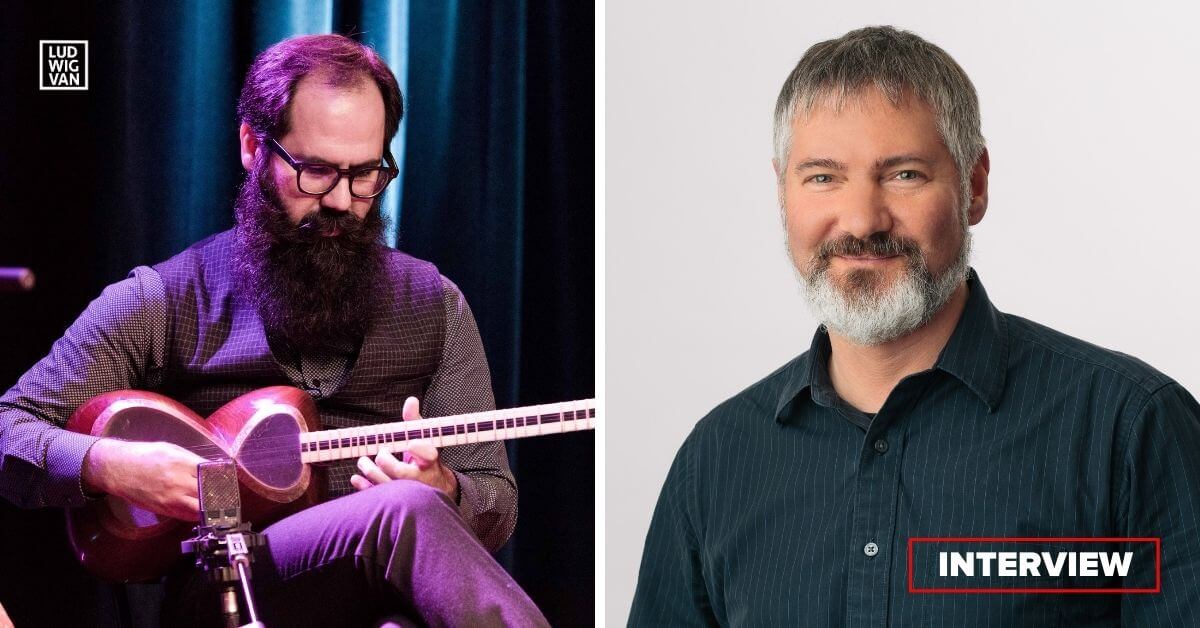
LV caught up with Labyrinth Artistic Director Araz Salek and Executive Director David Dacks to talk about the organization and the new cohort.
Labyrinth Ontario
Labyrinth began as a not-for-profit in 2017, with the goal of promoting the modal/makam musical traditions of the Mediterranean region, and Central, West, and South Asia. Those traditions came to Canada via immigrant cultures, but are more and more a part of Canada’s musical ecosystem.
Modal music is inherently inclusive. It involves expression, and improvisation is a crucial component. While Labyrinth begins with tradition, its goals include bringing the music into 20th century Toronto.
“Throughout the past four years with the Labyrinth Ensemble, I’ve really grown as a musician. What makes this experience so special for me is that it brings together musicians and instruments from so many different traditions,” remarks Amely Zhou, Labyrinth Ensemble first cohort in a statement.
“It’s such a unique and inspiring idea — bringing these sounds together right here in Toronto, a city that truly celebrates diversity and creativity. This is exactly where something like this should happen.”
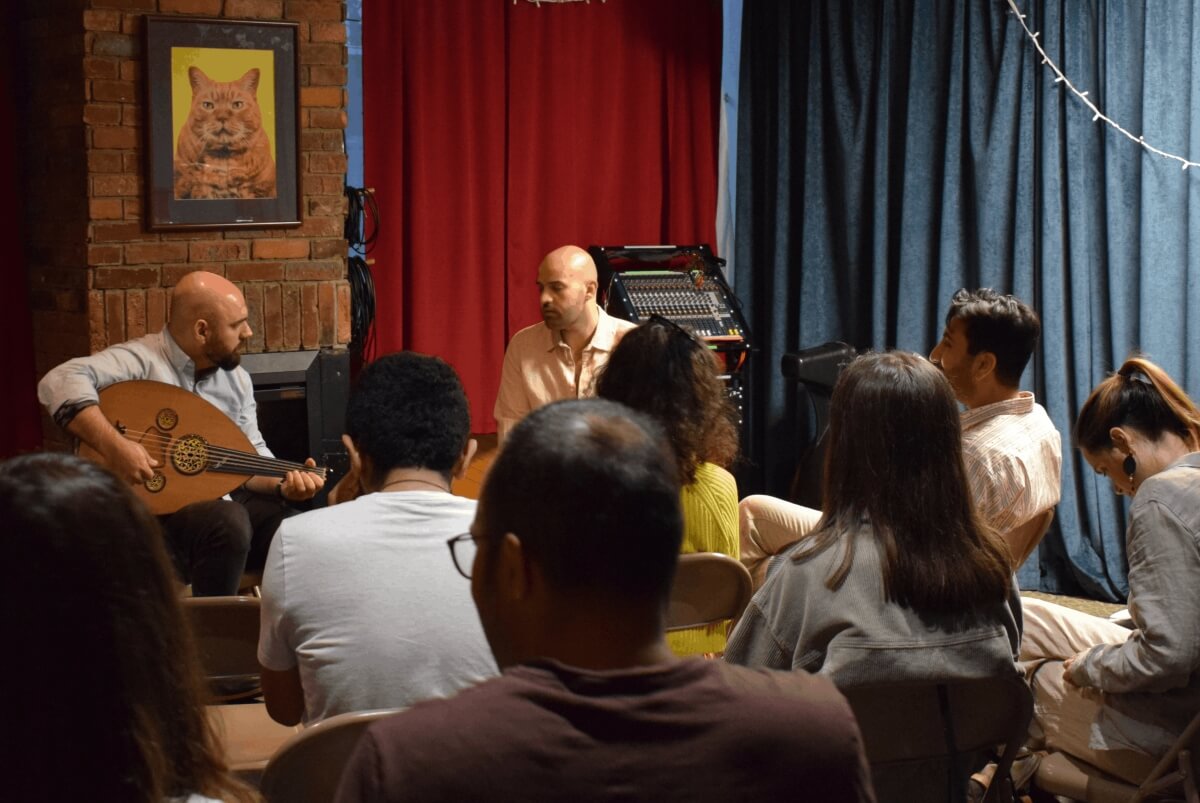
The cohort of selected musicians will receive intensive two-week training sessions twice yearly during their four-year tenure, and perform in various configurations around Toronto and Ontario. The Makam Nights initiative brings duos and trios from the ensemble to venues and festivals around Ontario, as well as presenting a monthly concert on the third Thursday of every month as part of a residency at the Tranzac Club.
Community building is an important part of the organization’s mandate, linking those who come from regions where modal music is the norm, and the musically open and curious of any background. Along with musician training and performance, the Makam in Schools program brings talks, performances, and round-table discussions to area schools. This year, the program will visit high schools in and around Toronto.
Labyrinth Artistic Director Araz Salek and Executive Director David Dacks: The Interview
“This is a four year long program,” explains Araz Salek.
The cohort of musicians, including 13 new members, and one who’s graduating from the program after spring 2026, includes:
- Alex Fournier: upright bass
- Araz Salek: tar
- Avashalom Brailovesky: tar
- Behzad Danesh: guitar
- Beth Silver: cello
- Elise Boeur: violin, Hardanger fiddle
- Joshua Greenberg: oud
- Lina Cao: guzheng (not in debut performance)
- Naoko Tsujita: percussion
- Naghmeh Farahmand: percussion
- Saghi Farsijani: qanun
- Sara Constant: flute
- Soheil Sadeghi: kemanche
- Yalda Ehsani: clarinet
- Yang Chen: percussion (leaving after Spring 2026)
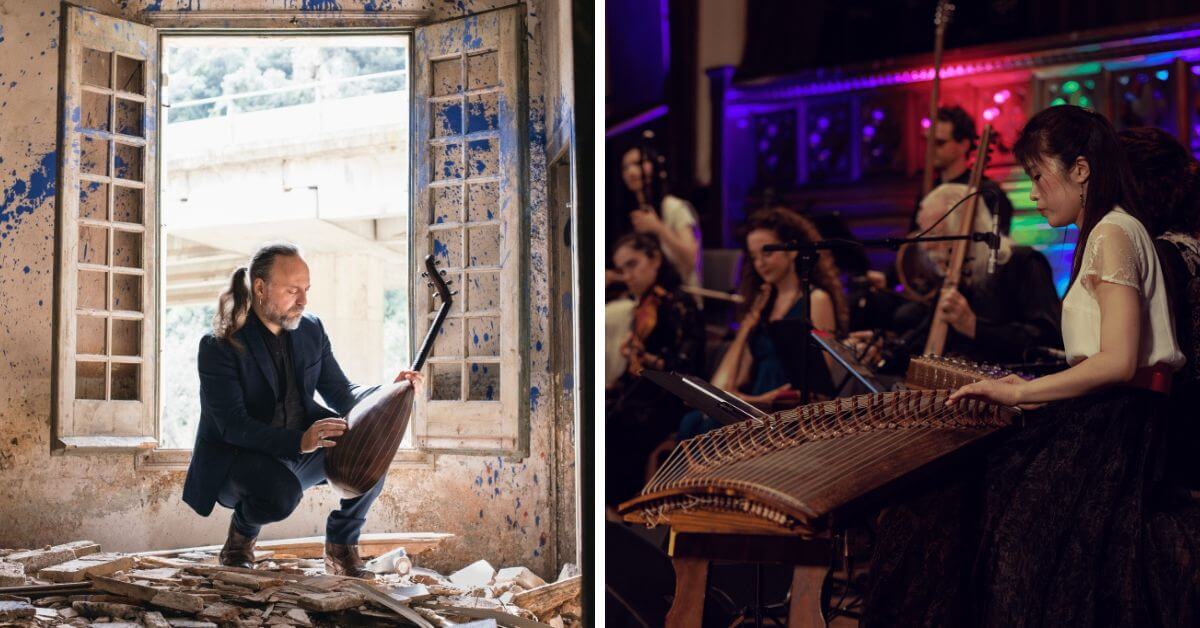
It adds new instruments to the mix, including guzheng, Hardanger fiddle, qanun and microtonal guitar. Guest musician Efrén López, a world renowned virtuoso and composer on hurdy gurdy and a variety of lutes, will lead the ensemble in exploring European Medieval, the Eastern Mediterranean, the Middle East, and Central Asian traditions in their first two-week workshop this spring. The experience will culminate in a performance on May 9 at the Aga Khan Museum, and members of the graduating cohort will also perform.
The instrumentation has changed with the new cohort, but the number of participants has remained the same. “It’s always 14, for the four years,” Salek continues.
Selecting the new cohort was an involved process. “It was an audition process,” Salek explains. Each candidate had to perform one piece in full, and at least excerpts of two more. Due to the ongoing effort of Labyrinth Ontario, interest has grown over the years. “We had a lot more applications,” he says.
“The auditions were even more competitive this time,” Dacks adds. There were applicants who played a broader range of instruments, and who came from various backgrounds.
The applicants were evaluated according to their ability, and also with a view to keeping a balance among the cohort. “When we put a call out, we keep it open to anyone to join, with any background, as long as they can play the microtonal nature of the music,” Araz says. “It’s not really about their background, as long as they’re willing to perform.”
Audience Building
Word has spread about the organization and its training program. “We’ve been doing quite a lot of work and doing presentations around the city since 2017,” Salek explains. That effort began with a 12-week long campaign involving two concerts per week, along with workshops. The organization has continued to present the music in various settings, including smaller and larger venues, and city parks.
“We’ve tried to be really active in the city,” Salek says. Those efforts have expanded through the region to include areas like Peterborough, Hamilton, Bancroft, and Guelph.
“Our mandate is actually Southern Ontario,” adds David Dacks. “Smaller urban centres are changing,” he continues. “There’s more diversity of culture.”
“I use this analogy, it’s just like wine,” Araz says. It’s a matter of developing your musical tastes beyond what you may be used to. Like wine, too, modal music changes with different regions. “It really takes time to build up that taste.”
As Davidexplains, when he’s at a concert, he’s not on stage. “I’m in the audience,” he says. It allows him to observe the mix first hand. “We have different audience segments, probably the biggest one of which is people who are born into this music. That’s a group of people who will be intrinsically more familiar [with the music],” he says.
“Then, they are people who are musical omnivores,” Dacks says. That includes a good portion of graduates from various musical programs. “They’re curious, well educated.”
Some of those musical omnivores end up as applicants for the cohort. “It’s an amazing technical and spiritual challenge,” Dacks says of the process.
“[There are] other people who come because they’re interested in different cultures,” David continues. He relates a concert that the Ensemble played at Toronto’s Evergreen Brickworks venue. It included a large sculpture that was tuned to a modal scale when struck at various points. “About 500 people saw that,” he says. “We’ve gotten gigs from that from a crowd on a random Saturday.”
Along with the music, there is an inherent academic component to Labyrinth’s goals. It’s about educating people whose background is outside the makam music culture, and talking about ideas like decolonization, and cultural exchange.
When people experience the music, the reaction goes beyond mere curiosity.
“It’s beyond a novelty,” Dacks says. “We see this as an important force in Canadian culture.”
What is “Classical Music”?
“When I first integrated to Canada … I listened to 100 days of Haydn symphonies,” Salek says. “What is that definition [of classical music]?”
There is Indian classical music, Iranian classical music… The word isn’t exclusive to Eurocentric culture.
“Building audience for Labyrinth was one of the most challenging efforts,” Salek recalls. “We resisted to use some of the labels that marketing companies use.” That includes “world music”, which simply becomes a repository for everything not tied to what we call Western culture.
As he points out, modal music isn’t specific to any nationality.
“We didn’t want to associate ourselves with a specific country,” Salek says. “We’re talking about a broader music making practice.” Araz notes that the makam traditions stretch from China to Bulgaria to northern Africa.
Labyrinth Ontario wants those traditions to become part of the Canadian mosaic. “Whenever it comes to culture presenting culture, diasporic culture, it all comes down to roots — nation states,” Salek says. “Which to me, they exist, and they do a very fine job preserving their culture.”
Salek, and Labyrinth Ontario, wants to see the music move beyond those historical boundaries. “As a Canadian, I don’t want to see Turkish music being preserved here,” he says “I want to hear how Turkish music can enrich our sonic landscape,” he adds.
“Us Canadians enjoy that, but to be able to enjoy that, we need to think about it beyond the idea of nation state. We need to deal with the actual musical material.,” Salek says. As he notes, performance and a deeper appreciation of both modal and Western classical music requires training.
Insisting on national or specific regional purity is beside the point. “It doesn’t explain what the actual musical material is about,” Salek says. “It gets reduced to identity politics. We resist that.”
The emphasis is on learning, and enriching Canada’s sound culture.
David Dacks was a global music journalist for years prior to becoming part of Labyrinth Ontario, writing for prominent journals and organizations. He also served as Artistic and then Executive Director of Toronto’s Music Gallery from 2011 to 2023. “What I find particularly interesting about the Labyrinth Ensemble is that the music is the star,” he says.
He emphasizes the dedication of the cohort of musicians, who’ll learn from eight different masters of the genre throughout their four-year terms. Some come from a Western classical music training.
“It’s improvising in the way that Western classical music just doesn’t,” Dacks says. “By the end of the last cohort, the facility of the people in the group to have really expressive solo statements, and work together […] I’ve never seen anything like it in my whole career.,” he adds.
“I’m really honoured to be a part of it,” he says.
Dacks notes that there is a lot of planning that goes into Labyrinth Ontario’s programs. “We put a lot of effort into designing what we do,” he says. That includes building in components that ensure equity. “Designing programming where everyone is valued, and every one contributes,” he says, “that is one of the things that comes through in the final product.”
The Fundraiser
“The fundraiser that’s coming up in April is a big one,” Dacks says.
Turkish musicians Yahya Geylan and Canan Sezgin Geylan will perform, and Dacks points out that the duo’s first Toronto performance was also at a Labyrinth Ontario event. “It was weeks after they emigrated from Turkey,” he says. “They are both master musicians in Turkey,” he adds. “They got into it with us on the ground floor.” In their home country, they were stars on TV and radio, as well as in concert halls. “To have them play at the fundraiser is very special,” he says.
“That is the kind of community that we are encouraging,” David says. “We’re here to support and help them express themselves in the way that they want to express themselves.”
Their continued success in Canada shouldn’t come as outliers to the local music scene, but as a valued part of it.
“It definitely has a political dimension.”
- Find tickets and more details about the Labyrinth Fundraiser event on April 9, 2026 at the Tranzac main hall [HERE].
Are you looking to promote an event? Have a news tip? Need to know the best events happening this weekend? Send us a note.
#LUDWIGVAN
Get the daily arts news straight to your inbox.
Sign up for the Ludwig Van Toronto e-Blast! — local classical music and opera news straight to your inbox HERE.

- PREVIEW | Classical Guitarist Alexandra Whittingham Makes Toronto & Ontario Debuts - March 13, 2026
- PREVIEW | Soundstreams Presents Quatuor Bozzini: With Strings Attached - March 13, 2026
- INTERVIEW | Award-Winning Librettist & Against The Grain AD Royce Vavrek Talks About Canuck Cantatas - March 13, 2026