
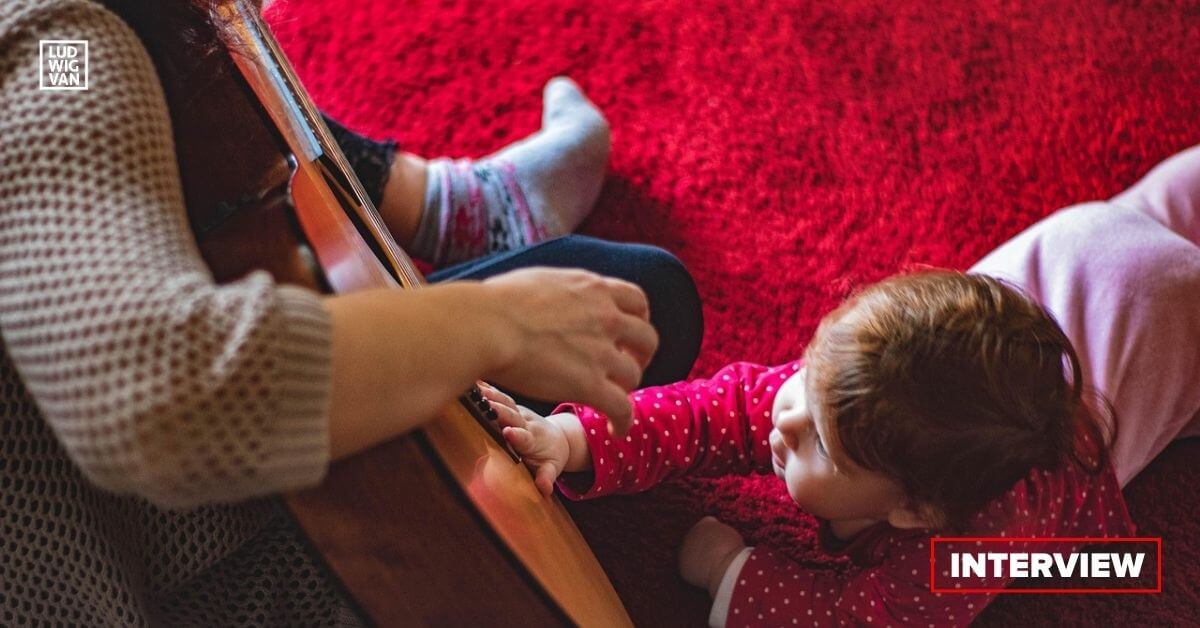
The Art of Care is a media conference that will take place on March 27. Presented by Theatre Direct and Balancing Act Canada, it brings together senior artists and culture leaders from various disciplines, policy influencers, and representatives of the government to look at the relationship between support for care and the economy, as it relates to infrastructure.
It’s about the intersections of care infrastructure and Canada’s creative economy. Boiled down to the basics, the essential question is: how can mothers, parents, and caregivers in creative fields work in an environment where there’s no support for childcare?
The Conference
Balancing Act Canada is a nation-wide initiative that offers a resource platform with a mandate of supporting mothers, caregivers, and parents in the arts and culture sector. They’ve supported more than 3,000 women artists, and partnered with 150 arts organizations across Canada, and developed more than 200 policies and toolkits for change.
There will be more than 100 participants at the Conference. A Call to Action panel will be moderated by former federal Minister for Women and Gender Equality, Maryam Monsef. Allison Venditti, founder of Moms at Work, an organization that helps women maximize their career goals while still taking care of business at home, is a participant, and Canadian singer-songwriter Jill Barber will perform.
Overall, the media conference is about celebrating progress that can be measured in the march towards gender equity. Artists who are also mothers, parents, and caregivers need support in order to be included in the creative economy.
Balancing Act Canada has been incubated by Theatre Direct, one of the country’s leading and award-winning companies devoted to theatre and arts education for young audiences, now in its 49th season. With funding from Women and Gender Equality Canada and The Canada Council for the Arts, the organization has been working for several years on systemic change where arts and caregiving intersect. Senior leaders in the arts and culture industry will share the proven policies that have been initiated so far.
The Conference on March 27 is designed to both reflect on the impact so far, and add to the forward momentum.
The Data
Looking at the arts as and caregiving as an economic issue is supported by the facts.
- Unpaid care work accounts for up to 40% of GDP in some countries;
- The arts and culture sector accounts for about $65 billion of Canada’s GDP each year;
- The sector supports 13 jobs per $1 million of input, a stat that outperforms other economic sectors in the Canadian economy, including the oil and gas industry, manufacturing, and agriculture.
In other words, supporting caregivers isn’t a frivolous, nice to have element of the Canadian economy. It increases participation in the workforce. It’s a strategic investment that supports economic resilience and gender equity.
Successful models already exist in places like the UK and USA. Existing initiatives in Canada include:
- Offering childcare and respite support for nominees at the JUNO Awards;
- Implementing on-site childcare at Canadian Stage in order to reduce barriers for audiences;
- Introducing early-career bursaries for student-parents at NSCAD University.
In Balancing Act’s recent Sector Expansion initiative, the organization saw a 93% increase in the ability of participants to fully engage in their work.
LV caught up with Susie Burpee (SB), Balancing Act’s Executive Director, to ask a few questions.
Susie Burpee: Q&A
LV: What essential message do you hope will come out of this conference — i.e. that improving the situation for working mothers/artists and parents is doable? That a lot of work is still required? Perhaps both?
SB: Supporting artist mothers/parents/caregivers is not only possible, it is an economic imperative and an absolute cultural imperative.
Economic:
- Unpaid care work (largely on the shoulders of women) contributes up to 35% of Canada’s GDP (StatsCan).
- Unpaid care is already an economic driver for Canada. If we do not embed support for working caregivers (flexible work, compassionate leave), all of the following will suffer: the paid work, the unpaid care, and the quality of life of both the caregiver and the dependent.
Arts and Culture:
- Structural barriers exist for arts professionals with caregiving responsibilities: gig-based work, low wages, late/long hours, inflexible schedules, touring & travel demands, and persistent stigma.
- These barriers disproportionately affect women and gender-diverse people, who shoulder most of the labour of unpaid care.
- Family responsibilities often coincide with the peak of an artist’s career.
Without embedded parent/caregiver supports in the workplaces of the arts, Canada risks losing critical cultural talent from the field, and will experience a backward move, in terms of gender equality in the arts workforce.
If the careers of women and gender-diverse artists are not well-supported, our stages, screens, and galleries will lose a rich diversity of programming, diminishing the Canada’s distinct cultural identity.
LV: Is there a sense of how many people this issue affects in Canada — how many working artists are also parents?
SB: When Balancing Act was founded in 2019 by Lisa Marie DiLiberto [of Theatre Direct], Balancing Act commissioned a study through U of T Occupational Therapy — 71.9% of artist respondents reported having to turn down work due to caregiving responsibilities.
One in two Canadians will become a caregiver in their lifetime (Canadian Centre for Caregiving Excellence). Every sector needs to be considering how it is supporting working caregivers. The arts are not immune to this statistic, especially when we consider the various vectors of care that exist in the arts — care for both young and aging, care for chosen family and kinship circles of care.
The National Arts and Culture Impact Survey of 2021 reported approximately 25% of artist/arts worker respondents were primary caregivers. However, we expect this number to be lower than actual because the survey was taken in the height of the pandemic, when most artist caregivers were overwhelmed with caregiving duties and not filling out surveys. So we don’t consider this a super-reliable number.
While it’s difficult to collect census data on artist parents (we have tried), in 2024, Canada had approximately 10.9 million census families.
LV: Can you share a few more details on the kinds of tool kits and measures that are mentioned in the media material — i.e. what is being done, and what is working?
SB: Here’s a list of top workplace supports that have been developed through Level UP!
Compassion Fund — arts organizations create a dedicated fund to support short-term contract workers without access to full-time benefits and employee programs. Since the arts are characterized by gig work, and organizations can set aside 0.5 – 1% of their annual budget fairly easily, this is a great program which was hugely popular with many of our arts partners. Funds could be used for childcare, transport to get home to an elder, wellness support, et cetera. It is one of the more sustainable supports.
- Tool kits: Intake Forms, Communication Templates, Assessment models and models for financial reporting. Who did this: Nightwood Theatre, Obsidian Theatre, Playwrights Guild of Canada, BIPOC TV & Film…
Flexible Work — employee supports that include reduced administrative work weeks, reduced rehearsal schedules (e.g. in theatre, moving away from 6 day rehearsal weeks and 10 hour days), schedules that support after-school pick-ups, scheduled needle injections.
- Tool kits: Employee handbooks, comprehensive Wellness/access forms, Needs assessment templates Who did this: Outside the March, Roseneath Theatre, Downstage Theatre, Cassidy Civiero and Alanna Schwartz…
Caregiver Policy Frameworks — comprehensive policies that support onboarding processes and outline what support is available for artist caregivers/parents and how to access it.
- Tool kits: Policy templates developed and in use now by arts organizations, Mental health support plans, templates of public-facing statements of care. Who did this: Neworld Theatre, Why Not Theatre, Persephone Theatre, Indigenous Curatorial Collective…
On-site Childcare — for film festivals, music festivals, theatre matinees, and conferences to empower attendance by artist parents/caregivers toward professional development and networking.
- Tool Kits: Waivers, Intake forms, ‘how-to’ guides. Who did this: St. John’s International Film Festival, Canadian Stage, Folk Canada, Theatre Direct…
Evaluation results from our 2024-25 cohort:
- 93% of the artists and art workers impacted reported they were able to participate more fully in their jobs or practice, 87% felt more satisfied in their work-life balance, and 73% experienced improvements in both the quality of their work and life outside of work.
Since 2021, we have worked with over 150 arts organizations, collectives, and productions, who have created over 200 tools/templates/resource guides. The practical sector-wide solutions are freely accessible and downloadable on our online Resource Hub so that other organizations can be inspired to iterate and implement with ease.
LV: What can we expect in terms of participation from the federal government — which began its term by eliminating the Ministry for Women and Gender equality?
SB: In May 2025, in response to pressure from hundreds of women’s organizations, the government reinstated the department, appointing Rechie Valdez Minister of Women and Gender Equality. The past October, Budget 2025 proposed to provide WAGE with funding totaling $660.5 million over five years, with $132.1 million ongoing, to ensure WAGE is able to conduct its critical work.
I am hopeful that this government will continue to be a government that stands up for gender equality. I am hopeful that this government recognizes that Canada’s distinct identity is directly tied to policies that continue to progress the agenda of empowerment in decision-making and leadership for women and gender-diverse people.
It’s important to remember that WAGE supports not only economic programs, but also programs that address gender-based violence, poverty, and support 2SLGBTQI+ communities. As a WAGE-funded organization, we stand with a diversity of women’s organizations who are leading these initiatives, and we recognize that our work is in direct conversation with all kinds of equity-driven organizations and research initiatives.
Former Minister Maryam Monsef maintains a key role in this work in Canada. As founder and CEO of ONWARD, she continues to dedicate her life’s work to the empowerment of women and mothers.
Also of note, to ensure that the voices and interests of caregivers are considered in federal policies and regulations, the Centre for Caregiving Excellence has convened a National Caregiving Caucus with representation across federal parties.
One of the goals of The Art of Care event on March 27 is to position Balancing Act as a convener, an ally, and a leader in thought leadership in this vital gender equality conversation. We are stronger together.
Are you looking to promote an event? Have a news tip? Need to know the best events happening this weekend? Send us a note.
#LUDWIGVAN
Get the daily arts news straight to your inbox.
Sign up for the Ludwig Van Toronto e-Blast! — local classical music and opera news straight to your inbox HERE.