
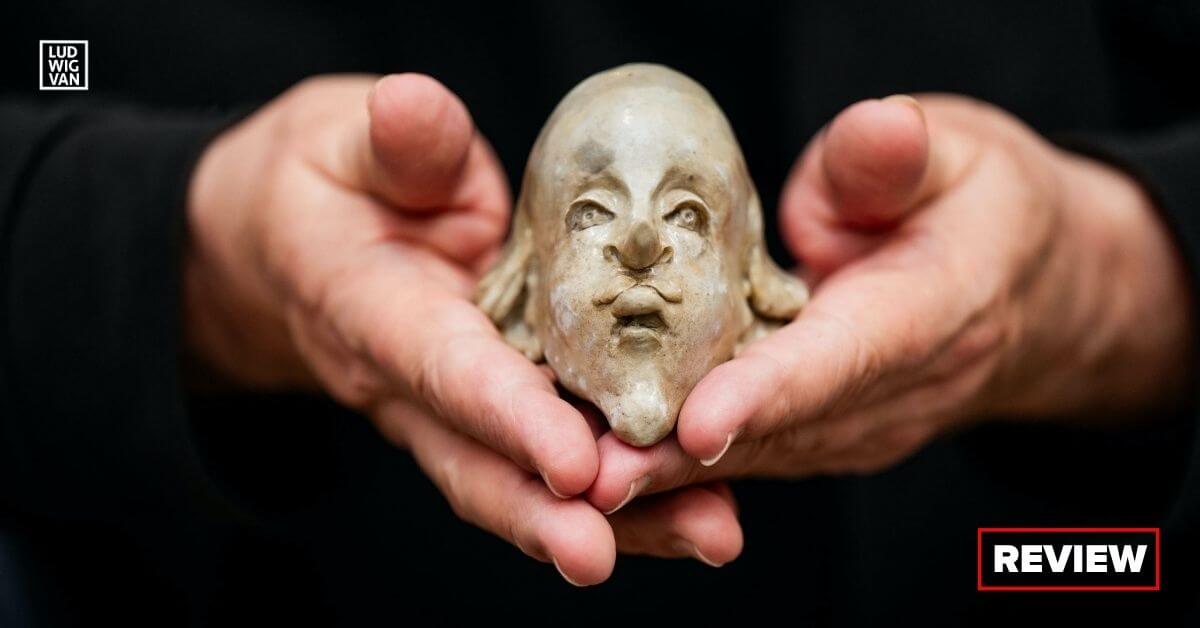
Ronnie Burkett Theatre of Marionettes Presented by Canadian Stage: Little Willy. Playwright, set designer, costume designer, marionette design: Ronnie Burkett; Music arrangements. Production: John Alcorn; Stage manager & technical direction: Crystal Salverda. March 3, 2026, Berkeley Street Theatre. Continues until April 5; tickets here.
If you think marionette theatre is polite entertainment for children and their dutiful grandparents, think again. Ronnie Burkett’s Little Willy, now at Canadian Stage, comes with a 16+ age restriction — and for good reason.
This is a rumbustious, ribald, razor-sharp evening of theatre that gleefully dismantles William Shakespeare while simultaneously reminding us why we still need him.
The Play
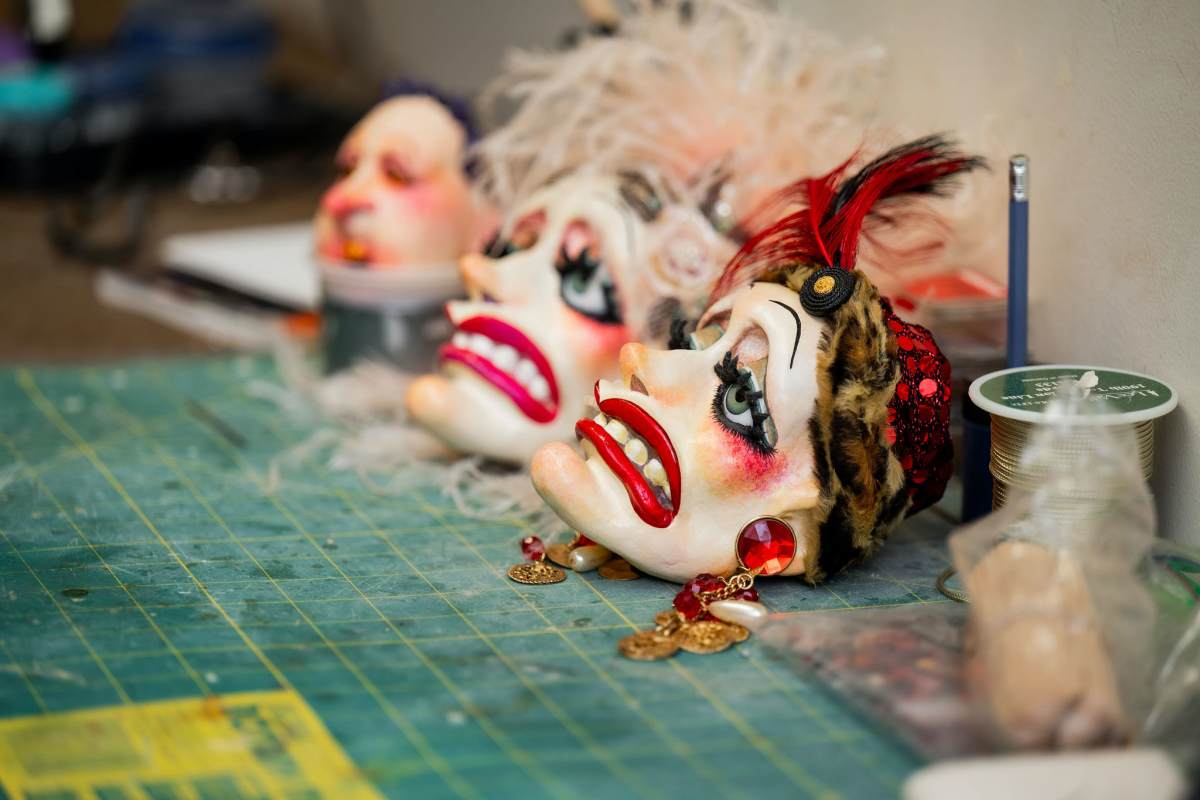
Advertised as a “riotously funny improvised mash-up” of Romeo and Juliet, the show more than delivers on its promise of chaos. It opens with an Elizabethan burlesque by the indomitable Dolly Wiggler, one of the regulars from Burkett’s Daisy Theatre — itself inspired by the illegal “Daisy” puppet shows of Nazi-occupied Czechoslovakia. That subversive lineage matters. From its first corseted shimmy, Little Willy signals that irreverence can be a form of resistance.
The semi-structured premise is deliciously thin: the Daisy Theatre is attempting to mount Shakespeare’s tragedy, despite having no funding and even fewer cast members. Mr. Pugh, the perpetually beleaguered impresario, is forced to recruit long-retired, semi-forgotten performers.
Chief among these is Esme Massengill — one of Burkett’s most beloved altar egos, whom he once described as “the version of me who has been on the road for 50 years and has just had it.” Esme shrugs off concerns that Juliet was 14, only to wander into murkier territory when it is revealed that she has actually been in the original cast 400 years ago — a claim made by no other than Shakespeare himself.
The Bard
Yes, the Bard appears. Previously “happily dead”, he is so scandalized by the news of the Daisy Theatre’s production that he turns over in his grave and materializes to intervene. What follows is a masterclass in comic timing.
In one of the evening’s most uproarious sequences, Esme and Shakespeare attempt the balcony scene — except that the Bard has upgraded from marionette to hand puppet.
“How dare you become a hand puppet!” Esme bellows at the sight of the Bard demonstrating his “floppety-floppety hands”. Their argument over “wherefore art thou” spirals into linguistic absurdity, with Esme persuasively proposing it should have been “whyfore”. This is erudite silliness at its finest; an affectionate skewering of textual sanctity and Elizabethan gender conventions, all delivered through wood, string and human audacity.

Burkett’s Arsenal
The show is also a dazzling vehicle for Burkett’s seemingly inexhaustible arsenal of voices and accents. Miss Jolie Jolie, a faded French actress, insists that everything in English sounds better in French. Major General Lesley Fuckward argues — with surprising conviction — that the sexiest thing on any Canadian stage is a thick British accent.
The rhythm of the evening shifts effortlessly between rapid-fire dialogue and vaudeville interludes, punctuated by John Alcorn’s jaunty musical arrangements (on the night I attended, the sound balance occasionally swallowed some lyrics, despite Burkett’s impressively robust delivery).
Then there is Rosemary Focaccia, a crass Las Vegas chanteuse, accompanied by suspiciously phallic Italian sausages, gamely manipulated by two young men recruited from the audience.
Burkett’s handling of audience participation is fearless and impeccably judged. One volunteer conducts the mechanical dolls of the Max Blümchen Orchestrale pit, like a delighted child with a jack-in-the-box. Another — shirtless and good-humoured — becomes the stand-in for Romeo’s corpse, as Miss Lillian Lunkhead (who once played Juliet at 16 and has been waiting for decades to perform her death scene again) enacts her final moments over his zipper, throwing herself at the plastic fork masquerading as a dagger.
Gloriously Mad
If this all sounds utterly mad, it is. And gloriously so. No target is too sacred: even Jesus Christ appears, styled as an “Easter bad boy”, gamely summarizing Friar Lawrence’s role in the plot. The comedy is brazen, occasionally transgressive, and refreshingly unafraid of giving offence.
But to describe Little Willy as no more than a string of irreverent vignettes would be to miss its quiet undercurrent. Beneath the bawdiness lies something achingly tender.
Miss Edna Rural, the beloved Albertan farmer’s wife, delivers a monologue about her late husband that becomes the emotional heart of the night. And Schnitzel, Daisy Theatre’s recurring fairy figure, brings a luminous stillness to the stage. His — her — their — rendition of the balcony scene is so simple and pure that it hushes the room. In that moment, laughter yields to reflection — on gender, on belonging, on the quiet courage of those who live outside prescribed norms.
Final Thoughts
But it was Schnitzel’s final words to Shakespeare which teared me up.
“Sometimes when grown-ups are involved, children aren’t treated very well.”
Are you looking to promote an event? Have a news tip? Need to know the best events happening this weekend? Send us a note.
#LUDWIGVAN
Get the daily arts news straight to your inbox.
Sign up for the Ludwig Van Toronto e-Blast! — local classical music and opera news straight to your inbox HERE.


- SCRUTINY | Shakespeare, (Un)strung: Ronnie Burkett’s Little Willy at the Canadian Stage - March 4, 2026
- SCRUTINY | Yefim Bronfman’s Recital At Koerner Hall Is A Tale Of Two Halves - February 23, 2026
- SCRUTINY | Clarity At The Threshold of Silence: Gimeno Leads Toronto Symphony In A Life-Affirming Mahler 9th - February 23, 2026