
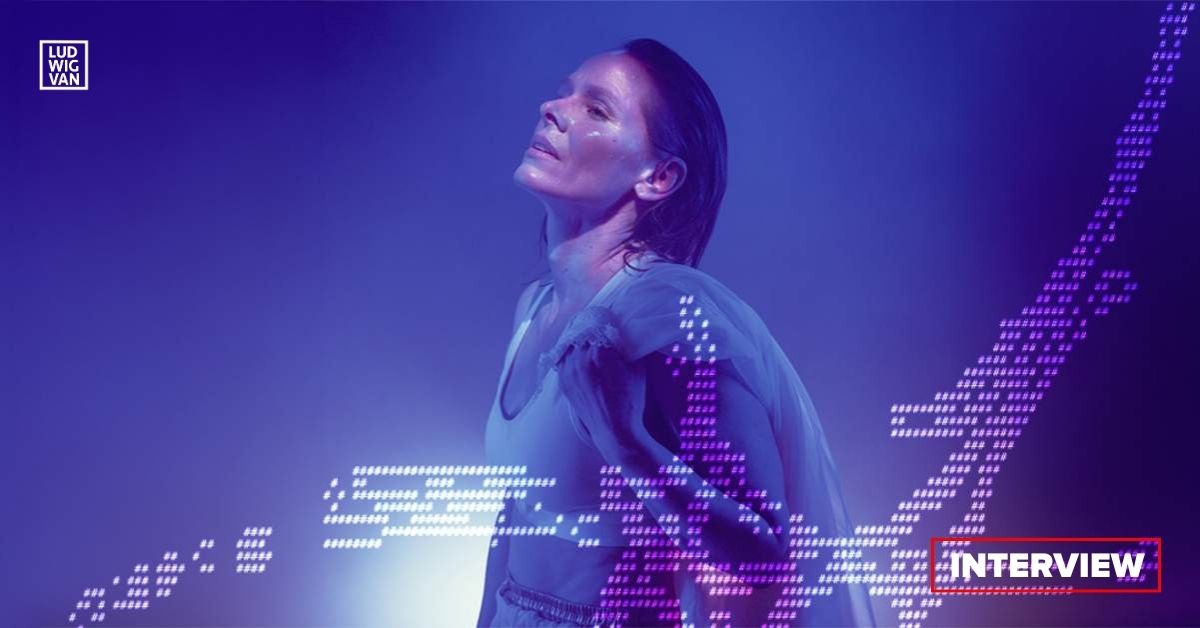
Jill Connell’s work The Herald takes the stage at Buddies in Bad Times Theatre from March 4 to 14. The work is an It Could Still Happen (a theatre collective founded by Connell), production in partnership with Buddies, and is subtitled:
Ancient Greece / right here + now
The plan will always feel like a mistake. Practice the mistake.
The performance weaves together various seemingly disparate elements, including a lecture on Antonio Banderas’ astrological chart, a chorus questioning their calling, and a long walk in a small mortal body. Connell’s piece interpolates Greek myth with today’s grindset culture, and questions how we all got to the point of obsessing over constant production and drive.
How can we create under a capitalist system?
“By the end of the play, all of us will know how to be in Shoppers Drug Mart, wondering how to handle time, and what will happen to all the work we do not make.”
Personnel
Jill Connell
Writer, producer, and director Jill Connell is based in Toronto. She is the artistic producer of It Could Still Happen, a collective of interdisciplinary artists. The performances they create often take place in industrial or alternative venues.
Jill is a graduate of the playwriting program at the National Theatre School, and a recipient of the Chalmers Arts Fellowship.
She describes The Herald as “a map of the underworld for translation by mortal bodies (performed by the Toronto Men’s Boxing Club)”.
Philip Nozuka auditions for Degrassi: The Next Generation:
Philip Nozuka
Philip Nozuka was born in New York City to a Japanese father and Canadian mother. His siblings are singers Justin Nozuka and George Nozuka, and he is nephew to actress Kyra Sedgwick and actor Kevin Bacon.
He grew up in Canada, where he graduated from the Etobicoke School of the Arts for Musical Theatre, and studied acting the National Theatre School of Canada in Montréal.
Philip began his career as a teen, and he’s known for his appearances on Degrassi: The Next Generation (as Chester), and Disney’s Aaron Stone (as Freddie). On film, he appeared in David Cronenberg’s 2012 film Cosmopolis, and in 2013’s Carrie.
Along the way, he added sound design and composition to his resume.
Philip Nozuka: The Interview
While he’s included in the show’s general credits, his role is largely sound design, as he explains.
“I’m not really acting in it,” he says. “It’s possible that I will say some lines from the text,” he adds.
Along with sound design, he’ll be performing music live on stage in collaboration with the ensemble of performers.
“We are playing around with me saying some of the lines.”
While he began with an acting career, music is also a big part of his background.
“I grew up doing a lot of music with my brothers,” he says. Most of his prominent TV roles came while he was still in his teens. “This brought me to National Theatre School,” he says. Music, though, was always present. “I’ve always kind of stayed in the lane of doing music and video work.”
During the COVID pandemic, with performance opportunities shelved, he focused more and more on music. “Now, I’m leaning into sound design,” he says. “It’s fairly new to me to do these types of projects.”
Previously, he worked with Toronto Dance Theatre in a similar fashion to The Herald, performing music and sound on stage in collaboration with the dancers. For that project, he created body sounds and loops. “Which is different than my music practice,” he says, “building worlds and soundscapes.”
His work with The Herald begins with the play’s text. “To enrich and emerge something from the text,” he explains. “I will say work ing with Jill, she’s very interested in what collaborators bring to the project.”
His ties with Connell go back several years. “We went to theatre school together,” he explains. “She knows my music practice as well.”
Working on The Herald means bringing all that experience to the table. “It feels fairly collaborative in that way.”

The Herald
The Herald features a non-traditional structure — one that doesn’t tell a linear story per se.
“I think in large part, this comes from Jill and her practice as a playwright,” he says. Connell’s work plays around with theatrical forms, and how plays operate within theatre spaces. “She’s less interested in a traditional narrative,” he adds.
“For me, this piece is doing two things.” There are scenes and characters, and an exploration of work and labour. In some ways, it’s an exploration of theatre work itself.
“There’s this kind of element where we are embodying ourselves as theatre practitioners on stage doing this work.” How do we work? “How does one be present to oneself doing this work?”
The ensemble of performers embody that idea. The reference to Shopper’s Drug Mart involves a character checking in with themselves as they act in the moment, surrounded by an audience.
“There’s kind of this simultaneous performance happening,” he says. “The play is a kind of guide, almost like scores and systems to work within,” Nozuka adds. That involves an element of spontaneity. “It might be different every night.”
It’s a concept of theatre that departs from the usual model of putting the same show on every night. “[It’s] a guide to create liveness.”
The performance mode frames the essential questions of the play. “At a time when so much is unknown, how do we remain present to ourselves and each other?” the play asks.
“Her work is quite open,” he adds. It acknowledges the multiplicity of how we experience things, as he explains. “Taking Greek theatre and kind of exploding it and reframing it in a contemporary way,” Philip continues.
“There’s this framework of a Greek classic. How it unfolds is […] she’s kind of inventing her own way of what a classic interpretation can be in 2026.”
Sound Design
“My approach to this type of sound design is, where I’m on stage and in the show,” Nozuka explains. Rather than creating from afar, so to speak, he’s been directly involved in rehearsals. “I’m in rehearsals pretty much full time.”
He offers and improvises different possible sounds and/or musical excerpts that could augment the actions of the performers.
“Right now, I find a lot of that is going back and forth between atmospheric soundscapes and actual music,” he says. “There’s a lot of reference to landscape.” It’s one of Jill’s persistent preoccupations, he says.
“I have these instruments on the table that allow me to make sounds on the go.” Nozuka says that he’s creating some loops to use, but in general, he’s trying to get away from the computer. “I want to really engage with the people,” he says.
“I’m using this thing called the MPC player.” The Media Player Classic was originally used a great deal by hip hop stations back in the 1980s, he explains. Users would hit different pads that emitted different sounds. “It’s a newer version,” he explains. “It allows me to essentially to make sounds.”
It allows him to recall specific sounds at a touch. “I’m creating a bank of possibilities,” he says.
As the rehearsals progress, he hones in on the specific sounds and combinations that relate best to the text. The sound can add a great deal to the effect.
“Suddenly we’re feeling this undertone that we didn’t realize,” he says. That’s why a sensitive touch is required. “Music can be so aggressive. It’s highly manipulative, which obviously can work for storytelling,” he adds.
“In large part it’s finding a flow […] without dictating a scene too much,” he says. “Sometimes the thing we discovered is that this part is silent. I would say that silence is one of my favourite tools as both a video maker and a musician, and a lot of that comes from contrast.”
As he points out, periods of silence allows for the audience to hear themselves too. “In a way that can be really effective,” he explains. “These things work best in contrast.”
It’s about working together.
“I think, for me, the thing that feels really forward in this particular piece, in large part, the story that we’re telling, is that we’re working together on stage. The most important part of the story to me in the rehearsal room is my attention to my collaborators, and the story of that working relationship.”
His process is based more on intuition and reaction than intellectual analysis.
“The strategy is to say, let’s just take a moment to be together. It’s less me going home and conceptualizing scenes to bring in a song that I made — although there is some of that. My work is essentially to be present in that room.”
As he explains, the practice involves real time collaboration both in rehearsals and in performance. It also ties into the main themes of the work overall.
“The biggest task of an actor is to be really present with their scene partner,” he says.
“It really does feel like in this work, it feels that it’s so important to Jill that my task is more about that than it usually is.”
The Play
Credits for the play:
Jill Connell // playwright + director
Sascha Cole // creative producer
With Paul Chambers, Ishan Davé, Brian Drader, William Ellis, Monica Garrido Huerta, Stephen Jackman-Torkoff, ORXSTRA, Philip Nozuka, Jackie Rowland, Tedi Tafel, Rose Tuong, Fan Wu
- Find tickets and show details [HERE].
Are you looking to promote an event? Have a news tip? Need to know the best events happening this weekend? Send us a note.
#LUDWIGVAN
Get the daily arts news straight to your inbox.
Sign up for the Ludwig Van Toronto e-Blast! — local classical music and opera news straight to your inbox HERE.

- INTERVIEW | Sound Designer Philip Nozuka Talks About Creating Sound Worlds For Jill Connell’s Evocative The Herald - February 27, 2026
- INTERVIEW | Pop Culture Icon Nathan Sawaya Talks About Art Of The Brick — Opening In Toronto March 5 - February 27, 2026
- THE SCOOP | Toronto Summer Music Has Announced Details For 2026: July 9 To August 1 - February 27, 2026