
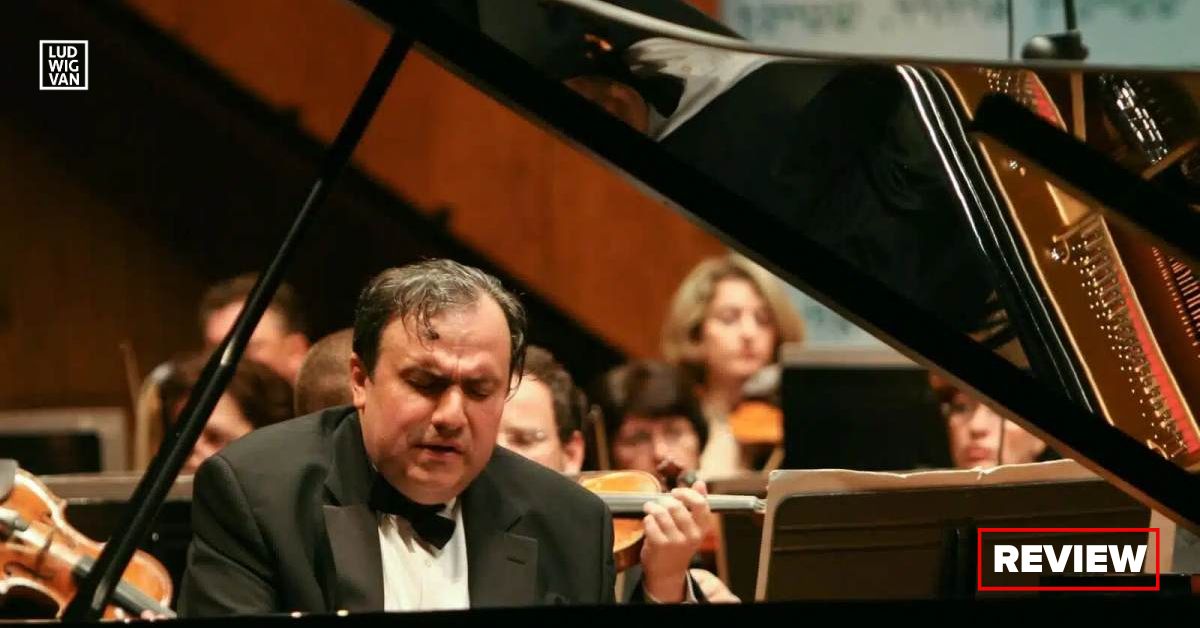
Royal Conservatory of Music: Yefim Bronfman. Robert Schumann: Arabeske in C Major, op. 18; Johannes Brahms: Piano Sonata No. 3 in F Minor, op. 5; Claude Debussy: Images, Book 2, L. 111; Sergei Prokofiev: Piano Sonata No. 7 in B flat Major, op. 83. February 22, 2026, Koerner Hall.
There is a particular assurance in attending a recital by a pianist of Yefim Bronfman’s standing. Matters of technique, stamina and architectural grasp are never in doubt; one listens without apprehension, even if detailed interpretative decisions remain open to question.
At Koerner Hall, however, it was only in the second half of this carefully proportioned program that the playing reached full voltage.
Each half set music of inward refinement against a work of large-scale argument: Schumann and Brahms before the interval, Debussy and Prokofiev after. The curatorial logic was clear. But the execution proved more uneven as the evening progressed from reticence to something far more galvanised.
Schumann & Brahms
Schumann’s Arabeske in C major offered a study in subtle tonal calibration. Bronfman explored the instrument’s softer registers with deliberate concentration, drawing a characteristically burnished bass sonority, though a handful of low notes were lost from view and some staccato articulations sounded unusually clipped. It took several pages for the sound to settle.
Yet, there were finely judged temporal inflections and a poetic reserve that resisted indulgence. The elusive coda — briefly disrupted by the seemingly unavoidable intrusion of a mobile phone — nevertheless retained its inward equilibrium.
The pairing with Brahms’s Third Piano Sonata made biographical as well as musical sense.
Completed during the composer’s stay with the Schumanns, the work’s symphonic breadth is an obvious fit for Bronfman’s monumental brand of pianism. Yet, his performance remained curiously constrained, almost as if he was trying to save the piece from its own pretensions.
The first movement’s thick textures never quite blossomed, and chords seemed reluctant to expand, the dynamic ceiling rarely rising beyond mezzo forte. Whether owing to the instrument or interpretative choice, the sonata’s orchestral aspirations remained more earthbound than airborne.
The poetic second movement was shaped with velvety tone, but again stopped short of exaltation. Bronfman sustained an almost macabre tension in the Scherzo, implicitly foreshadowing the fateful Intermezzo, as though the young Brahms might have already been rehearsing his late-period retrospection.
The contrapuntal intricacy of the finale was clearly articulated; yet here too, Bronfman seemed reluctant to deploy the wider timbral palette and ardent volatility that would have given the music its full measure of urgency.
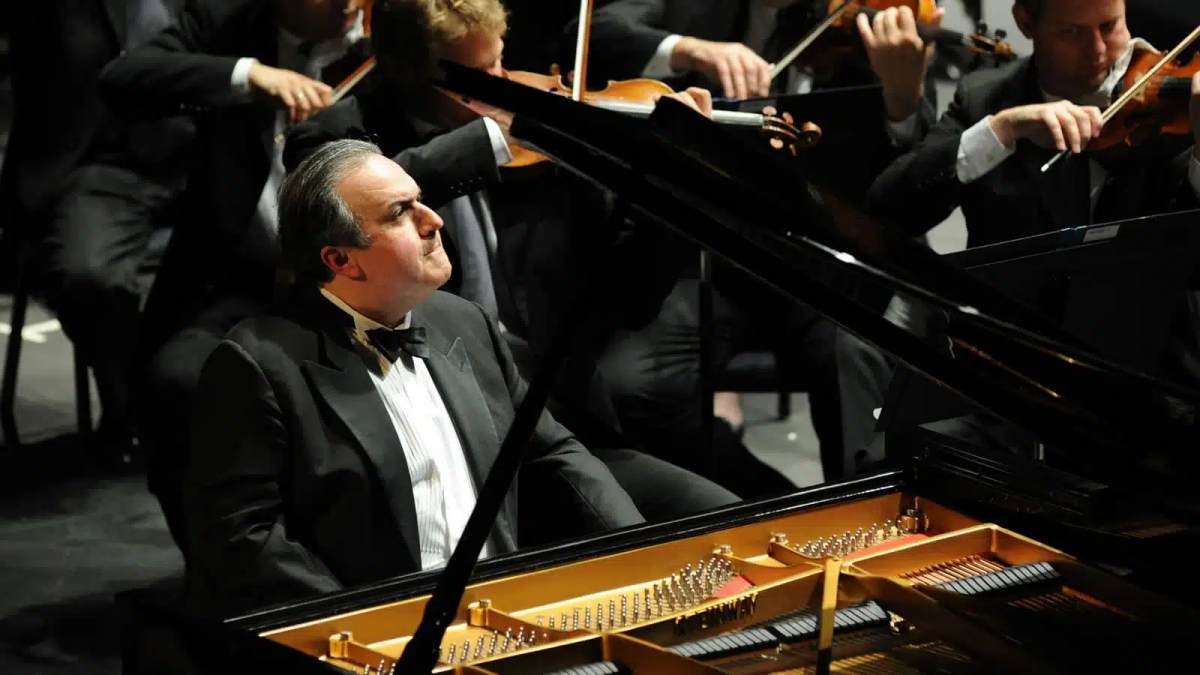
Debussy & Prokofiev
After the interval, something shifted — whether through subtle technical adjustment to the piano or interpretative choice.
The further dimming of the hall lights itself lent added atmosphere to Debussy’s Images, Book II. In ‘Cloches à travers les feuilles’, the gradual crescendo emerged from a finely gauged haze of pedal; ‘Et la lune descend…’ was veiled in antique stillness; and ‘Poissons d’or’, if less mischievous than we sometimes hear, glittered with buoyant energy and iridescent colour.
The combination of brilliance and prowess found its most compelling expression by far in Prokofiev’s Seventh Sonata.
Here, Bronfman’s power was unleashed with no holds barred. The first movement’s savage brutality was rendered with stark angularity; the lyrical episodes felt as though stunned by the violence that framed them.
The Andante possessed a bleak, steel-edged stillness, within which the funeral tolling bells were all the more ominous.
In the finale, the infernal perpetuum mobile accumulated volcanic momentum, any fleeting imperfections irrelevant to its driving inevitability. On the eve of another sombre anniversary of Russia’s invasion of Ukraine, the sonata’s war-born ferocity acquired unmistakable new resonance.
Final Thoughts
The audience’s rapturous applause was rewarded with two encores.
‘October’ from Tchaikovsky’s The Seasons was all the more moving for its disarming emotional candour, while Liszt’s E-flat Grande Etude after Paganini provided a concluding display of dazzling fingerwork, with an uncompromising velocity that bordered on the superhuman.
Are you looking to promote an event? Have a news tip? Need to know the best events happening this weekend? Send us a note.
#LUDWIGVAN
Get the daily arts news straight to your inbox.
Sign up for the Ludwig Van Toronto e-Blast! — local classical music and opera news straight to your inbox HERE.

- SCRUTINY | Yefim Bronfman’s Recital At Koerner Hall Is A Tale Of Two Halves - February 23, 2026
- SCRUTINY | Clarity At The Threshold of Silence: Gimeno Leads Toronto Symphony In A Life-Affirming Mahler 9th - February 23, 2026
- SCRUTINY | Tafelmusik’s Messiah: Handel-ed With Care - December 19, 2025