
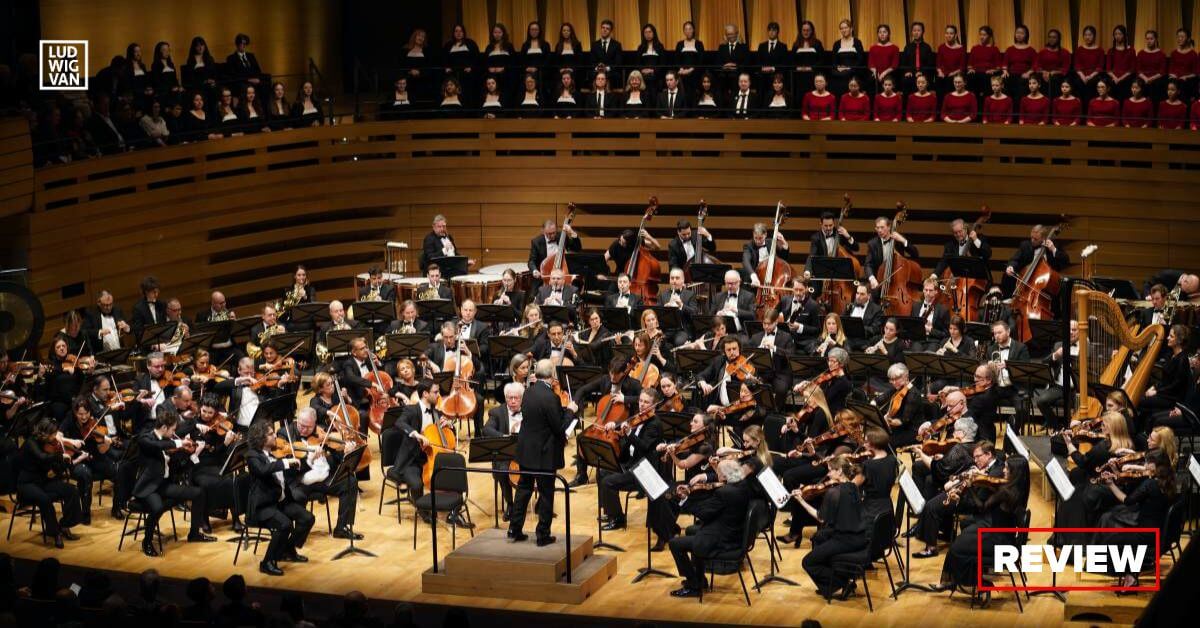
Royal Conservatory of Music: Budapest Festival Orchestra conducted by Iván Fischer. Mahler, Symphony No. 3, with mezzo-soprano Gerhild Romberger, the Toronto Mendelssohn Choir, and the Toronto Children’s Chorus. February 12, 2026, Koerner Hall.
The shimmering presence of god, the elemental rise of nature from deep beneath, man lost looking into eternity, awakening of all senses — all these and more came vividly alive in the Budapest Festival Orchestra’s Mahler 3 led by Ivan Fischer on Thursday night at Koerner Hall.
Mahler 3
This six-movement giant of a symphony poses much challenge to performers and audiences alike. As Mahler intended to construct the world in this symphony, the stamina and technical facility required to play this capricious music is incredible — there is no real break for anyone along this nearly two-hour journey.
Both children’s choir and women’s choir must keep their composure, and stay patient on stage for a good hour until they get to bring in the grace of god, as tolling bells. The incredible alto solo is a meditation in both control and boundless expression, requiring breath that seems to last through an entire lifetime of human search.
Instrumental Excellence
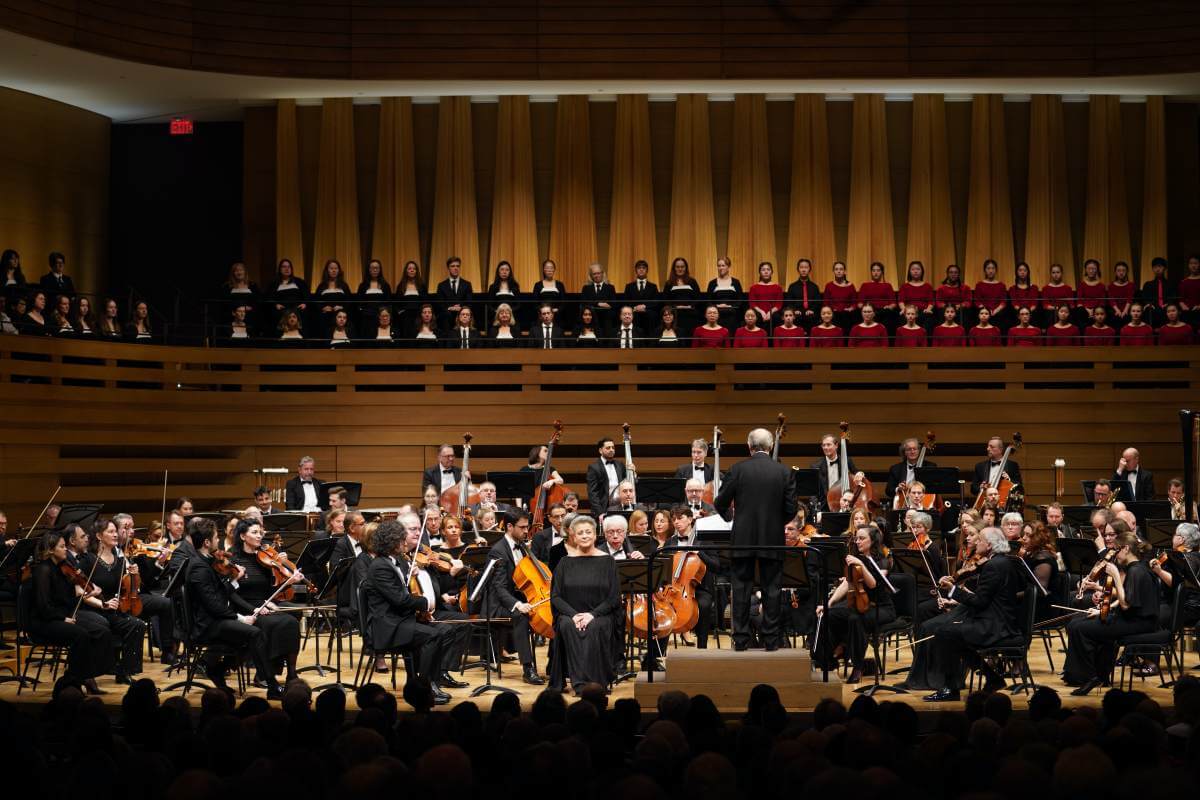
The hall was packed, with a few musicians and choristers spilling out onto the audience area this evening. A rare sold-out house since the pandemic, the audience buzzed with excitement and chatter.
However, at the first downbeat from Fischer, the house was entranced by the magic that BFO poured out for the next 100+ minutes.
Starting with eight horns in glorious unison, the first double forte was quickly contrasted with the pianissimos from the orchestra — an apparition, with some sound felt, more than heard — the percussion section, especially the gran cassa and tam tam, were wonderfully textural; as they resonated beneath with such complex undertones, their pitches lost meaning, becoming a physical haze.
Weaving in and out of the masterful ‘klangfarben’ — sound colour melody — exchange between sections, BFO’s colours merged one instrument to another seamlessly; yet, every instrumental solo cut through the texture, with great command and character.
The trombone solos by Balázs Szakszon, golden and tragic, full of pathos, and other times heroic and full of youthful jubilance, were a particular highlight throughout the whole symphony. The birdcall and wild nature noises from the woodwinds were feral and exotic. Daniel Bard’s violin solos were exceptional in their flexibility and absolute perfect intonation and synchronicity with the orchestra.
The whirling and expansion of string tuttis, in that special BFO blending, was especially exciting. It is not very often that an orchestra can produce different dynamics with such precision and audible difference between the sections as indicated on the score — it often ends up becoming an homogenous, synced dynamic — but not tonight.
The summer flowers of the second movement felt close to the heart: we have been experiencing one of the coldest winters recently: and as the winter grips hard on the heart, the heart yearns for the summer. The unsuppressable energy that allows seeds to germinate through the frozen ground, to shoot up into the blue sky over the summer meadow — BFO’s sections magically merged between chaotic explosions of energy and synchronised flow together.
The strings, often at the edge of brutality, also caressed with utmost gentle energy. The bass’s tutti pizzicatos throughout the second movement were whimsical and beautifully arced.
The animals of the forest, full of Mahlerian motifs, brought great riches of texture, melodies, and space. This spatial element of live music is not replaceable, and no equipment can ever recreate such an effect through recording. It was beautiful to sense these conversations and interjections as they shot out, in real space and time, from all directions.
Here, the posthorn played by Bence Horváth, from offstage, was an amazing treat to the ears. Actually banishing him from the stage, as a contrast to many off-stage directions nowadays where they simply separate the player from the main stage, created a great contrast. Horváth’s control and technical posthorn mastery must surely be one of the best performances in recent years.
What Did The Man Tell?
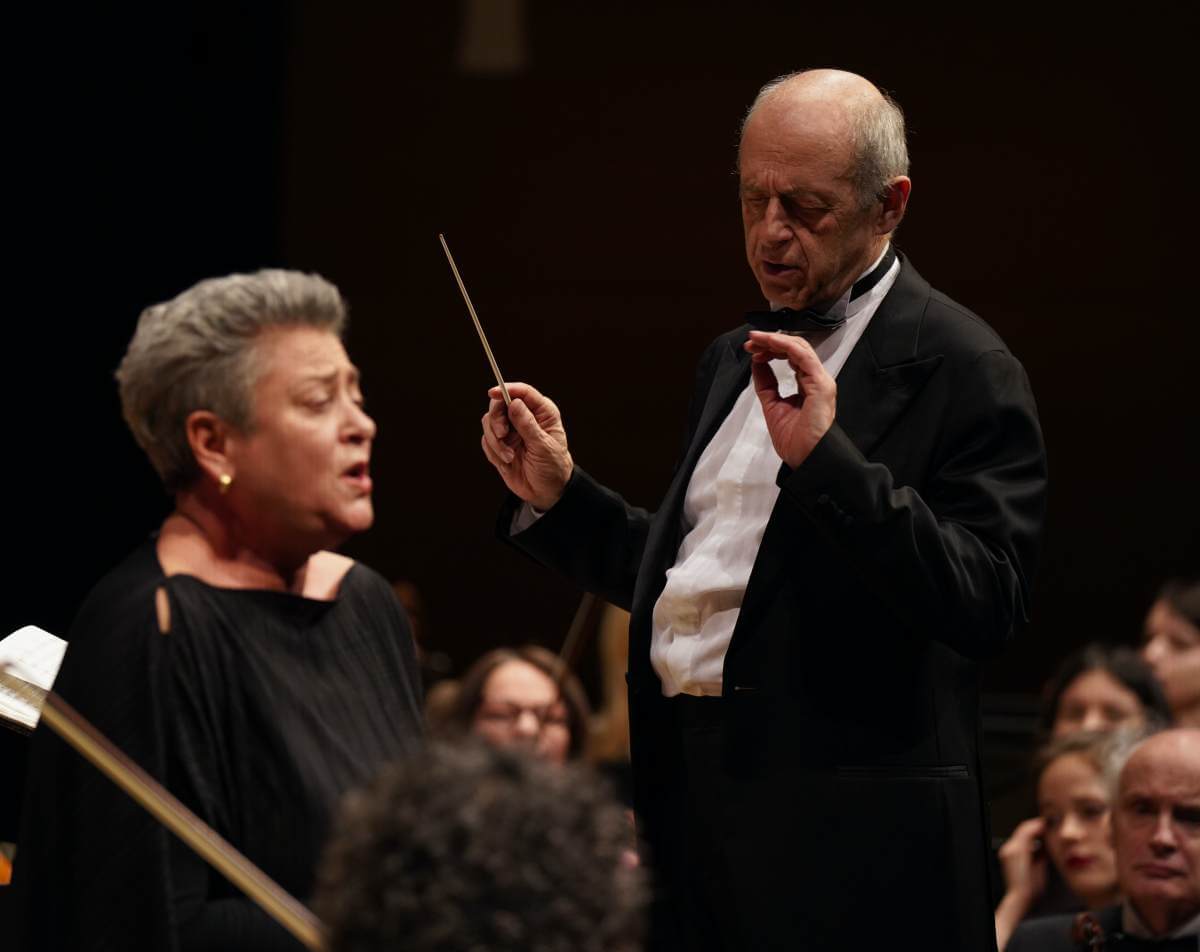
What did the Man tell? Through the shimmering undulation, Gerhild Romberger delivered the questioning thoughts from Nietzsche with a warm, commanding voice, as the awe for life gently supported her, leading us into the revelation — a joyful one, with bells and angels. Sharing much material with Mahler 4, the choirs, drawn from the Toronto Mendelssohn Choir and Toronto Children’s Chorus, were wonderfully resonant with great diction, creating a light hearted, trusting joy in god.
The sixth movement, “What Love Tells Me,” perhaps the most exquisite and generous slow writing by Mahler, was absolutely beautiful, especially in the tutti strings.
As the orchestra layered onto this benevolence, Fischer created the utmost of dynamic contrast between the highest peaks and the lowest valleys, leaving the hall in stunned silence after the triumphant cadential extension in D major- brilliant and resonating throughout the entire hall.
Final Thoughts
Fischer, well-grounded in the centre, was never excessive or theatrical. Two feet firmly on the ground, it was lovely to see him letting the orchestra loose at certain points. The trust between the conductor and the orchestra, and also within the sections, felt genuine and beautiful. The shared smiles and exchanged glances within the orchestra, especially in humorous moments, were genuinely touching.
After all, it’s about creating an experience with others in these gargantuan symphonies, and it’s lovely to see the real joy peeking through each musician. The palpable joy in the bass section during Part II: “What the Flowers of the Field Tell Me” in pizzicato, was another instance of great ensemble work.
This was the last stop of their North American Mahler 3 tour 2026. Toronto was indeed lucky to have hosted the BFO, Fischer and Gerhild Romberger.
The wild abandon, the beautiful calm post-apocalypse and self-annihilation, the entire world awakening — all these fantasies, beautifully described by Mahler, need an excellent ensemble, and BFO once again lived up to their fame as one of the best orchestras in the world. It was their finesse and grace that illustrated what music really is — it’s not a recording, it’s not a video, it’s a real time experience, with sound pouring from all over the stage, from people who you can see and feel across the stage, in one shared space.
What an absolute joy, in this world where so many things are flattened into digital apparitions. Bravo.
Are you looking to promote an event? Have a news tip? Need to know the best events happening this weekend? Send us a note.
#LUDWIGVAN
Get the daily arts news straight to your inbox.
Sign up for the Ludwig Van Toronto e-Blast! — local classical music and opera news straight to your inbox HERE.

- CRITIC’S PICKS | Classical Music Events You Absolutely Need To See This Week: March 29 – April 3 2026 - March 30, 2026
- CRITIC’S PICKS | Classical Music Events You Absolutely Need To See This Week: March 23 – March 29 2026 - March 23, 2026
- CRITIC’S PICKS | Classical Music Events You Absolutely Need To See This Week: March 9 – March 15 2026 - March 9, 2026