

Tafelmusik, Juilliard415, and two internationally respected Baroque dancers will team up for the presentation of Rameau and The Art of Dance. Dancers Caroline Copeland and Julian Donahue will add to the ambience of a theatrical concert that showcases the music of French Baroque master Jean-Philippe Rameau for four performances from February 19 to 22.
The music of Rameau’s operas and ballets will be the soundtrack for an intriguing evening that blends music and movement.
“Rameau’s music is pure theatre,” says Cristina Zacharias, Artistic Co-Director of Tafelmusik, in a statement. “By bringing together Tafelmusik, Juilliard415, and Baroque dancers, this program allows audiences to experience his music as a living, breathing art form, where sound, movement, and drama are inseparable.”
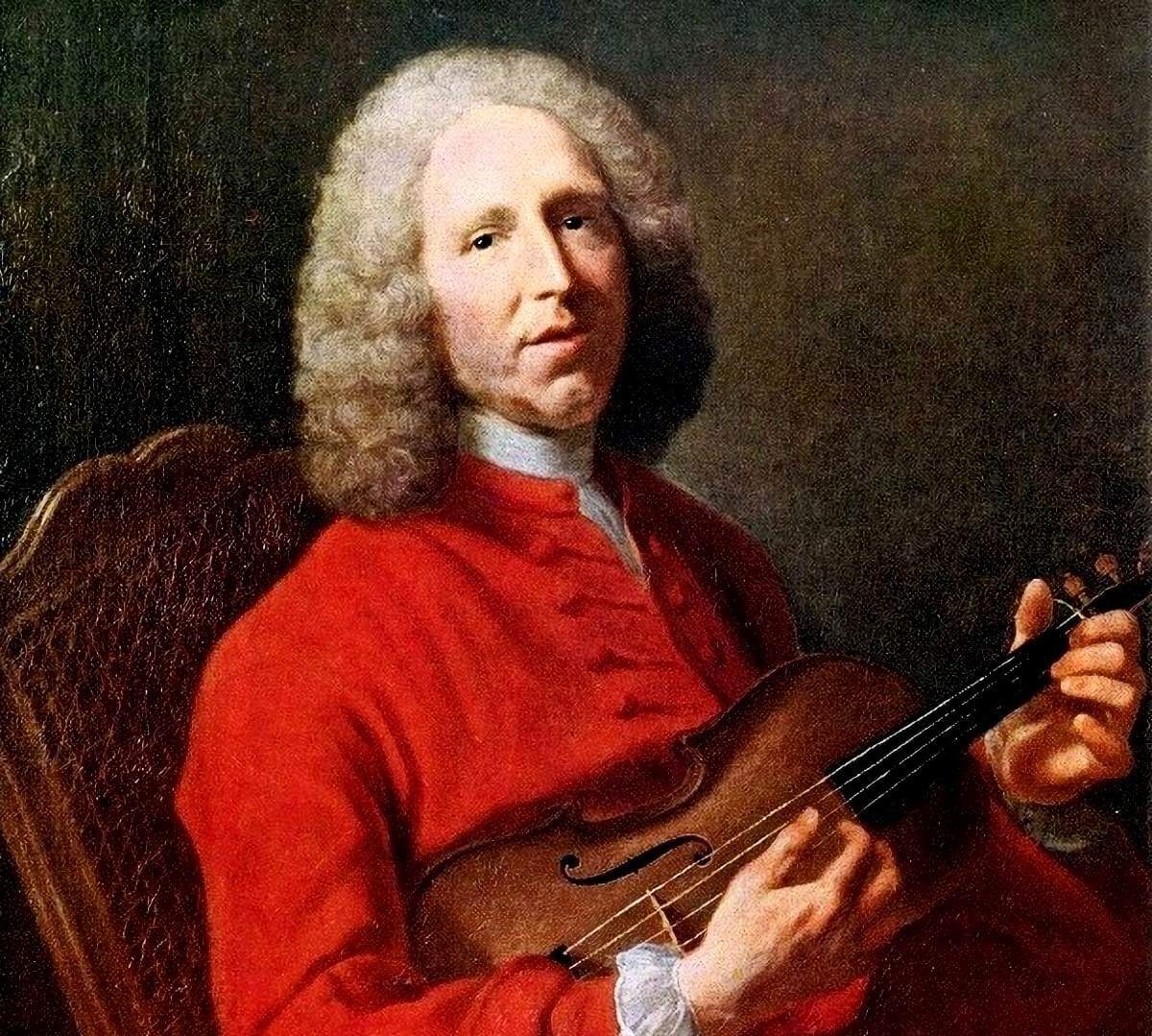
Jean-Philippe Rameau & Opera
Jean-Philippe Rameau (1683 – 1764) was both composer and music theorists, one of the most prominent of the 18th century.
His father, an organist, would have preferred to see him become a lawyer, but his poor grades ruled out that career path. Luckily for future generations, he turned to music by the age of 18, and became an organist in Avignon, Clermont, Dijon, Lyon, and briefly, in Paris, where he also began to publish his music.
In Clermont, in 1715, he signed a 29-year contract to become a cathedral organist, and on his own, decided to study the realm of music theory. His work, which focused on the natural overtone series, and put harmonic structure before melody, contrary to the views more common in his time, forms the basis for much of what is still studied today. He published his Traité de l’harmonie (Treatise on Harmony) in 1722, and it made him famous.
In order to be released from his contract, he began to play the organ so disagreeably that the authorities finally agreed to let him go.
He returned to Paris, where he would stay for most of the rest of his life. There, he published his first opera, Hippolyte et Aricie, which premiered in 1733, and caused a sensation. His orchestration differed significantly from from that of Jean-Baptiste Lully, his predecessor in the French court. His music was also revolutionary in its use of harmony, and in his operas, recitatives, or speech-like sections.
Rameau would go on to write some 30 operas and ballets, including the ill-fated Samson, his first collaboration with the writer Voltaire. It was never performed, and the manuscript was lost.
“The French baroque composer Jean-Philippe Rameau wrote some of the most addictively kinetic dance music ever,” says Robert Mealy in a statement. “I’m thrilled to celebrate his genius by bringing Tafelmusik together with our talented graduate students from Juilliard’s Historical Performance program, along with two brilliant Baroque dancers who will bring his dances to vivid life.”
Juilliard415
Juilliard415, The Juilliard School’s Baroque orchestra, is led by Robert Mealy, Artistic Director of Juilliard’s Historical Performance program.
Founded in 2009, the program has grown to become one of the significant schools for early music training. There has been a longstanding artistic exchange between Juilliard and Tafelmusik, including performances in Toronto, New York, and Boston.
Mealy is also one of the most prominent Baroque violinists in the US. His passion for early music began in high school, and he pursued his studies a the Royal College of Music in London, including both harpsichord and Baroque violin. He was invited to join Tafelmusik while he was still an undergraduate student at Harvard College. Mealy later performed with Les Arts Florissants. He has also led orchestras, toured, and recorded with early music ensembles in North America and Europe, and served as Orchestra Director for the Boston Early Music Festival.
He also serves as principal concertmaster at Trinity Wall Street in New York City, and co-directs Quicksilver, a chamber ensemble.
Caroline Copeland
Dance historian, choreographer, and educator Caroline Copeland specializes in 17th and 18th century ballet and opera. She has performed in more than 70 productions, and counts 50 credits as a choreographer in film, opera, theatre, and concert dance. She works as a dancer with the Metropolitan Opera, along with contemporary choreographers such as Robert Battle, Elke Rindfleisch, and JoLea Maffei, among others. She has both performed and choreographed for the New York Baroque Dance Company and the Boston Early Music Festival.
Caroline has performed across North America and Europe, including appearances at the Lincoln and Kennedy Centers, Drottningholm Palace in Sweden, The Neues Palais at Sanssouci, The International Handel Festival in Göttingen, Germany, and the Innsbruck Festival of Early Music in Austria.
Julian Donahue
New York City based dancer Julian Donahue is a Baroque and Renaissance specialist with a background in ballet, specifically the Cecchetti ballet technique. He is also experienced in contemporary and modern dance.
He founded Julian Donahue Dance in 2021 to create and showcase dance works, and his first piece premiered at NYTB’s Lift Lab Live performances, with subsequent performances at Battery Dance Festival, White Wave Dance Festival, and the Queens Outdoor Dance Festival. In June 2024, Julian’s vision of Midsummer Night’s Dream, and another new work set to Beethoven’s 6th Symphony, premiered in Boston.
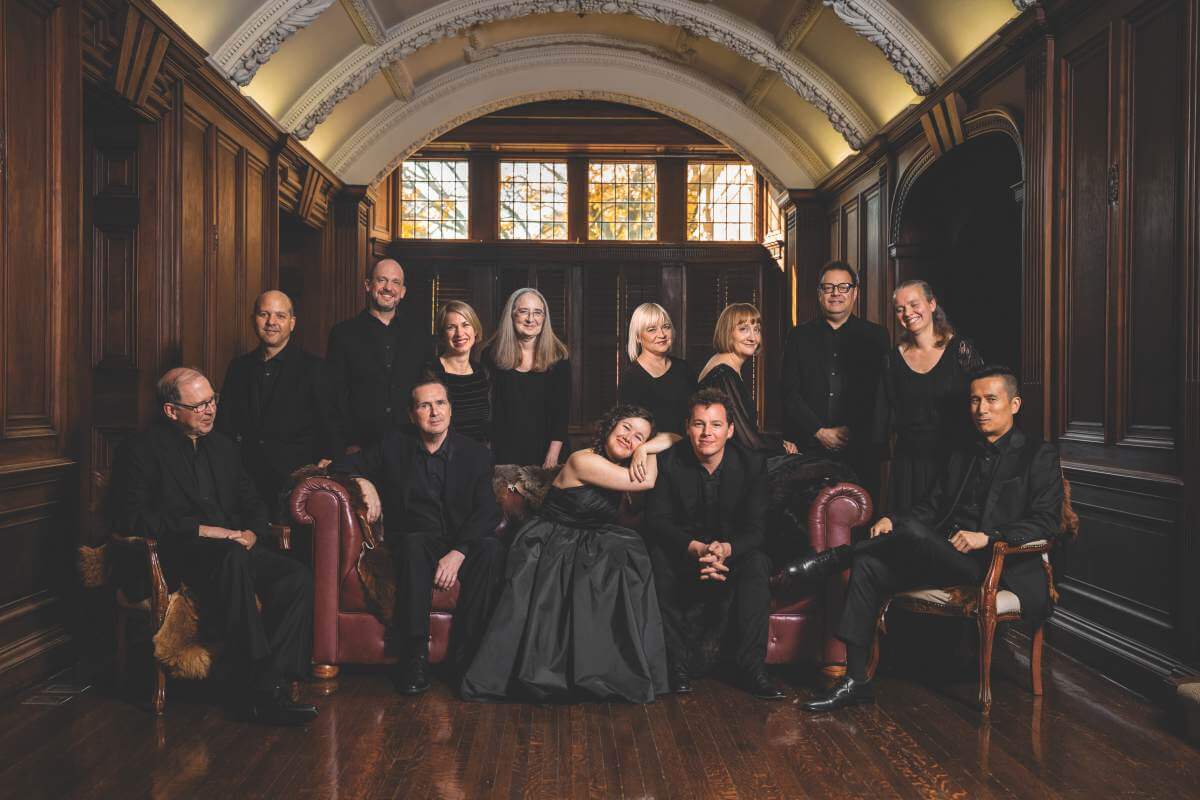
The Concert
Robert Mealy will direct the Orchestra in a program of selections from Rameau’s operas and ballets, featuring Baroque dancers Caroline Copeland and Julian Donahue.
Performances on February 19, 20, 21 and 22 will take place at Jeanne Lamon Hall, Trinity-St. Paul’s Centre.
- Find concert details and tickets [HERE].
Are you looking to promote an event? Have a news tip? Need to know the best events happening this weekend? Send us a note.
#LUDWIGVAN
Get the daily arts news straight to your inbox.
Sign up for the Ludwig Van Toronto e-Blast! — local classical music and opera news straight to your inbox HERE.

- INTERVIEW | Composer Andrew Balfour Talks About The Upcoming Concerts With Jubilate Singers & Friends - March 20, 2026
- PREVIEW | The Mississauga Symphony Orchestra Welcomes Canadian Pianist Sheng Cai - March 20, 2026
- INTERVIEW | Composer Aziza Sadikova Talks About The Toronto Premieres Of Her Music With Esprit Orchestra - March 19, 2026