
The Cathedral Bluffs Symphony Orchestra will present a concert titled Romeo and Juliet on February 7. As the title suggests, selections from Prokofiev’s Romeo and Juliet ballet will anchor the program, which just happens to fall near Valentine’s Day.
But, music by Canadian composer Violet Archer and Barber’s Violin Concerto add to the lineup. LV spoke to CBSO Music Director Martin MacDonald and violinist Stephen Sitarski about the music.
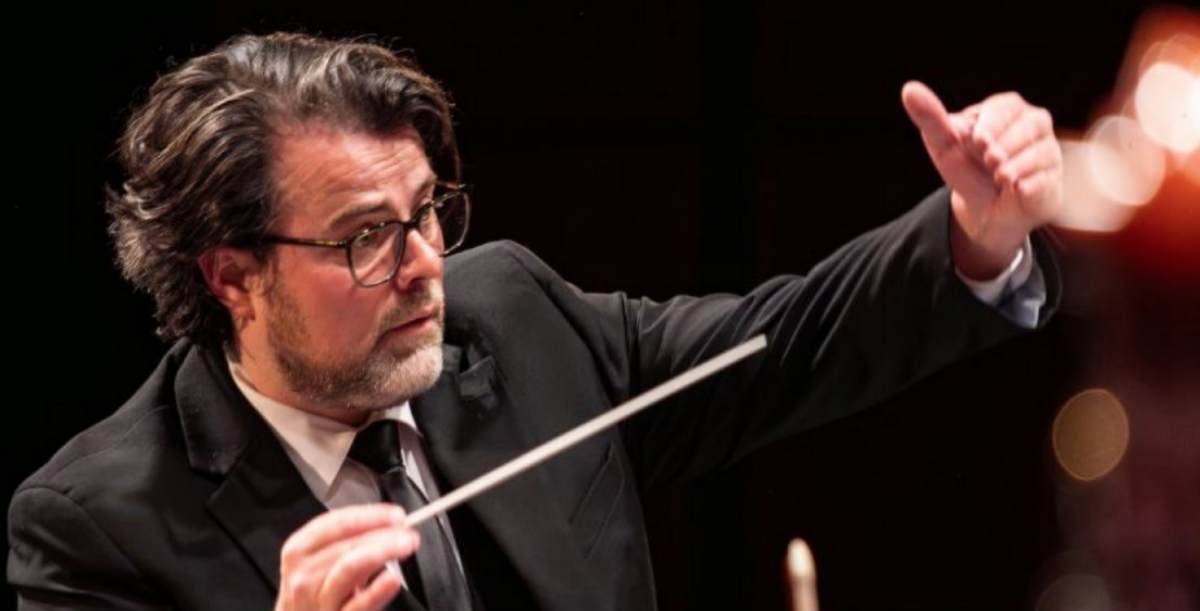
Martin MacDonald: The Interview
The full program for the February 7 concert includes:
- Violet Archer: Poem (1940)
- Barber: Violin Concerto
- Prokofiev: Selections from Romeo and Juliet
Canadian composer Violetta Teresa Giovanna Balestreri Archer (1913-2000) left an impressive catalogue of more than 330 compositions. She was a musician and teacher as well as a composer, and studied privately with Béla Bartók in New York City. Her Poem for Orchestra was composed in 1940.
“It’s an absolutely beautiful piece of music. We just had our first read through of it last night,” MacDonald says. “There’s just a lot of emotional clarity to it. There are a lot of these beautiful over arching phrases,” he adds.
Archer’s piece is fairly short, but incorporates a range of emotions. She saves the larger emotional passages for specific parts of the piece. It’s one of the aspects that fits with the rest of the program, as MacDonald notes.
“It’s a beautiful piece of music with these long gorgeous lines. The first time I heard the piece, I knew I had to find a way to program it,” Martin says.
He notes that, over the last few years, he’s tried to incorporate new Canadian music into his programming, but points out that there is a body of music from an older generation of Canadian composers as well.
“There’s a lot of this music from the older generation of Canadian composers that deserves more play,” he says.
It serves a purpose in the program as a whole.
“I think that it, especially for this particular program, the Prokofiev has so many really stunning moments, but there are also moments of terror and anguish. I felt that it was a good balance to that.”
Though it consists of just three pieces, the program as a whole presents a nice challenge both for MacDonald and the musicians of CBSO. “It’s proven to be quite a beast of a program.”
It’s designed to be an antidote to the excesses of the holiday season, and that post-holiday crash. Prokofiev requires a big orchestra with a beefed up woodwind section, including saxophone.
“We really wanted to make it a big experience.”
Prokofiev’s Romeo and Juliet is the cornerstone of the program, and that’s where he began.
“I really wanted to do this,” he says. MacDonald points out that, for orchestral performances, most conductors take material from the three orchestral suites that Prokofiev himself created from his ballet. But, those pieces don’t present the material in the chronological order of the ballet.
“I picked and chose movements from each of the suites, and then I rearranged them into the chronological order of the ballet.” That means switching back and forth between all three of Prokofiev’s orchestral suites. “So that it follows the narrative of the ballet,” he explains.
He’s pared about 100 minutes of music from all three suites down to roughly 47, a process that involved a lot of research. “A ten-movement suite that we’ve created, a custom suite we’ll call it.”
Martin looked to balance the emotional arc of the story. “It starts quite dramatic, with the Montagues and the Capulets,” he notes. “But it ends with the aching sadness of Juliet’s death.”
It was a time consuming project that involved creating custom booklets for each of the musicians. “Our librarian did an incredible amount of work on this as well,” he says. The effort was worth it. “People are really excited to play it. It’s incredibly challenging music to play technically, but it’s also challenging emotionally.”
For a community orchestra, it represents a worthwhile task. “The results so far are already really positive and satisfying.” As a community orchestra, he was happy to reach out to their auxiliary players — the third flutes and clarinets, along with extra string players.
“A lot of friends are back in the orchestra,” he says.
Including the Barber Violin Concerto is an idea that came from the soloist, Stephen Sitarski. “I didn’t really know it much,” he says. It came up in discussions with Sitarski. “We had gone through a few options.”
MacDonald became enthusiastic with the Barber Concerto when he listened to it, in particular, the way the composer juxtaposes the gorgeous lyrical moments with big emotions.
“I first worked with Steve maybe 12 years ago,” MacDonald recalls. “I’ve worked with him as a concertmaster. He’s got a level of playing that’s just unbelievable,” he says.
“He’s the type of player where you feel his confidence and his command reflects into you, and you can reflect it back,” Martin says. “I was really happy that he wanted to be part of this.”
Stephen Sitarski: The Interview
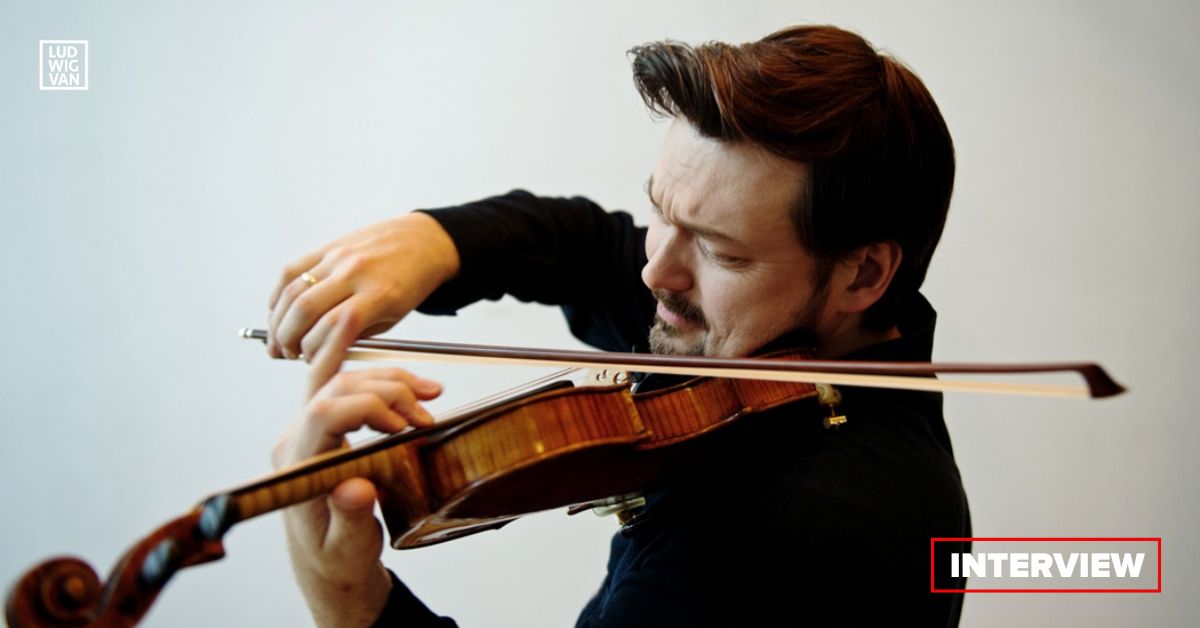
Stephen Sitarski is a versatile violinist with an impressive resume. He serves as the concertmaster of both The Hamilton Philharmonic Orchestra and Toronto’s Esprit Orchestra. Sitarski has also taken on the role of guest concertmaster with the Brott Festival on a few occasions, and with a number of other orchestras. In addition, he has performed widely across Canada as a soloist and chamber musician.
He has a longstanding association with Martin MacDonald.
“It’s very simple,” he says. “Marty has conducted a couple of orchestras that I worked with in the past. We got to know each other,” Sitarski explains. “Last year, out of nowhere, he asked if I would be interested in working with his orchestra. Typically it’s not unusual, especially with smaller orchestras, that the conductor makes contact with guest artists.”
It presented an opportunity to play a work that he could choose “Sometimes, an orchestra will come up with a program.” With the program set, it’s simply a matter of finding someone who can perform the work. With CBSO, it came out of discussions. “I probably gave Martin at least three or four choices. I didn’t know at the time exactly what other pieces he had in mind for that concert. I left it with him.”
MacDonald chose the Barber Concerto out of the options Sitarski mentioned. The sound fits with the rest of the program, as he discovered.
“It sounds like it’s loosely based on Valentine’s Day,” Sitarski says. “The Barber is very lyrical, it has an absolutely gorgeous, gorgeous melody. But certainly, it’s a very sweet melodic piece, and it’s not too long.” He points out that, at less than 25 minutes, it’s the right length to come after the epic Prokofiev.
Barber wrote his Violin Concerto in 1939. While it’s technically a modern piece, it contrasts markedly with much of the contemporary repertoire that Stephen often performs.
“In my career, I’ve had at least three concertos written for me particularly,” he mentions. “In all cases, I worked with them in composing the piece,” he adds.
“I’ve played a lot of avant garde music, very experimental. Brand new stuff. What I find often with contemporary composers, because there are very few rules of composition these days, almost anything goes. If you as a composer want to make your mark, it’s almost incumbent that you do something that hasn’t been done before. Occasionally, it leads to something quite special.” As he points out, creating a new kind of sound or effect can become a great moment in a piece.
At times, however, creating those new sounds can have unexpected effects. “Most of the truly experimental pieces that I’ve played […] they try to use the violin in a way that the violin wasn’t meant to be used.” That includes playing the violin with a pencil or triangle, hitting it in various ways and more. Sometimes, a crushing, scratching, grinding noise is the goal. “Claude Vivier used it quite a bit,” he notes.
“A couple of times a year, I have to take my violin to the shop and I have to have scrapes and marks removed.”
The bow can also take a hit when it comes to producing experimental sounds. “Those little tiny barbs on the horsehairs kind of get ground out,” he says.
Barber, in contrast, was more of a neo-Romantic than a modernist. “Barber uses the violin as it was intended to be used,” Stephen says. He notes the Violin Concerto’s long lines and lovely melodies. “It’s quite active, and virtuosic.”
Barber’s music uses the orchestral toolkit that had been in place since about the time of Vivaldi. “It uses all the instruments of the orchestra in the best way that they’re designed.” He points out that the oboe takes on the melody first, even before the violin, in the Concerto. “This melody just fits the oboe perfectly to a T,” Sitarski says.
“I really love the Barber because it’s a true violin concerto. No weird effects, no bizarre sounds. The audience won’t have to stretch their level of acceptance,” he says.
“I just want to play the violin beautifully if I can.”
- Find tickets and other concert details for Cathedral Bluffs Symphony Orchestra’s Romeo and Juliet on February 7 [HERE].
Are you looking to promote an event? Have a news tip? Need to know the best events happening this weekend? Send us a note.
#LUDWIGVAN
Get the daily arts news straight to your inbox.
Sign up for the Ludwig Van Toronto e-Blast! — local classical music and opera news straight to your inbox HERE.

- PREVIEW | Classical Guitarist Alexandra Whittingham Makes Toronto & Ontario Debuts - March 13, 2026
- PREVIEW | Soundstreams Presents Quatuor Bozzini: With Strings Attached - March 13, 2026
- INTERVIEW | Award-Winning Librettist & Against The Grain AD Royce Vavrek Talks About Canuck Cantatas - March 13, 2026