
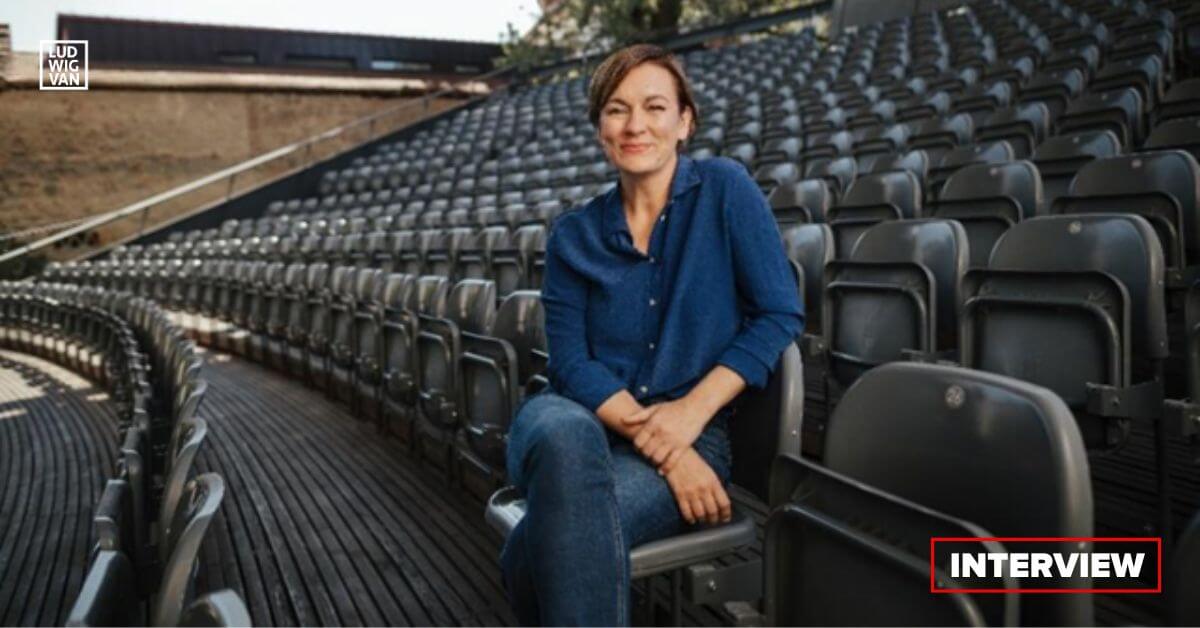
Daniela Candillari will conduct the Canadian Opera Company’s production of The Barber of Seville. The opera, a COC co-production with Houston Grand Opera, Opéra National de Bordeaux, and Opera Australia, takes the stage on February 5, 7, 11, 13, 15, 17, 19, and 21, 2026.
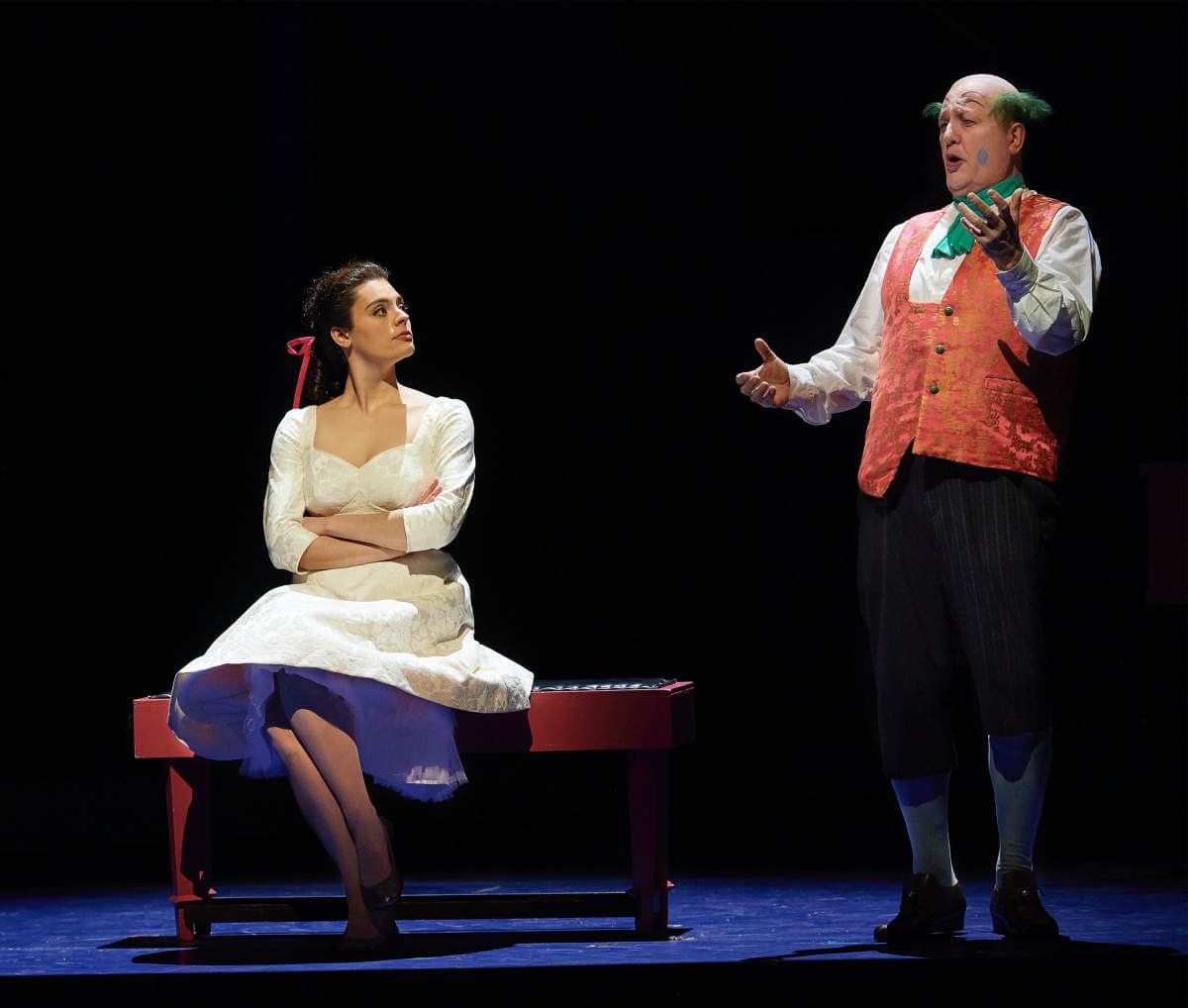
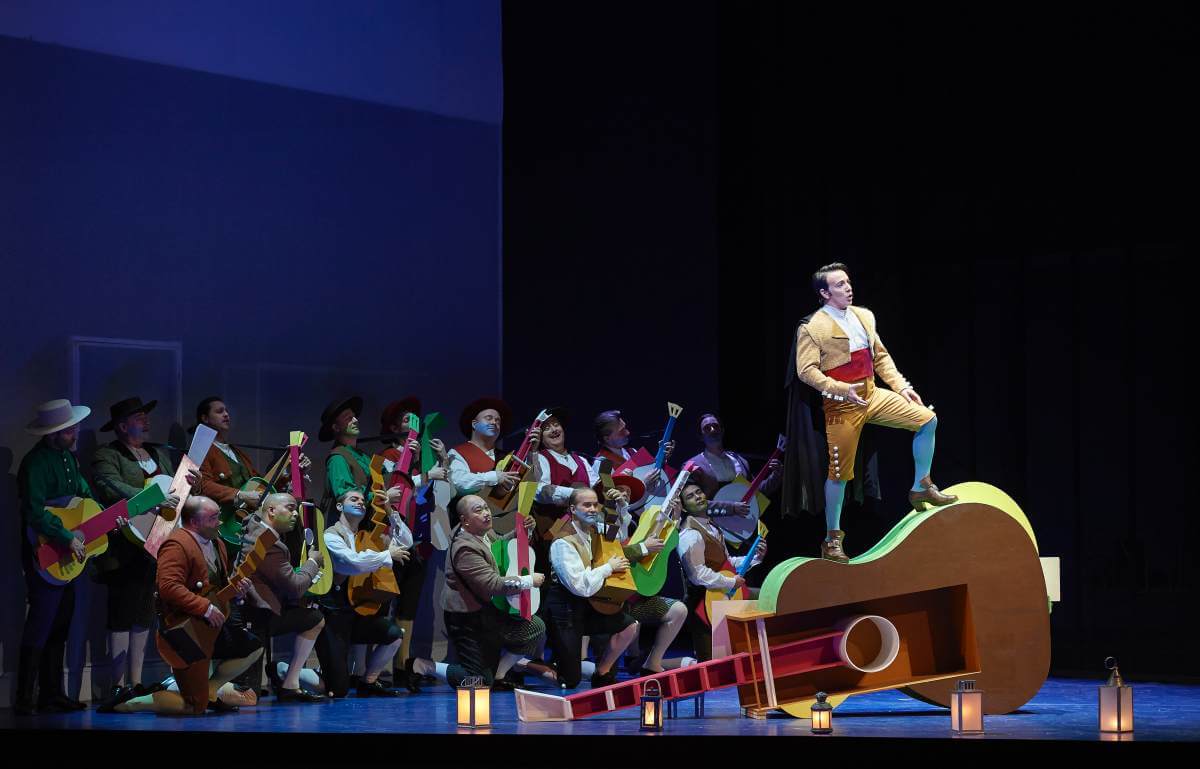
The production will be directed by Joan Font, inspired by Spanish street theatre, circus and commedia dell’arte, with an outsized set design and eye popping costumes by Joan Guillén. It’s an imaginative and whimsical production that breathes new life into a work that is among the best known operas in the world — even to those well outside the realm of opera aficionados.
LV caught up to Candillari to talk about the show.
Daniela Candillari
Daniela Candillari has been the principal Conductor at Opera Theatre of Saint Louis since 2022. However, her career takes her well beyond The Gateway to the West. Her 2025-26 season includes guest appearances with the Chicago Symphony Orchestra, London Philharmonic, Liverpool Philharmonic, Cabrillo Festival, Colorado Springs Philharmonic, and Sinfonieorchester Wuppertal along with her Canadian Opera Company engagement.
Born in Serbia, and raised in Serbia and Slovenia, Daniela’s grandmother was a professional opera singer. She experienced her first opera production at age five. While the rest of her family were athletes, she followed in her grandmother’s footsteps, and began piano lessons at the age of six. However, the solitary life of a concert pianist didn’t appeal to her, even though would later study piano performance at university in Austria. Her true interest was first sparked by chamber music and its collaborative atmosphere.
She began to work as a vocal coach. Fluent in six languages, she was ideal for the role. After graduation, she continued her studies at Indiana University in operatic vocal coaching, first as student, then as a faculty member. She also managed to find the time to earn a Master’s degree in jazz piano.
Daniela returned to Slovenia to work as head coach of the Slovenia National Opera, and that’s where the role of conductor was first suggested to her. She became chorus master, then assistant conductor, and eventually went on to lead her own productions.
On moving to New York City, she again started at the bottom of the operatic ladder, as a vocal coach. Within a few years, however, she had worked her way back into the role of a conductor.
Daniela Candillari: The Interview
Candillari still calls New York City her home base, although she obviously travels frequently. She’s enjoying the idea of working with the Canadian Opera Company.
“I’ve always loved the work that the Canadian Opera Company does,” she says. “I’m really, really thrilled to be coming to Canada and making my debut there.”
She relates that, as a pianist and student, she applied to audition for the COC years ago. However, she found out that candidates had to be Canadian in order to qualify.
“I was heartbroken. I came to Toronto, and I loved the city.”
The Barber of Seville
It will not only be her COC debut. It will be the first time she’s conducted the entire opera.
“This will be my first time conducting it,” she says. Daniela was already familiar with the work, having coached singers in it, and conducted the arias.
She’s looking forward to Joan Font’s lively production.
“I think the more boisterous the production is the better the music serves it,” she says. “The Barber of Seville was one of the first operas I ever heard.” She relates that both her mother and grandmother sang in it. Her grandmother, a mezzo-soprano, sang the role of Rosina.
“My sister and my Mom would take me to the opera when I was a kid,” she recalls. Her sister bought a recording of The Barber. “My sister and I just kept on listening it on repeat.”
In particular, she was fascinated with Figaro’s role.
“I think I was six or seven at the time. I couldn’t really verbalize what it was about the music that was intriguing me.” Daniela says it was the spirit of the music that moved her. As she grew up and studied music, she appreciated Rossini’s gradations, and the way he used musical motifs to add new ideas to the opera.
“It’s one of my favourite operas.”
She doesn’t let its vast popularity or the comic way (perhaps largely due to the Bugs Bunny influence) that many people see it influence her impressions. “I don’t really think about the influence that it had on popular culture,” she says.
Candillari points out that Rossini’s Barber of Seville generated an enormous scandal at its premiere.
In fact, the 1816 debut at the Teatro Argentina could fairly be described as a complete fiasco. The performance itself wasn’t the issue; composer Giovanni Paisello, a rival of Rossini, had already created an opera of the same name. He took Rossini’s work as an insult.
Rossini actually titled the work Almaviva, or the Useless Precaution, at its debut, in a bid to avoid controversy. But, a chunk of the audience, (likely paid by Paisello), disrupted the audience response. Mishaps on stage, including a singer with a bloody nose from a fall, and a cat who wandered on stage and refused to leave, added to the chaos.
Candillari says she’s fascinated by how certain works of art enter into popular culture in various ways. It’s due to their broad appeal on various levels.
“I think all of these stories deal with human emotions,” she says. Specific moments in the work resonate with audiences, and the public beyond them. “I think it’s those moments that actually make the piece stand the test of time.” She points to the example of Léo Delibes’ Flower Duet, which has shown up in a host of films and commercials — but while the song itself is popular, the whole opera is not.
“We accept pieces like The Barber of Seville as something that we need to have in our lives.”
Joan Font’s Production & Rossini’s Opera
“I think the best productions that I’ve seen and that I’ve done, are where the music enhances the stage, and the stage enhances the music,” Candillari says. “Opera is such a collaborative art form.”
As she points out, a successful production needs to be fine tuned at all levels.
“I’m really looking forward first to working with everyone.” She mentions baritone Luke Sutliff’s Figaro, and meeting the rest of the cast. “Finding our production and finding our truth. Building an ensemble,” she says. “I’m really intrigued about seeing the [production].”
Candillari enjoys Rossini’s skills as a composer and also as a dramatist. She points out his inclusion of an aria for every major character in Act One, which offers insight into the psychology of each. “It’s fascinating to see the various musical gestures that define the characters,” Daniela says.
“Musically, it’s so strong, the structure,” she adds. “We have very little minor chords in the whole opera. [It’s a] bubbly world.”
Through the rehearsals, the ensemble will build layers to the characters and music that complement each other. Naturally, there’s one major aspect she’s looking forward to.
“Obviously also working with the orchestra of the Canadian Opera Company.”
Final Thoughts
“One of the things that I also think about in terms of comedy, it’s really that comedies are really a great way of dealing with serious topics,” Daniela notes.
The points out that the plot, despite its comedic elements, is really about notions of freedom and social class.
“Comedies are really a great way to get us to think about serious topics in a ways that is going to enlighten [other issues],” she says. “They put really serious ideas into a world that is a little bit lighter,” Candillari adds.
“I think the dark comedies are the best type of comedies in many, many ways.” She mentions listening to a Met Opera podcast about The Barber of Seville, where much of the discussion revolved around the idea of arranged marriages, and the lack of choice faced by women in Rossini’s era. “So again, I think, for me personally, this idea of personal freedom is a really important topic in the piece.”
Musically, she mentions Rossini’s use of the crescendo to build and repeat themes. “There are so many elements of Baroque and classical.” Patterns are repeated, and add an almost minimalist quality to the music. “It draws you in as an audience member and as a listener.”
She mentions Rossini’s output as a composer. “I read this somewhere, he wrote The Barber of Seville in four weeks.” She’s incredulous about his energy, the constant momentum of his output. He approached composition as a true craft, a routine he developed, and simply repeated over and over.
“We can all learn something from this idea of craft,” she says.
The Opera
The cast includes:
- Luke Sutliff: Figaro
- Dave Monaco: Count Almaviva (February 5 to 15)
- Pietro Adaini: Count Almaviva (February 17 to 21)
- Deepa Johnny: Rosina
- Renato Girolami: Bartolo
- Luca Pisaroni: Basilio
- Nathan Keoughan: Fiorello & Officer
Find show details and tickets for the Canadian Opera Company’s The Barber of Seville [HERE].
Are you looking to promote an event? Have a news tip? Need to know the best events happening this weekend? Send us a note.
#LUDWIGVAN
Get the daily arts news straight to your inbox.
Sign up for the Ludwig Van Toronto e-Blast! — local classical music and opera news straight to your inbox HERE.

- INTERVIEW | Conductor Daniela Candillari Talks About The Barber Of Seville At The Canadian Opera Company - January 21, 2026
- INTERVIEW | Etobicoke Philharmonic Orchestra’s Matthew Jones & Corey Butler Talk About Hymns To Freedom February 1 - January 21, 2026
- INTERVIEW | Award-Winning Playwright Erin Shields Talks About You, Always At Canadian Stage - January 20, 2026