
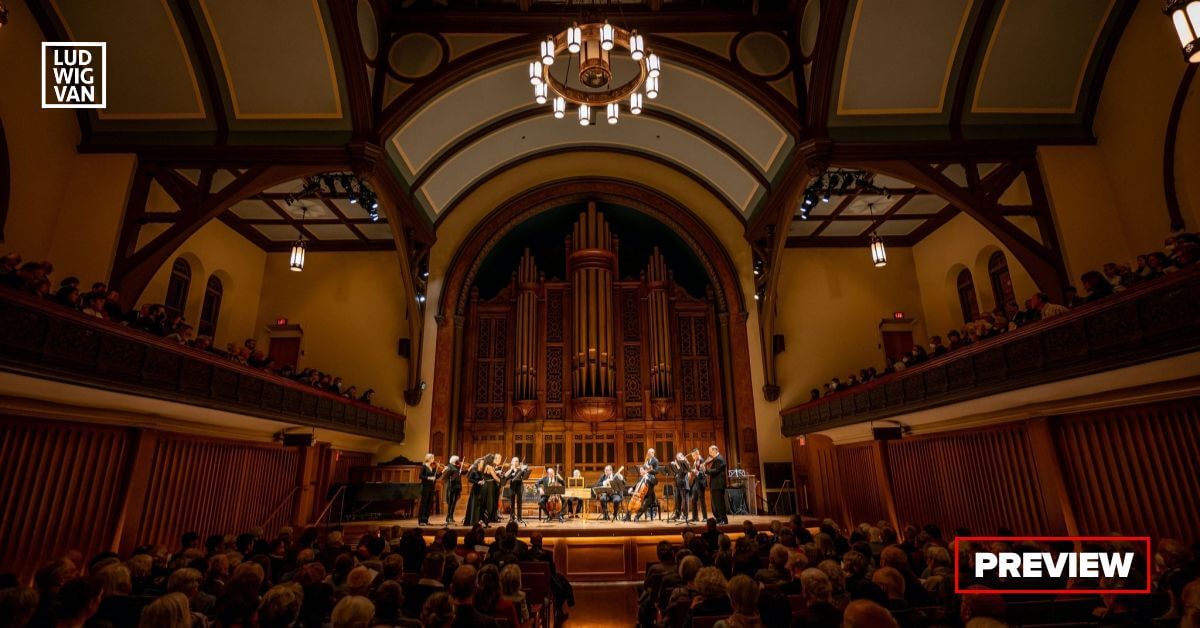
Bach’s Brandenburg Concertos have been among the most beloved works in Tafelmusik’s repertoire for many years. From January 29 to February 1, Tafelmusik and Principal Guest Director Rachel Podger will perform the first four of the Brandenburgs, along with the world premiere of a newly orchestrated version of Prelude & Fugue in E-flat “St. Anne”, after BWV 522.
Tafelmusik’s 1995 recording of the Brandenburgs won a JUNO Award, along with international accolades.
“Both Tafelmusik and Rachel Podger have earned world-wide accolades for their interpretations of Bach, and this joining of musical minds for the Brandenburg Concertos is sure to dazzle and enchant,” says Artistic Co-Director Cristina Zacharias in a statement.
“Always eager to find new ways to experience Bach’s music, we are also thrilled to present Bach’s Prelude and Fugue in E-flat in a new orchestral arrangement by Artistic Co-Director Dominic Teresi, which debuted to critical acclaim on our recent West Coast tour.”
Bach’s Brandenburg Concertos
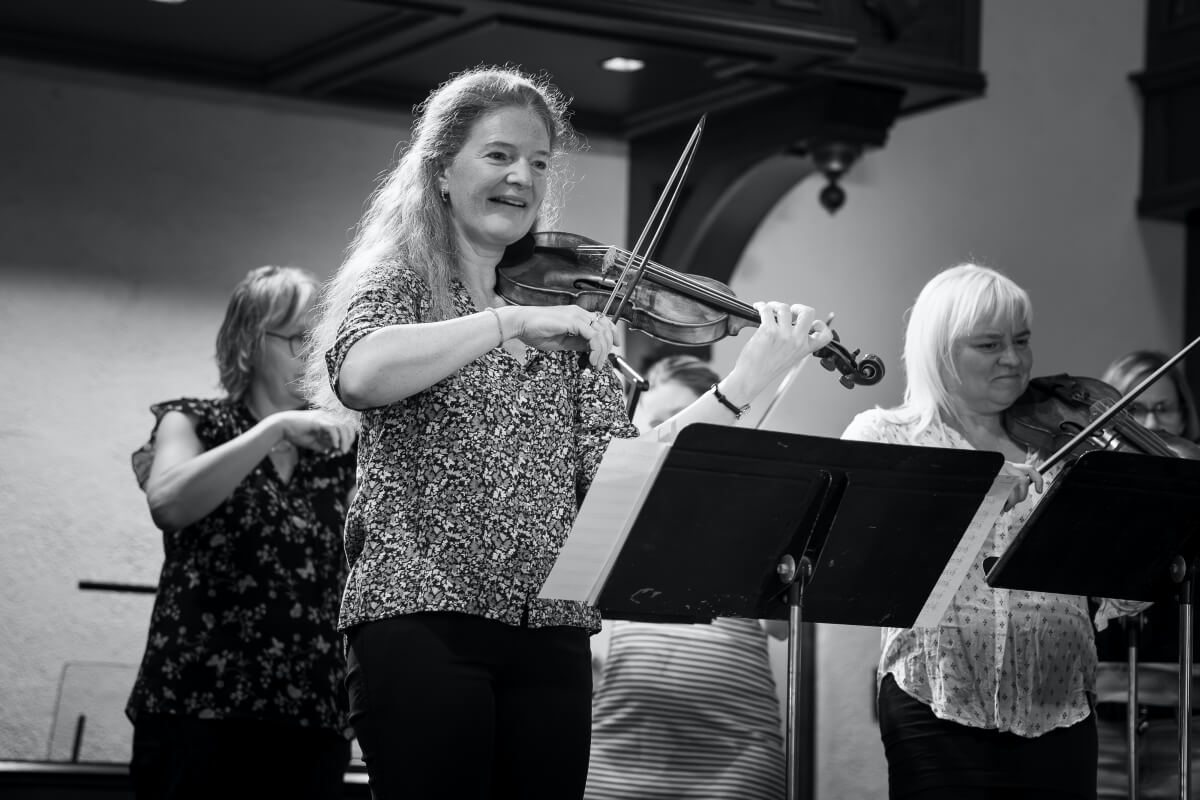
“Bach’s Brandenburg Concertos are some of the most innovative pieces to have been written during the Baroque era,” says director and violin soloist Rachel Podger. “Each concerto features a unique combination of solo instruments which in turn dazzle, sparkle, soar, sigh and mesmerise while their roles continuously shift between virtuosic solo displays, dialogues and being part of the ensemble. Bach’s writing is extremely virtuosic, strikingly beautiful and irresistibly joyful, and these pieces still sound fresh and modern, even today.”
Each of the Concertos has its own distinct character, and display Bach’s gift for orchestration, using a precedent setting variety of instruments. The First Concerto, the largest, incorporates three oboes, bassoon, two horns, a solo violin, and strings. The Third Concerto, inspired by Vivaldi’s L’Estro armónico, creates an ensemble with three solo violins three violas, and three cellos.
The Fate of the Brandenburgs
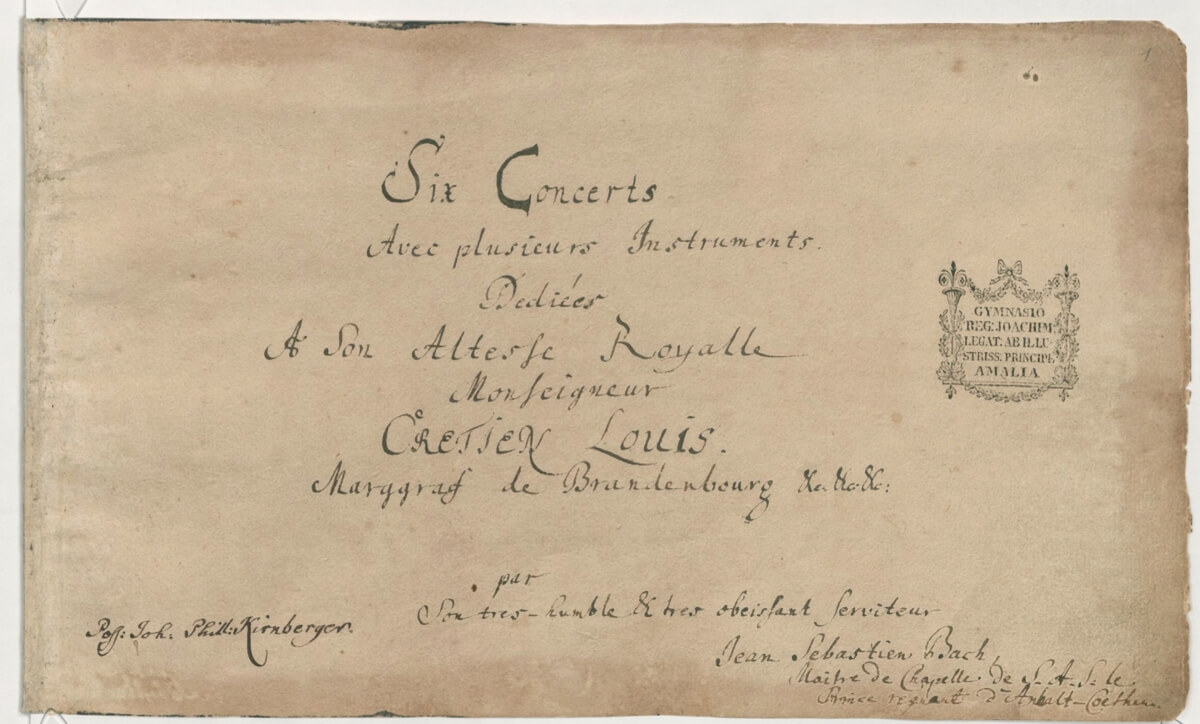
Bach’s original title for what have become iconic works was simply “Six Concertos with Several Instruments”. The composer presented the works to Christian Ludwig, Margrave of Brandenburg-Schwedt, younger brother of King Frederick I of Prussia, in 1721, although it’s believed that he wrote them earlier (probably between 1711 and 1720). When he compiled them, he wrote most of them by hand instead of using a copyist, as was his usual practice.
Of note is the fact that Bach’s tenure as director of music at the court of Cöthen was coming to an end, and he was sending out feelers for future work. The Margrave never even acknowledged their receipt, but Bach, in any case, found his calling at the Thomasschule in Leipzig shortly afterwards.
It seems incomprehensible now, but the Concertos were not particularly valued during Bach’s lifetime. It’s uncertain whether, in fact, the Margrave ever heard the Concertos, and they did not appear in the inventory of his library. They next reappear in the possession of one of Bach’s pupils, who bought them for a small sum, and subsequently bequeathed them to Princess Anna Amalia, herself a German composer, on his death. She in turn left the collection of manuscripts to a boy’s school near Brandenburg, which then transferred them to the Royal Library of Berlin. The original manuscripts were nearly lost during WWII when they were being transported out of the city for safekeeping, and the train itself was bombed. The librarian entrusted with their journey to Prussia jumped from the still moving train and fled into the woods with the music hidden underneath his coat. They were returned to the Berlin State Library in 2023.
The 5th Concerto, with its prominent part for harpsichord, was the only one that received any attention, and even that came after Bach’s death. German music theorist, editor, teacher and librarian Siegfried Diehn discovered the manuscripts in Anna Amalia’s library in 1849, and finally had them published for the world to enjoy about a century after Bach’s death.
The Program
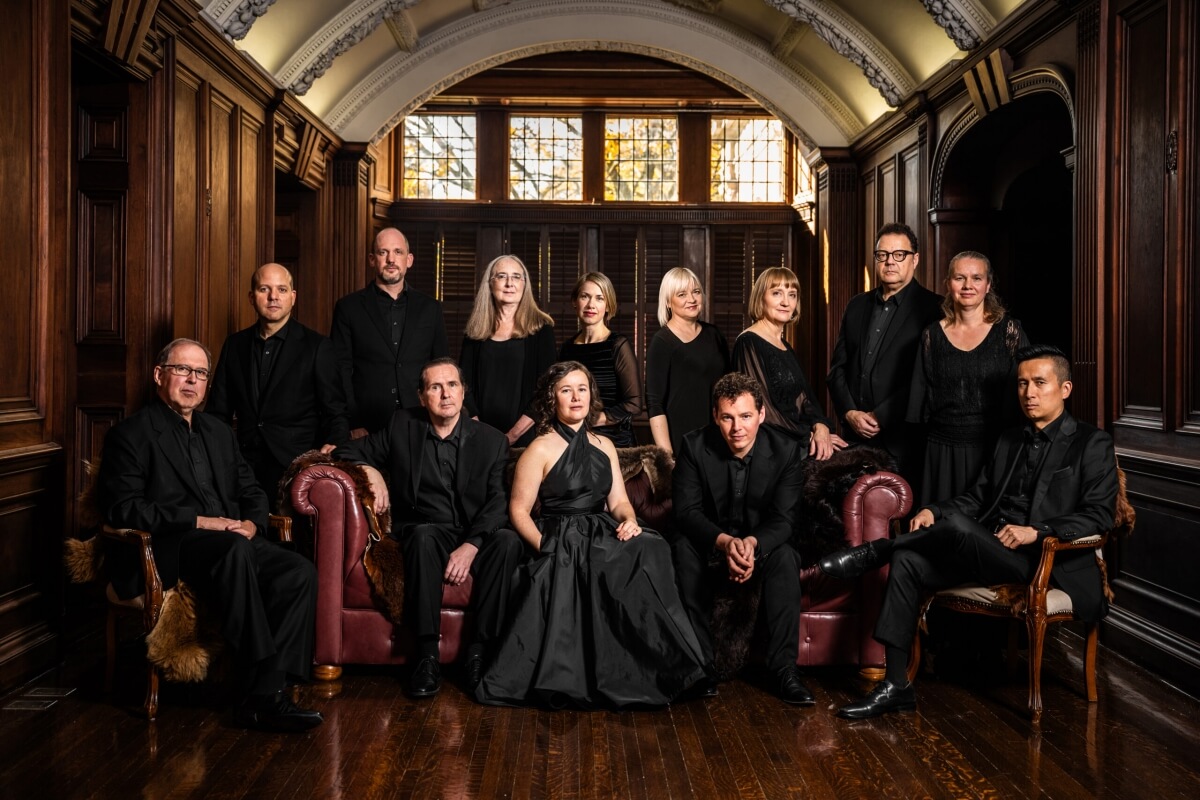
The Tafelmusik performance includes the first four Concertos and the world premiere.
- Brandenburg Concerto No. 1
- Brandenburg Concerto No. 2 (Soloists: Daniel Ramírez Escudero, oboe; Kathryn Montoya, recorder; Todd Williams, horn; Julia Wedman, violin)
- Brandenburg Concerto No. 3
- Brandenburg Concerto No. 4 — Rachel Podger, violin soloist
- Prelude & Fugue in E-flat “St. Anne”, after BWV 522, arr. for orchestra— Toronto premiere
Find concert details and tickets [HERE].
Are you looking to promote an event? Have a news tip? Need to know the best events happening this weekend? Send us a note.
#LUDWIGVAN
Get the daily arts news straight to your inbox.
Sign up for the Ludwig Van Toronto e-Blast! — local classical music and opera news straight to your inbox HERE.

- PREVIEW | Ottawa Bach Choir Present Bach’s Bach’s St. John Passion In An Authentic Baroque Performance - March 10, 2026
- THE SCOOP | Red Sky Performance & Toronto Symphony Orchestra Present The World Premiere Of She Holds Up The Stars - March 10, 2026
- THE SCOOP | Elton John To Be Honoured With Live Tribute At The 15th Glenn Gould Prize Gala In Toronto - March 9, 2026