
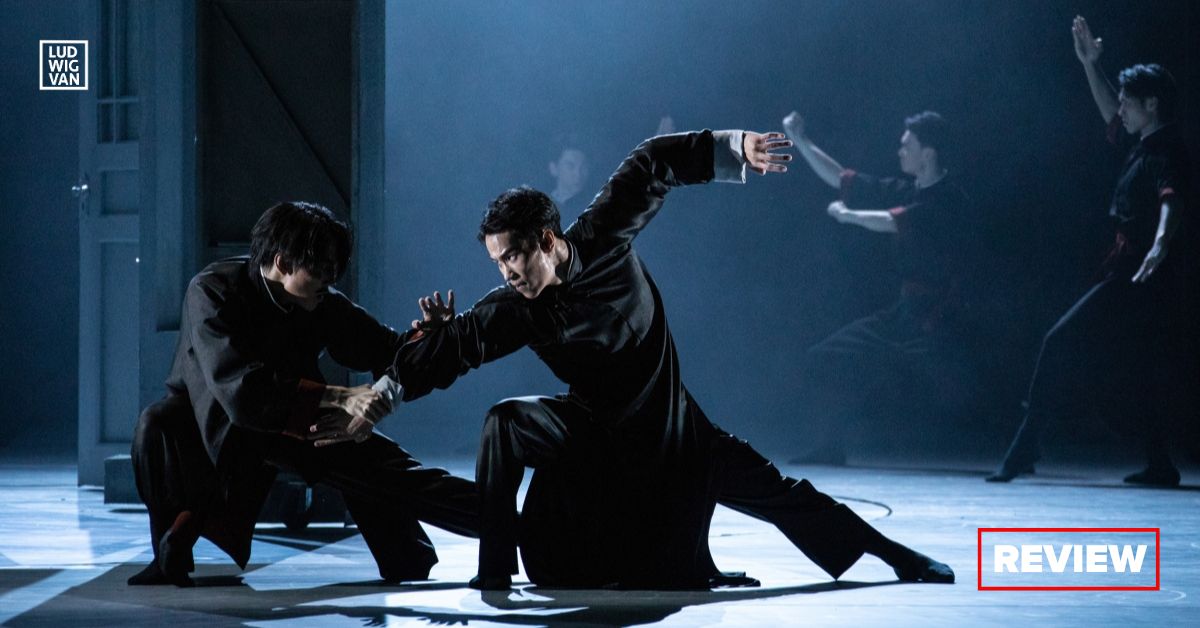
TO Live, ADEM Company Inc., Canada China Cultural Development Association: Wing Chun Dance Drama. Created by Shenzhen Opera and Dance Theatre, produced by the International Cultural Exchange Shenzhen and China Culture, Tourism, Sports, Radio & Television Bureau of Shenzhen China. Zhou Liya, Chief Director & Choreographer; Han Zhen, Chief Director & Choreographer, starring Chang Hongji as Ip Man. Meridian Hall, December 16, 2025. Continues until January 4, 2026; tickets here.
Wing Chun Dance Drama tells the story of Ip Man, the iconic martial arts practitioner — and legendary teacher of a young Bruce Lee — through his struggles to establish himself, set up his school, and endure the other ups and downs of his life. It’s a story familiar to many who’ve seen the movie series starring actor and martial artist Donnie Yen.
The show makes its North American debut with this 20 performance Toronto run, after having played internationally in 62 theatres in 51 cities for about 265 performances, with total audience numbers at more than 340,000. As part of their mandate to community engagement, blocks of tickets have been donated to non-profits like the Canadian Cancer Society, SickKids Foundation, CAMH, and other organizations.
Choreographers Zhou Liya and Han Zhen have previously staged productions at the Sydney Opera House and the Kennedy Center, among other prominent venues.
Story
The story offers two perspectives. One is Ip Man’s story as it unfolds, while the other focuses on Dachun, a lighting technician working with a 1990s film crew as they film the martial artist’s story. It’s a story within a story concept that creates some interesting moments on stage.
Two screens on either side of the stage offer context to the scenes as they unfold, including announcing the six chapters of the story — Standing Firm, Wandering, Aspiration, Farewell, Adversity, and Inheritance.
Ip Man’s story begins as he arrives in the city, trying to establish his martial arts school, and raise the reputation of Wing Chun. It’s not long before a confrontation with local street thugs set up his first fight, and recognition from the people on the street. The various chapters are approached as themes as well as plotting various points in his life. His story progresses chronologically, with dance sequences that flesh out the underlying themes as much as they do specific events.
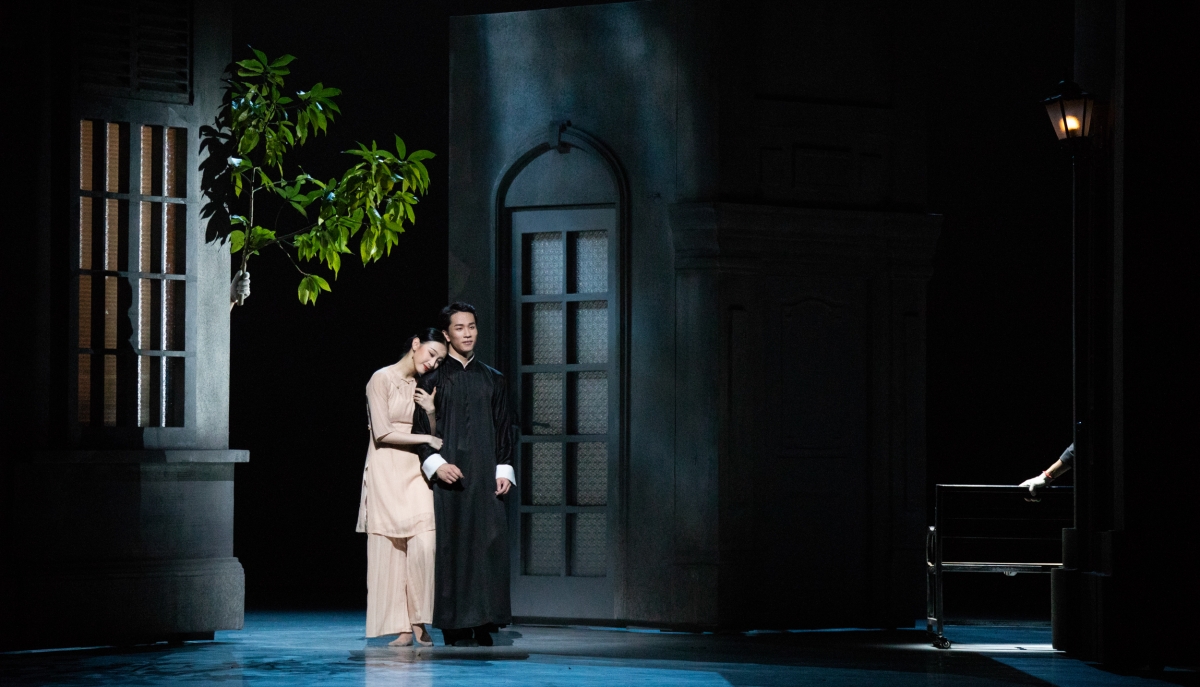
In the first half, there’s a lovely and romantic dance sequence between Ip Man and his wife. Choreographers Zhou Liya and Han Zhen blend traditional Chinese dance with modern Western balletic movement for an effect that is fluid and expressive.
The movie shoot actually launches the production, and Dachun the lighting tech emerges as a character in his own right, one whose story of yearning for a bigger role often mirrors that of Ip Man. In one particularly dramatic sequence (in Aspiration), the two dance on stage in an intersection of their stories. Eventually, he too learns to master Wing Chun, and becomes a martial artist as well.
Performance
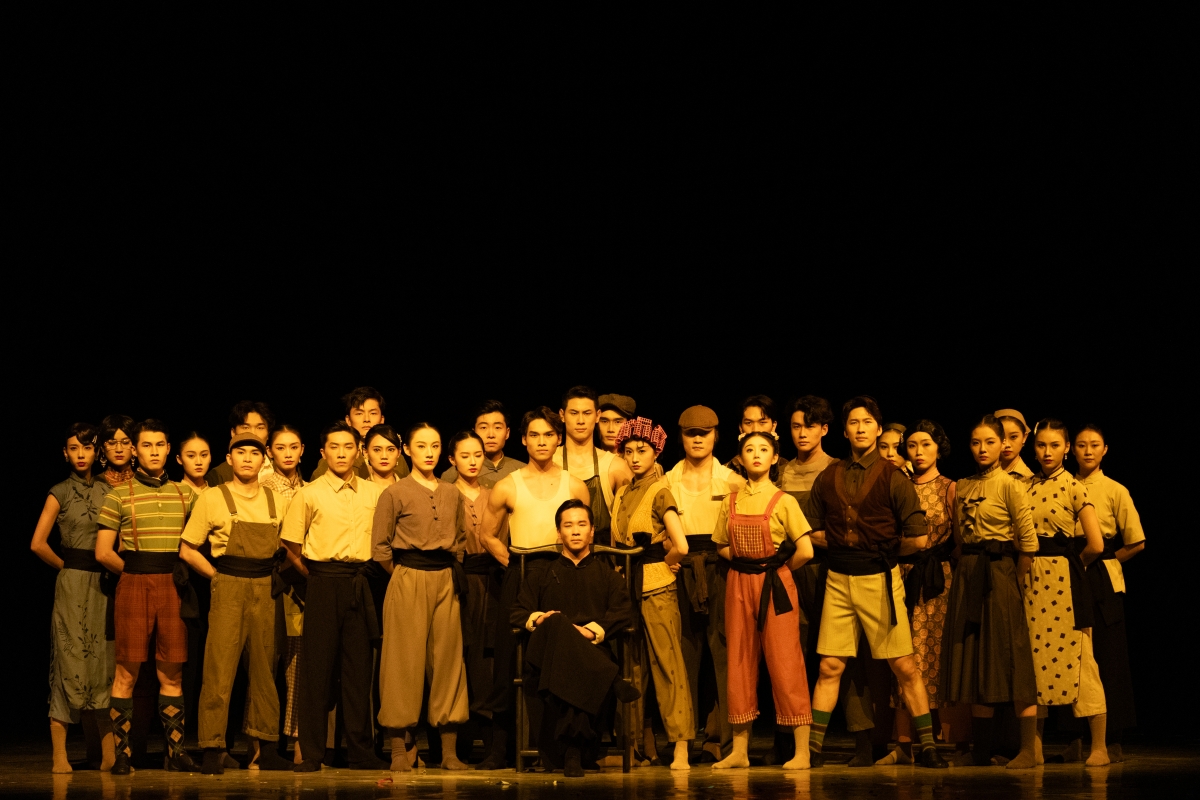
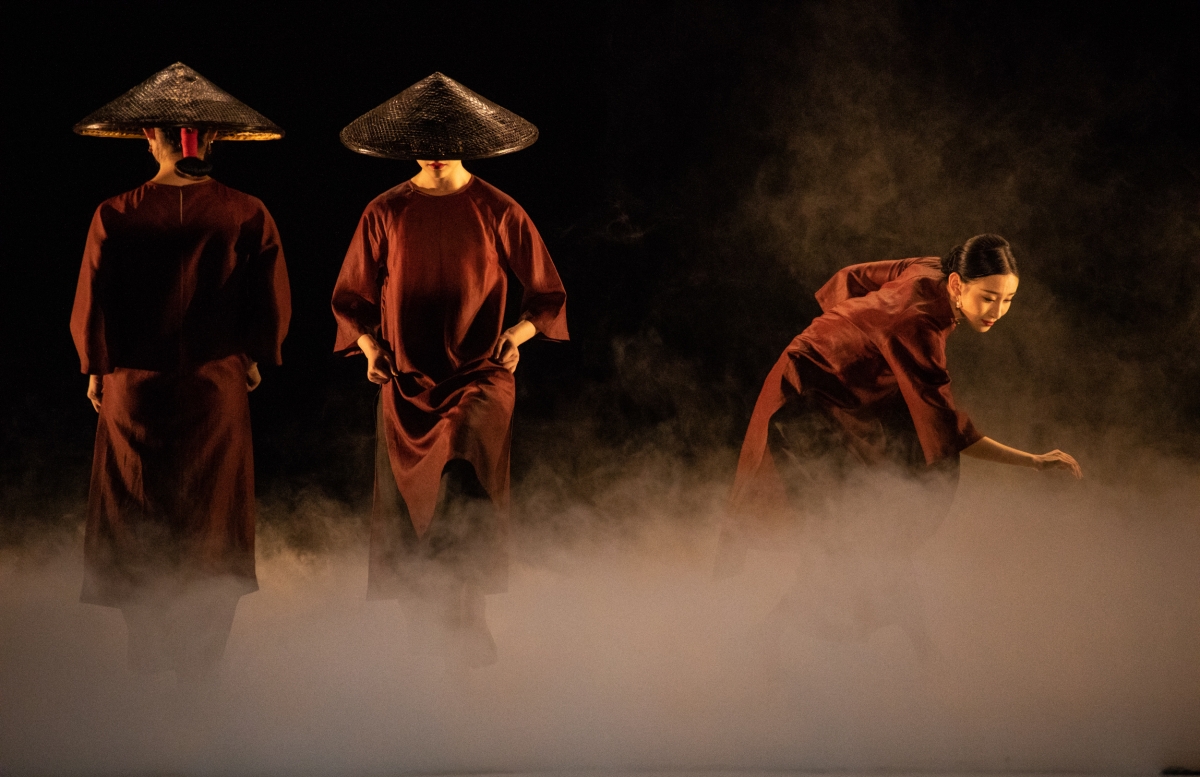
The story proceeds in dance sequences, many to set up the story and atmosphere. The large group of dancers often present a kind of tableau, as if part of the scenery, as well as ensemble pieces. Their stylized movements are precise and synchronized perfectly.
Movie making as a dance is an intriguing concept that the production uses to punctuate Ip Man’s story. The film crew dances together, and the woman who portrays the director has some expressive dance passages to illustrate the trials and tribulations of bringing a story to screen.
Highlights include the fight scenes, naturally, and in particular the part that opens the second half, where Ip Man explores several other martial arts, including Tai Chi (Taijiquan), Baguazhang (Eight-Diagram Palms), interestingly, practiced by women, Baji Quan (Eight Extremities Fist), and Praying Mantis (Tanglangquan).
Chang Hongji, a principal dancer of the Shenzhen Opera and Dance Theatre, naturally, is a stand out who blends elegance and impressive athletics in his movements, along with the dancer who portrayed Dachun. The latter’s athleticism and energy came to the fore during his parallel scene with Ip Man.
Also of note was the dancer portraying the movie director, fleshing out a more minor, yet memorable, role.
Stage
The production includes over 200 props and nearly 300 detailed and colourful — other than Ip Man’s iconic black robes — costumes. The costumes use Gambiered Guandong Gauze fabric, crafted using ancient methods that involve 14 techniques and 36 processes, along with plant-based dyes. The silk fabric floats along with the dancer’s movements.
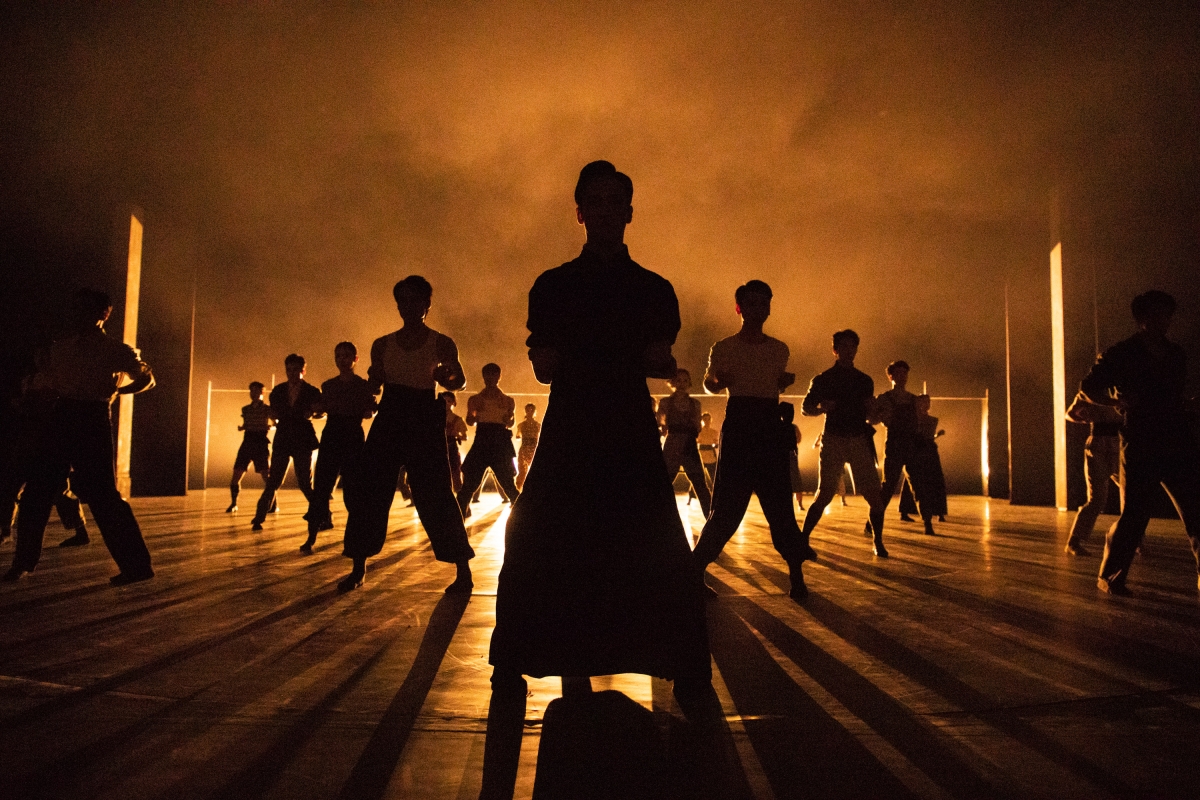
The set is constructed with a series of building facades on a rotating stage that can represent everything from an exterior streetscape to the intimacy of Ip Man’s home, along with more abstract locations like the scenes of martial arts demonstrations.
Curtains rise and fall to add or take away the depth of perspective. It’s an effective technique that adds to the impression of a stage that is constantly moving and evolving. In many cases, it’s the dancers themselves who move around the facades to different groupings, or switch from inside to outside view.
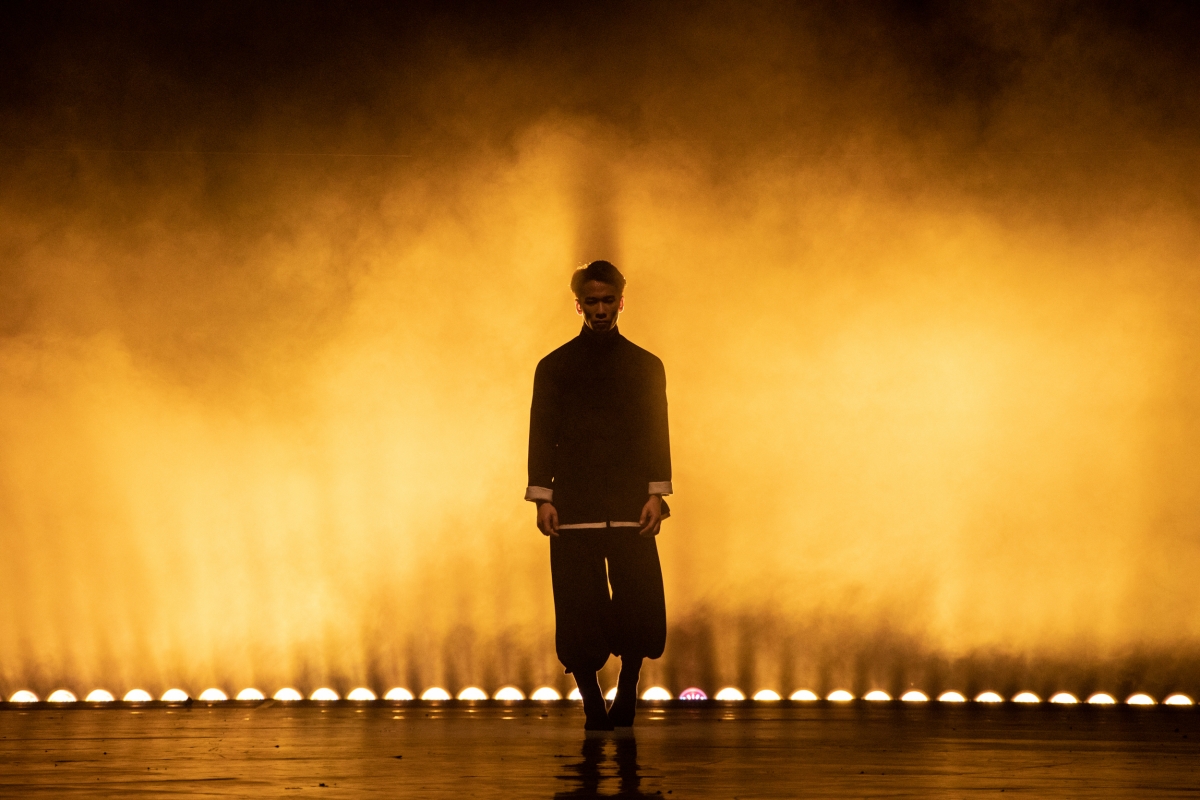
Lighting design is crucial to the show. Lighting and sound produce a scene along the shore with undulating waves, and elsewhere, reflect the intimacy of the relationship between Ip Man and his wife.
Scenes of Ip Man’s story turn into a movie with a switch from white to gold tinged lighting, complete with dark flecks to emulate the texture of film, and rolling perforations (sprocket holes) that appear on either side of the stage.
The score ranges from high drama to softer and more romantic, combining Chinese and Western idioms and orchestration. It underpins the emotions of the story.
Final Thoughts
It’s a story about China’s martial arts heritage and philosophies as much as it is about Ip Man himself, and the screens to the side of the stage remind the audience of the principles of Wing Chun, along with delineating different scenes and themes.
There are spectacular fight scenes, but they are woven into a narrative that is much more about the ordinary man who persists through the ups and downs, and tragedies of life, with the martial arts credo to guide him.
The glossy veneer of high tech production values combine with dance artistry to tell a story about resilience and holding to your truth in the face of adversity.
But, seriously….
Can someone, anyone, PLEASE invent a device that theatres can use to deactivate cell phones for the duration?
In addition to the two guys in the rows ahead of me who routinely had to stop and check their text messages, along with unabashedly filming bits of the show (this despite repeated warnings from the stage and the two screens adjacent to the stage), there were two women sitting in my row who really took the cake.
The arrived after the intermission, and proceeded to sit hunched over their cell phones for almost the entire duration of the rest of the show, texting, watching TikTok videos, and even sharing them with each other as they chatted.
Why come to a show when you can clearly demonstrate zero respect for either what’s happening on stage, or your fellow patrons, the majority of which did respect the phone ban?
This show deserves better.
Are you looking to promote an event? Have a news tip? Need to know the best events happening this weekend? Send us a note.
#LUDWIGVAN
Get the daily arts news straight to your inbox.
Sign up for the Ludwig Van Toronto e-Blast! — local classical music and opera news straight to your inbox HERE.


- INTERVIEW | Composer Aziza Sadikova Talks About The Toronto Premieres Of Her Music With Esprit Orchestra - March 19, 2026
- PREVIEW | Caelis Academy Ensemble & Thirteen Strings Orchestra Perform Matthew Larkin’s Passion Play - March 19, 2026
- THE SCOOP | Elton John Names Mezzo Emily D’Angelo As The Glenn Gould Protégé Prize Winner - March 18, 2026