
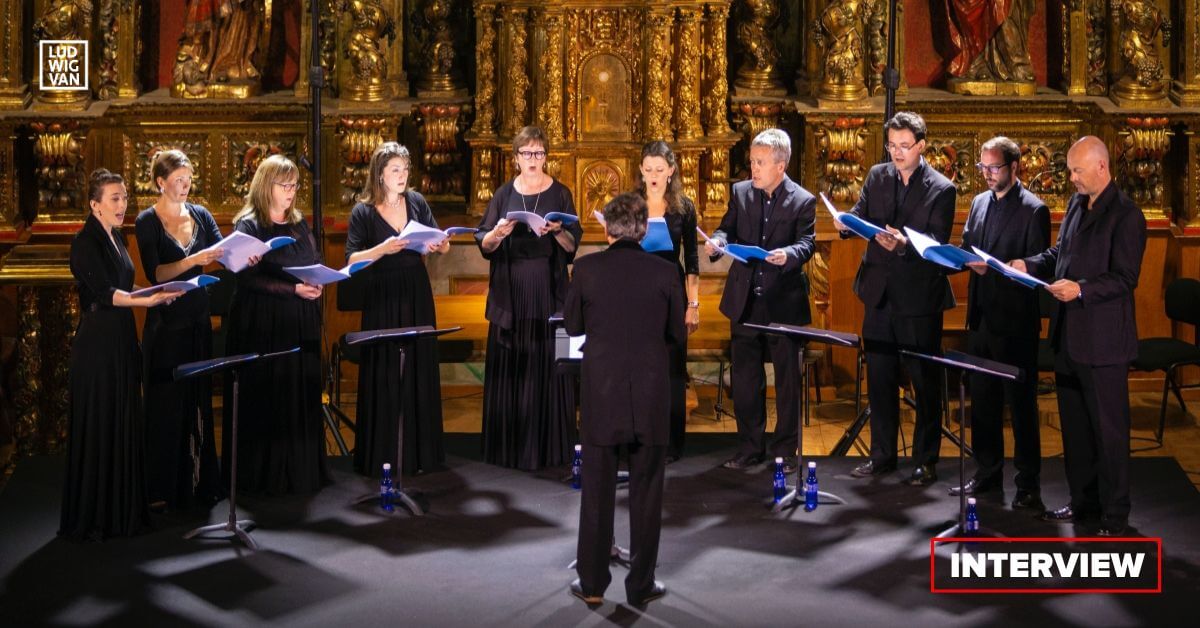
Britain’s The Tallis Scholars will perform a holiday concert titled The Mother and Child in Toronto on December 14. The program explores the Virgin Mary as a divine figure, including Renaissance as well as modern works.
Led by Director and founder Peter Phillips, The Tallis Scholars have become one of the world’s most respected and beloved keepers of the Renaissance polyphonic vocal tradition. They’ve been dubbed “the rock stars of Renaissance music” the The New York Times.
Along with touring internationally, the ensemble has accumulated an impressive discography as recording artists, including their 2021 recording of Josquin’s Missa Hercules Dux Ferrarie, which garnered both BBC Music Magazine’s Recording of the Year and the Gramophone Early Music Award.
LV spoke to Director Peter Phillips about the ensemble and their Toronto concert.
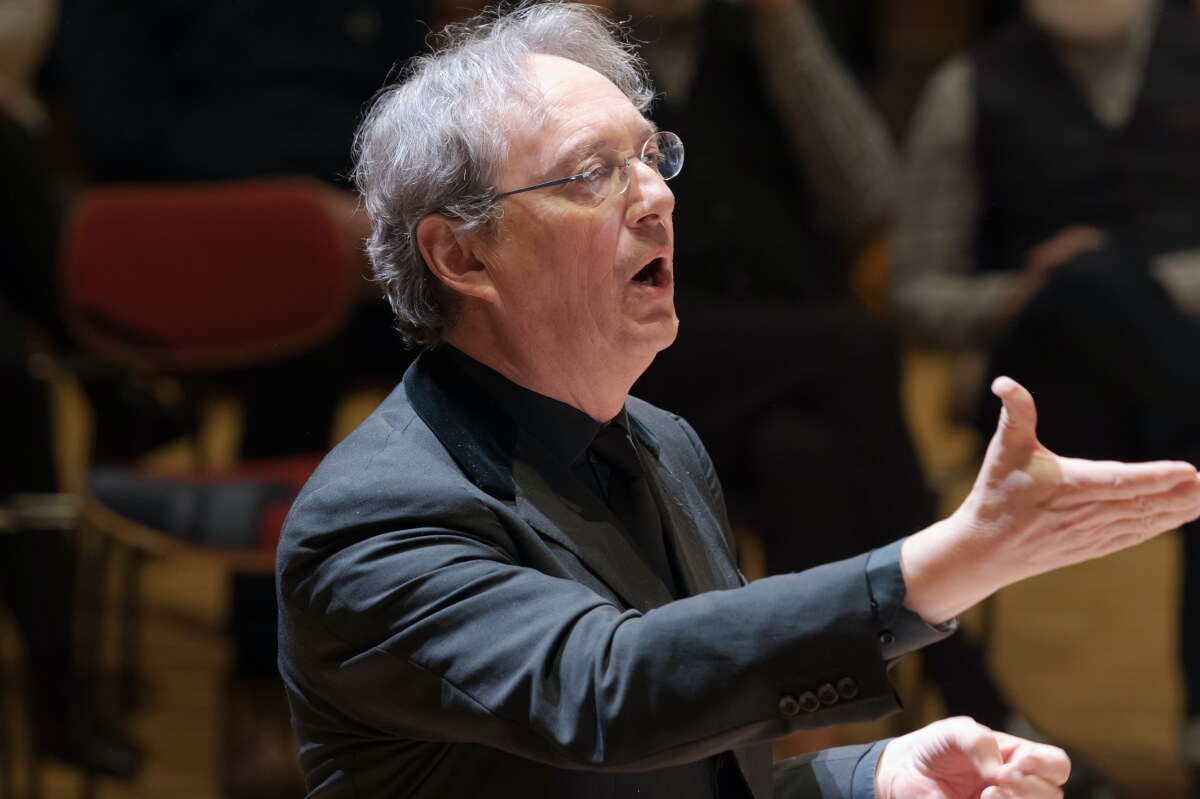
Peter Phillips: The Interview
Peter Phillips formed The Tallis Scholars in 1973 with fellow music students at St. John’s College in Oxford. He invited members of chapel choirs from Oxford and Cambridge to form an amateur Renaissance vocal ensemble.
Did he have any idea, back when the Tallis Scholars began, that it would still be going strong in 2025?
“No, not at all,” says Phillips. “It was all highly experimental and fun. We were all undergraduates.”
Popularity was something that came with time. “No one came to the concerts,” he recalls. Undeterred, he continued. “Basically, nobody stopped me,” he laughs.
As he points out, a vocal group doesn’t cost a lot of money to put together. And so, they persisted. After about a decade of concerts, the amateur group turned professional, and their reputation grew. The ensemble won a Gramophone Award in 1987, cementing their international reputation.
Today, they tour the world, and have performed in about 70 countries each year, including stops in North America, Europe, Asia, and Australia.
“We’ve just been in Australia,” he notes.
Renaissance Music in the 21st Century
Over the decades, he’s seen public interest in Renaissance vocal music grow.
“Yes, I’ve noticed,” he says. “It’s built up slowly, but it’s been gratifying.”
While he was in Australia recently, the ensemble held masterclasses with local groups.
“They’re so much better than they used to be. They can sing it straight away,” he notes. It’s not just the art form itself, it’s the demographic. “They get younger and younger, it seems to me. There are young people everywhere, in Europe and in unlikely places. It’s very heartening.”
What do modern audiences find in Renaissance vocal music?
“They find beauty,” he says. “If they listen to Beethoven, they may as well listen to di Lasso.”
There’s another element at work. “The average standard of performance is going up.”
The music of the Medieval and Renaissance periods saw a revival through the 20th century, although it would be largely in the 1960s and 1970s before it moved from scholars and individual church choirs to independent ensembles like The Tallis Scholars. The earlier groups didn’t necessarily know how to approach polyphony correctly.
“It sounds great,” he says of the music. That wasn’t always the case. “It didn’t used to, frankly.”
He points out that many of the earlier Renaissance vocal groups, for example, attempted to sing the material with operatic techniques.
“The tuning was dreadful,” he says. “People were acting as if they were performing alone on stage. It’s not that at all,” he adds. Polyphonic vocal music requires a different approach. “It’s very democratic.” In contrast with more modern music, which features a prominent melody and melodic vocalist with supporting harmonies, in the Renaissance, all the parts were considered of equal importance.
“They had to understand that they were singing with someone else. They couldn’t deploy their big solo voices.” That changed over the years. “It’s taken a long time.”
It meant that the earliest groups didn’t see the kind of success that The Tallis Scholars would achieve later. Audiences also developed over time. “The results were dire. No one would pay to go hear a group sing like that anymore, because they know what it can sound like.”
With the right approach, Renaissance vocal music has a quality all its own. “You can float off. It’s like yoga really,” he says. “People says it’s like a drug, and they don’t want it to stop.”
Modern ears may take a bit to adjust. “It takes 10 minutes for an audience to acclimatize, and then they realize they’re in for a wonderful experience.” Since most of the material is in Latin, there’s no real language barrier, as he sees it. “No one understand the Latin anyway.”
The Tallis Scholars sing William Byrd’s Vigilate:
The Tallis Scholars: Mother and Child
“Every year for the last 35 years, I’ve had to make a new Christmas program,” Phillips says. “I’ve had to reinvent things like that.”
The program is varied, and includes more modern works;
- Thomas Tallis: Missa Puer natus est nobis (Gloria, Sanctus, Agnus)
- William Byrd: Votive Mass of the Virgin
- Matthew Martin: New Commission (World Premiere Tour)
- Benjamin Britten: Hymn to the Virgin
- John Taverner: Mater Christi
- John Nesbett: Magnificat
“That’s one way out of it,” he explains. “As the years go by, we’ve specialized more and more in modern composers that I admire.” That includes Benjamin Britten, who notably rejected the influence of English Tudor music.
Matthew Martin’s piece is a brand new work.
“That’s a commission for this tour,” Peter says. “It’ll be premiered in New York. I just hope it’s singable,” he laughs. “It looks great. I like commissioning this sort of thing — a big setting of the Salve Regina.” It’s scored for soprano and two altos, he mentions.
“That’s the first panel in our tryptich,” he says. It’s a piece in the votive antiphon style, also called the English Votive style, which was popular in English early Renaissance music beginning in the 1470s. “They’re a godsend for someone who’s planning Christmas programs all the time. There are a whole load of them.” He commissioned the new setting to juxtapose against the 16th century music of Tallis and Byrd’s Votive Mass of the Virgin. “We’re singing the whole five movements of that mass,” he says of Byrd.
“This premiere of the Martin is an example of what I’m enjoying doing nowadays,” Peter explains. He commissions music from composers whose music “sits well” with the Renaissance music.
“It can be extremely dissonant, modern music. My favourite is Arvo Pärt,” he says. “It was Arvo Pärt who showed how it could be done.”
The Concert
The concert takes place at the Meridian Arts Centre, George Weston Hall, on December 14.
- Find concert details and tickets [HERE].
Are you looking to promote an event? Have a news tip? Need to know the best events happening this weekend? Send us a note.
#LUDWIGVAN
Get the daily arts news straight to your inbox.
Sign up for the Ludwig Van Toronto e-Blast! — local classical music and opera news straight to your inbox HERE.

- PREVIEW | New Adventures In Sound Art Celebrates Their 25th Anniversary With An Open House March 12 - March 6, 2026
- PREVIEW | The Arcady Opera Showcase: Mini Musical Dramas Featuring 2026 Emerging Artists - March 6, 2026
- PREVIEW | Pianist Eve Egoyan Presents In Stone, A Composition Written For The Armenian Genocide - March 6, 2026