
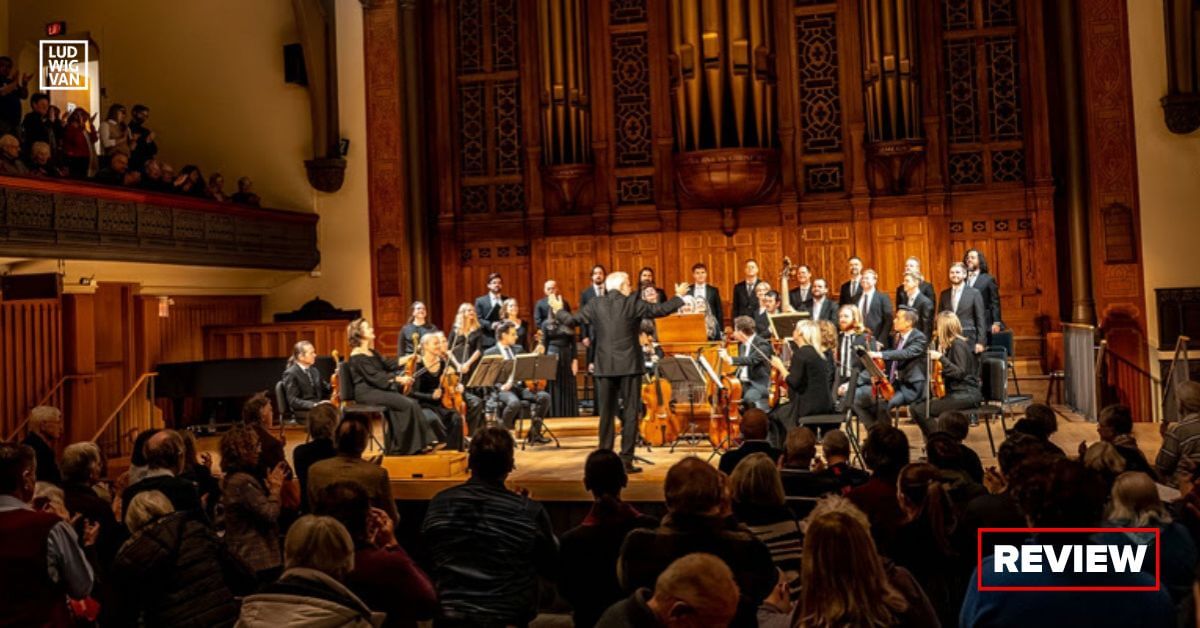
Tafelmusik Baroque Orchestra & Tafelmusik Chamber Choir: Double Dixit: Lotti & Handel. Steffani: Quinta Antiphona Sanctæ Ceciliæ; Lotti: Dixit Dominus in A Major; Handel: Dixit Dominus. Ivar Taurins, conductor. November 28, 2025, Jeanne Lamon Hall, Trinity-St. Paul’s Centre.
The Latin text of Psalm 110 was the inspiration for both Italian composer Antonio Lotti (1667 to 1740) and German-English composer George Frideric Handel (1685 to 1759). Roughly contemporaries, their musical interpretations of the text offered a study in contrasts — and excellence in performance — in a series of concerts between November 28 and 30.
The text is one of prophecy, describing the figure of a king-priest on whom God will bestow his power and authority. It predates the New Testament, of course, but for Christians, it’s taken as a prophecy of Jesus as the Messiah, and in fact is referred to as such by Peter, Paul, and Jesus himself in the later biblical texts.
While it’s not strictly considered to be Christmas music, it’s definitely on point for the season.
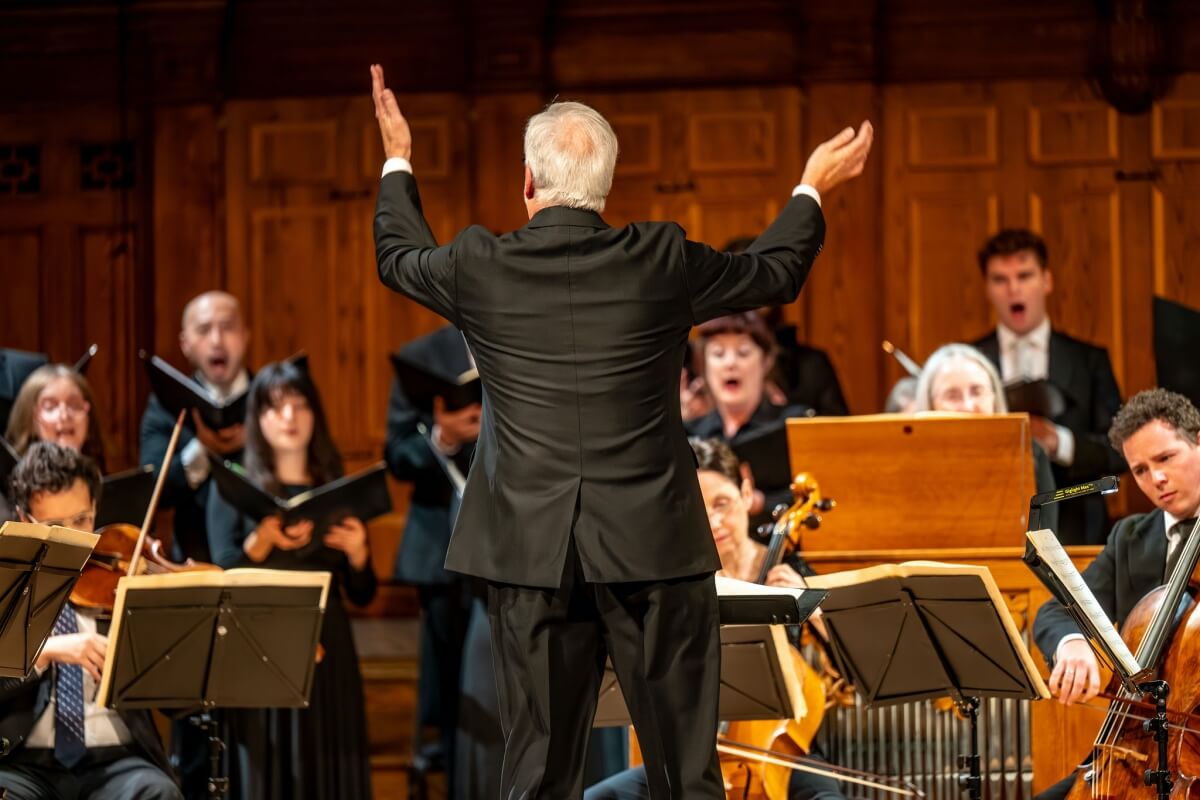
First Half: Steffani and Lotti
Notably, it’s the first concert of 2025/26 to include the Tafelmusik Chamber Choir, along with a range of soloists drawn from its ranks.
The concert opened with a brief piece by Italian composer Agostino Steffani — Quinta Antiphona Sanctæ Ceciliæ — a piece dedicated to Saint Cecilia, patron saint of music. As conductor Ivars Taurins noted after the performance of the piece, her saint’s day had just passed on November 22. The reflective work handily set the pace for the evening.
Taurins also mentioned the connections between the composers, Steffani having mentored a young Handel, who then went to Italy to study with Lotti. He also pointed out the contrast between Rome, where Steffani and Handel had composed their works, and Venice, Lotti’s home base.
Steffani’s piece begins with delicacy, building layers of counterpoint to a reverent finish. At times, the higher voices were a bit lost in the mix, at least from my vantage point in the orchestra seating.
Lotti’s piece followed. The choir’s soloists, including countertenor Nicholas Burns (in alto parts), and the soprano section, dominated the first two sections (of 11) with lovely tone and harmony, with special mention to soprano Jane Fingler and alto James Dyck in a splendid duet.
In the fourth section, the woodwinds offered a nice change of colours from the largely string-dominated orchestration, with some impressive work from Daniel Ramírez Escudero, who newly joined the Orchestra this season. The interplay between the woodwinds and Burns as a soloist was delightful.
As an ensemble, the choir’s performance was notable in the seventh and somewhat sombre section, holding shimmering long notes against the instrumental accompaniment. Soprano Roseline Lambert shone in the ninth section, with a gorgeous clear tone that played back and forth with the violin soloist and cellist in a trio arrangement. It was the only isolated section that garnered a smattering of applause on its close, in a break with the usual concert protocol.
A trio of male singers and the trumpet (Norman Engel) took over in the tenth section, with an impressively clean handling of the decorative elements of the music.
The piece ends with a dynamic and triumphant 11th section, finishing the first half on a strong note.
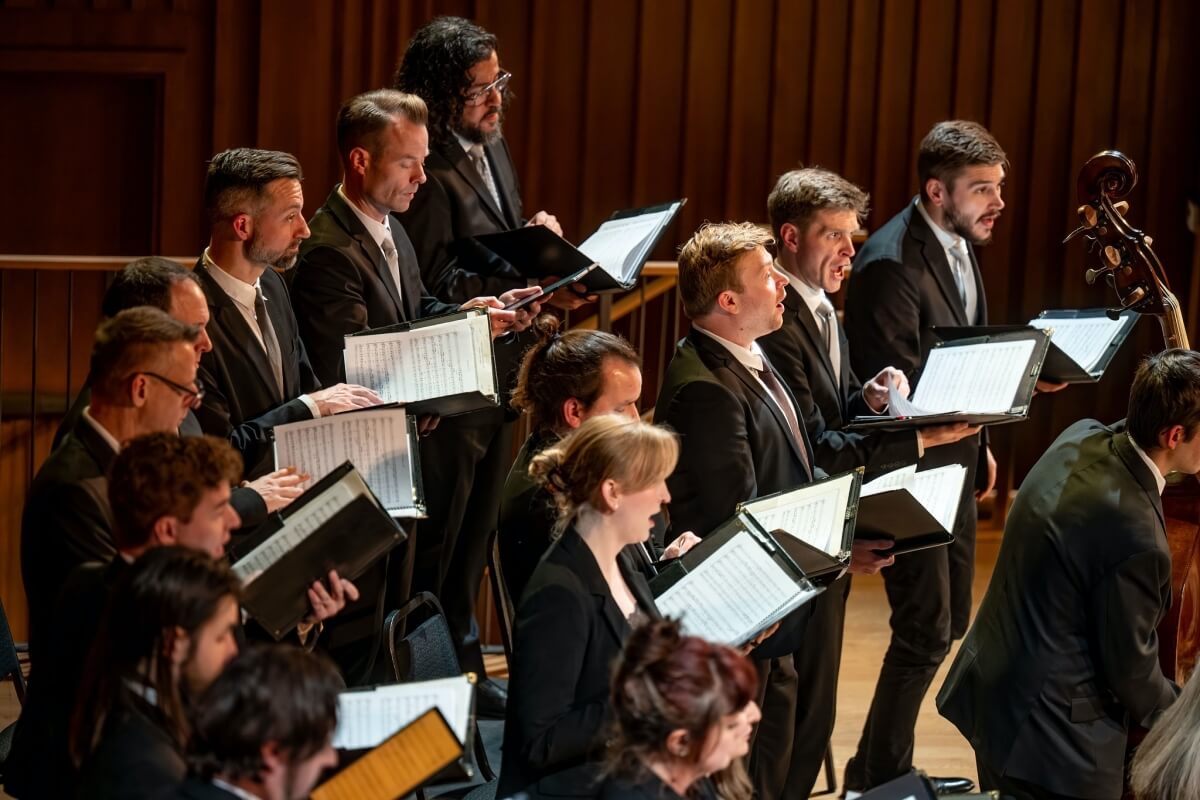
Second Half: Handel
Handel wrote his Dixit Dominus at just 22 years old. While it’s clear he had been influenced by the older Italian Lotti, he adds a flair for vocal drama that was one of his trademarks. Finishing with his piece was a judicious choice on the part of organizers.
Handel’s version of Psalm 110 begins with a strongly rhythmic first movement, and solid ensemble work from the choir. In the second, Nicholas Burns sang against the lower strings with a lush tone and lovely embellishments.
The music utilizes and plays with the choir’s textures in various ways. The choir offered an impressive extended crescendo in the dramatic fourth section, one that rises, and then trails back down to nothing. It was a study in vocal control. The orchestra came to the fore in the second half of the fifth movement, their virtuosity emerging from accompaniment to centre stage.
Also of note was the achingly sweet duet between Jane Fingler and Lindsay McIntyre in the seventh and penultimate movement, set against strings and organ continuo.
The piece comes to a dramatic finish as strings hand off the melody to the choir, singing Gloria Spiritus Sanctus. The work builds to a climactic finale that drew most of the audience to their feet.
Final Thoughts
The Chamber Choir and Tafelmusik Baroque Orchestra work together seamlessly, each building their respective strengths throughout the concert.
It the absence of superstar guest directors, it was a reminder of the power of the core ensembles at their best.
Are you looking to promote an event? Have a news tip? Need to know the best events happening this weekend? Send us a note.
#LUDWIGVAN
Get the daily arts news straight to your inbox.
Sign up for the Ludwig Van Toronto e-Blast! — local classical music and opera news straight to your inbox HERE.

- PREVIEW | New Adventures In Sound Art Celebrates Their 25th Anniversary With An Open House March 12 - March 6, 2026
- PREVIEW | The Arcady Opera Showcase: Mini Musical Dramas Featuring 2026 Emerging Artists - March 6, 2026
- PREVIEW | Pianist Eve Egoyan Presents In Stone, A Composition Written For The Armenian Genocide - March 6, 2026