
The Jubilate Singers present a program titled Abya Yala: Voices of Latin America, featuring the Canadian premiere of the title work, Abya Yala, by composer Freddy Vilches. Abya Yala means Continent of Life, or Land in Full Maturity, and the term is used by many Indigenous people to denote the continents of North and South America together.
The concert, supported by the Consulate General of Chile in Toronto, will also feature works by Ariel Ramírez (the Argentinian favourite “Alfonsina y el mar”), Silvio Ridriguez, Inti Illimani, and other composers from across Latin America, along with Canadian Indigenous composer Sherryl Sewepagaham (Cree-Dene from Little Red River Cree Nation) and Canadian-Chilean composer Nano Valverde.
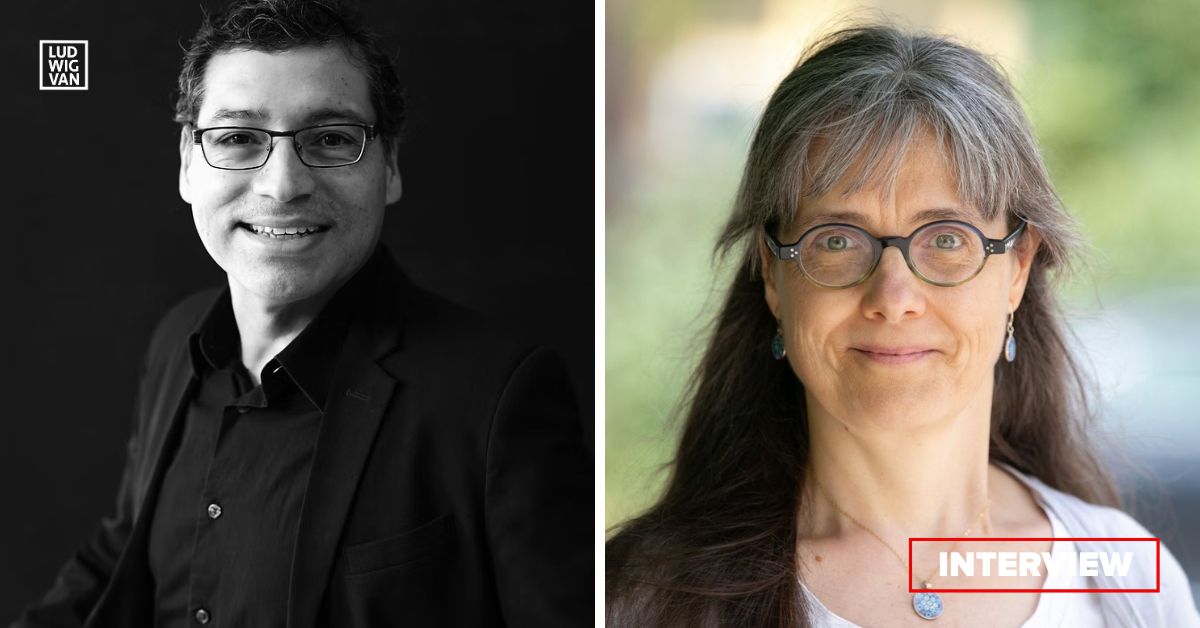
LV spoke to Freddy Vilches about the unique composition.
The Lewis & Clark Orchestra string section performs Suite Sudamericana by Freddy Vilches, Lance Inouye, conductor, in 2021:
Freddy Vilches and Abya Yala
Composer, vocalist, multi-instrumentalist, and educator Freddy Vilches is a native of Santiago, Chile. With roots in both Indigenous and European culture, he is based in Portland, Oregon, where he is a Professor of Hispanic Studies, Section Head Hispanic Studies, at Lewis and Clark College. Freddy holds a PhD in Latin American Literature from the University of Oregon, specializing in Latin American Literature of the 20th and 21st Centuries. His work specializes in Latin American language, literature, and music. As a composer, his music, both symphonic and choral music, has been performed across the United States, and in Bolivia and Cuba.
Abya Yala is the term used by many Indigenous groups to denote the continents of North and South America. Abya Yala is also a choral work choral suite composed by Freddy Vilches Meneses in five movements, each of which use the text of poets in various languages from North and South America.
They include Mapudungun, Quechua, Aymara, Maya K’iche’, and Nahuatl. Vilches sets the texts to music via a collaborative process that considers the poets and their various cultures.
Resonance Ensemble, commissioners of the Suite, perform the premiere of Abya Yala in 2022:
Freddy Vilches: The Interview
The Abya Yala Choral Suite, which premiered in 2022, is the result of a years of work.
“It’s been many years,” Vilches says. “For the longest time I’ve been doing research on the relationship between poetry and music in the song genre,” he explains.
After reading a great deal of material, he was inspired to add music to the mix. “At some point I thought it would be great to put together all these different languages from these different communities into a choral suite.”
He wanted the piece to represent the cultures of a range of Indigenous peoples from North, Central, and South America. “[I wanted to] vindicate these languages and give them a new platform,” he says, noting they are often marginalized. “Not part of Western traditions,” he adds.
“This suite incorporates the poetry of five different communities.”
He put them together, essentially, from south to north.
The first movement uses the Mapudungun language, spoken by the Mapuche people native to central and southern Chile, along with parts of Chile. The Mapuche poet’s words are set to music that uses traditional instruments such as the trutruca, the pifilka, the trompe, the kultrún, and the cascahuillas, revolving around themes of community and harmony.
From the Mapudungun poem “Tvfaci mapu mew mogeley wagvlen” by Elicura Chihuailaf N. (Winner of the National Prize for Poetry in 2014, and the National Prize for Literature win 2020), translated to English by Freddy Vilches:
In this soil
inhabit the stars
In this sky sings
the imagination water
Beyond the clouds
That surge from
These waters
And these soils
Our ancestors
Dream of us
Their spirit — they say — is the full moon
The silence, their beating heart.
The second movement, written in Aymara by poet Estela Gamero, incorporates traditional instruments from the Andes region, such as the charango, quena flute, and zampoñas. It’s the language of the Aymara people of southern Peru, Bolivia, northern Chile and Argentina.
“That’s the region where my father comes from,” Freddy notes.
The third movement, set to a poem by Julieta Zurita in the Quechua language, features instruments from the Andean region, such as the tarkas and bombo. The music is lively and festive, and the text includes a call to end all violence.
“When we say Quechua, there are different varieties of Quechua,” Vilches says. “It’s hard to describe if it’s Peruvian or Bolivian or Ecuadorian,” he adds. “The better approach is to think of these linguisitc communities.” Julieta Zurita is from Bolivia.
Maya K’iche’ is the language of the fourth movement, set to the words of K’iche’ poet Rosa Chavez that celebrate the culture. It uses drums, shakers, shells, and clay flutes, traditional instruments from Mesoamerica, a region that includes present day central and southern Mexico, along with Belize, Guatemala, El Salvador, western Honduras, and the Greater Nicoya region of Nicaragua and Costa Rica.
“There are several languages within the Mayan family.”
The final movement uses the words of Nahuatl poet Gustavo Zapoteco, with music that incorporates drums, and various clay flutes from the Aztec culture. It’s a dramatic choral movement that talks about the suppression of the Nahuatl language in the Mexican school system.
“It’s one of the most spoken indigenous languages in Mexico today,” Vilches says.
Working With the Poets
“I worked with five poets.” He went beyond simply asking for their words, consulting the poets on the style of music, including rhythmic and melodic elements, as well as instrumentation, that they’d like to be paired with their work.
“During this process, I tried to be as honest as possible in terms of using rhythms and styles from each of these communities,” he said. “I ended up deciding, that in addition to setting these poems to music, music that reflects these communities, I also include interludes of music. The work itself contains not only the five movements, but interludes or introductions to each movement.”
The small Latin American ensemble that will perform the musical portions will use the traditional instruments of the communities represented.
“It puts us into a sound environment of those communities,” he says, “without trying to be a museum, or an exact copy of it.” He’s not trying to authentically reproduce the sounds of the past, in other words, but to bring them into the modern world. “Music is dynamic, and communities are changing.”
Vilches notes that, while these Indigenous language are not considered endangered, they have suffered from many years of discrimination.
“At some point, if things don’t change, they could be doomed for extinction.”
He’s hoping the Suite will contribute towards their continued vitality, and raise more awareness of them outside their communities.
“It’s not only the beauty of the music, but the beauty of the poetry,” he says. “I read hundreds of poems in different languages,” he says. He was looking for a meaningful message along with the simple beauty of a poem per se. “The lyrics are very, very powerful.”
Through their lens of images and metaphors, they offer a look into the way the Indigenous communities view life. “They show us different ways of looking at the world. The words, the poetry, hasve a very strong message.”
Through his music, and the collective voice of a choir, he was looking to amplify that message.
“One of the beautiful things about a choir [is that] you have in this case five poems coming from a writer who is native to these communities, you have many voices who are amplifying those voices.”
Vilches says he’s actually working on a second suite of music using Indigenous poetry, noting that there are about 30 Indigenous languages in Mexico alone. He’s already in the process of selecting the specific poems.
“Part of the selection process has to do with my experience of those communities.” Vilches notes he has personal connections to them, as well as through his work as an artist.
“For this next work, I’m interested in doing some Guarayo, [spoken in] the Bolivian jungle, and Zapoteco, from Mexico. Perhaps another South American Indigenous language,” he says. His goal this time will be to showcase languages that are lesser known. “It’s just a matter of finding a connecting thread in terms of the poetry.”
He’d like the diverse language poems to have a complementary message.
While other composers and artists have worked in Indigenous languages of the Americas, they are typically limited by geography.
“I think my approach, which is about the whole entirety of the continent Abya Yala, is [somewhat unique],” Freddy says. “I don’t think there are very may works that try to integrate all these different languages and communities into one piece.”
The Shows
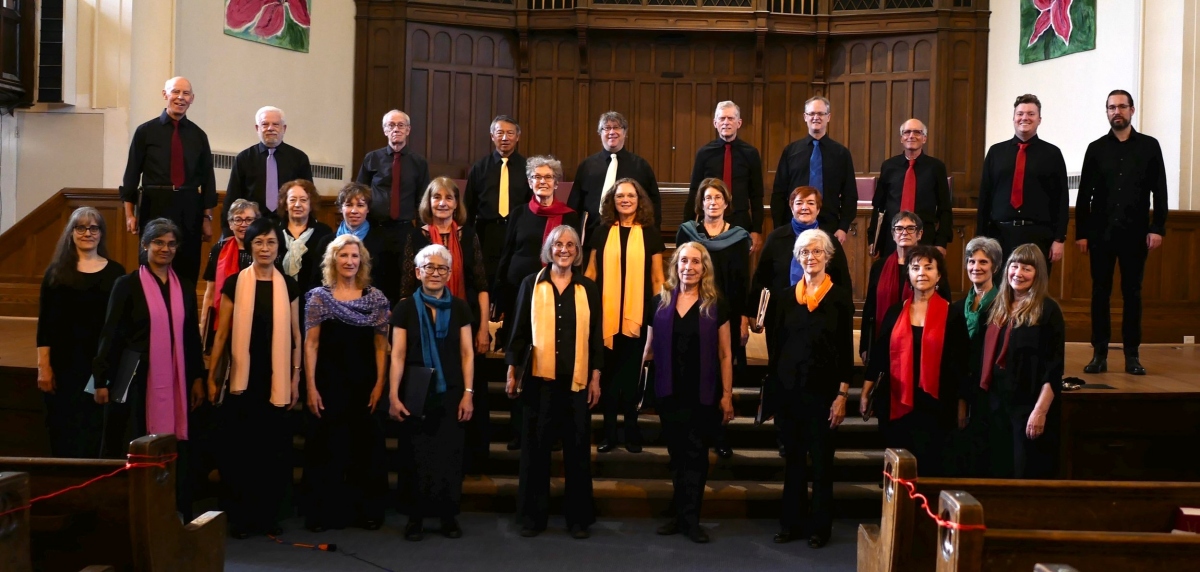
The Jubilate Singers is an auditioned community choir based in Toronto. Their performances draw from works that reflect the Greater Toronto Area’s rich cultural diversity. The choir often collaborates with Latin American‒Canadian musicians such as Rodrigo Chavez, Cassava Latin Band, Sikuris St. Lawrence, and Proyecto Altiplano, as well as groups from the African, Jewish, South Asian, Baltic, and Ukrainian traditions, among others. Artistic Director Isabel Bernaus was born in Catalunya, Spain, and trained as a musician in both Europe and North America.
The Jubilate Singers, directed by Isabel Nernaus, along with a Latin American ensemble featuring Nano Valverde, Freddy Vilches, Nico Vilches, Ernesto Cardenas, and Ellen Meyer (piano), will be performing the program both in Toronto (November 29) and in Kitchener (November 30).
Vilches will be present to perform with the Latin American ensemble for both concerts.
- Find tickets for both the November 29 performance in Toronto, and the November 30 performance in Kitchener [HERE].
Are you looking to promote an event? Have a news tip? Need to know the best events happening this weekend? Send us a note.
#LUDWIGVAN
Get the daily arts news straight to your inbox.
Sign up for the Ludwig Van Toronto e-Blast! — local classical music and opera news straight to your inbox HERE.


- PREVIEW | New Adventures In Sound Art Celebrates Their 25th Anniversary With An Open House March 12 - March 6, 2026
- PREVIEW | The Arcady Opera Showcase: Mini Musical Dramas Featuring 2026 Emerging Artists - March 6, 2026
- PREVIEW | Pianist Eve Egoyan Presents In Stone, A Composition Written For The Armenian Genocide - March 6, 2026