
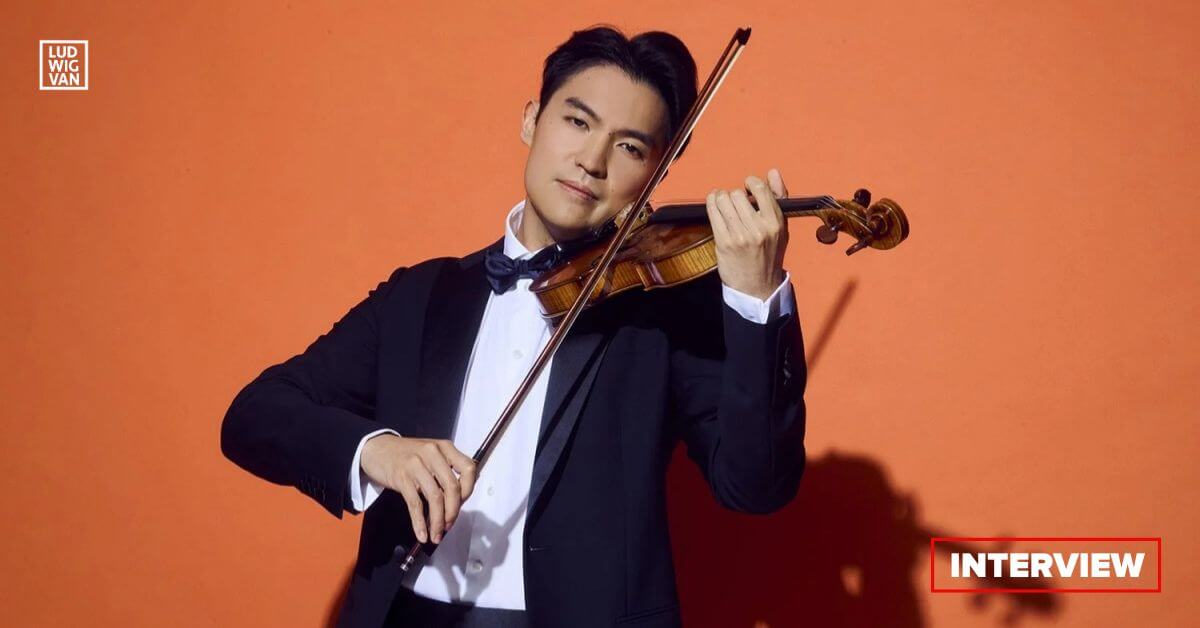
Violin superstar Ray Chen will be performing a recital with pianist Chelsea Wang at Toronto’s Koerner Hall on November 19. He’ll be bringing a varied program of music from Bach to Pablo de Sarasate, not surprisingly, much of it composed by other virtuoso violinists. The full program includes:
- Giuseppe Tartini: Violin Sonata in G Minor, B.g5 (“The Devil’s Trill”) (arr. Fritz Kreisler)
- Camille Saint-Saëns: Violin Sonata No. 1 in D Minor, op. 75
- Johann Sebastian Bach: Chaconne from Partita No. 2 in D Minor for Solo Violin, BWV 1004
- Antonio Bazzini: La Ronde des Lutins, op. 25
- Antonín Dvořák: Slavonic Dance No. 2 in E Minor, op. 72 (arr. Fritz Kreisler)
- Pablo de Sarasate: Zigeunerweisen, op. 20
LV caught up with the busy musician to ask him about the concert.
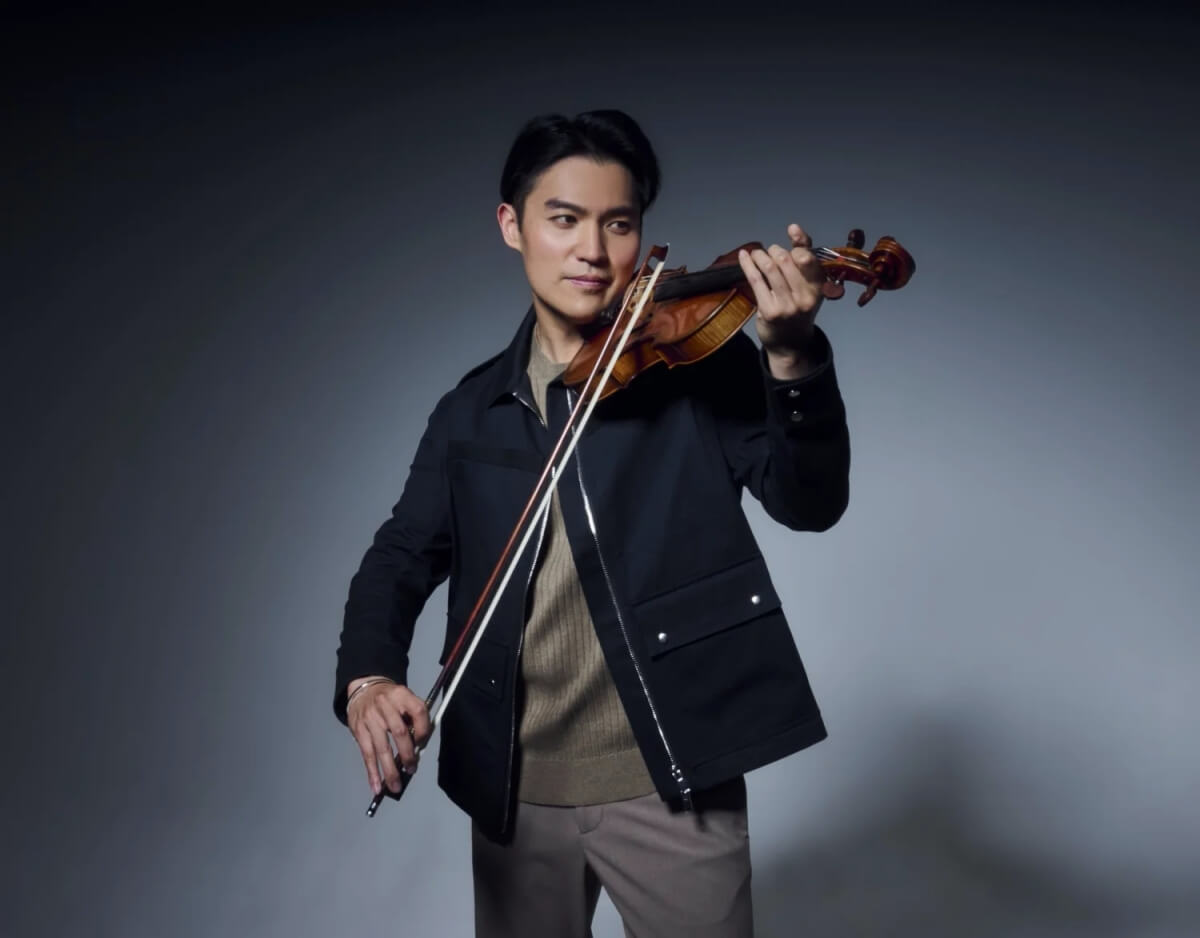
Ray Chen
Taiwanese-Australian violinist and YouTube star Ray Chen (陳銳) launched his career with high profile wins at the 2008 International Yehudi Menuhin Violin Competition and the 2009 Queen Elisabeth Competition. He’s since carved out an impressive career on the international concert circuit.
Ray was born in Taipei, Taiwan, and began studying the violin at the tender age of four. Growing up in Brisbane, Australia, he’d already breezed through all ten levels of the Suzuki method before his tenth birthday. At age eight, he made his orchestral debut as a soloist with the Queensland Philharmonic Orchestra, and was invited to perform at the opening celebrations of the 1998 Winter Olympics in Nagano, Japan.
Accepted at 15, Chen went on to study at the Curtis Institute of Music in Philadelphia, and graduated with a Bachelor’s degree in 2010, making time for international competitions between classes. He was the youngest participant at the Queen Elisabeth Competition in Brussels in 2009, and the win set up a European concert tour.
Ray was signed by the Sony Classical label in 2010, and won the Newcomer Award at the 2011 Echo Klassik Awards with his first album, Virtuoso.
Along with his performing career, Chen was one of the first classical musicians to recognize the power of online social media, and began making comedic videos in 2014. Classical music comedy duo TwoSet Violin cite him as an inspiration for their own highly successful social media series.
Ray Chen: The Interview
Chen previously performed on the 1715 “Joachim” Stradivarius violin, an instrument once owned by the famed Hungarian violinist, Joseph Joachim. This year, he’s bringing another Strad on tour.
”This violin that I’ll be playing is a 1727 Stradivarius. The name I haven’t revealed yet,” Ray says.
The period Italian violins he’s been performing with have previously come via loans by the Nippon Foundation, whose mandate is to support young artists.
“The thing is, ‘young artist’ is defined by a certain age. When I turned 36, […] their policy said, you could apply for an extension, but it would only be one year.,” he explains.
”We kind of see ourselves as torch bearers.” Chen calls himself fortunate to have been able to play such an extraordinary instrument for the time he did. “The next person, let them enjoy it. I’m going to go about in my own journey to find my next instruments,” he thought.
He began by putting out some feelers. “I was a little worried,” he acknowledges, but realized after a short time that there were many parties who were willing to loan him a similar antique violin. But, he found there was also an alternative route.
“There were also opportunities for me to co-invest in one,” he says. It involves working with a patron as a co-investor. “This is really cool. I might want to explore that.”
It gave his search a new sense of purpose, and some perks along the way. “I’ve tried 24 different Strats this year,” he says. “It’s been a fun journey.”
That journey took him all over the world, and offered an invaluable opportunigy to study the individual characteristics of each instrument.
“It’s thanks to that that you understand all the different characters,” he says. “They teach you, each time you get to know […] a great instrument.” He was able to find the right ones to suit his performance needs.
But, it’s not only the old Italian instruments that have made it to his collection. “I have a Kurt Widenhouse instrument. Technically three. I really enjoy his making.”
As he notes, a performer can use multiple bows for different purposes during a concert, but the instrument itself presents different challenges.
“You have to go through a recalibration every time you pick up a new instrument,” he explains. Ray prefers to play a violin for some time before performing on it.
Which is better — old Italian or contemporary American?
“I’ve taken my modern instruments on tour many times throughout the years,” he notes. “And you know what? It’s really cool. People can’t tell the difference. When you tell them, it changes their perspective,” he adds.
“As a player I can tell because it’s right under my ear.”
He uses each for different purposes. Chen recorded his album Golden with a modern instrument. “That album is a very old school sound. We were going for the golden age […] a little tip of the hat to the Jascha Heifetz period.”
Ray’s teacher at Curtis was Aaron Rosand, who he calls the last of that generation.
“It was interesting that I was actually able to get a sound that was closer to that old school kind of sound with the modern instrument in the studio rather than the Strad that I had at the time.
There is a certain boxiness […] a richness, but contained, that I associate with that sound. “
The album was recorded on vinyl to preserve the effect.
Using and trying out so many violins, has he ever heard the so-called Tartini notes — a third tone that Baroque violinist and composer Giuseppe Tartini described hearing when he played two notes simultaneously? They are said to be more perceptible when playing a vintage Italian violin.
“I wonder if that’s like something similar when people can hear colours. Synesthesia,” he posits. “I wonder about that. I just associate that with the fullness of the sound,” he adds.
“There’s something about the old instruments that’s more transparent,” he continues. “As an analogy, there’s the lows, the mids — the EQing when you’re recording. I find that modern instruments just stack in one area. But older instruments, it’s been stretched out. It’s set across evenly a wider band across that EQ scale,” he notes.
“You get a more transparent sound. When you hear that, it’s not quite a reedy sound.
Violin by nature is a more angular sound, as compared to the flute, for example.”
What’s the final verdict on old vs new?
“My personal belief in why the older instruments have more resonance, and have that different sound,” he says. “If you think about how wind can literally carve stone, if you think about the vibrations over the years…” So many hours of practice and performance leave their mark. “That definitely does something to the wood.”
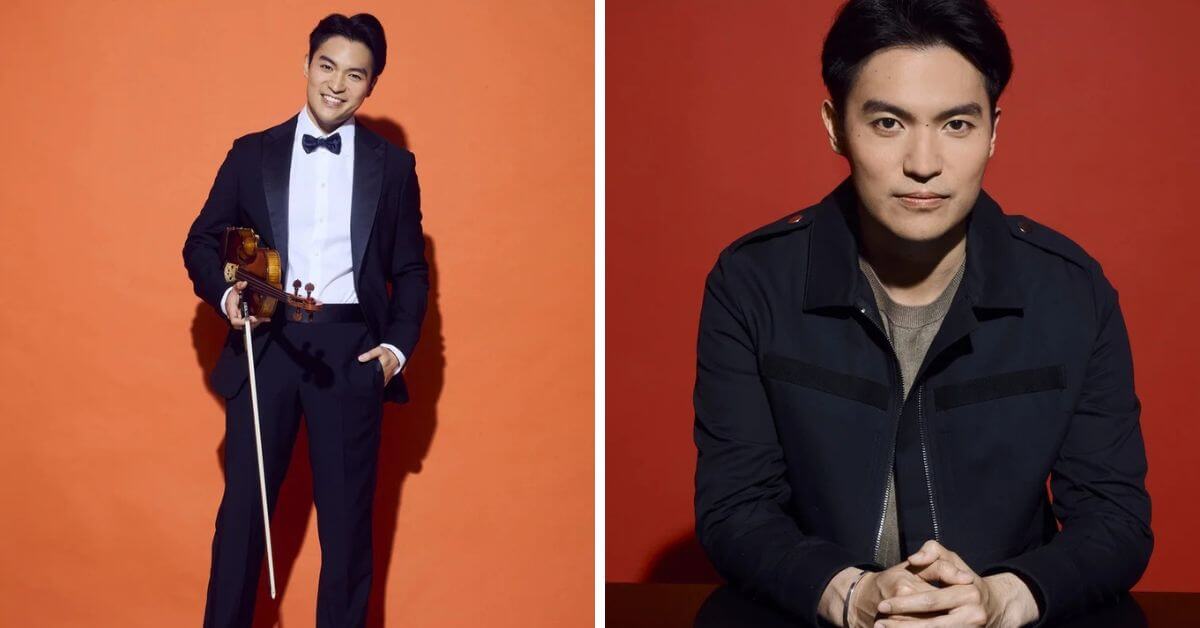
The Recital Program
“The concept behind this program is, there were a few factors that came about. I originally wanted to do the Tartini and the Franck.”
He found, though, that other musicians on the concert circuit were also performing those two works together at about the same time.
“Tartini to Franck — I need to find something else that’s French, Belgian/French. I wanted to find something else that fit that mould.”
The Saint-Saëns sonata fit the bill, and as a bonus is a work that’s not programmed very often.
“It’s very brilliant,” he says “I’m playing it with Chelsea Wang, who also went to Curtis.
We actually just had our first rehearsal yesterday.”
It’s a novelty for Chen nowadays. “These days, I don’t get to play recitals with people who I’ve just met.”
His usual partner, American pianist Julio Elizalde, is taking time away from performance.
“I’ve just had this opportunity to really look around. That’s what music making is all about. Making connections,” he says. “One thing I realized is, I haven’t played with a female pianist in almost ten years.”
He says he was struck by seeing Wang perform Dvořák’s Slavonic dances.
“There was always this slight awkwardness when I played it with male pianists. When she played it, I thought wow, I could just melt into this. There was this different type of energy,” he explains. Choosing a musical partner is always about the chemistry. “At the end of the day, it’s people energy,” he says.
“It’s really exciting. I got so excited when I was in that rehearsal yesterday.”
Considering The Audience
“I really like to program it like a multi-course meal,” he says of his recitals. He considers his audience along with the music, and where they’re coming from.
“The fact that they’ve made it to the concert hall in person is already a feat. It’s not like it was 30 years ago.”
He’s conscious of their time and experience.
“Are they having a good time?” he wonders.
His concern for the audience led to his second most famous gig — social media.
“That’s what led me to do social media and content creation,” he explains. The interactive nature of social media puts him in touch with his audience directly. “What’s going on in the audience? I want to know who they are.”
Ray Chen performs the Tartini Devil’s Trill Sonata arr. Kreisler at the Concertgebouw Amsterdam on 17th February 2019 with the Amsterdam Sinfonietta:
Program Order
The first piece in the program is like an amuse bouche.
“It brings them to the present moment,” he says. “Suddenly, that first piece, it’s like the appetizer.
It’s got to be like, you’re here. Then you know, the rest of the meal is going to be incredible,” he adds.
“The Tartini does that so well.”
The Saint-Saëns sonata is a meatier course. “A French dish. It has so much Romanticism, and yet so much virtuosity.”
He contrasts the two opening works. “Tartini — it’s almost like a rock guitarist kind of vibe, especially towards the cadenza.”
He calls Saint-Saëns a staunch romanticist in an era where modernism was branching in very different directions.
Then comes Bach’s Chaconne. “We want a different sonority,” he says. “And then afterwards, the pieces get shorter and shorter, at least the structure of it.”
Bazzini’s La Ronde des Lutins, also known as The Goblin Dance, offers a stark contrast to Bach’s serenity. “It’s a very virtuosic piece. And then Slavonic dance, and finally Zigeunerweisen…”
The Bach comes as a kind of interlude amid the drama and virtuosity. It’s also about giving his audience a piece they love.
“That’s just kind of everyone’s favourite piece. What can I say? I guess I’m a people pleaser.”
The Concert
Chen performs with pianist Chelsea Wang, whose career includes appearances as soloist and chamber musician. She’s performed widely across North America, Europe, and in Asia, and with musicians such as Jonathan Biss, Leonidas Kavakos, and the Emerson Quartet, among many others.
- Find tickets and show details for the November 19 recital [HERE].
Are you looking to promote an event? Have a news tip? Need to know the best events happening this weekend? Send us a note.
#LUDWIGVAN
Get the daily arts news straight to your inbox.
Sign up for the Ludwig Van Toronto e-Blast! — local classical music and opera news straight to your inbox HERE.

- PREVIEW | New Adventures In Sound Art Celebrates Their 25th Anniversary With An Open House March 12 - March 6, 2026
- PREVIEW | The Arcady Opera Showcase: Mini Musical Dramas Featuring 2026 Emerging Artists - March 6, 2026
- PREVIEW | Pianist Eve Egoyan Presents In Stone, A Composition Written For The Armenian Genocide - March 6, 2026