
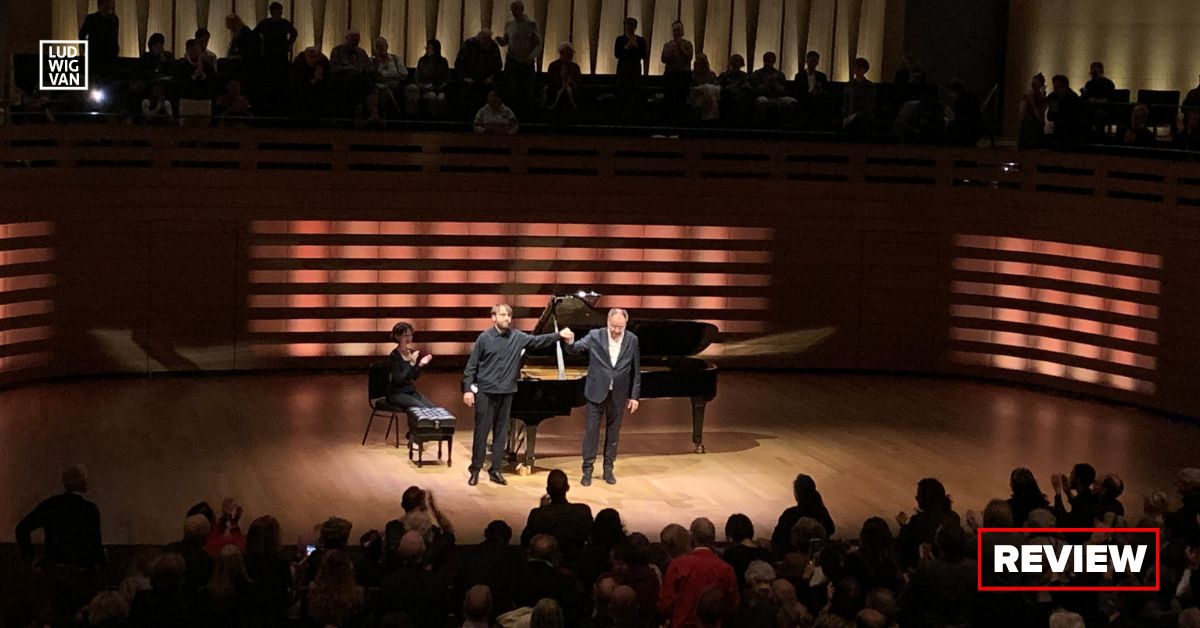
Royal Conservatory of Music: Matthias Goerne and Daniil Trifonov. Schubert: Winterreise. October 16, 2025, Koerner Hall.
Matthias Goerne, known for his harrowing portrayal of Wozzeck and Bluebeard, and his mastery of German lieder, took the stage with Daniil Trifonov, one of the best pianists of our time, at Koerner Hall last night.
Goerne, at age 58, is no longer a young man, and has sung the Wintterreise hundreds of times in his lifetime. Trifonov, at age 34, has maturity and virtuosity beyond his years. They first started to collaborate in 2016 at the Wigmore, featuring the lieder of Berg, Schumann, Wolf, Brahms, and Shostakovich, and since then, the pair has explored Schubert lieder in depth. For Koerner Hall, they’ve brought Die Winterreise.
Schubert’s Die Winterreise
In Die Winterreise, a young heartbroken man wanders the world post-broken heart, where a once beautiful world has turned bitter, cold, and barren. The beauty of the previous life — Müller gives us only the embers of the past, and this journey in 24 vignettes features no other persons until the last song, where an old busker with a hurdy-gurdy is seen; they remain strangers to the very end.
The overwhelming sense of loss, a memory of the past in technicolour against the stark frozen ground, has been a true enigma to countless musicians and audiences.
Goerne’s Winterreise, however, perhaps belongs to a much older man, like those mysterious men of the stories where one may age decades overnight, turning the hair white, youth taken away.

Matthias Goerne
Goerne’s rich registers, especially tragic and expressive in the low ranges, resonating through his body full of expressive gestures — operatic at times — made it difficult to set a singular, definitive figure.
There were many Goerne on the stage — an apparition of a young man full of choking sadness in Gefror’ne Tränen, turning into fury in Erstarrung, desperately searching and tearing through the frozen ground, looking for that past spring.
Though they are sequentially connected, this young man became one whose time has been robbed of joy, and Goerne made it impossible to determine the length of the suffering — could it have been a few months since spring? A decade? A lifetime? Does such suffering come with expiration dates? When, and how does a man become a ghost?
A similar transformation happened from Rast to Frühlingstraum. Goerne sang of tiredness, a need for rest, an old man ready to sink into the cold ground, with burning cinders of anguish; but as he drifts, we were transported into the spring — everything was beautiful, vibrant. With masterful musicianship, Goerne’s dream of spring was buoyant in the high register, at ease, just like a young man, whose steps are filled with hope and joy, with his love.
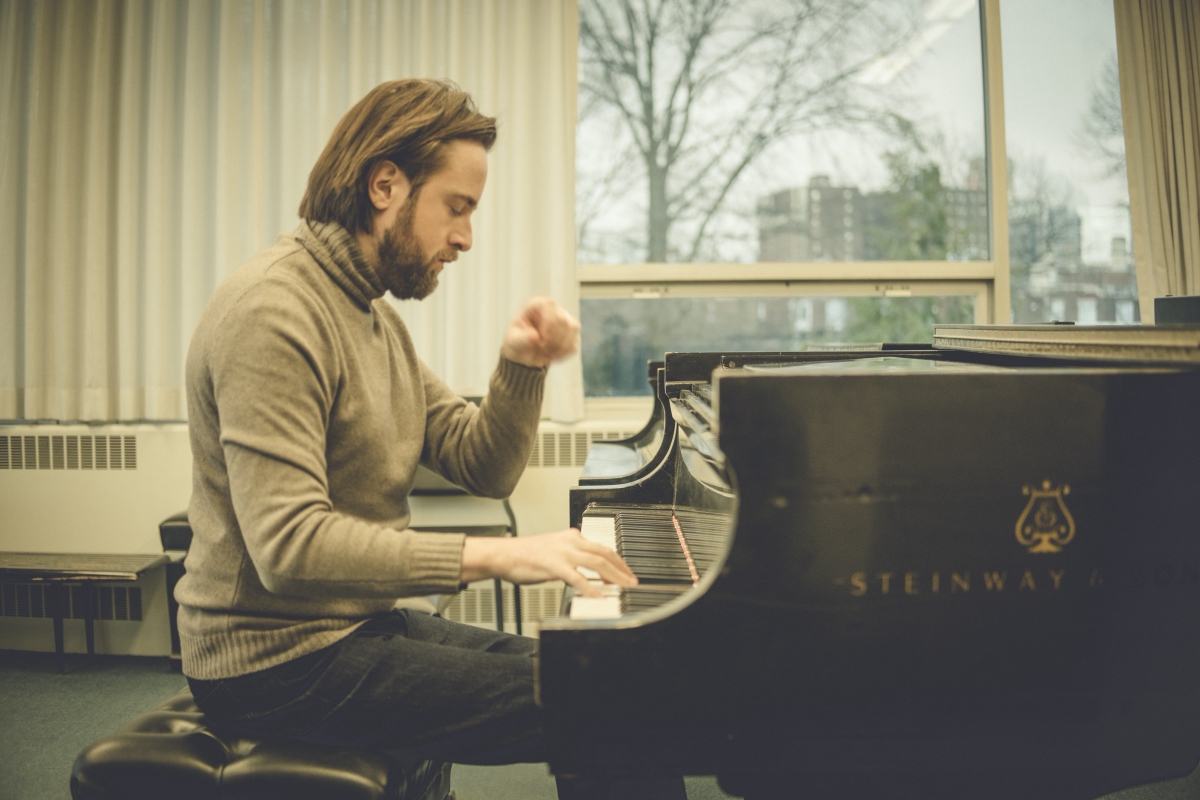
Daniil Trifonov
Trifonov’s versatility, from kitten-soft touches to raging, howling wind, created vivid backdrops for Goerne; conjuring everything from the swaying linden tree, to a lone crow in a mysterious möbius loop in Die Krähe, to the angularity of a broken world — reminiscent of cubism. In Letzte Hoffnung, nothing was amiss in possibilities of expression and musical dynamism.
As Trifonov wove timeless scenes — from the most pictorial descriptive scenes such as Die Lindenbaum, to the obliteration of a sense of any particular space in Eimsamkeite — we could’ve been in a cold winter scene, or in the empty void of space — Goerne shifted through many apparitions of this figure.
Young and old, full of life and hollowed out to a shell, regretful and grateful — it was a series of continually evolving vignettes, which kept the entire hall captive, in near silence.
Final Thoughts
Great art does weird things to what we have organized as real life. Things are organized to be predictable. We rely heavily on singular, chronological, language-based narratives, and any other possibilities of the world are seen as ‘different,’ and impractical. Time moves forward, from midnight, to noon. Everyone grows older, never younger.
Yet, there we were, ensnared in this collection of scenes as Goerne showed his gift as a storyteller, as his words nestled in the universe that Trifonov conjured for each story, for 70 straight minutes.
Time was messed up. The line between forward and backward blurred. We swapped from internal void, to screaming winter storm, to ecstasy of ideal love, in a flash. And then it all ended, and we were back in our seats.
This was an evening of extraordinary tales, leaving the hall in hushed silence till the applause broke out. It was beautiful to be taken out of reality — what a pleasure.
Are you looking to promote an event? Have a news tip? Need to know the best events happening this weekend? Send us a note.
#LUDWIGVAN
Get the daily arts news straight to your inbox.
Sign up for the Ludwig Van Toronto e-Blast! — local classical music and opera news straight to your inbox HERE.


- CRITIC’S PICKS | Classical Music Events You Absolutely Need To See This Week: March 9 – March 15 2026 - March 9, 2026
- SCRUTINY | Chanticleer Demonstrate The Beauty And Shared Humanity Of Singing At Koerner Hall - March 2, 2026
- SCRUTINY | The Danish Quartet Offer Repertoire Both Familiar And Unfamiliar With Their Distinctive Finesse - March 2, 2026