
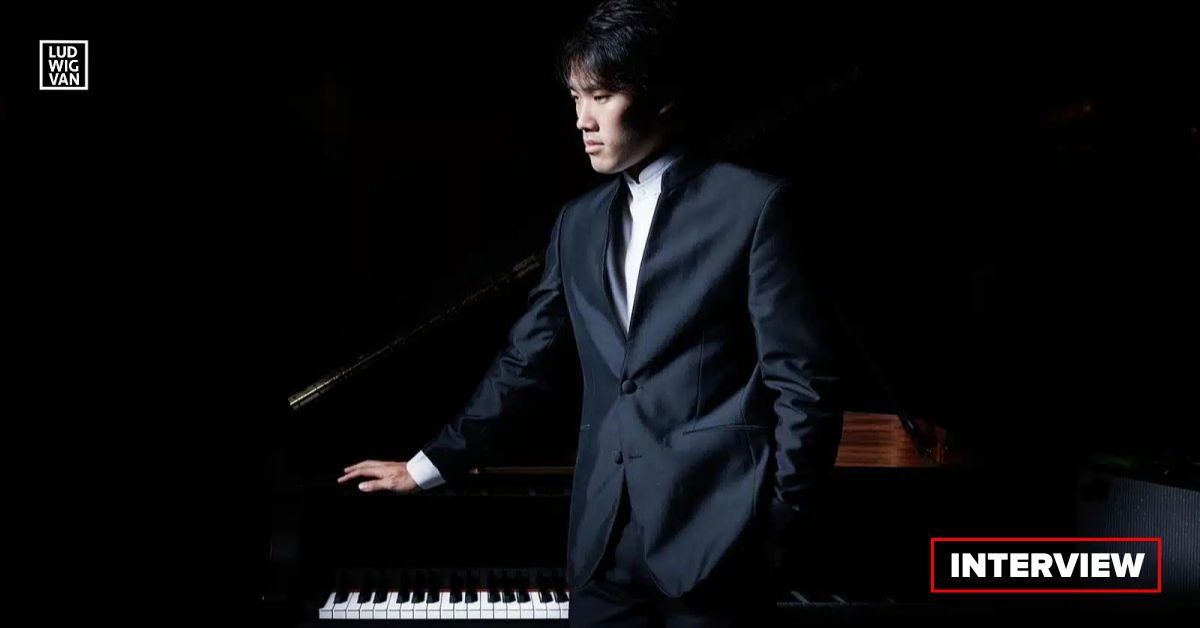
For years, it has been impossible to speak of Bruce Liu without mentioning Chopin in the same sentence.
The Montréal-based pianist and our national pride became the first Canadian to have ever won First Prize in the International Chopin Piano Competition in 2021, at the age of 24. With that win, his career immediately took off with a whirlwind of international engagements.
Bruce has been named Toronto Symphony Orchestra’s 2025-26 Spotlight Artist. Toronto audiences will have the opportunity to hear him not only once, but twice, in this TSO season.
We spoke to Bruce about his life after the Chopin Competition.
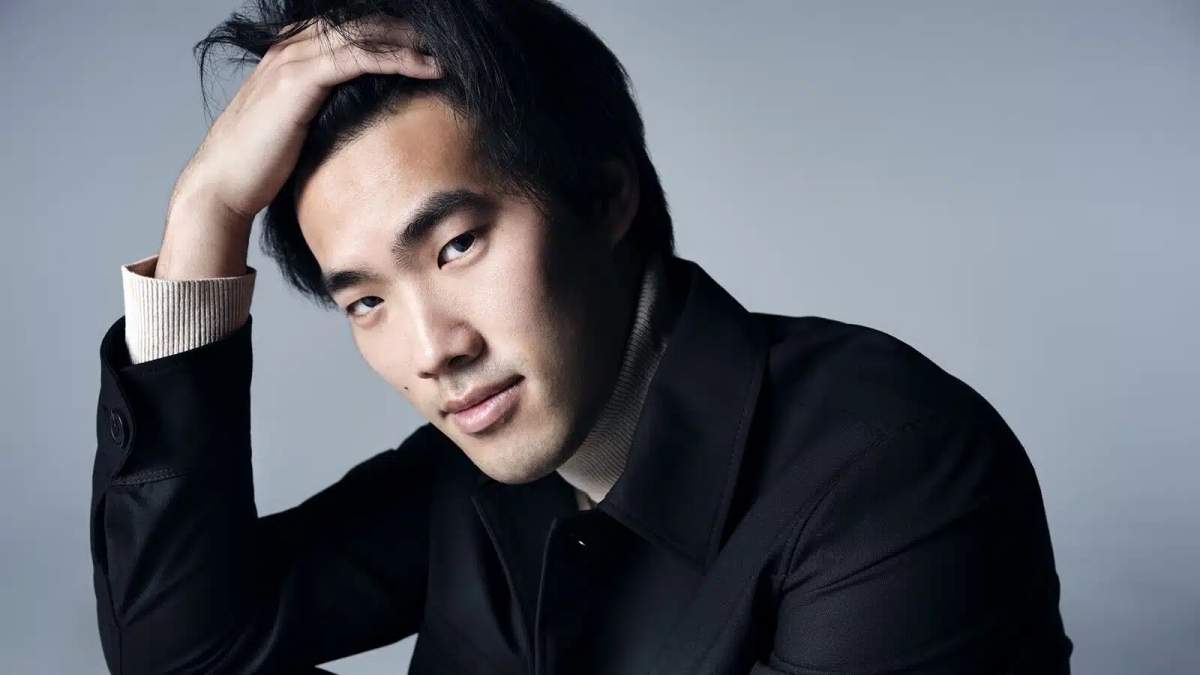
Bruce Liu: The Interview
LV: It seems just like yesterday that you won the Chopin competition. What have you been up to and what are some memorable career highlights since then?
BL: Of course, after winning, my schedule just suddenly exploded with concerts and travel. It has been a whirlwind, but a very rewarding one. The win opened so many doors for me.
The most incredible thing I remember is that for a week or two, I had to play in three different continents. Once, at the airport’s custom check, the officer asked me to play a little bit on my fingers. I laughed really hard because for a second, it felt like a mini audition just to get onto the plane.
I also did my album debut with Deutsche Grammophon soon after the competition. That experience taught me a lot about shaping and interpretation in the studio, which is very different from the stage. From then, I have started and continue to explore new repertoire — not only Chopin, but also French, Russian and other repertoire which are really broadening my musical horizons.
So in short, from Warsaw until now, it’s been about building a life as an artist beyond the competition.
LV: I’m sure you’ve grown as a pianist. How have your interpretations changed and what shapes them now?
BL: It’s a question that I often ask myself too. Back in the time of the competition, it was very much shaped by intensity of focus — every phrase had been rehearsed and polished with the competition in mind. That discipline gave me a kind of sharpness.”
But since then, I feel that I have grown into more freedom and flexibility, and I try to take more risks now. I allow the moment, the energy to shape what happens. The silence, breath, and spontaneity play a bigger role in my interpretations than they did before.
And of course, another change is shaped by my life outside of the piano — the travels, people I meet, books I read, even simple things like walking through a city or tasting new foods. These experiences give me new colours and a new atmosphere into the music.”
LV: What new discoveries have you made about yourself as an artist? Where has this journey of discovery led you so far?
BL: I would say that my interpretations are less about control and more about storytelling or resonance. They are not shaped by just practice but also by living. The deeper I discover, I’ve learned that I don’t want to be a pianist locked into one label. I want to stay curious and let music constantly reshape me.
So, instead of searching for a final version of myself, I’ve started to enjoy the idea that I will be always evolving, that each stage of my life will bring something new to my interpretations. I think this journey is about discovering that what matters most is not fitting into one role but really allowing myself to be open and to keep changing through the music.
LV: Which composer’s music speaks to you most and what works do you aspire to perform in the future?
BL: I would say that I have a very special attachment to Schumann, perhaps because of his split personality expression. There’s something about his music that is just very mysterious for me, and there’s always something to dig into about his life and history. There’s a sense of structure and harmony in the colours, and his story behind that touches me tremendously.
For the future, I would like to play more works by Brahms.
LV: Please speak about being TSO’s Spotlight Artist and the two concerts you’ll be doing in Toronto.
BL: My first TSO concert is Mozart’s Piano Concerto No. 23, and the second is Rachmaninoff’s Piano Concerto No. 2. These two pieces couldn’t be more different, and that contrast is exactly what excites me.
The Mozart 23 is a concerto of pure elegance and balance. He writes with such clarity that every note, every phrase has to be honest. There’s absolutely nowhere to hide. The second slow movement is in a very rare minor key, which has the sense of fragile beauty, almost like an operatic aria.
For me, playing Mozart is about transparency, not forcing anything, and just letting the music breathe and speak. Performing that with the TSO is very meaningful, because it’s one of the works I most dreamed of playing, especially with Austrian maestro Franz Welser-Möst.
Rachmaninoff wrote his second piano concerto in a very dark period of his life, when he was struggling with depression and creative block. Thanks to therapy and support, he found his way back to composing, and this concerto was the result. So you can feel this sense of rebirth in the music. It’s full of passion and sweeping melodies.
This is a very special concerto for me because it’s one that I used to play a lot in my teenage years. But now, after so many years, the meaning and the music have grown inside of me so differently, and it has matured.
This is also the piece I will be playing in Spain when I join Gustavo Gimeno and the TSO on their European tour in January.
These two concertos show very different sides of the pianist. I always like to finish an answer by comparing any piece to a dessert, because I’m a sweet-toothed person.
The Mozart 23 is like crème brûlée. On the surface, it’s very simple and elegant. But when you crack through, you discover layers of depth and delicacy. This balance between the sweetness and restraint is everything. It’s all about the clarity, the proportion — too much sugar, it loses the refinement; too little, it feels a bit austere.
The Rach Two, on the other hand, is like molten chocolate cake. It’s super rich, overflowing with intensity. Once you dig in, it’s dramatic and overwhelming in flavour. It’s comfort food on a very big scale. I think both of them are delicious, and they satisfy in very different ways.
LV: We are so excited to have you back in Toronto. What do you think about Toronto and what do you like most about the city?
BL: For me, Toronto is one of those cities that immediately gives off a welcoming and international feeling. Every time I visit, I have been struck by the diversity and mix of cultures that somehow all blend together. It’s a city where people are very curious, open, and genuinely enthusiastic.
Even though I have never lived there, Toronto has played an important role in my journey because of its audience. I have done concerts at the Royal Conservatory and the TSO two years ago, and they make me feel like I’m a part of something bigger than just a single performance. It’s a city that celebrates both its own artists and those who come from elsewhere. Each time I return, that connection deepens.
LV: How do you decompress in-between your very busy touring schedules?
BL: It’s true, the touring life is busy and sometimes overwhelming — between the flights, hotels, rehearsals and going straight onto the stage, sometimes it can feel like a blur. Usually after a very intense period, I need stillness. It can be just long walks in nature without any music at all, and just letting the mind settle. I love swimming and karting. I really enjoy photography, and I try to capture moments while travelling as much as I can.
LV: What are some future projects you’re working on?
BL: My future project is to keep evolving, to stay open, travel, and let new experiences shape my interpretations and personal growth. There is, of course, an incredible amount of touring and many recording projects. I can’t go into details, but one thing I can talk about is the idea of storytelling through programming. So it won’t be just an album of pieces, but a kind of journey that connects the works of centuries or styles, which is what I try to transport in concert. It can be pairing familiar pieces with something less expected, and seeing how they speak to each other.
LV: You’re certainly an inspiration to other young pianists. What advice do you have for them?
BL: I would say to stay curious and be patient with yourself, because progress is not about a straight line. Find your own voice by asking yourself what you want to say through that piece. Don’t be afraid of individuality. Sincerity will always communicate more than imitation.
And, of course, remember why you play, because even though you can get caught up in all these competitions, exams and pressure, at the heart of it, it’s all about the love of music. We should never lose the joy of simply sitting on the piano and playing for ourselves. While on stage, it is important to think less about proving ourselves, but more about sharing the music with people. Beyond all of that, play because you love it, because that’s the only thing that makes the journey meaningful.
- Bruce Liu will be performing with the Toronto Symphony Orchestra October 16-18, 2025 in Mozart & R. Strauss, and on January 22 & 23, 2026 in Bruce Liu Plays Rachmaninoff 2. Find tickets and show details [HERE].
Are you looking to promote an event? Have a news tip? Need to know the best events happening this weekend? Send us a note.
#LUDWIGVAN
Get the daily arts news straight to your inbox.
Sign up for the Ludwig Van Toronto e-Blast! — local classical music and opera news straight to your inbox HERE.
- FEATURE | Toronto Mendelssohn Choir’s Singsation Builds Community And Celebrates Joy Of Singing - March 11, 2026
- SCRUTINY | Orchestra Toronto Nailed Unique Program Of World Premiere And Rarely Performed Tchaikovsky - March 2, 2026
- PERFORMANCE PICKS | Theatre, Dance & Performance You Need To See This Month: March 2026 - March 2, 2026