
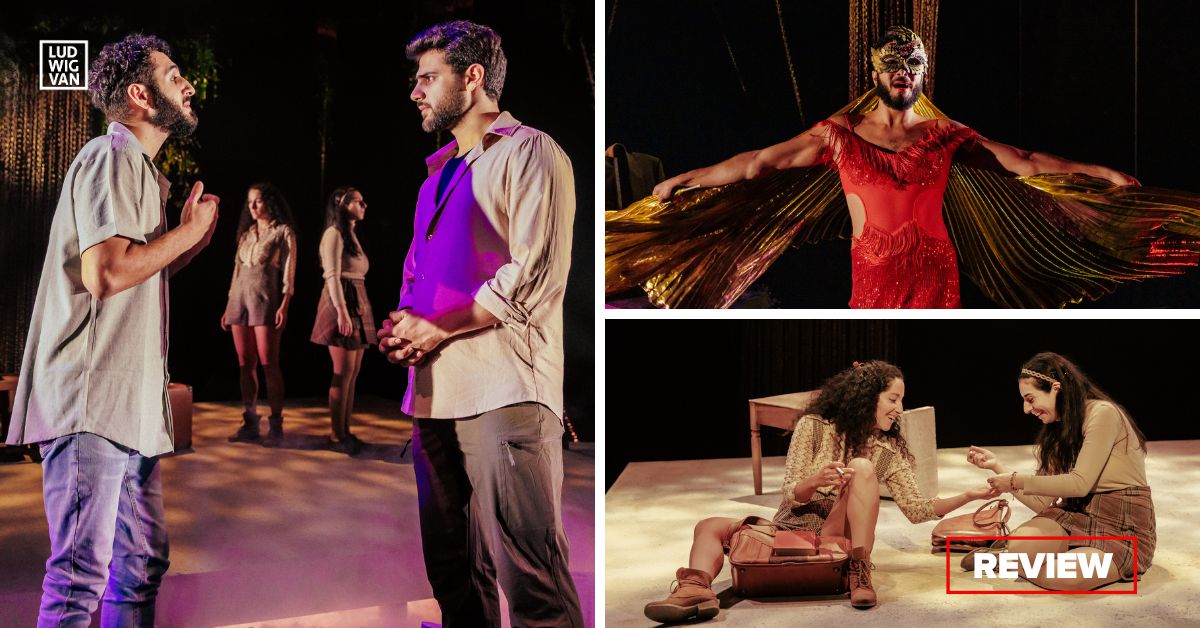
An In Arms Theatre and MENA Collective production in association with Factory Theatre and Buddies in Bad Times: The Green Line, written & directed by Makram Ayache; performers: Waseem Alzer (Fifi, Zidan), Oshen Aoun (Naseem, Rami), Basma Baydoun (Yara), Zaynna Khalife (Mona). Buddies in Bad Times Theatre, September 25, 2025. Continues until October 4; tickets here.
In the program notes, the playwright/director says, “In writing this play, I described it as a love letter to my Arabness, a love letter to my mom and dad, and a yearning to be a part of Beirut and all the people within it.”
The city of Beirut and its complicated history runs through the lives of the four characters in The Green Line — just as the titular Green Line cuts across the city itself. It’s an environment that nurtures some, and destroys others.
The opening moments of the play explain the reference.
During the Lebanese Civil War, with stretched on from 1975 until 1990, the city became divided, both in terms of religion between Muslim and Christian factions, and physically by a kind of no man’s land area that separated East (Christian-controlled) from West Beirut (Muslim-controlled). Vegetation began to flourish in the abandoned area, creating a green line of wilderness that became a symbol of the city’s divided heart.
The Play
The play, a finalist for the 2024 Governor General’s Literary Award, weaves together two stories in two time frames, both of which take place in Beirut.
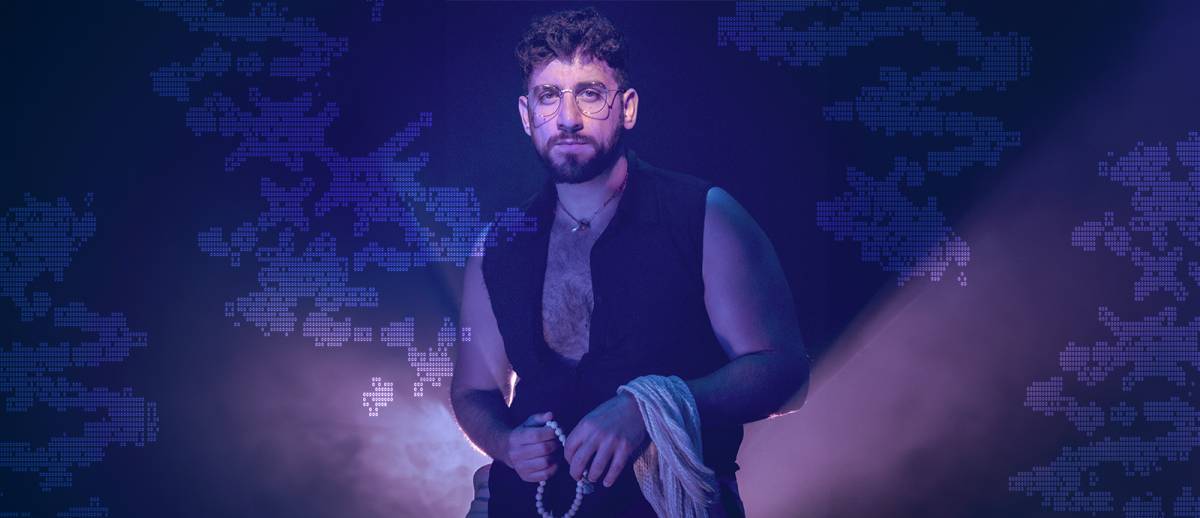
In 2018, Rami, a queer Lebanese Canadian in his 20s, arrives in Beirut to bury his father. The request from his dying father had come with an enigmatic photograph of an apartment in the city, and a gold necklace with a pendant in the shape of a phoenix, the firebird that rises from the ashes.
Rami’s confused by the request, and the responsibility of disposing of his father’s remains in a country that is foreign to him weighs heavily. He takes a break from gloomy thoughts to pop into a gay bar where flamboyant drag queen Fifi is performing. Fifi, as it happens, is dressed as a phoenix.
In 1978, brother and sister Naseeb and Mona are left on their own in a Beirut apartment after their parents and grandparents are killed in the violence of the Civil War, which is in full swing. Naseeb wants to take his sister out of the city to a plot of land they have inherited in the mountains, but Mona is nearing the end of her studies in engineering, and has fallen in love with Yara, her classmate.
Their love is secret, and barely expressed in the repressive society they live in. Yara is already entering an arranged marriage, and Naseeb plans on marrying off Mona to a nice man in the mountains as soon as possible.
The two stories, in short, have very different trajectories, both of them shaped by Beirut, the Civil War, and its aftermath, political and personal.
Performances
The all-Arab cast of The Green Line was uniformly convincing in scenes that cut across each other both in space on the stage, and in the time frame of the play. They inhabited their characters with a sense of sincerity that sparked real emotion.
The play unfolds in active scenes as well as monologues that flesh out inner thoughts, back history and other details. Timing is crucial for this kind of structure, and the flow was well paced. Each story began to fill out little by little, sometimes in predictable ways, and sometimes as a surprise twist, in bits that seemed to flow by quickly. Flashes of humour effectively lighten the mood here and there, adding to the momentum.
Since it’s a premiere, I don’t want to give away any of the details, except to say that the story gradually develops into a kind of mystery about family secrets, and what lies behind the stories they don’t want to talk about.
With the city and war as a constant backdrop, strong themes emerge. The tentative, fraught nature of the women’s alliance is juxtaposed against the out and proud queerness of Rami and Zidan (Fifi) in the contemporary world. The treatment of women, who were meant to obey the men in their lives in mainstream society, becomes a defining influence in the story.
The tense atmosphere of gunfire in the streets in 1978 contrasts with Rami and Zidan openly wandering the neighbourhood of the bar to look for eats in the middle of the night.
Playwright Makram Ayache emphasizes the effect by creating parallels within the play. The phoenix, a sandwich shop, and other small details exist in both stories and eras.
He writes in a combination of realistic dialogue and poetic description that adds a timeless note to the play. The only real critique I’d have is that there were moments when the poetic nature of the dialogues and monologues got in the way of the flow of emotion, and slowed it down.
The emotions carried the story, the most visceral coming out of the plight of Mona and Yara. Of the four performers, Zaynna Khalife as Mona was a standout. Yara is a more pragmatic character, one actor Basma Baydoun created with a quiet dignity; Mona wears her heart on her sleeve. Both her elation and her anguish in the story were palpable.
Oshen Aoun developed multi-dimensional characters out of both naive Canadian Rami (“For a place so full of war, it’s surprisingly fun!”) and Naseem, torn by the violence, who set both stories in motion with their actions, and Waseem Alzer created some nice moments on stage showcasing Fifi’s swing from brash to vulnerable.
Production
The action takes place largely on and across a raked platform in the centre, i.e. one slanted towards the audience. Set design by Anahita Dehbonehie included hanging rows of chains and faux greenery, with two screens that project the dialogue in both English and Arabic. It’s effective in conveying a sense of the apartment as well as outdoor locations where the two young women first meet.
The balcony is used in creative ways to create distance from the actors and the situations they portray — both a wedding and a shooting.
The soundscape, co-created by Heidi Chan and Chris Pereira, creates subtle effects. Music adds an emotional backdrop to many of the monlogues, and sound effects a sense of menace, as well as surprise.
Final Thoughts
Makram Ayache reveals the queer stories that are seldom acknowledged in history books; certainly few mainstream accounts of the Lebanese Civil War will incorporate the lives of that nation’s LGBTQIA2S population.
But, while there is undeniable oppression, The Green Line also shines a light on the resilience of those oppressed communities who survived despite everything.
“I love it here,” says Zidan near the end, “even if it breaks my heart.”
Are you looking to promote an event? Have a news tip? Need to know the best events happening this weekend? Send us a note.
#LUDWIGVAN
Get the daily arts news straight to your inbox.
Sign up for the Ludwig Van Toronto e-Blast! — local classical music and opera news straight to your inbox HERE.

- PREVIEW | Classical Guitarist Alexandra Whittingham Makes Toronto & Ontario Debuts - March 13, 2026
- PREVIEW | Soundstreams Presents Quatuor Bozzini: With Strings Attached - March 13, 2026
- INTERVIEW | Award-Winning Librettist & Against The Grain AD Royce Vavrek Talks About Canuck Cantatas - March 13, 2026