
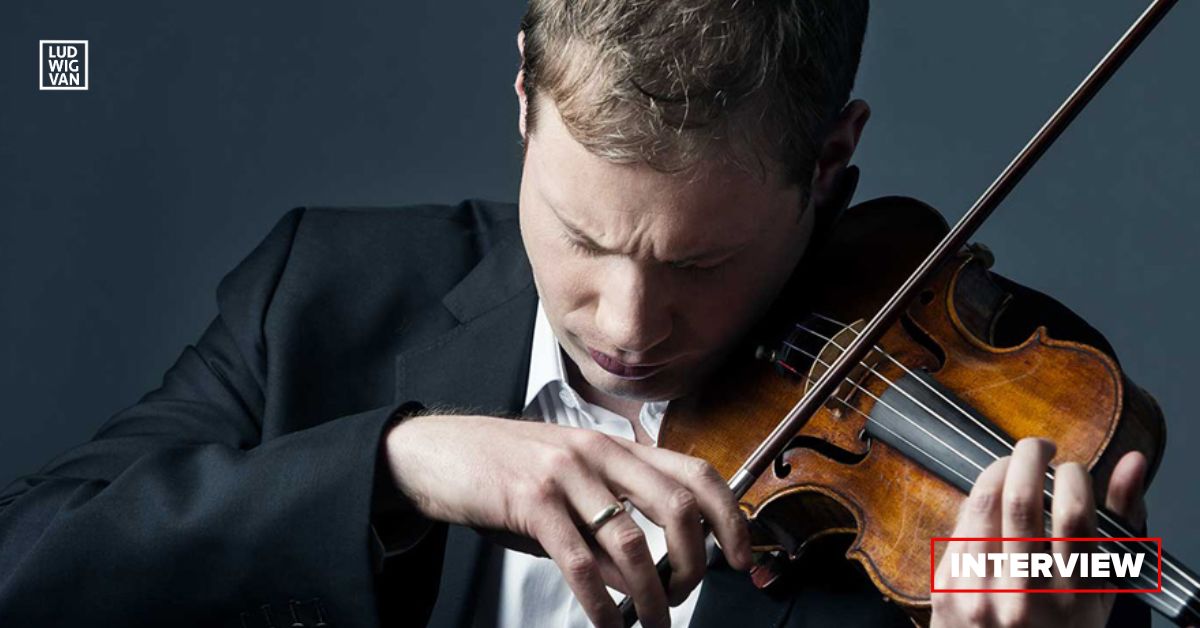
Add to the list sought after soloist and chamber musician, and it begins to convey the varied music practice of violinist Jonathan Crow, a familiar figure to even a casual consumer of classical music in Toronto. He stepped down from one prominent role earlier this year, and weeks later, his appointment to a newly created academic position was announced.
The native of Prince George, British Columbia, has had an eventful year.
He is, of course, also Concertmaster to the Toronto Symphony Orchestra, a chair he’s held since 2011, and a member of the New Orford String Quartet.
LV caught up with him to talk.
Jonathan Crow: The Interview
It was back in August of 2024 that Crow announced his departure from the role of Artistic Director of Toronto Summer Music, a position he held from 2016 until the last performance of TSM 2025 in July.
“I definitely wasn’t planning on doing it just for a year or two,” he notes. “The transition is definitely traumatic for the organization. I think it’s important that there’s enough continuity,” he explains. A multi-year commitment comes with the job. “I was lucky to come in; [Douglas McNabney] had put together this amazing Academy program.”
McNabney, AD at TSM from 2010 until 2016, had revamped the Academy into a full-fellowship program for gifted emerging chamber musicians.
“I was planing on at least five or six years, and then COVID came along,” Crow says. “I really want to make sure we’ve recovered from COVID before I move on. We didn’t know if the drop in audiences was going to be permanent.”
It’s only been the last couple of seasons that have seen ticket sales surge back to, and according to Crow, in even greater numbers than, pre-pandemic levels.
“Artists still want to come here,” he says. Being able to attract the kind of talent TSM audiences expect was crucical. “To get everything back into good shape.” Then, the anniversary year loomed, and timing seemed perfect.
“I wanted to be here for the 20th anniversary.”
As he points out, his departure now leaves the 25th to fall in the lap of current AD William Fedkenheuer.
This year’s TSM saw many sold-out shows. “I’m thrilled with how we’re doing financially,” he says. He’s especially happy that international audiences and artists are continuing to show a growing interest in the festival. That includes the Academy emerging artists.
“The best young musicians in the world are coming,” he says. “It’s nice to see concerts full night after night.”
Crow thinks one thing TSM might do better is touting their successes. “We perhaps don’t do a good job of showing what we do well,” he says. It comes as a contrast to a lot of the doom and gloom news in the classical music industry.
“I’m really, really happy that audiences responded,” he says. Many people have TSM on their calendar year after year. His experience comes as both AD and performer in the festival. “It’s nice for me to as an artist to be able to look out and think, I think I know about 300 people of the 500 in the hall.”
Education: Bridging the Gap
The educational aspect of TSM blends well with his own priorities. Crow taught at the Shulich School of Music at McGill University from 2005 until 2013. Since 2013, he’s been an Associate Professor of Violin at the University of Toronto.
“They’ve been teaching at Toronto Summer music since the beginning.” The existing program, as he notes, puts the emerging artists on stage with their professional mentors. “You actually spend all week in rehearsals together.”
It approximates the kind of schedule a young musician needs to be able to adapt to when leaving the academic world and entering professional life as a performer.
“[It’s] bridging that gap between school when you rehearse for six months for a concert, and real life, where you have six hours,” he laughs.
Being able to prepare yourself for a professional gig in a tight timeframe isn’t something you necessarily pick up in school.
Crow has first hand experience. After earning his BMus (Honours) Performance from McGill University in 1998, he went straight to the Associate Principal Second Violin position at the Orchestre symphonique de Montréal.
“When I left school and joined the OSM, I was a little bit shocked,” he says. “I thought, my God, this is really, really quick.” It’s about realizing who you’re playing for. “This is the professional world, and people have bought tickets. You have to GET ready,” he adds.
While he’s left those early days long behind, the impression never left him. The TSM Academy focuses on (among other things) filling that gap in practical knowledge that’s necessary for a professional career. That includes the Vocal Academy.
“The singers and pianists get together on Sunday, and then by Monday, they are expected to be able to get a masterclass together,” he says. As tight as that may seem to an outsider, in the real world, as he points out, you’d meet your pianist in the morning, and perform together that evening. Long warm up periods aren’t a reality, and skill alone won’t keep you prepared if you can’t apply it at the right moment.
“In the professional world, things move fast. You have to be able to apply those technical skills right now.”
He points out that, even though TSM is focused on chamber music, the skills apply to young musicians looking for an orchestral career as well. “Preparation is preparation,” he says. “Interacting with four people in a quartet isn’t so different than interacting with 80 people in an orchestra.”
Preparation is part of being a desirable colleague. “You don’t want to be the one to be holding people back.”
Post secondary instrumental training programs, he notes, don’t come close to creating a real world environment when it comes to performance. When he was a member of the McGill Orchestra during his own student days, they practiced a piece for six weeks before a concert. It’s a stark contrast to a real world situation, where musicians are expected to arrive at rehearsal knowing the music inside and out.
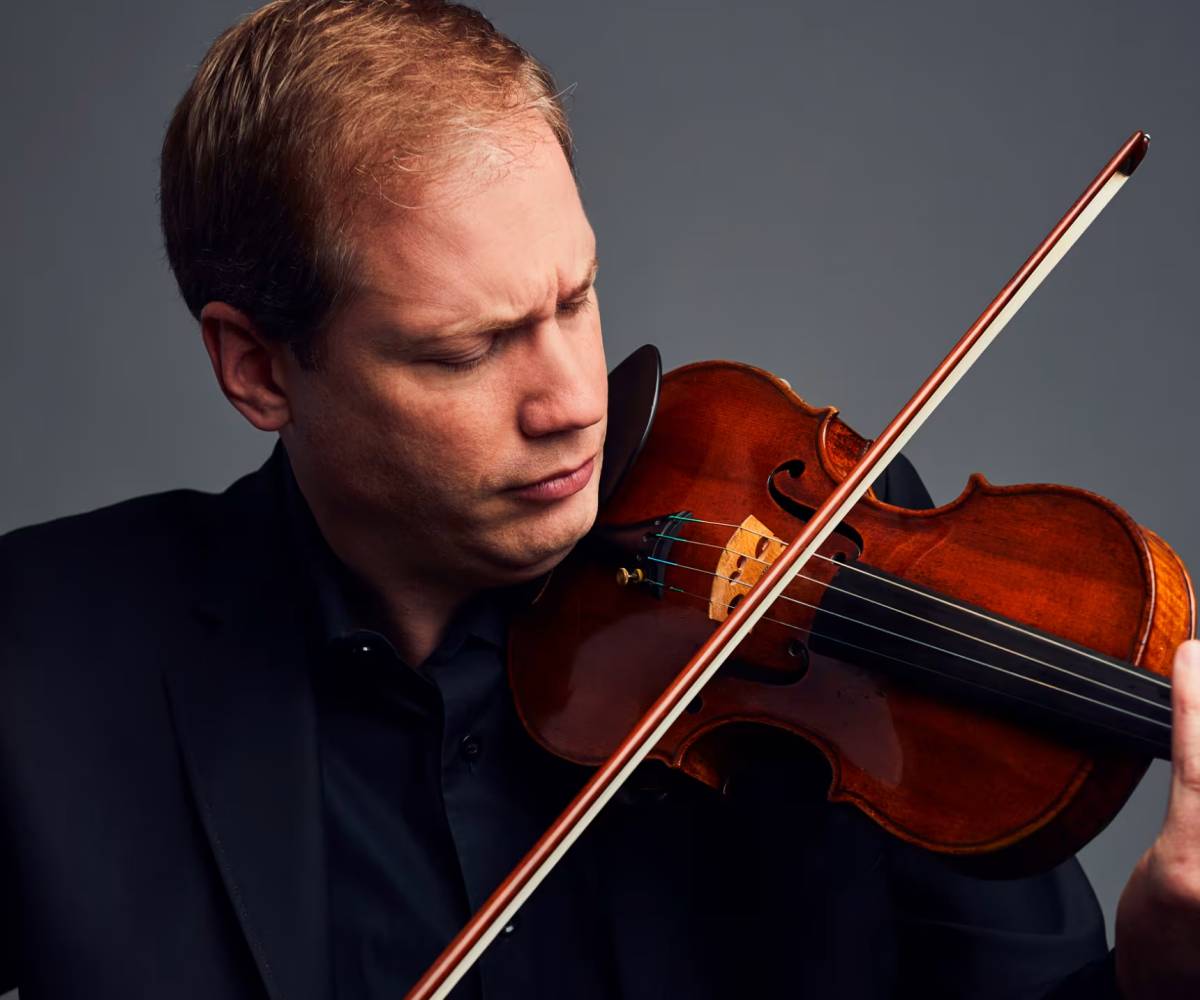
Director of the Temerty Orchestral Program
On the heels of stepping down as AD of TSM, Crow was announced as the Director of the Temerty Orchestral Program at the Royal Conservatory of Music’s Glenn Gould School. He’ll begin that position in September 2026.
“I’m very excited,” Jonathan says. “And the Royal Conservatory doesn’t have a regular conductor.”
As he notes, the RCM brings in four conductors to lead the Royal Conservatory Orchestra over the course of each year.
“The students there get to work with real professionals in the field.” That includes people like Tania Miller and JoAnn Falletta.
Treated as professional musicians, it’s another program that looks to help students in that leap from student to professional. The RCO works with each conductor for only a week.
It’s a good practice from a performance point of view, but it left a gap.
“That means there’s not somebody necessarily looking over the repertoire,” he points out. Hence, the creation of his new position with the school. He’ll be filling the need for someone to oversee the repertoire over the whole year, and make sure it fulfills the students’ requirements.
He’ll also be taking in a few select students.
The Toronto Symphony Orchestra & Other Projects
When LV spoke to Jonathan, it was just after the TSO’s 2025/26 season opening night. It was his first time back with the orchestra since his summertime sabbatical.
“That was really nice,” he says. He spent much of the summer travelling. “I don’t really want to live in airports.”
He’s also an active member of the New Orford String Quartet, which recently kicked off their season in Kingston at the Isabel Bader Centre with pianist Jaeden Izik-Dzurko. It was also the first concert with cellist Joseph Johnson, who’ll be performing with the quartet this season. The ensemble takes up a residency at Western University in November for several weeks of intensive chamber music.
“We love working together,” he says.
As a soloist, he’s focusing on the Mendelssohn violin concerto. He’s performing it with the Toronto Symphony Orchestra and conductor Peter Oundjian on October 2, 3 and 4, and it will be a continuing theme for him through the whole season, including several other appearances to perform the work throughout Ontario.
It’s an enviable schedule.
“I can’t really complain. I’m really happy with what I get to do,” he says. “I must admit I’m pretty lucky.”
Are you looking to promote an event? Have a news tip? Need to know the best events happening this weekend? Send us a note.
#LUDWIGVAN
Get the daily arts news straight to your inbox.
Sign up for the Ludwig Van Toronto e-Blast! — local classical music and opera news straight to your inbox HERE.

- PREVIEW | Classical Guitarist Alexandra Whittingham Makes Toronto & Ontario Debuts - March 13, 2026
- PREVIEW | Soundstreams Presents Quatuor Bozzini: With Strings Attached - March 13, 2026
- INTERVIEW | Award-Winning Librettist & Against The Grain AD Royce Vavrek Talks About Canuck Cantatas - March 13, 2026