
Artists are stubborn creatures, resisting control by anyone but themselves.
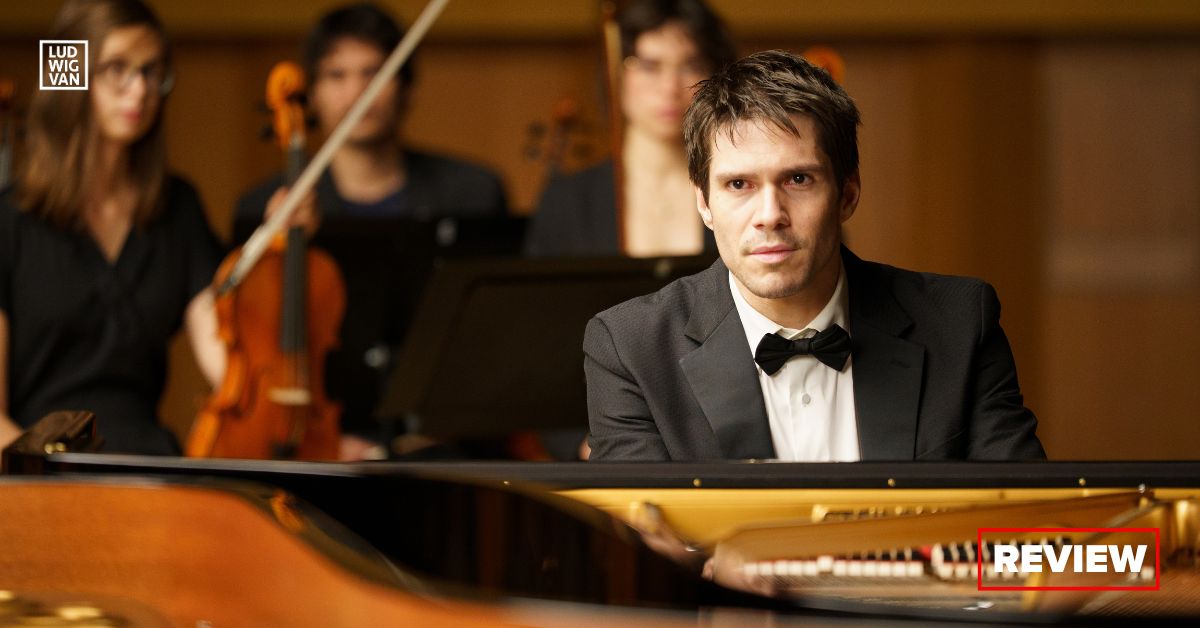
In Two Pianos, directed by Arnaud Desplechin and co-written by Kamen Velkovsky, Mathias Vogler (François Civil) is a pianist returning to perform in his hometown of Lyon at the invitation of his former mentor, Elena Auden (Charlotte Rampling), after a long stint hiding away and establishing a career in Japan.
“I just want to escape,” he tells his manager Max (Hippolyte Girardot).
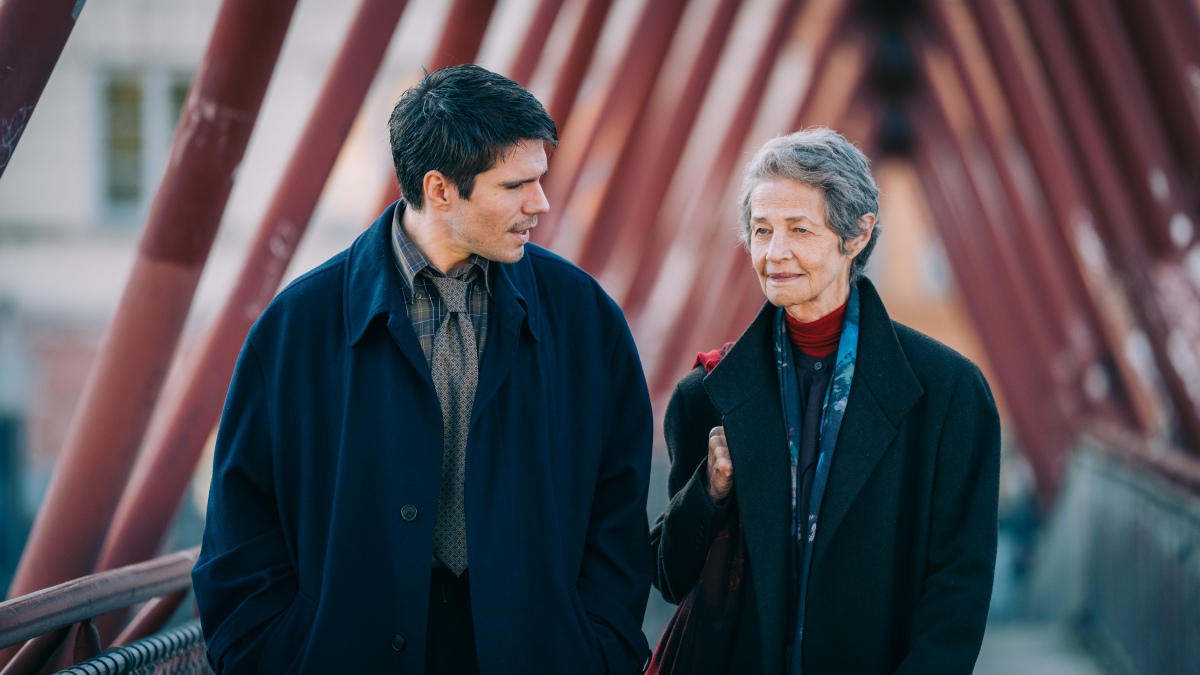
Not long after he arrives does he learn that Elena, despite the icy, steely façade that Rampling imbues in all her characters, is suffering from early signs of dementia, and the concerts they are set to perform will be her last — if either of them can get through them without breaking down.
For Mathias, who, at first, red pencil in hand to mark up a score, is completely committed to his craft, an encounter with a former lover, Claude (Nadia Tereszkiewicz), causes him to suddenly collapse, as though he has encountered a ghost, and relapse after years of dedicated sobriety.
In fact, rather than Mathias, the film opens with Claude, and her husband Simon (Jeremy Lewin), who engrossingly, and entertainingly, tells her a story about the importance of faith, which becomes relevant later on when Simon suddenly dies, leaving a gap for Mathias to fill.
Themes & Ideas
Desplechin’s previous films, such as A Christmas Tale and My Golden Days, are notable for the way they seamlessly intertwine various characters and plots without feeling contrived, and despite its abrupt narrative progressions, Two Pianos, with its amiable tone and autumnal palette provided by Paul Guilhaume’s cinematography, achieves a similar feat.
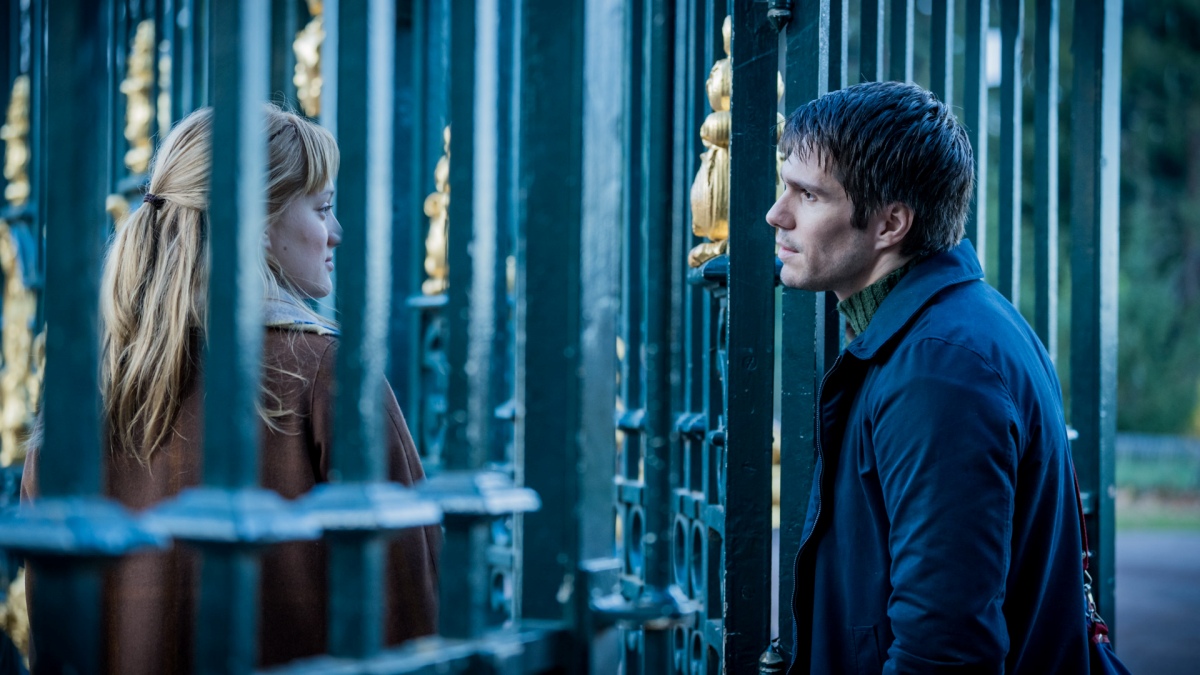
With Claude, the audience is privy to the way that one experiences grief as a widow, and the internal conflict of being in love with and desiring two men simultaneously.
With Elena, we see the ways that an artist, suffering from aging and the looming presence of death, resists losing possession of the very gift that they have used to make a life.
But it is Mathias who receives the most development, who we watch struggle to perform at the piano — “Rubato,” Elena says, “Not legato” — who can’t resist taking another shot, who becomes obsessed with following around the son (Valentin Picard) who uncanny resembles him.
Art & Artists
As in most glimpses into the world of art, the most compelling scenes are the ones that occur in the periphery: as when a young cellist, who is a long-time admirer of Mathias, tells him how important it was to see him play, then seeing him again observing Mathias’ stage fright, the rose-coloured lenses of this man of greatness fading away in real time.
Or, during a concert, when Mathias’ paternal impulse gives Elena the necessary confidence to move past the nerves.
“The world no longer awaits me,” Elena says to Mathias, before receding from the narrative.
The price it exacts on the artist to perform — to sustainedly perform at a certain level for decades — is steep and full of sacrifice, one whose sense of fulfillment can only come from within, and it is in those moments, few and far between, where Two Pianos kicks into gear.
Final Thoughts
Although there is much to respect about Desplechin’s humble vision, the film’s intentions are fixed on the matters of the heart, to the plot about the return of a lover and the discovery of another life that one can live — the life of fatherhood — which, terribly familiar territory, is easy to lose interest in, can give it the look and feel of a film from a decade ago.
Two Pianos, stuffed with enough clichés gone unsubverted nor developed in any significant way to make us view them anew, and instead provides a comfortable, predictable tale that sees a handful of wounded souls contending with the things left unsaid and possibilities left unexplored.
“I expected better than mediocre,” Elena tells a hungover Mathias after their first rehearsal.
Audiences, as stubborn as artists, seeking serious investigations of love and music, will, by the end of the film, feel similarly, as though hearing a minor concerto played on a piano out-of-tune.
The film will be released theatrically in France on October 15, and hopefully make its way to North American streamers in the coming months.
By Nirris Nagendrarajah for Ludwig-Van
Are you looking to promote an event? Have a news tip? Need to know the best events happening this weekend? Send us a note.
#LUDWIGVAN
Get the daily arts news straight to your inbox.
Sign up for the Ludwig Van Toronto e-Blast! — local classical music and opera news straight to your inbox HERE.

- INTERVIEW | Violinist— And Now Filmmaker — Lara St. John Talks About Dear Lara - March 2, 2026
- CLASSICAL CHARTZ | The Top Ten Classical Music Albums For The Week Of March 2 To 8 2026 - March 2, 2026
- CLASSICAL CHARTZ | The Top Ten Classical Music Albums For The Week Of February 23 To March 1 2026 - February 23, 2026