
You’ve got to hand it to Agnieszka Holland, the veteran award-winning director who spent a formative portion of her cinema life in the Czech Republic, the home of Janacek, Dvorak and Kafka.
Many people have aspired to make a film about Franz Kafka but the few attempts — Steven Soderbergh’s misfire Kafka (1991) in particular — have made a mess of it. The mistake is in conflating the writer’s phantasmagoric tales with his mundane reality. Merging the two is impossible.
Franz Kafka himself attempted it in his life, and failed.
Working for an insurance company by day while writing bizarre visionary tales by night is hardly the stuff of great cinema. But Holland saw something else in Kafka’s life, the man behind the polite, nearly blank mask.
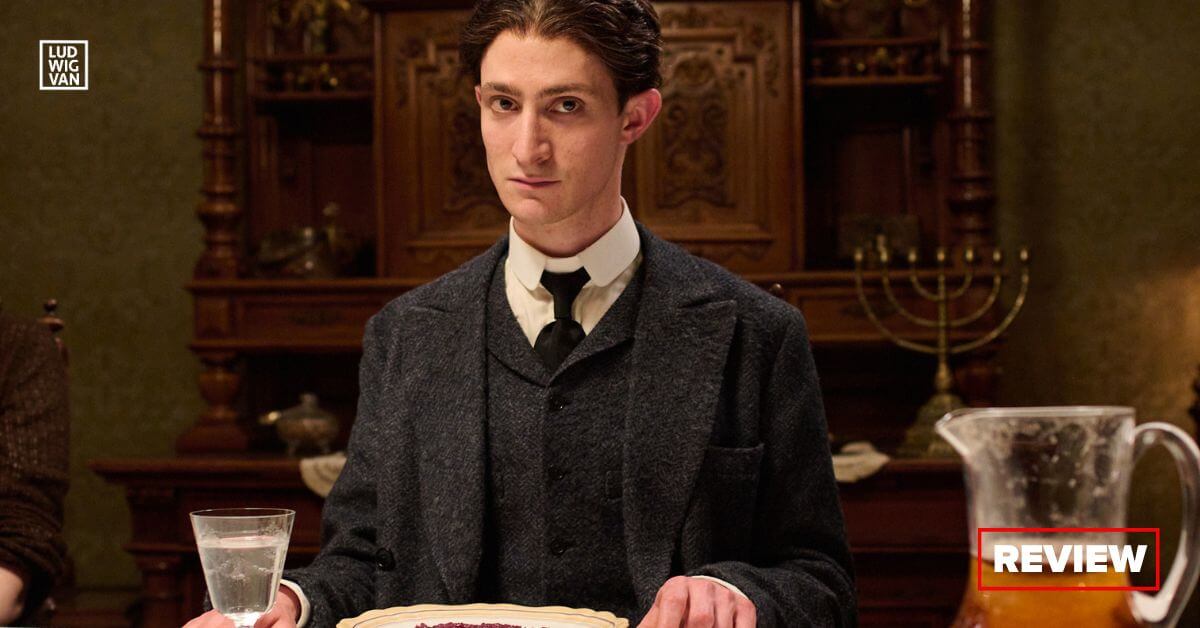
While affecting an objective tone, her direction and the script by Marek Epstein for Franz is clearly sympathetic towards someone of profound inner feelings who tried to make his way in the world with the least amount of fuss and bother. The film emphasizes the author’s difficulties with his father, an overbearing but immensely successful businessman, who never understood his son.
Kafka, The Man
Holland’s film, though occasionally strident and definitely arty, does convey Kafka’s situation rather precisely. While his father was a hard man to like, Franz Kafka did have three sisters who loved and supported him emotionally, especially Ottilie. The film makes that clear, and also shows that he derived enjoyment from his group of writer friends, which included the talented and successful Max Brod and Franz Werfel.
It’s clear that the sober persona that Kafka adopted didn’t conceal his dark wit from his friends. The film follows the historic record, mainly chronicled by Brod, which related that Kafka’s darkest fantasies were considered to be immensely funny to his friends during his lifetime.
In a brilliant scene, Kafka reads one of his stories, In the Penal Colony, which Holland illustrates in excruciating detail. Here, she changes the film’s tone, allowing for the gruesomeness of Kafka’s vision to come to the forefront.
She shows that the audience’s response to such a tale was marked by as much rejection as acceptance. It’s made understandable that Kafka’s writing might have been acclaimed by some, but his work was hardly a public favourite during his lifetime.
The Film
Franz is constructed in a series of discrete scenes that move seamlessly back and forth in time from Kafka’s youth to adulthood to demise and beyond, into contemporary scenes that show how his reputation is exploited in today’s Prague.
This is Holland’s directorial coup: she sticks to the true nature of Kafka’s life and work while also offering the ultimate irony, that his reputation is far greater than anything even the great fabulist spinner of tales could have imagined. By moving with rapidity throughout Kafka’s time — and today’s — we are offered a darkly comic equivalent of his life without needless “Kafkaesque” pretension.
Holland doesn’t avoid dealing with Kafka’s rather unsuccessful romantic life. Franz Kafka is played with a quiet charisma by Idan Weiss, who has the appearance of an appealing intellectual, which would be attractive to certain women. Among them was Felice Bauer (Carol Schuler), an empathetic intelligent woman and a relative of Brod’s; her flirtatious best friend Grete (Gesa Schermuly) and the journalist Milena Jesenka (Jenovefa Bokova).
Clearly awkward with women but desirous of them, Kafka did spend time with prostitutes — and they are depicted in the film. Ultimately, Kafka’s failure to marry may be ascribed to his inability to feel comfortable in his own skin, or next to anyone else’s.
Kafka Today
The least successful element in Franz may be the contemporary depictions of Kafka’s reputation being exploited in kitschy ways by the Czech government and Prague entrepreneurs.
While undoubtedly correct, it doesn’t contribute to a thoughtful portrayal of the brilliant prescient writer, though it does play with an irony that might have appealed to the author.
What does work — and marvelously well — are the set designs and costumes for the film. They truly evoke the final days of the Austro-Hungarian Empire and the beginnings of Czechoslovakia.
Final Thoughts
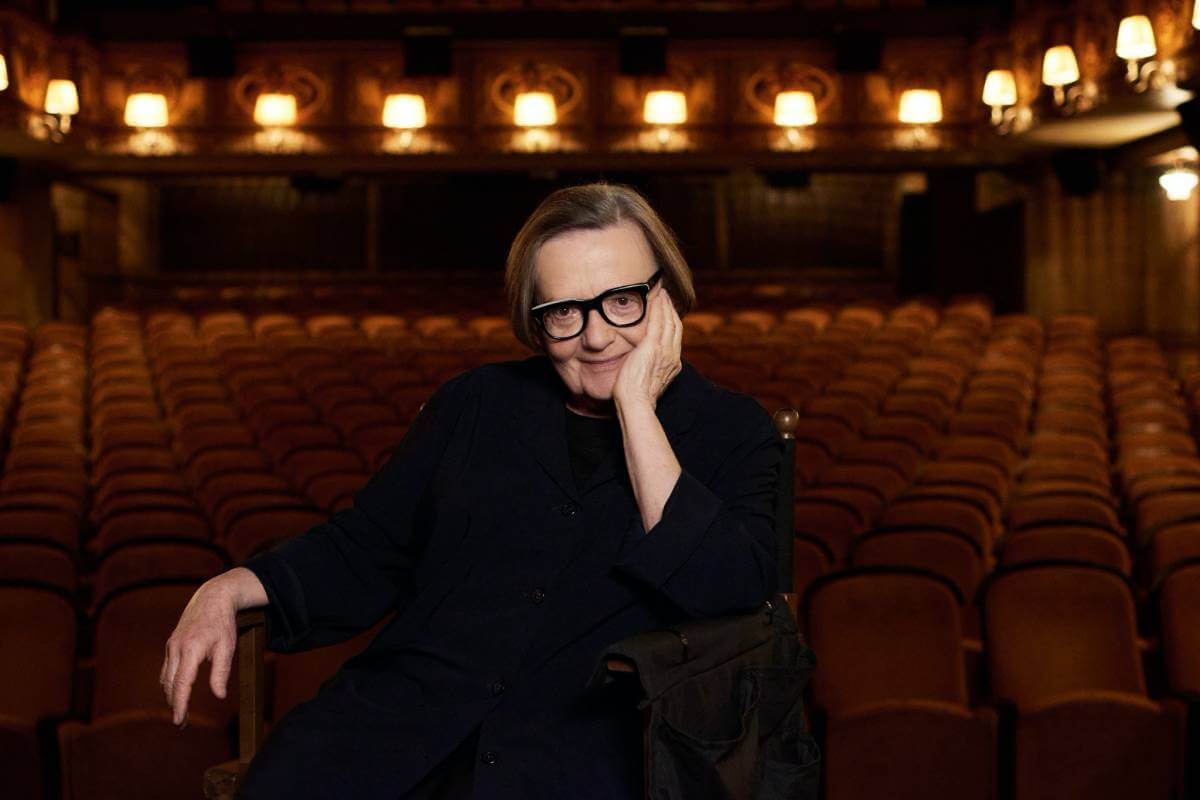
For Agnieszka Holland, a pioneer female director, Franz is a welcome addition to her filmography.
The wonderful director of such European classics as Europa Europa (1990), In Darkness (2011) and Green Border (2023) has done it again. At the age of 76, she has years to go — one hopes — to add to her prestigious directorial efforts.
The film has been chosen to represent Poland at the 2026 Oscars as their entry for the Best International Feature Film.
By Marc Glassman for Ludwig-Van
Are you looking to promote an event? Have a news tip? Need to know the best events happening this weekend? Send us a note.
#LUDWIGVAN
Get the daily arts news straight to your inbox.
Sign up for the Ludwig Van Toronto e-Blast! — local classical music and opera news straight to your inbox HERE.
- CLASSICAL CHARTZ | The Top Ten Classical Music Albums For The Week Of March 16 To 22 2026 - March 17, 2026
- SCRUTINY | Love and Immigration Converge In Nautanki Bazaar’s An IMM-Permanent Resident - March 16, 2026
- CLASSICAL CHARTZ | The Top Ten Classical Music Albums For The Week Of March 9 To 15 2026 - March 9, 2026