
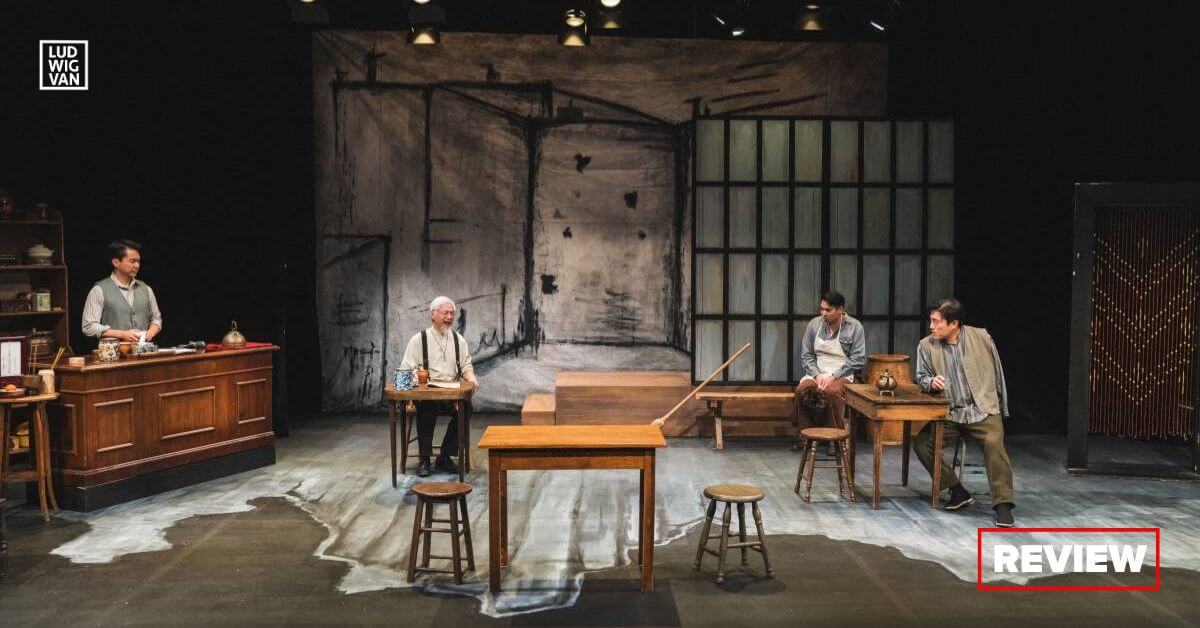
Renaissance Theatre/ Bachelor Man, written by Winston Kam, director/rewrites, Brenda Kamino, associate director, Diana Belshaw, closes Sept. 14. Tickets here.
Bachelor Man is the kind of play where the first act sets up the characters and the situation in such a way, that when you get to the intermission, you’re ready for the playwright to take you somewhere.
Happily, Winston Kam does just that in spectacular fashion. The second act of Bachelor Man is absolutely gripping theatre.
Background
Bachelor Man is not a new play.
It first saw the light of day in 1987, when it premiered at Theatre Passe Muraille directed by a very young Peter Hinton in a landmark production. It was the first time that an all-Asian cast had been presented in a main stage production by a Toronto theatre.
We owe this revival to actor/playwright Andrew Moodie and actor/director Brenda Kamino, the cofounders of the cleverly named Renaissance Canadian Theatre Company, whose goal is to give worthy plays a second showing and thereby, to quote their mandate, both cherish the rich legacy of Canadian theatre artists and also help us better understand who we are as a people.
That last part of the mission statement is very important in terms of Bachelor Man.
Real Canadiana
We Canadians like to think of ourselves as a Kumbaya nation, very open and inclusive. but here are some hard truths.
Japanese internment camps during World War II. Residential school round ups of indigenous children. Black segregation in Nova Scotia that led to the infamous Viola Desmond incident. That notorious “None is too many” response by a senior immigration official to global pressure to accept Jewish refugees fleeing Nazi Germany. And the shameful An Act Respecting Chinese Immigration of 1923, more commonly known as the Chinese Exclusion Act.
In other words, Canada has a lot to answer for, but it is the Chinese Exclusion Act that is the wellspring of Bachelor Man.
What Is A Bachelor Man?
Within the Chinese community, The Chinese Exclusion Act is known as “Humiliation Day” because, ironically, it came into effect on July 1, 1923, when Canada celebrated Dominion Day, the country’s national holiday.
The Exclusion Act was unapologetically and openly racist because it allowed only certain classes of Chinese immigrants into the country, pitifully few in fact. Government officials. Merchants. Foreign students.
What was missing from this list were the wives and children of the Chinese men who were living in Canada, forcing them to become unwilling bachelors.
Hence, the all-important setting of Bachelor Man.
The play takes place in John’s Teahouse in Toronto’s Kensington Market on July 1, 1929.
Designer Jackie Chau has transformed the Tarragon stage into a very atmospheric and evocative space. The moment you walk into the theatre you are confronted by the stark reality of the teahouse.
The Characters
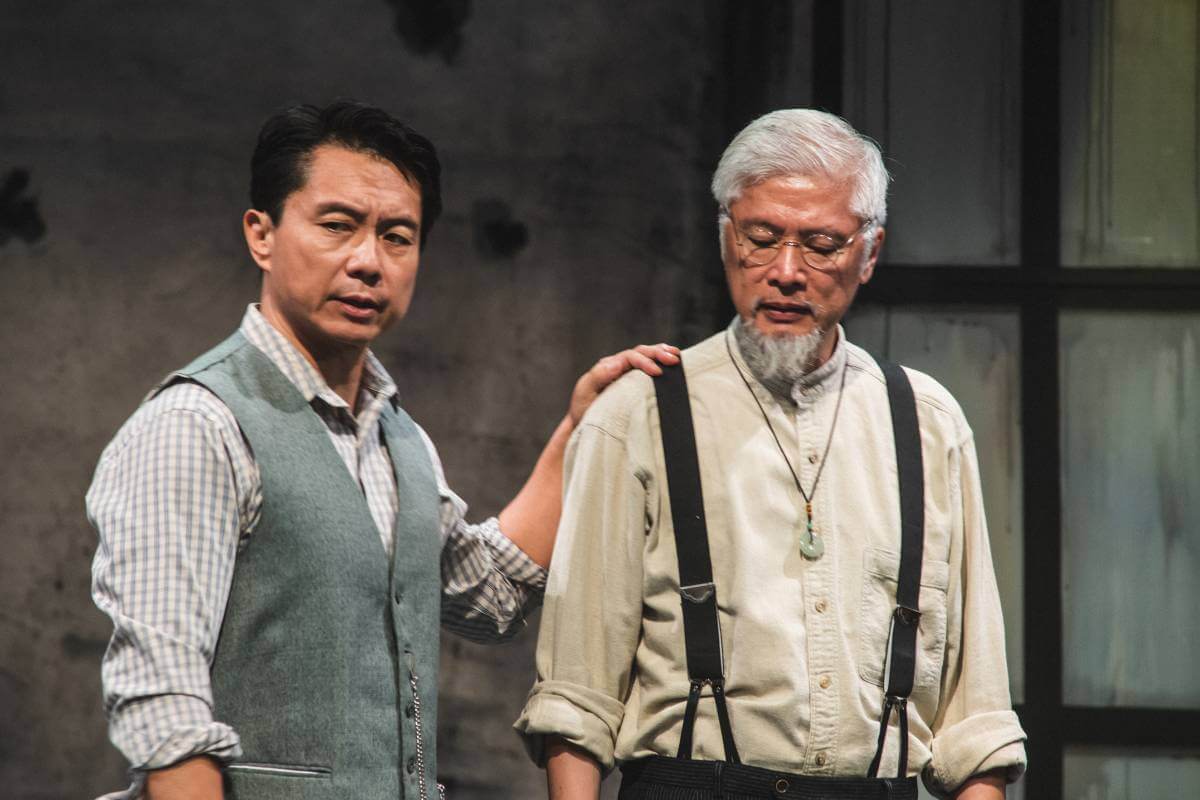
John (George Chiang), the owner of the teahouse, rents rooms to three other men who live on the floor above.
The elderly Grandad Lian (Robert Lee) is the traditionalist who spouts Confucian homilies as a guide for living and preserving traditions. The scholarly Kung (Oliver Koomsatira), who is half Chinese half Canadian, is a political activist hoping to pressure the government to reverse The Exclusion Act. Huang (Ziye Hu) is openly involved in Man-Love or homosexual relationships.
As for John himself, he seems to have connections with the shadowy secret Hong or Tong societies that run Chinatown, and from whom he takes his orders. As someone remarks, John is the only one who has any money. Young Asi (Damon Bradley Jang) is John’s helper in the teashop.
Other than John and Asi, we never know where the other men work.
The last bachelor is the troubled alcoholic veteran Kao (Sean Baek), who lost an arm fighting in World War I. Even though he was born in Canada and fought for his country, he is still not regarded as a citizen.
There are two women in the cast.
Young Madame Wu (Renée Wong) is the wife of the much-disliked coffee shop owner next door. Queenie (Brenda Kamino) is the tough as nails old whore who roams the streets looking for clients, and would like John to rent her a room.
How The Play Unfolds
Because it’s Dominion Day/ Humiliation Day, the men are boycotting the festivities and remaining indoors.
The first act of Bachelor Man is dominated by desultory conversation between the men, mostly raging against the false promise of Gold Mountain, their name for Canada. John reads a sorrowful letter from his distant wife. They exercise by practising tai chi. They castigate Kung for failing to write the promised letter to Ottawa against the Exclusion Act.
It is the angry bitter Kao, however, who drives the act with his forceful energy, and leads the direction of the conversation.
There are two important theatrical devices in the first act.
The first is that the character of Asi breaks away from time to time to give us straightforward background narration, which jars us to remember what has forced these men to be alone in this teahouse without families on July 1, 1929.
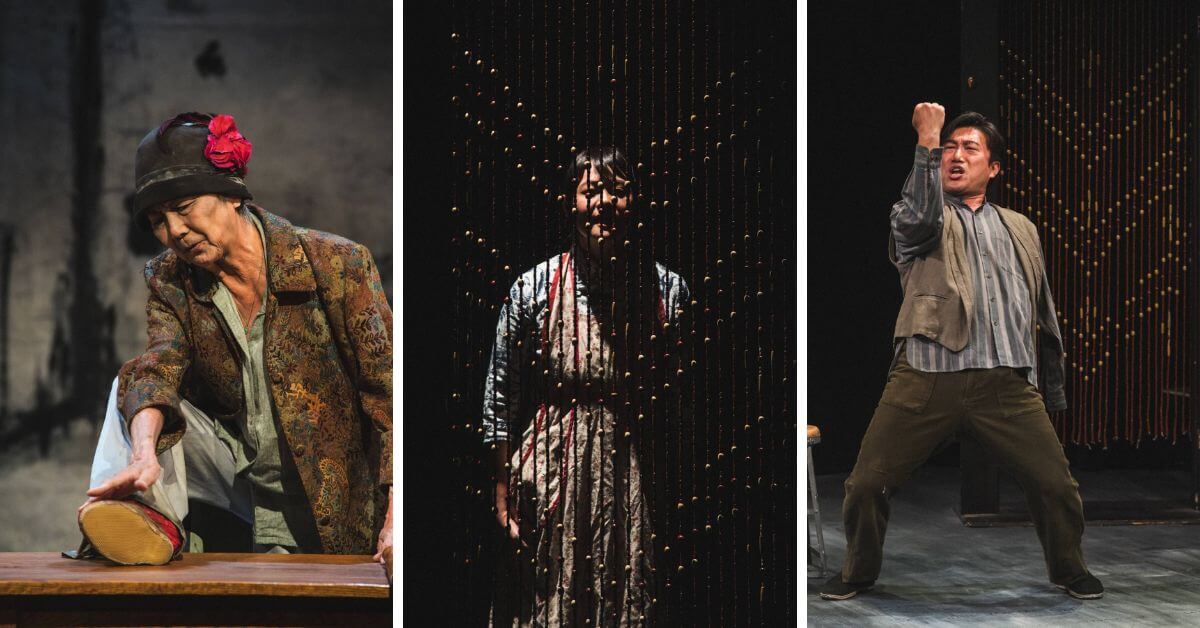
The second is the plaintive lyrics about the plight of women sung by Madame Wu in an original song by Allen Cole, which also occurs from time to time. First she is only a dark image in silhouette, but later becomes barely visible behind a ribbon curtain. Her last line is being a woman is a bitter thing.
The Second Act
I said at the beginning that the playwright captured our interest in the first act, and we were waiting to see where he was going to take us, but where he took us was simply impossible to predict.
This act is filled with surprises, most of them resolutely unpleasant, and which I will not give away.
Suffice it to say that after the meanderings of the first act, the second act is theatrical assault, even emotional abuse. Only someone with a heart of stone would not be deeply affected by playwright Kam’s story arc.
In general terms, here are some of the things that happen.
Hurtful personal stories are told, and traumatic secrets are revealed. Relationships shift and new alliances are formed.
By the end of the act, several of the characterizations have been deepened and enriched, which has led to changing perceptions on the part of the audience.
And a dreadful real-life incident occurs.
There are a multitude of themes swirling around, yet none of them conflict with one another, and all of them are important. Finding one’s personal identity and community identity. Coping with trauma, both self-induced and that caused by outside forces. Dealing with trust issues within this new ad hoc family
We know that Gold Mountain had not been kind to these forced bachelors, but Kam does not spare us the cruelties of Chinese village life either.
Bachelor Man is also a play about women, particularly their suffering. Wives are disparagingly referred to as “rice cookers”. A “big happiness” is the birth of a male child; a “small happiness” is the birth of a female child.
The Actors
Despite some unevenness among the actors, Bachelor Man is an ensemble piece and that holds true. Nonetheless, there are two standout performances.
We only hear Brenda Kamino’s Queenie off stage in the first act, but when she makes her actual appearance in the second, she dominates the action with a magnificent performance. Tough, fearless, truthful, manipulative, yet never without compassion, Kamino’s Queenie definitely deserves consideration when award season comes along.
Similarly, Sean Baek lifts the raging Kao off the stage. It would be so easy to play a drunken bitter one-armed man on one note, but Baek finds Kao’s humour, even his sympathetic side. The actor probably goes through more mood changes than any other character on stage. He is also the most physical in terms of movement despite his physical disability, which in turn makes him the most charismatic.
Both Robert Lee who plays Grandad and Kamino who is Queenie were in the original 1987 production. Kamino was far too young to play Queenie then, but now more age-appropriate she knocks it out of the park. Unfortunately, we don’t know the role that Lee had, but, nonetheless, two actors from the original production in a remount 38 years later is certainly worthy of a mention.
Perhaps Kamino as director was able to bring out the richness in the characters because she knows the play so well from the inside.
The Importance Of Bachelor Man
According to the program, Winston Kam has recently passed away and in fact this production is dedicated to his memory.
I wonder what he would think of Canada’s newly restrictive immigration laws. The Chinese Exclusion Act was a result of the pressure from white workers worried that Chinese workers would take away their jobs. Similar pressures played a part here.
Renaissance Theatre’s co-artistic directors feel that Bachelor Man is very relevant in today’s world, particularly with the rising tide of prejudice and intolerance on so many levels and against so many ethnic minorities.
Winston Kam’s play reminds us of our not so glorious past with a hope that we will find a better future.
Are you looking to promote an event? Have a news tip? Need to know the best events happening this weekend? Send us a note.
#LUDWIGVAN
Get the daily arts news straight to your inbox.
Sign up for the Ludwig Van Toronto e-Blast! — local classical music and opera news straight to your inbox HERE.


- SCRUTINY | Mirvish’s Shucked Is Loud, Brash & Unapologetically Corny - March 10, 2026
- SCRUTINY | The National Ballet of Canada Opens Winter Season with Classical Purity and Contemporary Power - March 2, 2026
- SCRUTINY | Mirvish’s Some Like It Hot Celebrates Broadway Glam Updated For 2026 - February 24, 2026