

The Cincinnati based Poiesis Quartet stunned the Banff International String Quartet Competition’s (BISQC) veteran audience and distinguished jury with an incontestable victory as the finest ensemble at the end of a superb week of music making by nine groups from realms as disparate as Seoul, Salzburg, Paris and Hong Kong.
Poiesis, unreservedly out in its visual presentation, particularly the shaved head violist Jasper de Boor, who wore stunning dresses in several concerts, displayed their technical and aesthetic prowess in five quite distinct performances. Though their focus is on 21st century compositions, Poiesis acquitted themselves well while playing Haydn’s String Quartet in D Major, Opus 71, No. 2 and Brahms’ Quartet No. 3 in B Flat Major, Opus 67, showing a discerning crowd that their commitment to chamber music is deep and serious.
The prize-winning announcement made at the competition’s conclusion on Sunday night, August 31, was greeted by a heartfelt standing ovation at the Banff Centre for Arts and Creativity.
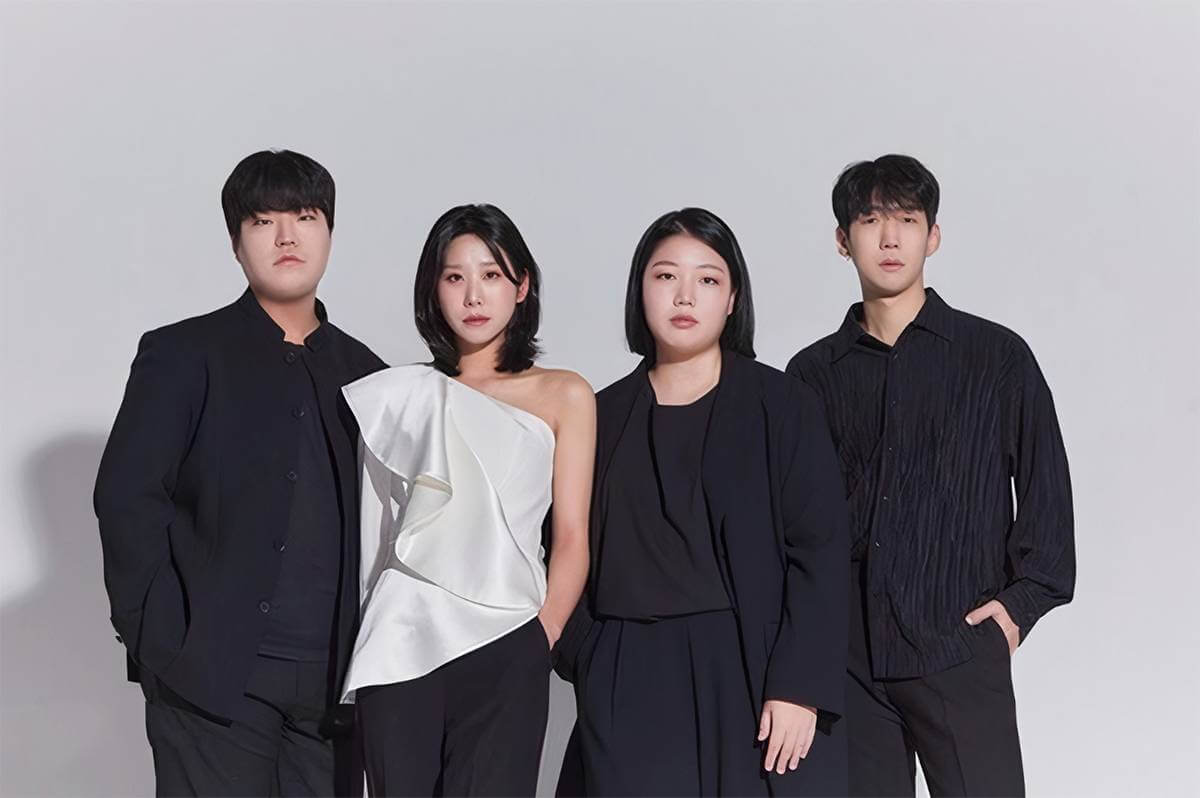
The Final Round
Poiesis were joined for the Competition’s fifth and final round by two other remarkable ensembles, second prize winning South Korea’s Arete, which received $12,000 (CAD), and the Japanese/Chinese Kairi, which got $8,000 as third prize winner, and an additional $4,000 for best performance of a Haydn quartet.
The remaining ensembles who didn’t make it to the final round received the $5,000 Christine and David Anderson Career Development Prize.
The other rounds of the week-long event, in which all ensembles participated, consisted of a Haydn and 21st century piece in a deliberately challenging and mismatched duo; a 19th century Romantic composers’ sequence; a premiere of a piece by acclaimed Canadian Kati Agocs (interpreted differently by each); and a Beethoven or Schubert allegro accompanied by a 20th century composition (this reviewer’s favourite).
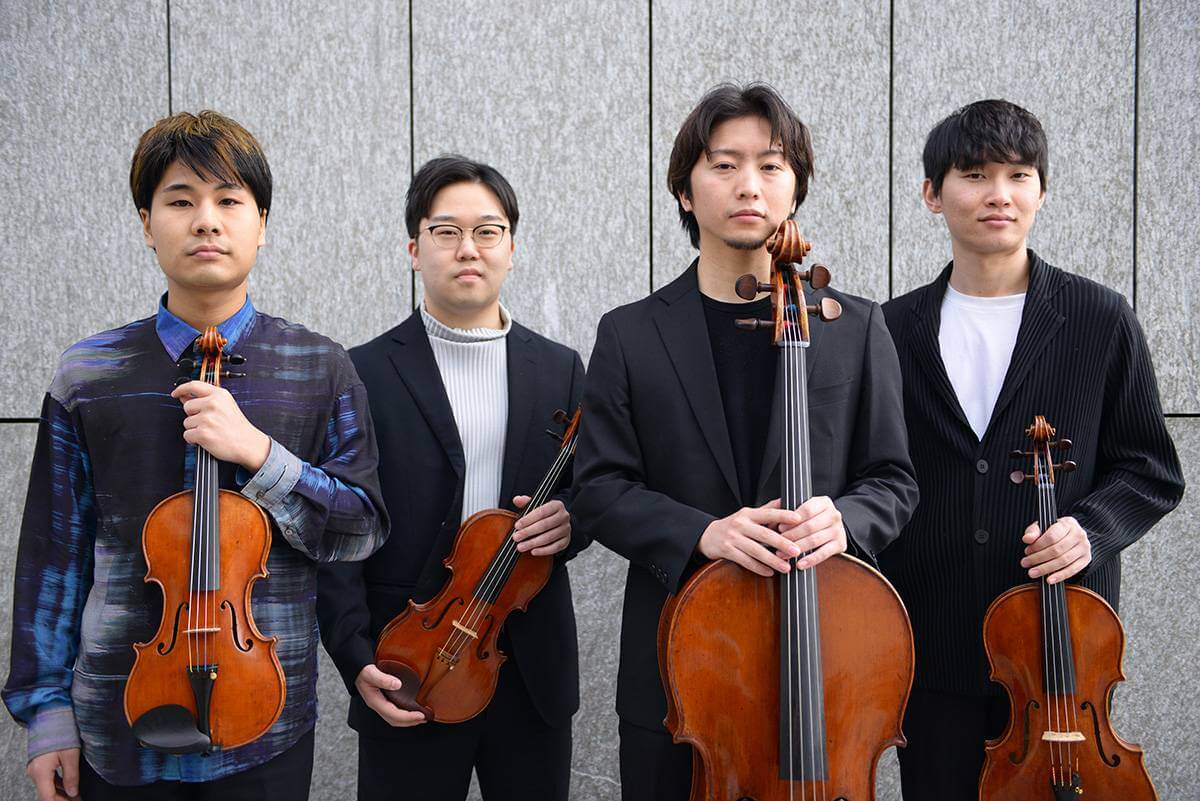
First Prize Package
The winning package for Poiesis is estimated as being worth $500,000, one of the grandest prizes in chamber music worldwide. It includes:
- $25,000 (Canadian) in cash;
- Winner’s Concert Tours in North America handled by MIKI Artists and Europe by Kozertdirektion Hamplin;
- a recording produced by the Banff Centre;
- a residency with the Esterhazy Foundation, including concerts at Haydn Hall in Eisenstadt and the Lucerne Festival;
- a Southern Methodist University Peak Fellowship Ensemble-in-Residence Prize, including a one-year paid visiting residency at the Meadows School involving performances, coaching and mentorship;
- a two-week residency at Banff, and an opportunity for a two-week Chamber Music Residency at the English Britten Pears Arts.
The Poiesis Quartet performs the last movement of Coleridge-Taylor Perkinson’s String Quartet No. 1 “Calvary” at the final round of the 50th Fischoff National Chamber Music Competition at University of Notre Dame’s DeBartolo Performing Arts Center (DPAC) on May 13th, 2023 in South Bend, IN:
The Poiesis Quartet
The Poiesis Quartet have garnered first prize awards before this one, including the Fischoff National Chamber Music Competition in 2023 and the 2024 Concert Artists Guild Competition, but they were clearly emotional over their victory at Banff.
Speaking at a press conference at Banff, the group, which consists of violinists Sarah Ying Ma and Max Ball, violist Jasper de Boor and cellist Drew Dansby, responded well when the Violin Channel’s CEO Geoffrey John Davies asked about the meaning of their prize for the LGBTQIAS2 + community.
Sarah Ying Ma was in tears as she stated, “There was a very long period of my life where I did not feel like I would ever have a performing career, largely because of my LGBTQ identity, and my upbringing. There was a lack of resources when I was as a child — just a wide variety of different issues that were not really within my control. So many people I know have left the industry because of those same reasons.
“This is literally something I just never thought I would be doing. Four years ago, I was ready to just quit music. Now, I feel that I’m somewhere I belong.”
Although Poiesis can play Haydn and Mozart, they want to pursue making work by contemporary composers. Their deliberately challenging final round compositional selections consisted of pieces they chose by composers of colour confronting modern issues while referencing the past.
Beginning with the rhythmic and danceable string quartet Pisachi by Jerod Impichchaachaaha’ Tate, it finished with their first commission, the String Quartet #7 by Canadian Kevin Lau. In their quite philosophical notes, Poiesis admits to creating a program “which focuses on relevant and timely works…(that) explore the innately human process of healing from a contemporary lens.”
Poiesis writes in their Festival notes, “our primary mission as performers and programmers is to introduce and connect a wide range of audiences to the string quartet through artistic storytelling.”
A Changing Landscape
At the conference, Ming elaborated, “We really care about the music that we play, the repertoire. Being able to present the program here of all 21st century works by composers of colour is important. We hope to use our platform now to continue that work.”
Ming continued, “Now there’s so much space for diversity — not necessarily just representation, but expansion, new understandings, and integrating different traditions into the music and our lives. I think it goes so much deeper than just visibility.
“It’s about changing education, changing the repertoire that gets played, changing the way things get programmed. And it’s incredible that we could do that in the final round of this competition. I can’t even explain what it means to be able to continue doing that in the future.”
Perhaps understandably, BISQC Artistic Director Barry Shiffman was articulate about the ensemble and its meaning.
“We haven’t had a group that wears their gender as publicly and theatrically as Poiesis before. It was a really interesting journey for us at the competition in seeing how the audience responded. There were lots of conversations about their photos, and [as the season passed me by] a diminishing amount of conversation about the look, and an increasing amount of conversation about the music. That was what we hoped would happen, and I think our audience was extraordinary in how quickly it didn’t seem to be the discussion point.”
Ming sums it up about the future of chamber music in an evolving world.
“It’s about changing education, changing the repertoire that gets played, changing the way things get programmed. And it’s incredible that we could do that in the final round of this competition. I can’t even explain what it means to be able to continue doing that in the future.”
By: Marc Glassman for Ludwig-Van
Are you looking to promote an event? Have a news tip? Need to know the best events happening this weekend? Send us a note.
#LUDWIGVAN
Get the daily arts news straight to your inbox.
Sign up for the Ludwig Van Toronto e-Blast! — local classical music and opera news straight to your inbox HERE.

- CLASSICAL CHARTZ | The Top Ten Classical Music Albums For The Week Of March 9 To 15 2026 - March 9, 2026
- SCRUTINY/INTERVIEW | The Leonkoro Quartet’s Premiere Performance Delights Music Toronto Audience - March 9, 2026
- INTERVIEW | Violinist— And Now Filmmaker — Lara St. John Talks About Dear Lara - March 2, 2026