
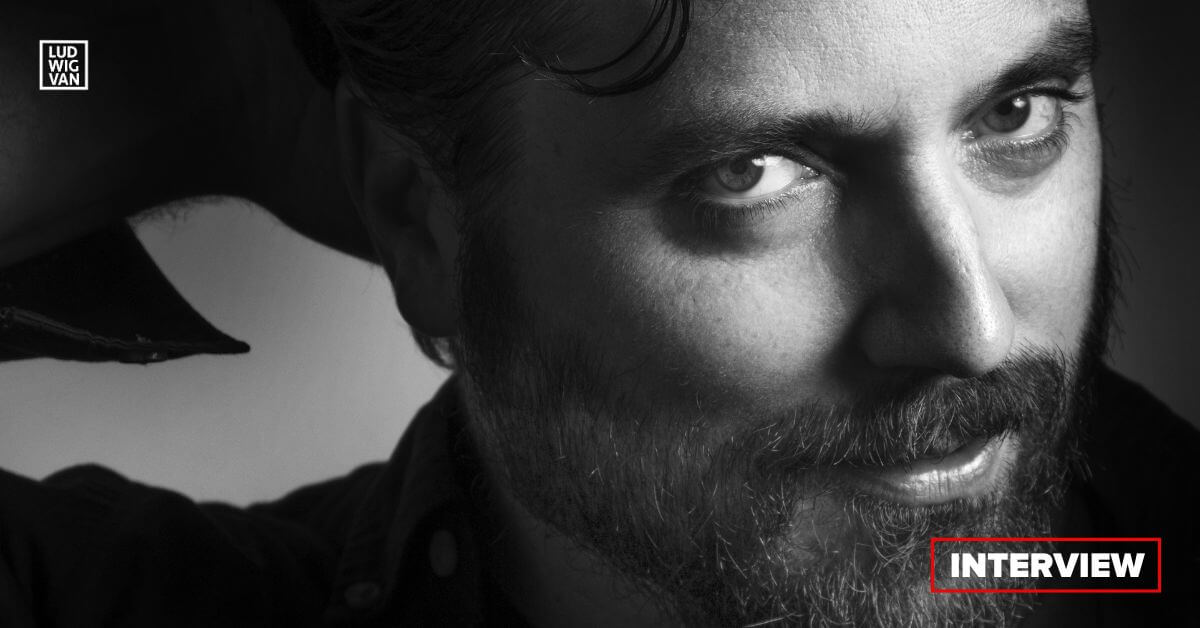
Composer Andrew Staniland is releasing a new album he’s dubbed classical crossover. The Laws of Nature was created using innovative electronic technology that the University of Toronto graduate has been developing for several years.
Staniland’s music takes elements of classical, cinematic, and electronic music, blending them into a distinctive sound.
Andrew Staniland
Born in Red Deer, Alberta, Staniland’s first foray into music came via the guitar. He went on to play in heavy metal bands as a teenager. He then made the switch to jazz, which he studied at the then Grant MacEwan College (now MacEwan University) in Edmonton. He studied classical guitar performance at the University of Lethbridge, and followed up with a Master’s and Doctorate degree in composition at the University of Toronto.
His music has been performed across the globe, and has been commissioned by the Gryphon Trio, Les Percussion de Strasbourg, Germany’s Flex Ensemble, the National Arts Centre Orchestra, and American poet and activist Jessica Care Moore, among others.
Staniland served as the Affiliate Composer for the National Arts Centre Orchestra from 2002 to 2004, and held the same position with the Toronto Symphony Orchestra from 2006 until 2009. In between, he was composer-in-residence at the Centre de Création Musicale Iannis Xenakis in Paris in 2005.
He’s been nominated for three JUNO Awards, and has taken home ECMA Awards, along with the 2016 Terra Nova Young Innovators Award.
Staniland still occasionally performs on the guitar in multimedia electroacoustic projects. Today, along with his composition and performance practice, Andrew is a professor at Memorial University in St. John’s Newfoundland.
Percussionist Rob Power uses JADE in EEG mode to create live accompaniment that he improvises over:
The Laws of Nature: JADE and Mune
At Memorial University’s Memorial ElectroAcoustic Research Lab, or MEARL, Staniland leads a cross-disciplinary research team that has developed two electronic instruments: JADE and Mune.
Mune aims to combine digital music production with the expressiveness — and simplicity — of acoustic instruments. It’s designed for both traditional and avant-garde musical idioms.
It allows you to use a vast array of sounds and playing modes, including beat sequencing, controls, melodies and chords. Mune can be played in a variety of different positions, with 24 touch sensors and controls that allow for several parameters to be manipulated simultaneously.
Best of all: it’s easy to use, making it accessible to anyone.
JADE is a unique instrument that plays according to vital signs it measures, such as heart rate and blood pressure. The instrument has a dual purpose, in that it’s used for both music, and working on mindfulness via biofeedback you can hear.
Possible uses include music performance and composition, meditation and mindfulness, and stress management, among others. Find out more here.
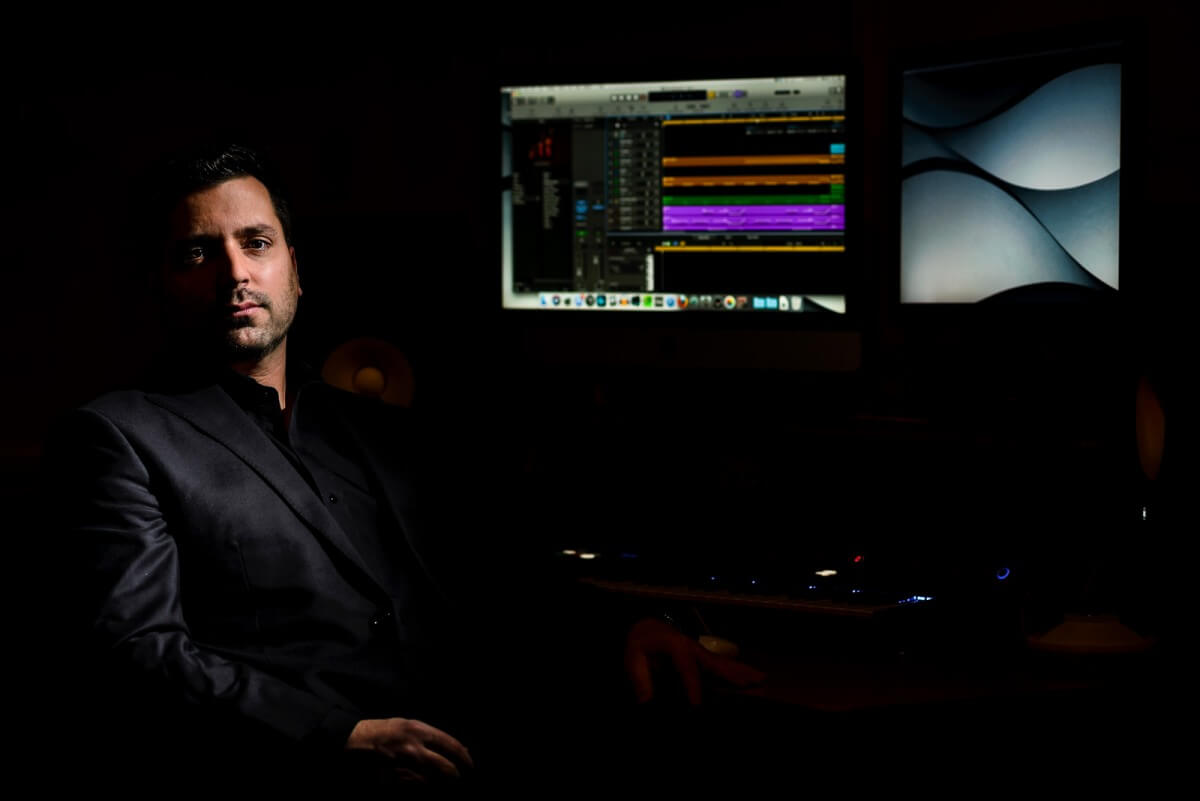
Andrew Staniland: The Interview
“I think that this album release is the first major artistic output, the crown jewel of all the work we did before on the JADE instrument,” he says, noting how much work had gone into the project over more than a decade.
“I was looking for an opportunity to do something artistic with it in a big way.”
The album includes pieces written over about the last two years, but came out of a process that spent years in development.
“I started this other journey about in 2010 I guess,” he recalls. “That journey began out of a gap or a problem that I found when performing these multimedia projects on stage with my colleagues.” Staniland typically added the electronic elements.
“I felt a real mismatch,” he says. Pushing keys on a laptop just didn’t create the kind of performance experience he was looking for. It’s not the same visceral appeal as striking a drum with a stick, he points out. It’s also not as exciting for audiences.
The electronic projects developed from that starting point. “It’s been an incredible adventure.” And not one, as he points out, where he knew the end point when he started.
That journey began after he left Toronto and connected with Scott Stevenson, an entrepreneur with a love of electronic music. Stevenson founded Mune as a private company for a few years before it became part of MEARL. JADE came along several years later.
For Staniland, it was also a combination of his interests. “What happens if I take all these things I’m interested in […] composition and digital instruments? What comes up? That’s been the guiding principle.”
The music, and the ways it can be created with Mune and JADE, are part of the exploration. “These are all questions, they’re not answers at all.”
In the new album, Andrew uses JADE to measure the EEG brain waves of a group of dancers. Six dancers from the Newfoundland based Kittiwake Dance company participated.
“It was really fun working with the dancers on it,” he says. The data from the EEG creates a flow of numbers, which in turn produces sounds. “That’s already an artistic act,” he says. “You’re composing immediately.”
It brings science and art together seamlessly, but that wasn’t actually a specific goal. “I think it certainly happened organically,” he says. “What happens when I align my values in this or this or this?”
The project also satisfies artistic preferences. “I also love to collaborate. I also love dance. That was a really interesting element to bring to the piece.”
Data from the EEG sensors on the dancers is unique. “You really have this response that it’s impossible to anticipate or recreate in any way.” It becomes something that he couldn’t possibly have put together on his own.
As he points out, the Greek root word of “orchestra” (ὀρχήστρα) comes from the verb orcheisthai, or to dance.
A Different Direction
Along with composing contemporary orchestral music, his practice has extended to film music in recent years, and ongoing electroacoustic performance.
“I think why I’m so excited about this album — I’m super excited about his one especially — is because it’s really different for me,” he says.
As far as genre, he’s going with classical crossover.
“Is it for the new music crowd? I don’t know. Is it for the dance crowd? I’m not sure,” he says. “We settled on classical crossover, and contemporary.”
In truth, it’s hard to put into a category neatly.
“I think it’s really cool, and to me, it’s a real fresh, artistic output.”
- The album will be released on August 1 on the Leaf Music label. You can pre-add/save, or stream later from your favourite service [HERE].
Are you looking to promote an event? Have a news tip? Need to know the best events happening this weekend? Send us a note.
#LUDWIGVAN
Get the daily arts news straight to your inbox.
Sign up for the Ludwig Van Toronto e-Blast! — local classical music and opera news straight to your inbox HERE.

- PREVIEW | Classical Guitarist Alexandra Whittingham Makes Toronto & Ontario Debuts - March 13, 2026
- PREVIEW | Soundstreams Presents Quatuor Bozzini: With Strings Attached - March 13, 2026
- INTERVIEW | Award-Winning Librettist & Against The Grain AD Royce Vavrek Talks About Canuck Cantatas - March 13, 2026