
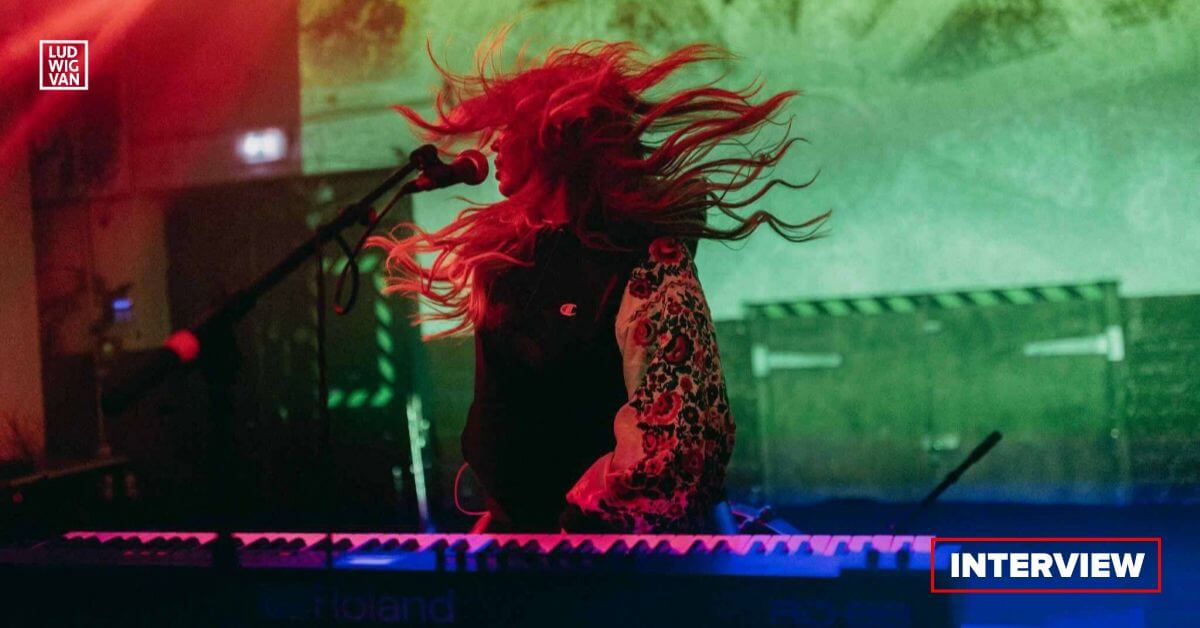
Singer, musician — and war correspondent. It’s an unusual resumé, and one that has garnered several awards for Marichka. Her new music project, Daughters of Donbas — Songs of Stolen Children, makes its live debut on July 27 at the Scarborough Folk Festival.
In between, she’ll be shuttling back and forth to Ukraine to continue with her duties as war correspondent and medical volunteer with the Ukrainian army.
LvT caught up with her to ask about her work.
Marichka
Ukrainian-Canadian singer and human rights advocate Marichka has had a remarkable career as both a musician and war correspondent. She’s performed in Carnegie Hall, The Barbican Centre in London and the Edinburgh Fringe Festival, founded a folk music website, and won an Amnesty International Prize.
The former longtime singer of Toronto’s popular Lemon Bucket Orkestra and Balaklava Blues has a new project that incorporates both her passions, called Daughters of Donbas — Songs of Stolen Children. It revolves around the fate of the estimated 20,000 Ukrainian children who’ve been abducted from Eastern Ukraine and taken to Russia.
Marichka graduated from the National Music Academy of Ukraine with a Major in Ethnomusicology/Folklore Music. She’s won two Dora Awards, and a First Edinburgh Fringe Festival Award.
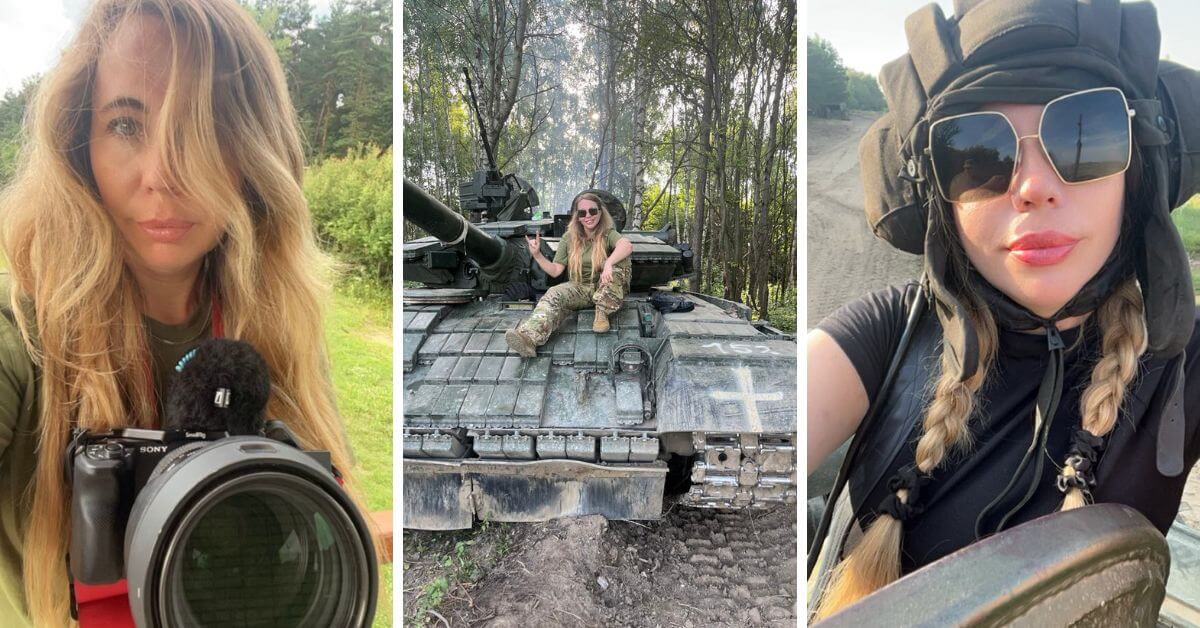
She joined the Ukrainian Army Forces in 2023 as a volunteer combat medic, and an embedded journalist in the Donbas region in Eastern Ukraine.
The first single from Daughters of Donbas was released on June 20:
Marichka: The Interview
How do you go from singing lead in Lemon Bucket Orkestra to working as a war correspondent?
“I woke up and thought, should I be a war correspondent?” Marichka laughs.
Her time singing with Lemon Bucket and Balaklava Blues ended with her romantic relationship to Lemon Bucket’s leader and creator.
“It was painful for me,” she said.
It left her somewhat at loose ends. That’s when she was approached by journalist, and record and radio producer Daniel Rosenberg about the Daughters of Donbas project. It connected with her both musically and on a personal level.
“That’s exactly what I am worried about mostly,” she says of the plight of kidnapped Ukrainian children. “It wasn’t shown very much on the news.” Even though coverage of the issue has increased somewhat over the years since the Russian-Ukrainian war was launched, it’s still minimal, she notes.
“I always like to do something meaningful through the music that I create,” she says. It goes along with her educational background. “Because I am an ethnomusicologist by training.”
The project struck a chord with her, both idealogically and musically.
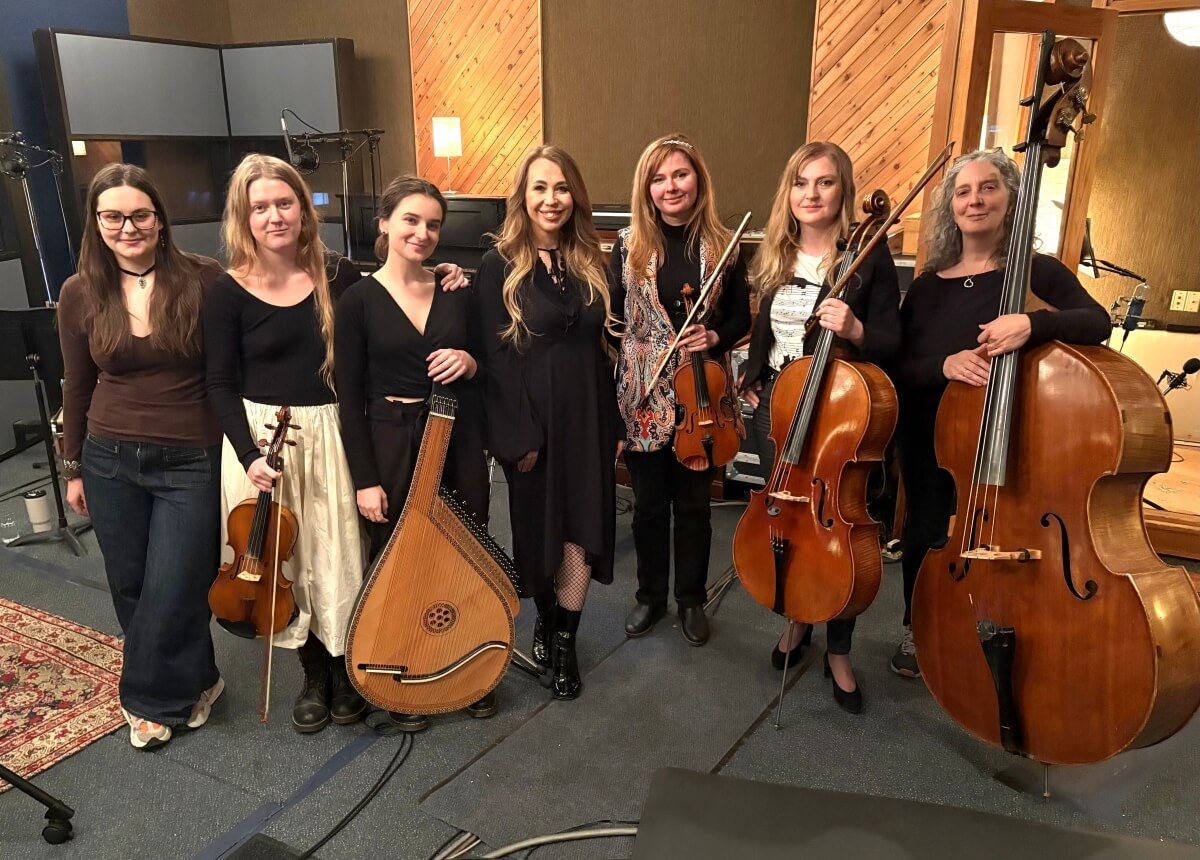
“Because I’m perfectly trained a musician, I can play the classical music and arrangements,” she says. She performs the songs, which include original music as well as arrangements of folk songs, with a string quartet.
It wasn’t hard to find collaborators, largely Ukrainians based in Toronto. “I posted something that said literally, who wants to be part of this project?” she says. “For me, it has to be a female project. It’s mostly about mothers trying to find a way to rescue their kids.”
Violist Zoë Santo was an existing connection, and violinists were relatively easy to find. She almost got stuck on a double bass player.
“I asked probably all existing musicians,” she laughs. “I got lucky. One of them was very, very interested.”
Music with a Social Conscience
Music is a uniquely effective method for getting messages across to a larger audience.
“We love to do it as a musicians. I know I can bring a very important message to the people through their heart and their emotions.”
She was initially worried about the fact that all the songs would be in Ukrainian, and considered incorporating English in some songs, or having surtitles during the performance. “Everyone around was, no Marichka.” She became convinced that performing in Ukrainian offered a more organic and authentic sound.
“It doesn’t matter what language I’m using, it literally works,” she says. “They will tell the stories of the people who are going through this situation.”
She relates how, a few weeks ago in Ukraine, she met a girl about 17 or 18 years old who’d been through five “filtration” (aka concentration) camps in Russia.
“I asked her if she wants to be part of the project. She agreed immediately,” she says. “Of course, it’s painful to tell what she went though, but at the same time, she says it’s very therapeutic.”
She says the message is that much stronger when the singer is directly involved. “It was a very special moment for us,” she says. “We even have a big plan to perform in The Hague,” she adds. “So she will be a part of our project as well.”
Marichka is working on a presentation of the musical/human rights project at The Hague in the Netherlands, home of the International Criminal Court.
A War Correspondent
“I started 12 years ago,” Marichka says. “12 years ago, I just brought my instrument, the keyboard, went to the front line to play for the soldiers.”
The effort, though, struck her as not doing enough for the soldiers.
“So, I became a volunteer first. A couple of years ago, when the full scale invasion started, I questioned myself again, what more can I do?”
Marichka took courses in field medicine, on how to save people wounded on the battlefield, and became certified. She also brought medical supplies to Ukraine. A friend told her, you should be part of our battalion.
“I thought, oops,” she says. “Now I am kind of part of his platoon.”
She packs the medical bags for the platoon, and by extension, a larger battalion, and describes a familial atmosphere. Still, she looked to do more.
“I think I can do more if I can be a journalist and write,” she say. She notes that many journalists weren’t allowed direct access to the Ukraine army, access that she already had. She used the opportunity to delve into the lives of the soldiers on the front. “I interviewed them,” she says, bringing the details of their lives to light. “I did my research.”
One of the topics she has covered is sex during war time. “How do they survive outside their duties?” She notes that the soldiers are all volunteers, and many have been away from their families for a decade or more. “So, how are they surviving?”
It’s with a large dose of black humour, she relates. “It’s a huge part of their life and existence,” she says. “I just started to write it down.”
She’s back in Ukraine in early July, partly to film videos for a filmmaker creating a documentary about her.
Daughters of Donbas — Songs of Stolen Children
Prior to Daughters… Marichka says she hadn’t written any of her own songs for several years. “For ten years, for some reason, I didn’t do that,” she says.
The first five songs on the album were written last year in Ukraine on a training field. They fit perfectly with the Daughters of Donbas project.
“I’m so happy because my dream became true. I will perform with a string quartet and it will sound so magical,” she says. “I love it. I grew up with classical music. I never played with a string quartet,” she adds.
“I’ll finally hear it live.”
Songs of Stolen Children will premiere live at the Scarborough Folk Fest in Toronto on July 27.
In the advance single, titled 4.5.0, Marichka sings from the perspective of a mother, sending a song to her stolen daughter to send a message of hope and resilience, even as things are falling apart. Other songs on the album are based on the testimony of the few children who’ve been rescued from their kidnapping.
Marichka performs on vocals and piano with a classically trained quartet that includes: Mariia Hurak, backing vocals; Olga Kostianyuk, violin; Zoë Santo, viola; Lusine Navoyan, cello; Natalie Kemerer, double bass.
- Find out more about her performance at Scarborough Folk Fest on July 27 [HERE].
Are you looking to promote an event? Have a news tip? Need to know the best events happening this weekend? Send us a note.
#LUDWIGVAN
Get the daily arts news straight to your inbox.
Sign up for the Ludwig Van Toronto e-Blast! — local classical music and opera news straight to your inbox HERE.

- INTERVIEW | Composer Aziza Sadikova Talks About The Toronto Premieres Of Her Music With Esprit Orchestra - March 19, 2026
- PREVIEW | Caelis Academy Ensemble & Thirteen Strings Orchestra Perform Matthew Larkin’s Passion Play - March 19, 2026
- THE SCOOP | Elton John Names Mezzo Emily D’Angelo As The Glenn Gould Protégé Prize Winner - March 18, 2026