
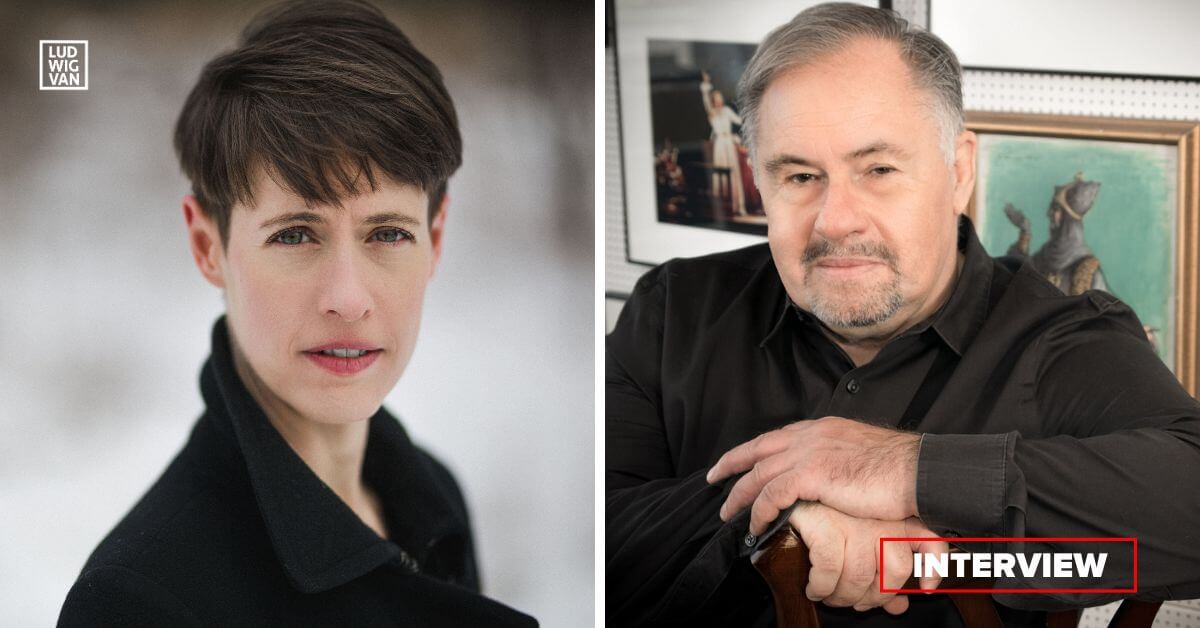
The University of Toronto Faculty of Music has announced the commission of a new opera titled Fall River, the legend of Lizzie Borden. The opera will premiere in November 2026 in a performance by U of T Opera.
Cecilia Livingston will compose the music, with a libretto by Michael Patrick Albano. Fall River will be only the third opera ever commissioned by U of T Opera.
Composer-in-residence at the Canadian Opera Company since 2022, and formerly composer-in-residence at Glyndebourne (2019-2022), Cecilia specializes in vocal works, which have been praised for their beauty. She graduated from the University of Toronto with a doctorate in composition, and was awarded the Theodoros Mirkopoulos Fellowship in Composition.
Michael Albano was an Associate Professor in the U of T Opera program, now retired, and served as Resident Stage Director, among other functions. His resume also includes more than 25 works for the stage, including librettos for companies such as the Washington Opera, the Opera Theatre of St. Louis, and the Canadian Children’s Opera Company. At U of T, he staged more than 50 opera productions. As a director, he’s worked with companies such as the Manhattan School of Music, New York City Opera, the Opera Festival of New Jersey, among others
The work will be written for five leading roles, seven secondary roles, a choral ensemble, and chamber orchestra of about 10 to 12 musicians.
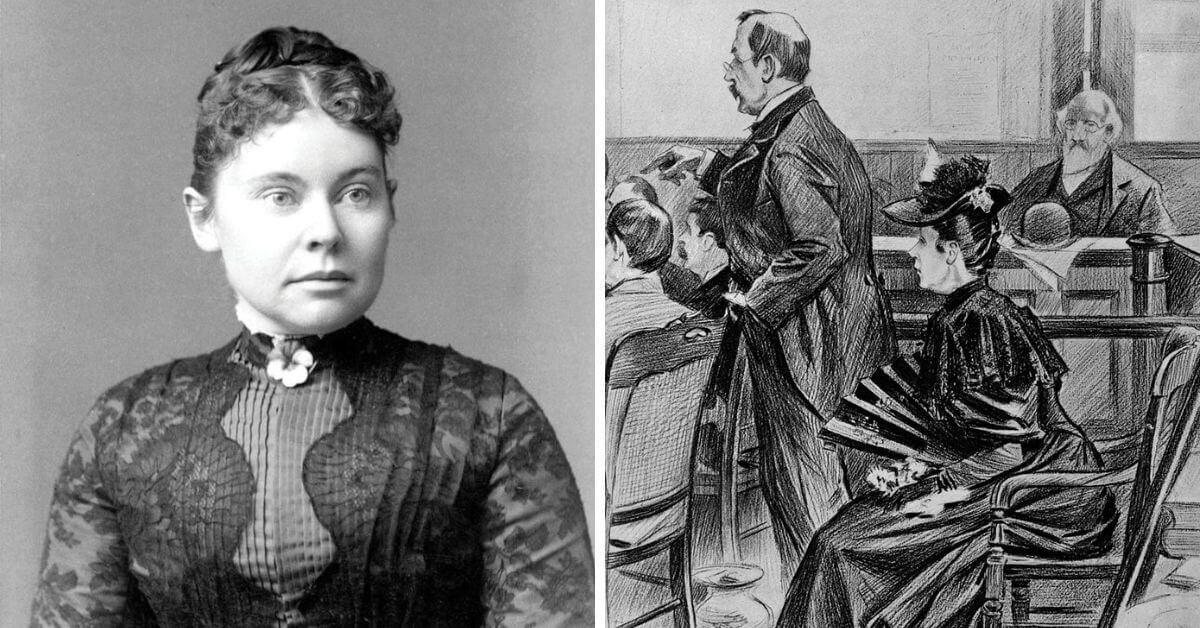
Lizzie Borden: The Facts
First, a look at the facts of Lizzie Borden. Lizzie Andrew Borden was born on July 19, 1860, and died on June 1, 1927. It was on August 4, 1892, when Lizzie was 32, that her father and stepmother were brutally murdered with an axe in Fall River Massachusetts.
Borden’s family were wealthy through manufacturing and real estate concerns, although her father, Andrew, was known for his frugality. After Lizzie’s mother died, Andrew remarried Abby Durfee Graysons. Relations with Lizzie were cold, however. She insisted on calling her “Mrs. Borden” and not mother, and Lizzie and her sister seldom ate with the couple.
Strained relations led the sisters to leave the home for an extended vacation in July of 1892. Even after she returned, Lizzie lived in a rooming house for a few days before returning to the family home. It emerged at the trial that Andrew had been generous in gifting land and other things to Abby and her family, causing a great deal of friction.
On the morning of August 4, Abby was killed first as she did chores that morning. Later, after Andrew returned, he was killed in the same way.
Testimony from the live-in maid conflicted the evidence, as well as Lizzie’s responses. The police didn’t like her calmness and poise — and found two axes in the basement. She was charged with murder, but acquitted, and lived the rest of her life in that same house with her sister.
It’s the perfect story, in other words, for an operatic treatment.
Cecilia Livingston & Michael Albano: The Interview
As Michael points out, although U of T commissions have been few and far between, the University’s Opera department was often used to premiere new works as a kind of trying ground for the Canadian Opera Company. “We got the privilege to do the premieres, without the accolades,” he says.
Premieres, and new operas, are essential, despite a great love of 19th century opera, the romantic traditions.
“The form will die, it will become a museum form, unless new pieces are written,” he says. But, he says that current signs of an upswing in opera’s popularity, especially among young people both as creators and audience members, are encouraging. “I think we are living in an interesting time. Opera is hot!” he says.
The Lizzie Borden story is an interest of Michael’s. “I’ve been obsessed with this story for quite a while,” he says. That includes visiting Fall River, and her former home, now a B&B. “It’s the scale of a story,” he explains. “It’s just so operatic. It’s just like something Euripides would have written.”
As the decades have passed, public interest in the story hasn’t much diminished, although the focus perhaps has. From law and order, many people are now interested in the psychology underpinning the sensational story.
He also credits Tyler Greenleaf, the Director, Advancement of the Faculty of Music, as a driving force behind the project.
When it came to composers, Albano says he knew who he wanted. “I was on tenterhooks until we heard from Cecilia.”
“I did not say no,” Cecilia laughs. “I was fascinated by the story idea. I too am interested in […] how do we get to those places where we commit these acts?” she says. “We continue to think of how she might have gotten there.”
Cecilia had taken Michael’s introduction to opera composition class as a student. “Look what he unleashed.”
“I’ve followed Cecilia’s career,” Michael adds.

Adapting The Story For Opera
In adapting the story, as he describes it, you begin with the historical facts like the dates, her age, the facts of her living in a repressive household with an abusive father.
“[She had] a very, very fractious relationship with her step mother,” he said.
Michael got hold of a transcript of the actual trial while he was in Massachusetts. Where the transcript leaves off, the artistry begins. “Then you imagine the links between those facts.”
It builds a series of little narrative bridges that turn the facts into a cohesive story. “It’s such a strong, strong, narrative.”
When it comes to the music, for a story that’s situated in the past, there is a choice to be made. “What is the musical style of the time, and do we sit in those spaces? I’ve made that choice many times,” Cecilia says. “I like a mix.”
Her works tend to use techniques that suit the drama and atmosphere of the moment. “I think I’ll write it in my own language,” she says. “It lets me have a really wide tool kit.”
That includes dissonance as well as intensely lyrical passages, as the narrative dictates.
The story makes a few jumps in time. “The hardest part of writing the libretto,” Michael says, “once the very brutal murder of her parents occur, where do you go after that?”
The story builds during the first act. “I thought that we would […] jump right into the turmoil of that household,” he says. The first act ends with Lizzie clearly contemplating violence.
“That’s going to be a fantastic moment,” Cecilia adds. “I think that’s going to be a treat.”
The second act begins after the crimes to chronicle the aftermath, but then doubles back, at the very end, to finally depict Lizzie wielding the axe against her father and step-mother.
“One of the reasons that I was so keen to undertake this with Michael was that I could see the care he’d taken with the structure,” Cecilia says. It creates a dramatic story arc, and her work is to match the match the pacing to the music. “For me, that’s the delightful challenge.”
To avoid turning a chamber opera into a courtroom just for one scene, the trial plays as flashbacks in Lizzie’s mind.
“I love those spaces for ambiguity,” Cecilia says. “I am particularly excited for this story. We think we know her.”
“The interest in this story is phenomenal,” Michael adds. “Music is such a great medium of storytelling.”
Michael describes his approach to writing. “A libretto by its nature needs to be minimal,” he says. He appreciated Cecilia’s few suggestions here and there for tightening the text to make more room for the music. “There always has to be room for music,” he explains. “It’s never worked that I know of, of someone simply taking a play and setting it to music.”
Long Live Opera
While there aren’t any stats to document it, it’s true that those who work in the field have noticed an increased interest, and more importantly, a presence, by younger generations in the opera world. It’s having a moment that will hopefully not only endure but grow.
“I think there are many and complex reasons for that,” Cecilia says. “It’s terrifically exciting to be a composer as part of that.”
Toronto’s indie opera scene is a busy one.
“I just think that’s something deliciously enormous about opera,” she says. “It’s about huge emotions. It’s about complex questions.”
It’s a way of collectively thinking about and sharing questions of human experience. Part of its new popularity is due to the way opera has also reached beyond the confines of a traditional opera house to embrace audiences looking for different experiences.
“The creators of any art form don’t necessarily end up owning it,” Michael says of any naysayers.
Cecilia mentions, “the power of the singing voice, unmediated by speakers” as a defining feature of the opera, an inherently multidisciplinary art.
As Michael points out, great singers always find an emotional heart to the story, no matter what the subject. It can bring difficult characters like Lizzie to vivid life on stage.
The University of Toronto Opera commission is facilitated by financial support from individual donors, including Denton Creighton and Kristine Vikmanis, currently a director on the board of the COC.
The November 2026 premiere will be conducted by Sandra Holst, Head of the U of T Opera division.
Are you looking to promote an event? Have a news tip? Need to know the best events happening this weekend? Send us a note.
#LUDWIGVAN
Get the daily arts news straight to your inbox.
Sign up for the Ludwig Van Toronto e-Blast! — local classical music and opera news straight to your inbox HERE.

- PREVIEW | North Wind Concerts Presents Winter’s Delight: Good Cheer From The European Renaissance - December 15, 2025
- THE SCOOP | Glenfiddich Invites Canadian Artists To Apply For The 20th Annual Artists In Residence Program - December 15, 2025
- PREVIEW | Holiday Variety At Chris And Christel’s Christmas Collection - December 15, 2025