
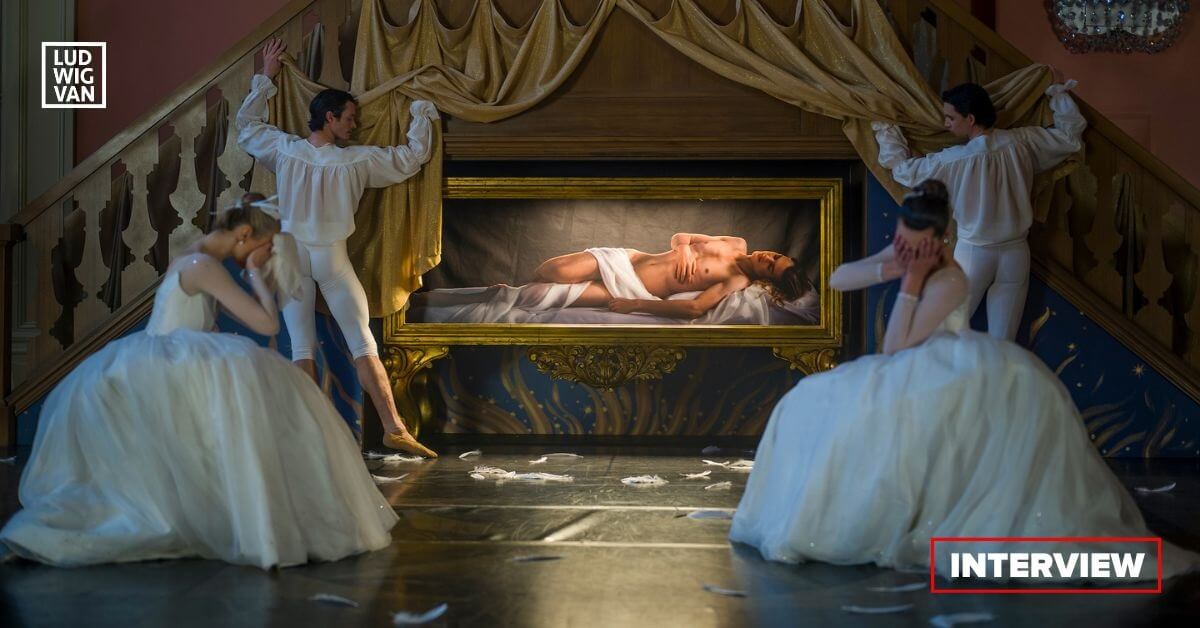
It has been a long time coming. Opera Atelier’s production of Handel’s The Resurrection (1708) was supposed to take place in 2020, but a certain obstacle called the pandemic got in the way. At that point, the company pivoted to making a film of the piece, which streamed online in May and June of 2021.
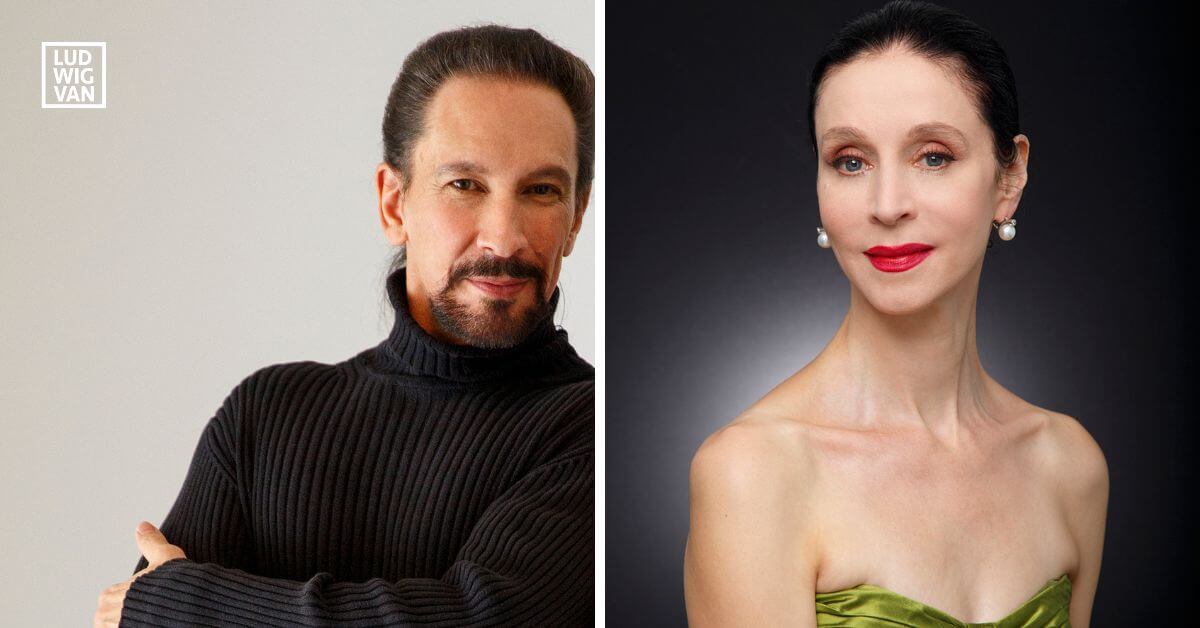
Recently, I caught up with OA’s co-artistic directors, stage director Marshall Pynkoski and choreographer Jeannette Lajeunesse Zingg, by Zoom, to talk about that seemingly once and future production, that finally arrives, fully-staged, at Koerner Hall, Apr. 6 to 9.
Let’s go over again, your history with this early Handel masterpiece.
We didn’t know anything about it until we staged it for conductor Marc Minkowski in 1995 in Halle, Germany, Handel’s birthplace. Marc’s the one who introduced us to the work. This was followed by a semi-staged version at the Jane Mallett Theatre in 1999. Since then, it was always our intention to present a fully-staged version one day. Incidentally, that 1999 show was tenor Colin Ainsworth’s opera debut, and now he has come full cycle, again playing John the Evangelist in this production.
Let’s remind readers about the story.
Handel, who was just 23, was commissioned to write an Easter liturgical oratorio by his Rome patron, Marchese Francesco Ruspoli. It was performed on Easter Sunday, 1708. Handel really wanted to write operas, so this oratorio is in a definite operatic style. There are two worlds. Lucifer and the Angel are in the supernatural world, while in the real world, there are three people mourning the death of Christ – Mary Magdalene, Mary Cleophas, and John the Evangelist. Lucifer is rejoicing because Jesus is dead, so he is the winner, but the Angel says that she is the winner because Jesus will be resurrected. Death is not a finality.
Remind me about the decision to make a film version, and the problems involved in that.
Our grant money had come in and we had a decision to make. Do we bank it and wait, or do we keep producing? Our decision was to keep on working. It was absolutely traumatic when we were closed down in March 2020 without notice, particularly because we were almost ready. We had a show, so we wanted to do something with it. We began shooting in 2021. The making of the film cost us an extra $125,000 due to having to pay for compliance features like protective equipment, air purifiers and a full-time nurse. We also covered all the cab and Uber fares of the cast and crew so they wouldn’t be taking public transit.
Yet the film was a huge success.
A large audience caught our own streaming, but what really put us on the map was when the Harris Theatre in Chicago put the film on their digital series. That increased the audience reach tremendously, and became our calling card to European festivals, such as to Angela Hewitt’s Trasimeno Music Festival in Italy. We’re proud of the film despite wearing the masks, which took away 50 % of what we do, but it was a board decision, so we had to comply.
So why go back to the stage production?
Audience demand. They wanted to see it live, and so did we — without masks and without social distancing. We also missed a live audience. In fact, we need a live audience for our work. It also gave us a chance to go back to our original conception. Admittedly, the film gave Opera Atelier a bigger reach, but we were always determined to do a live staging. It was never off our agenda.
What was it like going into rehearsals without restrictions?
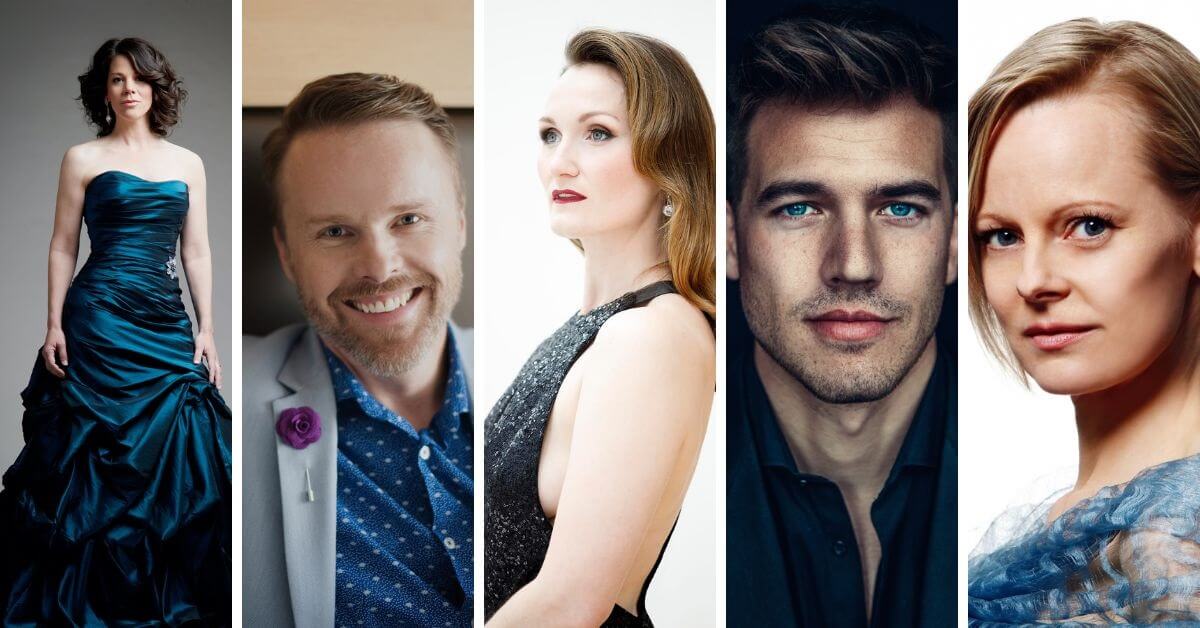
In a word — intense. In the film, there is no physical contact, yet there is reference in the text to touch. Ordinarily, we never ignore text, but we had to work around it in the film. Now the characters could be in each other’s arms. They could embrace. For example, Lucifer and the Angel spar with words, and now we could bring in physicality between them. Handel wrote a very emotional work, and we could heighten that emotion. Luckily, we have the same cast and the singers were really excited to get it to the stage. On an amusing note, we are using the same costumes. They were almost finished when we began filming, but now they are completely sewn instead of just basted.
Did you have to change much in the dance?
For the film the choreographic patterns had to be completely reconfigured, so the dance for the stage is new, so to speak.
What has been your biggest challenge in staging The Resurrection?
Koerner Hall is a concert venue and not a theatre, so we have to work within those parameters, but then, the first performance was done in the main hall of a palazzo in Rome, so that was not a theatre.
What is the biggest difference from the film?
We can mount the set as it was intended, which we couldn’t do in the film because the ceiling of the St. Lawrence Hall wasn’t high enough. It’s one of the biggest sets we have ever used. It consists of a huge double staircase that runs from the stage to the highest balcony. In other words, we are using the entire performance space from ground to almost the ceiling. There are also two enormous pulpits for Lucifer and the Angel, and various platforms on the staircase. In terms of decoration, it is an exact match to Koerner Hall’s décor. It completely blends in. At last, we can use the whole set as one unit, whereas in the hall, we couldn’t fit the two pieces together.
If you are using the entire performing space for the singers and dancers, where is the Tafelmusik orchestra?
Four rows of seats have been removed to create an orchestra pit, and a hydraulic lift lowers the floor.
You did something really clever during COVID. Because Toronto was shut down, you went to Europe where things were open.
We worked on Grétry’s Richard Coeur-de-Leon and Charpentier’s David and Jonathan during that time. In truth, working in Europe has always helped us build up repertoire.
And your final word on this fully-staged production?
We want to emphasize that it is a different show and theatrical experience from the film, both for us and the artists, and it will be for the audience as well.
Tickets are on sale here.
#LUDWIGVAN
Get the daily arts news straight to your inbox.
Sign up for the Ludwig van Daily — classical music and opera in five minutes or less HERE.


- SCRUTINY | Mirvish’s Some Like It Hot Celebrates Broadway Glam Updated For 2026 - February 24, 2026
- SCRUTINY | Mirvish’s Canadian & Juliet Is A Runaway Hit - December 16, 2025
- SCRUTINY | The Woman In Black Evokes Terror Without The Customary Digital Spectacle - December 10, 2025