
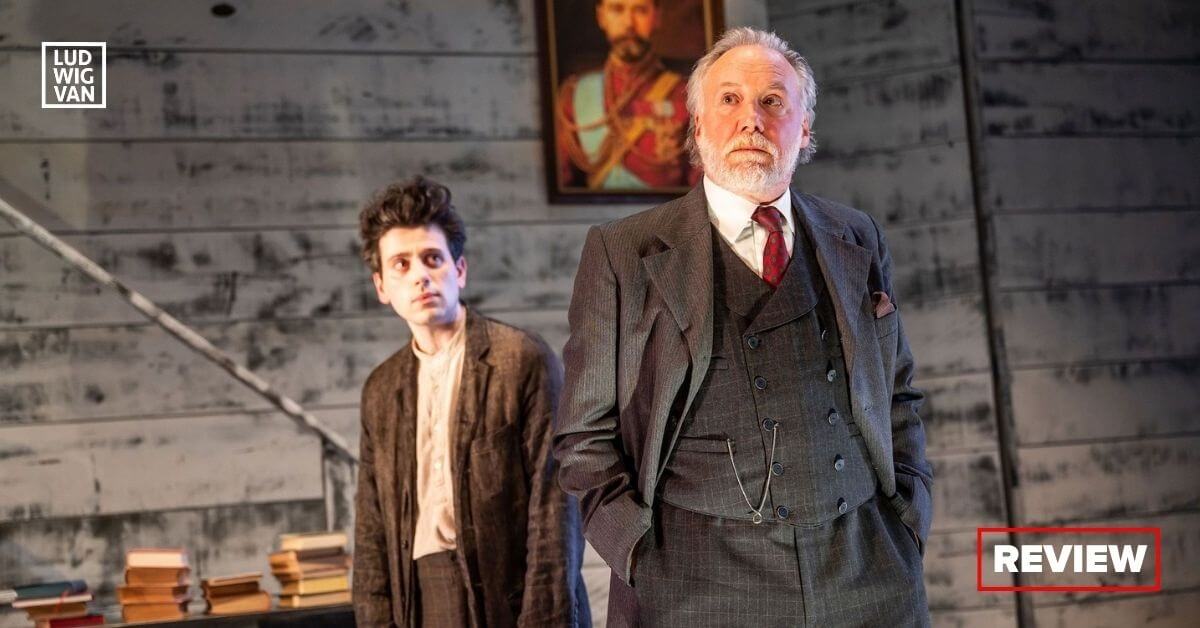
Crow’s Theatre/Orphans for the Czar, written by George F. Walker, suggested by The Life of a Useless Man by Maxim Gorky, directed by Tanya Jacobs, Guloien Theatre, Mar. 29 to Apr. 24. Tickets available here.
Exhilarating! That’s the first word that came to mind at the end of the world premiere of George F. Walker’s Orphans for the Czar at Crow’s Theatre.
Later, I could add words like provocative, funny, sobering, clever, and vastly entertaining. It was clear right from opening night that the play was going to be a huge hit, and, not surprisingly, the run has been extended, so catch it while you can. It’s going to clean up at the Doras.
The prolific Walker is the dean of Canadian playwrights, with an international career that goes back to the 1970s. The bulk of his canon concerns the marginalized who live on the fringes of society. Walker, himself, has a working-class background, and that is where his most memorable characters are found (albeit, some with criminal proclivities). This new play features an anti-hero who exists right at the bottom of Russian society.
Orphans for the Czar was inspired by Maxim Gorky’s 1908 novel The Life of a Useless Man. This is not the first time Walker has used Russian literature for his springboard. He based his play Nothing Sacred on Ivan Turgenev’s 1862 novel Fathers and Sons. This current play is given extra resonance by the war raging in Ukraine. The conflict is absolutely a factor that registers at the back of one’s mind.
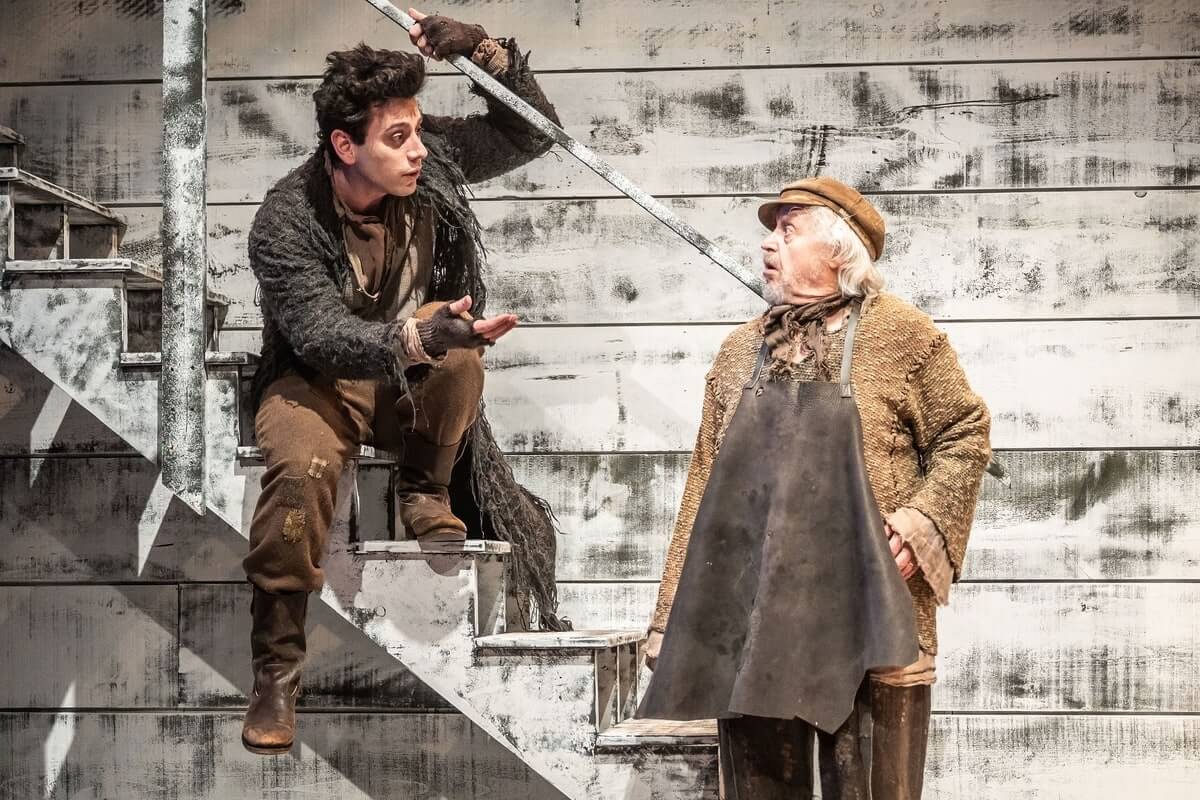
It is 1905, and Vasley (Paolo Santalucia) is an orphan in a small village. He routinely gets beaten up by Yakov (Christopher Allen) just because he’s there. To get some kind of direction to his life, Master (who gives him odd jobs) sends Vasley to St. Petersburg to work in his brother Piotr’s bookstore (a riotous Eric Peterson in both roles).
The Master also orders Yakov to take the blind orphan Rayisha (blind actor Shayla Brown) to St. Petersburg, so she can have a better life. In time, Yakov and Rayisha end up at the bookstore.
Piotr, however, is clandestinely selling revolutionary material (for money and not for belief), and two of his best customers are the insurrectionist graduate students and sisters, Olga (Michelle Mohammed) and Maya (Shauna Thompson). In St. Petersburg are also Sasha (Kyle Gatehouse), who is spying for the Czar’s agent Makarov (Patrick McManus). Needless to say, Vasley is recruited by Sasha to work for Makarov.
And so, the scene is set for the First Russian Revolution of 1905 with all the forces represented. We have the Czar’s agents trying to hold on to tight control of the population, the intelligentsia who are fomenting revolution, and the innocents who are caught in between. Because this is a George F. Walker play, surprising plot complications abound, as well as ironic tangential character portraits that take little side trips away from the main storyline.
In terms of dialogue, Walker’s famous writing style, with its short staccato lines, is one of droll irony. Lines that would ordinarily sound silly, when delivered in the Walker style, become downright funny. It’s all in the intonation, and director Tanya Jacobs has ensured that the play is pure Walker from start to finish. You just can’t help yourself laughing out loud, even when dire things are happening to the characters. Jacob’s direction is masterful.
Jacobs is also aided by a very strong cast. Santalucia as Vasley is utterly woebegone, and he expresses his vulnerability to the max. He is the centrepiece of the play, and his fine downtrodden portrayal anchors the cast. Peterson, as usual, steals the show, and, in fact, is there a better grumpy old man in the country? McManus as Makarov is smooth as honey, and dominates the stage when he is on it. He is seductive in his arguments, and Vasley cannot resist him. It’s an impressive performance. The rest of the cast does great work in fleshing out their roles.
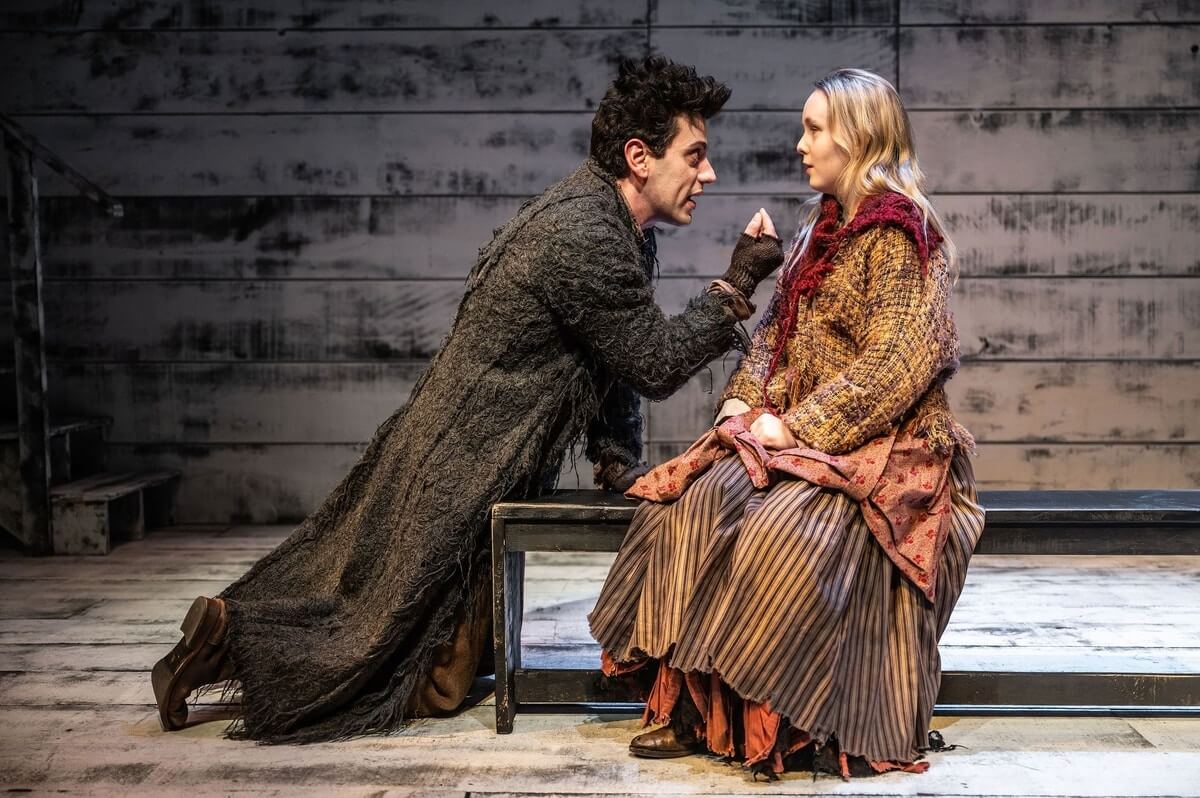
Designer Lorenzo Savoini has provided a set that appears as a solid wooden backdrop (how Russian is that?) with a very odd staircase attached, and hidden doors. It’s a quirky set for a quirky play. And of course, there are books galore on tables, and these tables are manoeuvred very cleverly as action demands.
Ming Wong’s period costumes are perfection. In fact, the first time we see Makarov, he is so beautifully dressed in a coat and hat that you know he has been to a very good tailor. Logan Raju Cracknell has provided two-sided lighting — for the village on one side and the bookstore on the other — that works well. He also achieves clever atmospheric effects with shadows. And then there is the omnipresent Thomas Ryder Payne’s wonderfully evocative sound score, featuring Russian folk tunes that really adds authenticity to the mix.
This production of Orphans for the Czar manages to show both the horrors of poverty and an oppressive police state, and all with laughter. In fact, it’s only after the play is over do you come to grips with the serious messages and themes that Walker is presenting, particularly in light of Russian aggression in Ukraine.
That said, Orphans for the Czar is wonderfully engaging, and is not to be missed. George F. Walker is still a master of his craft, and this is another of his plays that will have an international lifespan. I’m sure of it.
#LUDWIGVAN
Get the daily arts news straight to your inbox.
Sign up for the Ludwig van Daily — classical music and opera in five minutes or less HERE.


- SCRUTINY | Mirvish’s Shucked Is Loud, Brash & Unapologetically Corny - March 10, 2026
- SCRUTINY | The National Ballet of Canada Opens Winter Season with Classical Purity and Contemporary Power - March 2, 2026
- SCRUTINY | Mirvish’s Some Like It Hot Celebrates Broadway Glam Updated For 2026 - February 24, 2026