

Voicebox Opera: Isis and Osiris, Gods of Egypt at Jane Mallett Theatre St. Lawrence Centre for the Arts. April 3, 2016.
VOICEBOX: Opera in Concert has evolved over its long life into a company willing and able to present staged productions, and even commission new works. On Sunday, the organization gave the second performance of Isis and Osiris, Gods of Egypt, a collaboration of two veterans, composer Peter-Anthony Togni and librettist Sharon Singer.
Second performance and last? That would be a little easy, but I think it is fair to say this two-hour-plus enterprise (intermission not included) is a troubled piece that will be need revision before it is mounted again.
The story is founded on the Osiris myth, in which the primeval king of Egypt is murdered (and dismembered) by his brother Seth and, after a magical reconstruction, restored to his wife (and sister) Isis. The initial chorus, in which coordinated angular arm movements were manifold, suggested that we were in for a mythic and stylized afternoon.
In fact, the dramatic mode lurched unpredictably between the ritualistic and the everyday. “Why do you always fight Isis and Osiris and me?” was one a few examples of prosaic lines (in this case voiced by Nepthys, as Singer spells the name of this goddess) that could have come out of a domestic drama set in Little Italy.
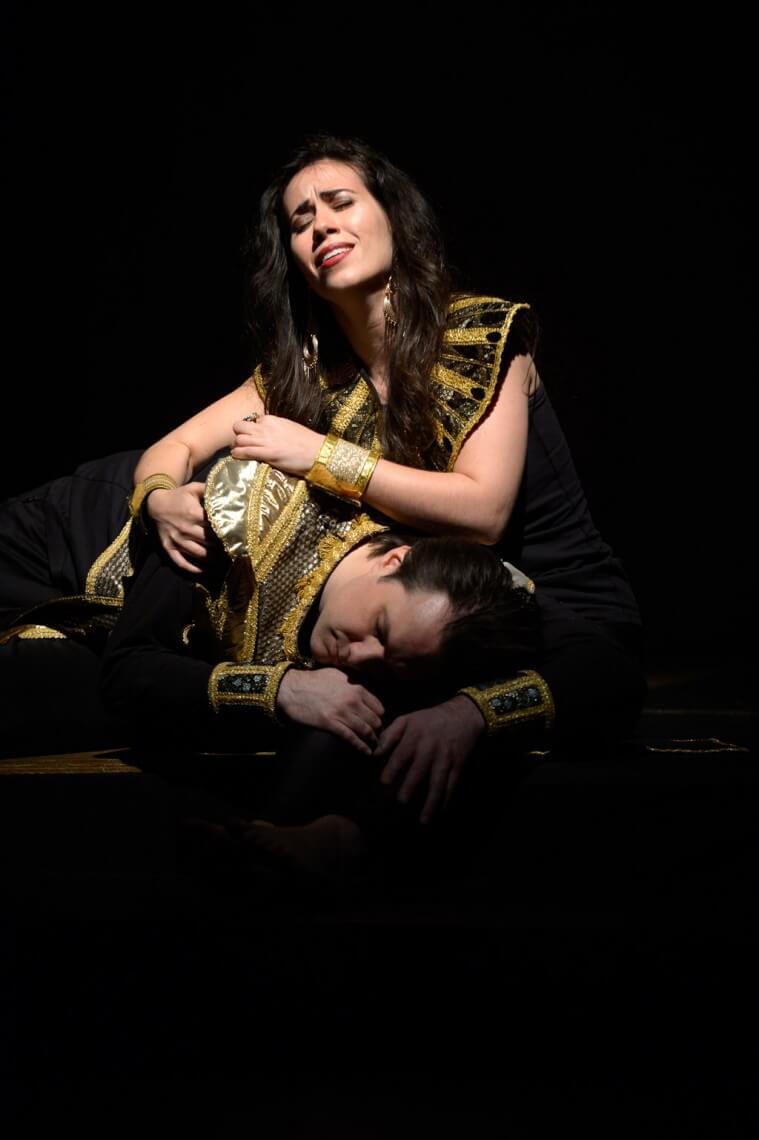
Nor did the story unfold with optimal vigour. Characters who were introduced didactically in the opening minutes then introduced themselves for good measure. Seth, the villain of the piece, describes explicitly his plan to poison his brother, and later, his plans for the corpse. Odd for a central character (rather than a critic) to be providing spoilers.
Despite its ancient setting, this was a work of Canada and the 21st century. Osiris articulates a new defence-only military policy for Egypt that could have come from the NDP playbook. Seth turns out to be an environmental transgressor as well as a warmonger. These might have been nice touches had they not seemed so transparently contemporary.
Many operas, of course, survive on the strength of the music. Isis and Osiris is not one of these. Togni’s score is a hard-to-like hybrid of modal choral sequences and solos and duets on loan from Broadway. A few interludes would do for a Hollywood Biblical epic of the 1950s. Sometimes the music stops in its tracks, leaving the characters to speak the text.
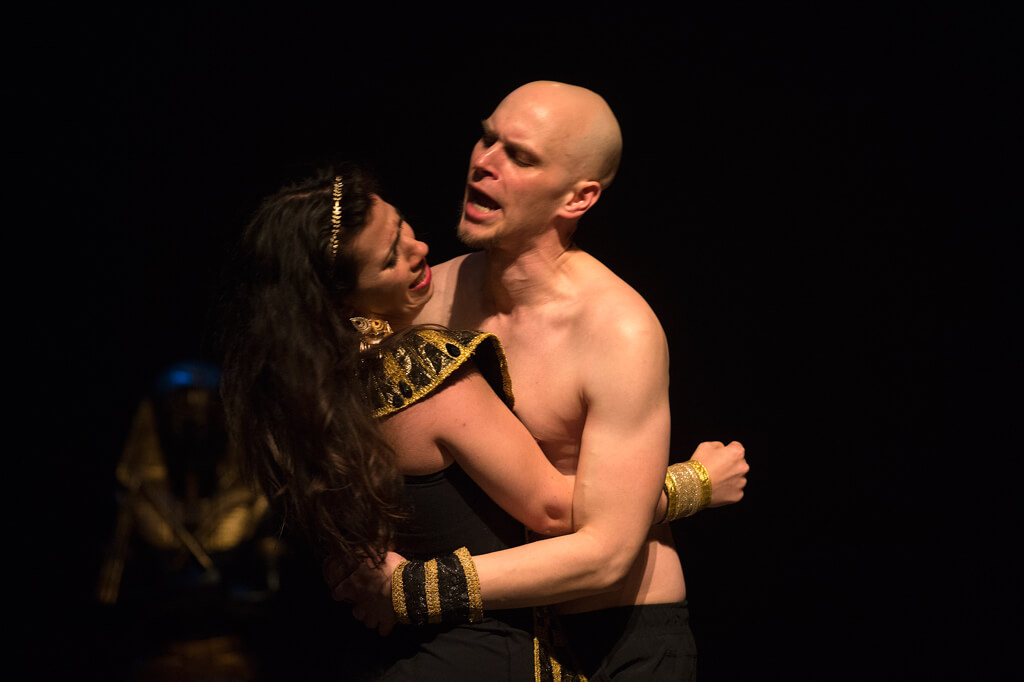
Nevertheless, there were interludes that did lift off the stage of the Jane Mallett Theatre, including the love duet of the title characters in Act 1. Singer was at her poetic best in this. Seth articulates an impressive “destruction is my joy” aria late in Act 2. Verdi and Boito got it right by letting Iago unleash his Credo early in Otello.
Baritone Michael Nyby as Seth was incisive as a vocalist and actor; tenor Michael Barrett could not equal him in the role of the weak and easily duped Osiris. Lucia Cesaroni, however, was both firm-toned and dramatically assertive as Isis. This excellent soprano has both gleaming highs and a warm middle.
She was sandwiched in the cast between the able coloratura Leigh-Ann Allen as Sennefer and mezzo-soprano Julie Nesrallah as Nepthys. The latter, known to us all as a CBC broadcaster, has not lost her lustre.
The chorus performed with admirable discipline under Robert Cooper, who paced the piece as well as it could be paced. He extracted good sounds from a small group, including a keyboardist who was often called on to imitate that exotic standby, the harp.
Guillermo Silva-Marin was listed as “dramatic advisor.” Well, this general director of VOICEBOX: Opera in Concert gave good advice. Beautiful costumes and a few well-chosen statues demonstrated how, in chamber opera, a little can go a long way. Indeed, the entire production (supported by the Jackman Foundation and the Egyptian tourist authority) stood as a testament to what Isis and Osiris could have been.
#LUDWIGVAN
Want more updates on Toronto-centric classical music news and review before anyone else finds out? Get our exclusive newsletter here and follow us on Facebook for all the latest.

- FEATURE | Canadian Pianist Élisabeth Pion Takes Honens Piano Gold In Calgary - October 27, 2025
- FEATURE | The Honens International Piano Competition Does Things A Little Differently - October 22, 2025
- SCRUTINY | Rachel Podger Leads Tafelmusik Through Mozart & Schubert - September 29, 2025