
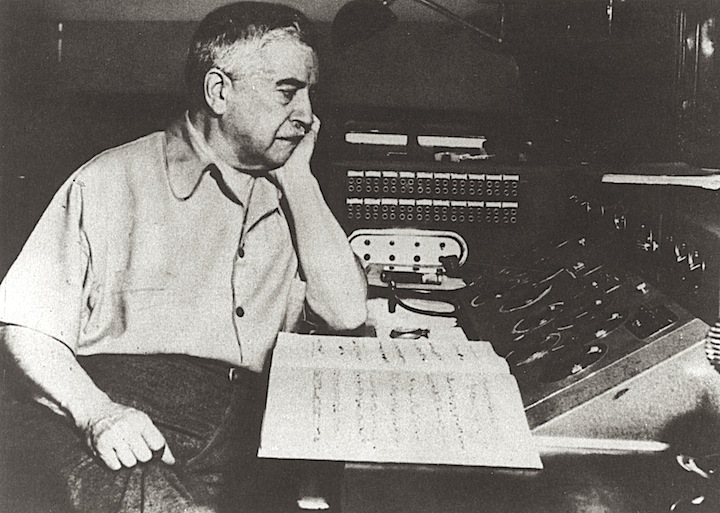
The recordings of Austrian 20th century pianist Artur Schnabel (1882-1951) remain touchstones for anyone seriously interested in the repertoire. His compositions, on the other hand, died with him. But based on the contents of a new 2-CD box from the German CPO label, there is reason to listen again.

- Classical Music 101: What Does A Conductor Do? - June 17, 2019
- Classical Music 101 | What Does Period Instrument Mean? - May 6, 2019
- CLASSICAL MUSIC 101 | What Does It Mean To Be In Tune? - April 23, 2019
Interpreters serious about their craft go to great lengths to know as much as possible about each work and composer. Listening to this selection of pieces by Schnabel is like reverse engineering, revealing much about his much-loved interpretations of Beethoven and Schubert, especially.
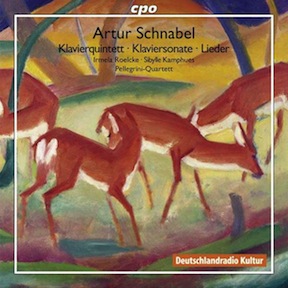 The compositions featured here are all from Schnabel’s freelance years in Berlin, from 1900 to just before he started teaching at the State Academy of Music (he left Germany in 1933, when the Nazis came to power). They feature two Schnabels, really.
The most interesting and engaging musically is the portrait of the composer as a young man, with a Piano Quintet, Three Piano Pieces and Three Fantasy Pieces for piano, violin and viola and 17 art songs in two sets, all composed before the end of World War I.
Schnabel the composer sits torn between a deeply expressive late Romanticism, a reverence for classical forms, and a bold spirit of Modern adventure as well as asceticism. It could be a dog’s breakfast, but instead turns out to be a surprisingly delicious, audacious aural stew.
Pretty but not captivating are the Lieder, written for his wife, singer Therese Behr. Left to purely instrumental devices, Schnabel is bold; but the songs are strangely flat and timid. Not even the fine performances by contralto Sibylle Kamphues and pianist Irmela Roelcke can save these pieces from becoming sonic wallpaper.
The most viscerally engaging is the 54-minute Piano Quintet, completed in 1916. Beautifully rendered by the Pellegrini Quartett, this piece is a gorgeous piece of thematic architecture full of oversize emotion. It has all the power of the great quintets of Edward Elgar and Emanuel Chabrier, but Schnabel has found a more adventurous musical language, where the tonal centre is as slippery as a firehall pole.
This promises pure seduction for anyone interested in going along for the ride.
The most daring work on this album is a half-hour-long Piano Sonata from exactly 90 years ago. It has no key and no bar lines or metronome specifications, just a series of not-very-helpful instructions. For example, at the start of the fifth and final movement Schnabel asks for: “Feurig, verwegen, ohne Aufenthalt, aber auch ohne Hast und Erregung, ganz gesund” (Fiery, daring, without rest, but also without haste and excitement, very wholesomely).
That’s quite the interpretive puzzle, which brings us back to Schnabel the pianist: He mixed fire and ice, detachment and intense involvement in equal parts. He was a Romantic at heart and a Modern in spirit, just like his music.
It’s not easy to get details on the excellent, often obscure Austro-German music that CPO specialises in. The best place to start is the label’s German retail site, here.
+++
Here to show off his compelling mix of hot and cold is a 1939 recording of Schnabel playing Franz Schubert’s Op. 53 D Major Sonata D850:
John Terauds
- Classical Music 101: What Does A Conductor Do? - June 17, 2019
- Classical Music 101 | What Does Period Instrument Mean? - May 6, 2019
- CLASSICAL MUSIC 101 | What Does It Mean To Be In Tune? - April 23, 2019